Find the Best Geothermal Heat Pump Contractors for Your Business
No obligation • Fast responses • Nationwide coverage

Why you can trust HVAC Firms
HVAC Firms is a leading United States resource for evaluating HVAC service providers. Our team researches companies, checks credentials, and reviews customer feedback to present clear, unbiased information. Listings and rankings are based on merit, and companies cannot pay to change our editorial content.
Search providers near you
Best Geothermal Heat Pump Contractors in Colorado Ranked
Geothermal heat pumps (GHPs), also known as ground-source heat pumps, are a highly efficient heating and cooling technology that leverages the earth's stable underground temperature. For Colorado homeowners and businesses, these systems offer a path to significant energy savings, reduced carbon footprint, and year-round comfort. This guide explains the key considerations for geothermal systems in Colorado, from state-specific regulations and financial incentives to installation best practices, helping you connect with qualified local professionals.

Tonville HVAC LLC
710 N 7th Ave #1, Brighton, CO 80601
Tonville HVAC LLC is a locally owned HVAC company serving Denver, CO, and surrounding areas. Since 1987, they have provided heating, air conditioning, geothermal, and ventilation services including installation, repair, and maintenance of furnaces, boilers, rooftop units, and ductless mini splits. Their team is experienced in geothermal system work and offers emergency service along with industry-leading warranties on workmanship and parts.
True North Heating and Cooling LLC
Colorado Springs, CO
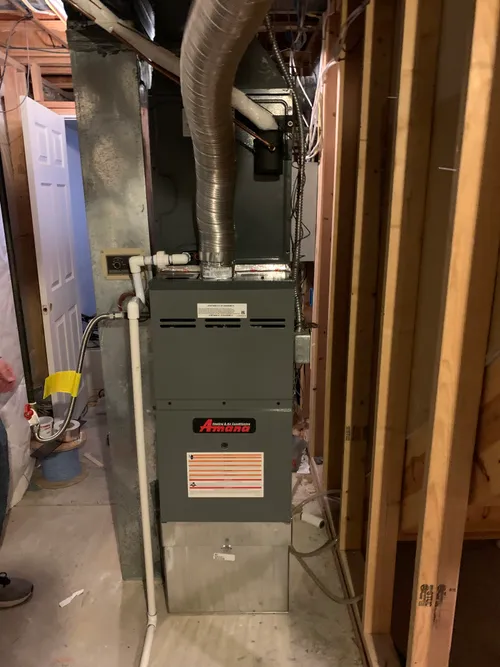
True North Heating and Cooling LLC is an HVAC contractor serving Colorado Springs, CO. With over two decades of experience and nearly 50 vendor certifications, the company offers a wide range of services including air conditioning and furnace repair, installation of HVAC systems, mini splits, geothermal heat pumps, and indoor air quality solutions. They serve residential, multifamily, and commercial properties, providing 24-hour service and support. True North Heating and Cooling specializes in comprehensive HVAC maintenance and repair, backed by manufacturer warranties and a one-year labor warranty on new installations.
Major Heating and Air Conditioning - Denver
6285 W 48th Ave, Wheat Ridge, CO 80033
Major Heating and Air Conditioning - Denver has been providing heating and cooling services in Denver, CO since 1970. They offer a wide range of HVAC services including installation, repair, and tune-ups for air conditioners, furnaces, heat pumps, boilers, and geothermal heat pumps. The company serves both residential and commercial clients throughout the Denver metro area and surrounding regions. Major Heating and Air Conditioning is known for its expertise in custom commercial HVAC solutions and renewable geothermal systems.
Sensible Heating and Cooling
2895 W Oxford Ave # 4, Englewood, CO 80110
Sensible Heating and Cooling is a heating and cooling contractor based in Denver, CO, offering a wide range of HVAC services including repair, installation, and maintenance for air conditioners, furnaces, heat pumps, boilers, and geothermal systems. They specialize in both traditional HVAC solutions and alternative energy options, focusing on energy-efficient and environmentally friendly systems. With over a decade of experience and a team collectively bringing more than 100 years of expertise, Sensible Heating and Cooling is known for its capability in geothermal heating and cooling as well as air-source heat pump services. They provide emergency furnace repairs and comprehensive boiler services, supporting Denver residents with reliable HVAC solutions.

ABE Heating and Cooling
15000 Boston Ct, Brighton, CO 80602
ABE Heating and Cooling is an HVAC contractor based in Denver, CO, serving residential and light commercial clients. Since 1997, they have provided installation, repair, replacement, and maintenance services for a wide range of heating and cooling systems, including air-to-air and air-to-water heat pumps, geothermal heating and cooling, boilers, mini-split systems, and indoor air quality solutions. Their expertise includes geothermal heating and cooling installations, helping customers transition from traditional fossil fuel systems to more efficient geothermal options.
Why Geothermal is a Smart Choice for Colorado
Colorado's unique geology and climate make it an excellent location for geothermal heat pump systems. The state's ground temperature remains relatively constant below the frost line, providing a reliable heat source in winter and a heat sink in summer. This allows GHPs to achieve remarkably high efficiencies, with Coefficients of Performance (COP) typically ranging from 3 to 5 1. This means for every unit of electricity used to run the system, three to five units of heating or cooling energy are delivered. Compared to standard air-source heat pumps or furnaces, this translates to drastically lower operating costs and energy consumption.
Understanding Colorado's Regulatory Landscape
Installing a geothermal system in Colorado involves specific state permits and requires working with certified professionals. The process is managed by two primary agencies:
- Colorado Energy & Carbon Management Commission (ECMC): This agency regulates the drilling and operation of deeper geothermal wells, typically those exceeding 100 feet in depth. They issue Operations Permits for these systems.
- Division of Water Resources (DWR): The DWR manages the use of groundwater and issues Use Permits for geothermal systems, particularly for shallower closed-loop installations that interact with groundwater resources.
These agencies often work in tandem. A certified installer will know which permits are required for your specific project. State law mandates that installers hold proper certification and obtain an annual permit from the State Engineer, ensuring they are knowledgeable about Colorado's codes, which specify everything from approved materials like high-density polyethylene (HDPE) pipe to proper grouting and fusion techniques 2.
Financial Incentives and Cost Overview
The upfront investment for a geothermal system is significant, but Colorado offers some of the most attractive financial incentives in the country to improve affordability.
- Typical Costs: A complete residential geothermal heat pump system in Colorado can range from $20,000 to over $40,000, depending on the property size, soil conditions, loop type, and system capacity 3.
- Federal Tax Credit: The federal Inflation Reduction Act (IRA) provides a tax credit for qualified geothermal heat pump installations, covering a significant percentage of the project cost, including labor 4.
- Colorado State Incentives:
- Geothermal Electricity Tax Credit Offering (GETCO): This is a refundable state income tax credit for geothermal electricity generation and thermal energy projects, which can include larger residential systems 5.
- Heat Pump Tax Credit: The Colorado Energy Office administers a refundable state tax credit specifically for the installation of heat pumps, providing direct savings 6.
- Net Metering: If your geothermal system is paired with a renewable electricity source like solar panels, you may be eligible for net metering credits from your utility, further reducing operating costs 7.
Find the perfect geothermal heat pump contractors for your needs
Get personalized recommendations and expert advice
The Installation Process: What to Expect
A proper geothermal installation is a multi-step process that ensures system longevity, efficiency, and regulatory compliance.
- Site Assessment & Design: A certified contractor will evaluate your property, including soil composition, available land, and heating/cooling loads, to design an optimal loop field and select the right heat pump unit.
- Permitting: Your installer will secure the necessary permits from the ECMC, DWR, and local building department 8 9 10.
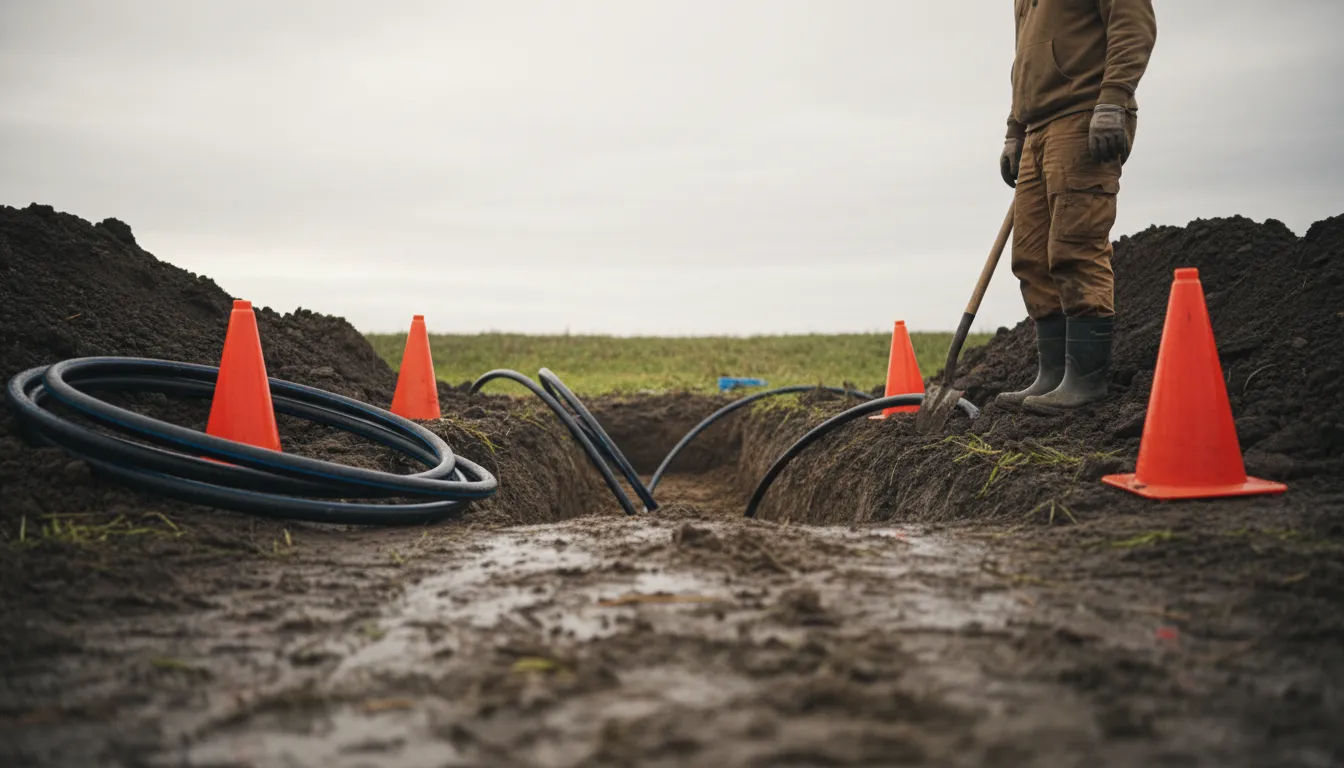
- Loop Field Installation: This involves drilling vertical boreholes or excavating horizontal trenches (typically 4-6 feet deep) to lay the closed-loop piping. HDPE pipes are fused together using heat to create a leak-proof, durable circuit.
- Grouting & Backfilling: For vertical boreholes, a special thermally enhanced grout is pumped into the space around the pipes to seal the well and improve heat transfer. Horizontal trenches are carefully backfilled 11.
- System Connection & Commissioning: The underground loops are connected to the indoor heat pump unit and the home's ductwork or hydronic distribution system. The entire system is pressure-tested, filled with fluid, and started to ensure optimal performance.
Maintenance, Repairs, and Long-Term Value
Geothermal systems are known for their durability and low maintenance. The underground loop often carries warranties of 25-50 years, and the indoor heat pump unit typically lasts longer than conventional HVAC equipment due to less exposure to outdoor elements. Routine maintenance involves annual check-ups of the heat pump components, similar to a traditional furnace or air conditioner.
Should repairs be needed-such as for a pump, valve, or controller-it is crucial to use a licensed HVAC professional familiar with geothermal technology and Colorado's specific codes for piping and connections 12. The primary advantage remains the exceptionally low operating cost. By moving heat rather than generating it through combustion, GHPs can reduce energy bills by 30% to 70%, providing substantial long-term savings that offset the initial investment 13 14.
Frequently asked questions
Sources
Footnotes
-
Geothermal - Colorado Geological Survey - https://coloradogeologicalsurvey.org/energy/e-geothermal/ ↩
-
Drilling & HVAC Licensing | International Ground Source Heat Pump ... - https://igshpa.org/state-codes-and-regulations/ ↩
-
Geothermal Heat Pump Guide: Installation Costs, Types And Benefits - https://modernize.com/hvac/heating-repair-installation/heat-pump/geothermal ↩
-
Tax Credits & Incentives - EnergySmart Colorado - https://energysmartcolorado.org/tax-credits-incentives/ ↩
-
Colorado Geothermal Energy Tax Credit Offering - https://energyoffice.colorado.gov/geothermal-tax-credit ↩
-
Colorado Heat Pump Tax Credits - https://energyoffice.colorado.gov/hptc ↩
-
Geothermal Energy - https://content.leg.colorado.gov/sites/default/files/R25-1041_Geothermal_Energy_Resources_and_Policy_Incentives_Update-accessible.pdf ↩
-
Resources - Colorado Energy Office Geothermal - https://geothermal.colorado.gov/resources ↩
-
Geothermal - Division of Water Resources - https://dwr.colorado.gov/public-information/geothermal ↩
-
Geothermal - Colorado Energy & Carbon Management Commission - https://ecmc.colorado.gov/programs/geothermal ↩
-
Code of Colorado Regulations - https://www.sos.state.co.us/CCR/GenerateRulePdf.do?ruleVersionId=856&fileName=2%20CCR%20402-10 ↩
-
Geothermal Heat Pumps - Department of Energy - https://www.energy.gov/energysaver/geothermal-heat-pumps ↩
-
Geothermal Heating and Cooling | Colorado Energy Office ... - https://geothermal.colorado.gov/geothermal-heating-and-cooling ↩
-
Denver Heat Pumps for Year-Round Comfort - https://elephantenergy.com/denver-heat-pump/ ↩