
Find the Best Geothermal Heat Pump Contractors for Your Business
No obligation • Fast responses • Nationwide coverage

Why you can trust HVAC Firms
HVAC Firms is a leading United States resource for evaluating HVAC service providers. Our team researches companies, checks credentials, and reviews customer feedback to present clear, unbiased information. Listings and rankings are based on merit, and companies cannot pay to change our editorial content.
Search providers near you
Top Geothermal Heat Pump Contractors in Aurora, Colorado Ranked
A geothermal heat pump is a highly efficient home comfort system that uses the earth's stable underground temperature to provide heating, cooling, and even hot water. For Aurora homeowners, this technology offers a path to significant energy savings and reduced environmental impact. This guide explains how ground-source heat pumps work, what installation involves, and how you can find qualified local professionals to assess your property.
Tonville HVAC LLC
710 N 7th Ave #1, Brighton, CO 80601
Tonville HVAC LLC is a locally owned HVAC company serving Denver, CO, and surrounding areas. Since 1987, they have provided heating, air conditioning, geothermal, and ventilation services including installation, repair, and maintenance of furnaces, boilers, rooftop units, and ductless mini splits. Their team is experienced in geothermal system work and offers emergency service along with industry-leading warranties on workmanship and parts.
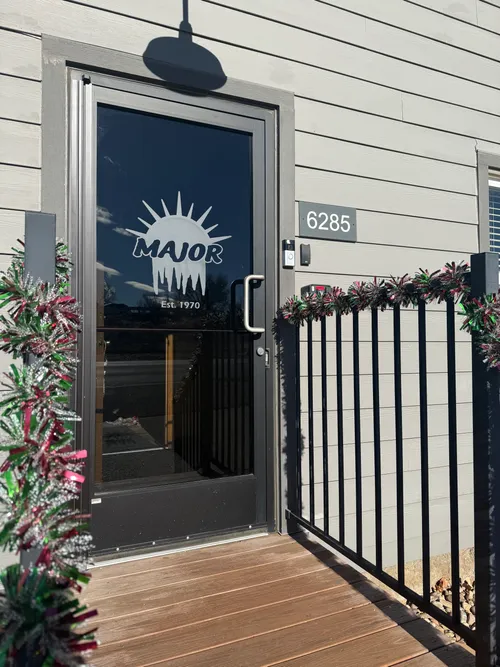
Major Heating and Air Conditioning - Denver
6285 W 48th Ave, Wheat Ridge, CO 80033
Major Heating and Air Conditioning - Denver has been providing heating and cooling services in Denver, CO since 1970. They offer a wide range of HVAC services including installation, repair, and tune-ups for air conditioners, furnaces, heat pumps, boilers, and geothermal heat pumps. The company serves both residential and commercial clients throughout the Denver metro area and surrounding regions. Major Heating and Air Conditioning is known for its expertise in custom commercial HVAC solutions and renewable geothermal systems.
Sensible Heating and Cooling
2895 W Oxford Ave # 4, Englewood, CO 80110
Sensible Heating and Cooling is a heating and cooling contractor based in Denver, CO, offering a wide range of HVAC services including repair, installation, and maintenance for air conditioners, furnaces, heat pumps, boilers, and geothermal systems. They specialize in both traditional HVAC solutions and alternative energy options, focusing on energy-efficient and environmentally friendly systems. With over a decade of experience and a team collectively bringing more than 100 years of expertise, Sensible Heating and Cooling is known for its capability in geothermal heating and cooling as well as air-source heat pump services. They provide emergency furnace repairs and comprehensive boiler services, supporting Denver residents with reliable HVAC solutions.

ABE Heating and Cooling
15000 Boston Ct, Brighton, CO 80602
ABE Heating and Cooling is an HVAC contractor based in Denver, CO, serving residential and light commercial clients. Since 1997, they have provided installation, repair, replacement, and maintenance services for a wide range of heating and cooling systems, including air-to-air and air-to-water heat pumps, geothermal heating and cooling, boilers, mini-split systems, and indoor air quality solutions. Their expertise includes geothermal heating and cooling installations, helping customers transition from traditional fossil fuel systems to more efficient geothermal options.

Loos & Sons HVAC LLC
Denver, CO
Loos & Sons HVAC LLC is a local HVAC contractor serving Denver, CO, and nearby areas including Longmont and Boulder County. They provide a range of heating and cooling services such as installation, maintenance, and repair of boilers, heat pumps, geothermal systems, mini split systems, and general HVAC equipment. Their expertise includes energy-efficient system setups and comprehensive tune-ups designed to improve system longevity and performance. The company emphasizes sustainable solutions like geothermal heat pumps and offers precise diagnostics and repairs to keep systems running smoothly.
How Geothermal Systems Work
The core principle behind a geothermal system, often called a ground-source heat pump (GSHP), is remarkably simple: it moves heat rather than creating it by burning fuel. Just a few feet below the surface, the earth in Aurora maintains a nearly constant temperature of 50-60°F year-round. This stable thermal mass acts as a free energy source in winter and a heat sink in summer.
The process involves three main components:
- The Ground Loop: A network of durable, high-density polyethylene pipes buried in your yard. A water-based fluid circulates through this closed loop.
- The Heat Pump Unit: Located inside your home (often in a basement or utility closet), this unit contains a compressor and a heat exchanger.
- The Distribution System: Your home's existing ductwork or radiant floor system to deliver conditioned air.
In winter, the fluid in the underground pipes absorbs the earth's warmth. This slightly warmed fluid is pumped to the indoor unit, where the heat pump concentrates the thermal energy and distributes it throughout your home 1. In summer, the system reverses: it extracts heat from your indoor air, transfers it to the fluid in the loop, and disperses it into the cooler earth, effectively providing air conditioning.
Types of Ground Loops for Aurora Properties
The design of the underground piping, or ground loop, is critical and depends on your lot's characteristics. There are two primary closed-loop system designs common in residential installations.
Vertical Closed-Loop Systems
This is often the preferred method for homes in Aurora with smaller or landscaped yards. A drilling rig creates boreholes, typically 200 to 500 feet deep. U-shaped loop pipes are inserted into each borehole, which are then backfilled with a special grout to ensure good thermal conductivity. Vertical systems require less land area and cause minimal disruption to existing landscaping, making them a practical choice for many suburban lots.
Horizontal Closed-Loop Systems
If you have ample, open land, a horizontal loop may be more cost-effective. Trenches are excavated about four to six feet deep, and pipes are laid in a series of long, straight runs or coiled into "slinky" configurations to fit more pipe length into a shorter trench 2. This method requires more square footage of unobstructed land but generally has a lower installation cost than vertical drilling due to the simpler equipment required.
Other System Configurations
While less common, other options exist:
- Open-Loop Systems: These systems use groundwater from a well directly as the heat exchange fluid, then discharge it to a pond, stream, or second well. They are highly efficient but require an adequate supply of clean water and compliance with local codes regarding water discharge 3.
- Pond/Lake Loops: If you have a sufficient body of water on your property, coils of pipe can be submerged at the bottom. This can be a very low-cost loop option if the site conditions are ideal 4.
The Installation Process: What Aurora Homeowners Can Expect
Installing a geothermal heating and cooling system is a significant project that requires careful planning and expert execution. Here's a typical step-by-step overview.
- Comprehensive Site Assessment: A qualified installer will evaluate your property's soil composition, rock content, lot size, and layout. They will also assess your home's existing ductwork or heating distribution system, insulation levels, and heating/cooling load requirements. This assessment determines the best loop type and size for optimal efficiency 5.
- System Design & Permitting: The installer designs the loop field and selects the appropriately sized heat pump unit. They will also handle pulling necessary permits from the City of Aurora and Kane County, which may cover excavation, drilling, and electrical work 6.
- Loop Field Installation: For a vertical system, a drilling rig will be brought in to create the boreholes. For a horizontal system, a backhoe will dig the trenches. In some cases, directional drilling may be used to steer pipes under driveways, gardens, or other obstacles with minimal surface disruption 7 8.
- Indoor Unit Installation: The geothermal heat pump unit is installed in your home and connected to the existing ductwork. If you don't have ducts, the system can be paired with ductless mini-split heads or a hydronic (water-based) radiant floor system 9.
- Connection, Testing, and Commissioning: The ground loop is connected to the heat pump, the system is filled with fluid and pressurized, and all electrical connections are made. The contractor will then start the system, test its performance, and ensure it is operating correctly and efficiently.
Find the perfect geothermal heat pump contractors for your needs
Get personalized recommendations and expert advice
Costs, Savings, and Value Considerations
Understanding the financial aspects is crucial for any Aurora homeowner considering a geothermal system.
Upfront Investment
The installation of a residential geothermal heat pump system represents a significant upfront investment, typically ranging from $20,000 to $40,000 or more for an average Aurora home 10. This cost is higher than a traditional furnace and air conditioner primarily due to the ground loop excavation or drilling. The final price depends on your home's size, the loop type (vertical usually costs more than horizontal), soil conditions, and the chosen equipment.
Long-Term Energy Savings and Payback
The primary financial benefit comes from dramatically lower operating costs. Geothermal systems are 300-600% efficient, meaning they move three to six units of heat for every one unit of electricity used to run the compressor and pump 11. This can translate to energy bill reductions of up to 65% compared to systems using electric resistance, oil, or propane heat 12 13. For a home with high heating costs, the annual savings can be substantial.
The "payback period"-the time it takes for energy savings to equal the initial investment-varies but often falls between 4 and 15 years 14. This period can be shortened by available federal tax credits, which can cover a significant percentage of the installation cost, and sometimes by state or local utility rebates.
Durability and Home Value
A major advantage of geothermal is its exceptional lifespan. The underground polyethylene piping is designed to last for more than 50 years-often guaranteed for decades. The indoor heat pump unit typically lasts 20 to 25 years, which is about twice as long as the average outdoor air-source heat pump or air conditioner 15. This longevity, combined with ultra-low operating costs, can also increase the resale value of your home, as potential buyers recognize the benefit of a permanent, efficient comfort system.
Is a Geothermal System Right for Your Aurora Home?
Geothermal heat pumps are an excellent choice for many, but not all, properties. They are ideal for homeowners who:
- Plan to stay in their home long enough to realize the long-term savings.
- Have high annual heating and cooling costs from older systems.
- Are building a new home or significantly renovating, as the loop installation can be more easily coordinated.
- Value environmental sustainability and want to reduce their carbon footprint.
- Have suitable land for a horizontal loop or the budget for vertical drilling.
The most important step is to consult with experienced, certified geothermal contractors in the Aurora area. They can provide a detailed analysis of your property, accurate cost estimates, and projections of your energy savings.
Frequently asked questions
Sources
Footnotes
-
How it Works - https://www.climatemaster.com/homeowner/side-links/how-it-works ↩
-
Geothermal Heating and Cooling - Open Energy Information - https://openei.org/wiki/GeoBridge/Heating_and_Cooling ↩
-
About Geothermal - https://www.gaoi.org/about-geothermal ↩
-
Geothermal Heat Pumps - Department of Energy - https://www.energy.gov/energysaver/geothermal-heat-pumps ↩
-
Geothermal Heat Pumps | WBDG - https://www.wbdg.org/resources/geothermal-heat-pumps ↩
-
Geothermal Heating and Cooling - Ecology Action Center - https://ecologyactioncenter.org/energy-home/geothermal-heating-and-cooling/ ↩
-
Geothermal Explained - https://www.geo-inc.com/geothermal-explained ↩
-
All You Need to Know About Home Geothermal Heating & ... - https://dandelionenergy.com/all-you-need-to-know-about-home-geothermal-heating-cooling ↩
-
Geothermal and radiant: An energy-efficient powerhouse - https://www.pmmag.com/articles/106687-geothermal-and-radiant-an-energy-efficient-powerhouse ↩
-
Geothermal Heat Pump Guide: Installation Costs, Types And Benefits - https://modernize.com/hvac/heating-repair-installation/heat-pump/geothermal ↩
-
Geothermal Heat Pumps - EnergySmart CNY - https://www.energysmartcny.org/heat-pumps/geothermal/ ↩
-
5 Things You Should Know about Geothermal Heat Pumps - https://www.energy.gov/cmei/articles/5-things-you-should-know-about-geothermal-heat-pumps ↩
-
Everything You Need to Know About Geothermal Heat Pumps - https://www.familyhandyman.com/article/everything-you-need-to-know-about-geothermal-heat-pumps/ ↩
-
Geothermal heat pumps: The ultimate guide to ground-source ... - https://termo-plus.com/blog/geothermal-ultimate-guide-to-ground-source-heat-pumps/ ↩
-
How Do Geothermal Systems Work for Residential Homes? - https://www.davisheat.com/blog/how-do-geothermal-systems-work-for-residential-homes/ ↩