Find the Best Geothermal Heat Pump Contractors for Your Business
No obligation • Fast responses • Nationwide coverage

Why you can trust HVAC Firms
HVAC Firms is a leading United States resource for evaluating HVAC service providers. Our team researches companies, checks credentials, and reviews customer feedback to present clear, unbiased information. Listings and rankings are based on merit, and companies cannot pay to change our editorial content.
Search providers near you
Top Geothermal Heat Pump Contractors in Broomfield, Colorado Ranked
Geothermal heat pumps, also known as ground-source heat pumps, are a highly efficient method for heating and cooling your home by leveraging the earth's stable underground temperature. This technology is particularly relevant for Broomfield residents looking to reduce their carbon footprint and achieve significant long-term savings on energy bills. This guide will help you understand how these systems work, what installation entails, and how to connect with qualified local professionals for your project.
Tonville HVAC LLC
710 N 7th Ave #1, Brighton, CO 80601
Tonville HVAC LLC is a locally owned HVAC company serving Denver, CO, and surrounding areas. Since 1987, they have provided heating, air conditioning, geothermal, and ventilation services including installation, repair, and maintenance of furnaces, boilers, rooftop units, and ductless mini splits. Their team is experienced in geothermal system work and offers emergency service along with industry-leading warranties on workmanship and parts.
Major Heating and Air Conditioning - Denver
6285 W 48th Ave, Wheat Ridge, CO 80033
Major Heating and Air Conditioning - Denver has been providing heating and cooling services in Denver, CO since 1970. They offer a wide range of HVAC services including installation, repair, and tune-ups for air conditioners, furnaces, heat pumps, boilers, and geothermal heat pumps. The company serves both residential and commercial clients throughout the Denver metro area and surrounding regions. Major Heating and Air Conditioning is known for its expertise in custom commercial HVAC solutions and renewable geothermal systems.
Sensible Heating and Cooling
2895 W Oxford Ave # 4, Englewood, CO 80110
Sensible Heating and Cooling is a heating and cooling contractor based in Denver, CO, offering a wide range of HVAC services including repair, installation, and maintenance for air conditioners, furnaces, heat pumps, boilers, and geothermal systems. They specialize in both traditional HVAC solutions and alternative energy options, focusing on energy-efficient and environmentally friendly systems. With over a decade of experience and a team collectively bringing more than 100 years of expertise, Sensible Heating and Cooling is known for its capability in geothermal heating and cooling as well as air-source heat pump services. They provide emergency furnace repairs and comprehensive boiler services, supporting Denver residents with reliable HVAC solutions.

ABE Heating and Cooling
15000 Boston Ct, Brighton, CO 80602
ABE Heating and Cooling is an HVAC contractor based in Denver, CO, serving residential and light commercial clients. Since 1997, they have provided installation, repair, replacement, and maintenance services for a wide range of heating and cooling systems, including air-to-air and air-to-water heat pumps, geothermal heating and cooling, boilers, mini-split systems, and indoor air quality solutions. Their expertise includes geothermal heating and cooling installations, helping customers transition from traditional fossil fuel systems to more efficient geothermal options.
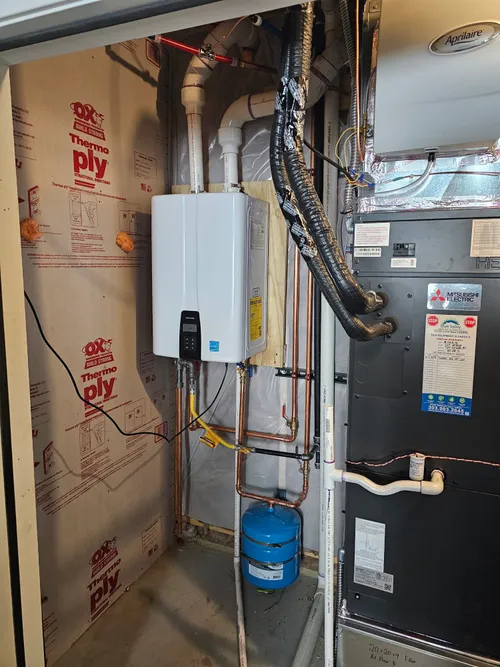
Blue Valley Heating & Cooling
1740 Skyway Dr UNIT H, Longmont, CO 80504
Blue Valley Heating & Cooling is an HVAC company based in Denver, CO, providing a wide range of heating, cooling, and plumbing services for both residential and commercial clients. Their offerings include air conditioning, furnace, heat pump, geothermal system installation and repair, as well as HVAC tune-ups. With over 30 years of experience, they focus on energy-saving solutions and sustainable options to improve indoor comfort and efficiency. Blue Valley Heating & Cooling also offers 24/7 emergency service and a maintenance membership program for ongoing support.
How Geothermal Heating and Cooling Works
The core principle behind a geothermal system is remarkably simple: it uses the earth as a constant temperature battery. Just a few feet below the surface, the ground maintains a nearly constant temperature of approximately 55°F year-round, regardless of summer heat or winter snow 1. A geothermal heat pump, or ground-source heat pump, capitalizes on this stability.
Here's the basic process:
- Heat Exchange: A loop of durable high-density polyethylene (HDPE) pipe is buried in the ground. A water-based solution circulates through this closed loop, absorbing the earth's warmth in the winter.
- Concentration and Transfer: This slightly warmed fluid returns to the heat pump unit inside your home. The unit, using a refrigeration cycle, concentrates this low-grade heat and transfers it to your home's air (via a standard duct system) or water (for radiant heating).
- Cooling Cycle: In the summer, the process reverses. The system extracts heat from your home's air, transfers it to the circulating fluid, and rejects it into the cooler earth.
This direct exchange with a massive, stable thermal mass is what allows geothermal systems to achieve extraordinary efficiencies of 400-600%, meaning they move four to six units of heat for every one unit of electricity used 2. This can translate to cutting your heating, cooling, and even hot water costs by up to 70% compared to conventional systems like furnaces and standard air conditioners.
Types of Geothermal Ground Loops
The buried pipe system, or "ground loop," is the heart of the installation. The right type for your Broomfield property depends on your land, soil composition, and budget. There are four primary configurations:
Closed-Loop Systems (Most Common):
- Vertical Loops: This is often the preferred method for residential lots in more developed areas. Contractors drill boreholes 100 to 400 feet deep and insert U-shaped loops of pipe into each one 3 4. While the drilling process adds to the upfront cost (typically $30-$60 per foot), vertical loops require the least amount of surface land and are excellent for rocky soil common in parts of Colorado 5 6.
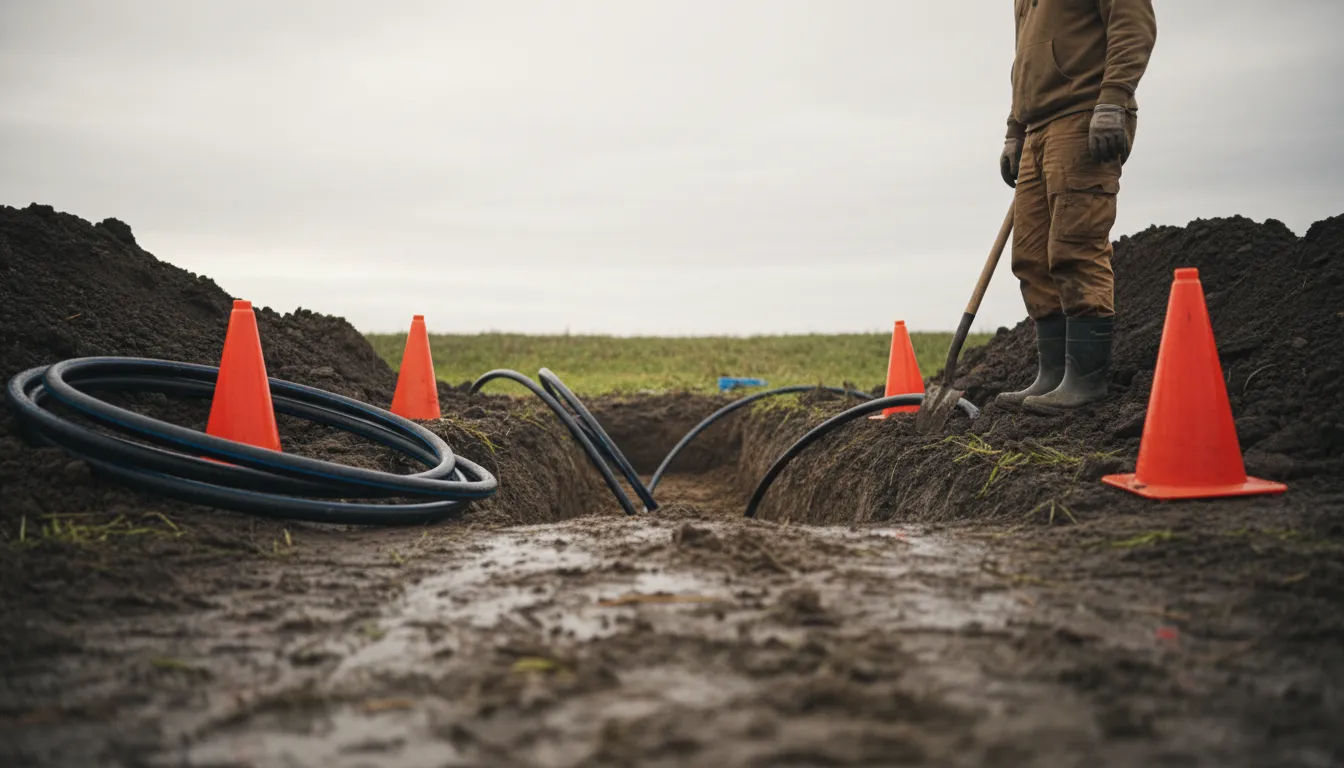
- Horizontal Loops: This method involves digging trenches 4 to 6 feet deep in long, straight lines or coiled "slinky" patterns. It generally has a lower installation cost than vertical drilling but requires a significant amount of open, accessible land. It's a great option if you have ample yard space and soil that is easy to excavate.
- Pond/Lake Loops: If you have a sufficient body of water on your property, coils of pipe can be submerged at the bottom. This can be a very cost-effective loop option due to reduced excavation, but it requires a pond or lake of adequate size, depth, and quality 7.
Open-Loop Systems: This system uses groundwater from a well as the direct heat exchange fluid. After passing through the heat pump, the water is discharged back into a second well, a pond, or a stream (where local codes permit). Open-loop systems can be highly efficient but are entirely dependent on having a reliable, plentiful source of clean water and complying with local groundwater regulations.
What to Expect During Installation in Broomfield
Installing a geothermal system is a significant project that integrates work on your property with work inside your home. Understanding the timeline and process can help you plan effectively.
Typical Project Timeline (4-7 Days):
- Loop Installation (2-3 days): This is the most variable phase. For a vertical system, a drilling rig will be on-site to create the boreholes. For a horizontal system, a backhoe or trencher will dig the necessary trenches. The HDPE pipe is then placed, connected, and pressure-tested.
- Loop Testing and Flushing (1 day): The entire ground loop circuit is thoroughly flushed and tested to ensure it is clean, sealed, and leak-free before being connected to the heat pump.
- Indoor Unit and Ductwork (1-2 days): The geothermal heat pump unit (which is about the size of a traditional furnace) is installed in your basement, garage, or mechanical closet. Existing ductwork may be modified or connected, and an air handler is set up. Finally, the system is charged, started, and balanced.
Find the perfect geothermal heat pump contractors for your needs
Get personalized recommendations and expert advice
Costs and Long-Term Value
The upfront investment for a geothermal heat pump system is higher than for a conventional HVAC system. For an average home in Broomfield, total installed costs typically range from $20,000 to $40,000 or more 8 9. The final price is highly dependent on your home's heating/cooling load, the type of ground loop required (vertical drilling is more expensive), the condition of existing ductwork, and the specific equipment chosen.
However, this cost must be viewed through the lens of long-term value:
- Dramatic Energy Savings: As noted, homeowners can see reductions of 40% to 70% on their combined heating and cooling bills 10 11. Over a 20-30 year lifespan, these savings can offset a substantial portion of the initial investment.
- Increased Comfort: Geothermal systems provide exceptionally even, draft-free heating and cooling with superior dehumidification in summer.
- Durability and Low Maintenance: The ground loops are often warranted for 50 years and can last generations. The indoor heat pump components typically last 20-25 years, longer than conventional equipment.
- Environmental Benefit: By using renewable thermal energy from the ground and electricity, you drastically reduce your home's reliance on fossil fuels and its carbon emissions.
- Potential Incentives: While specific local programs change, federal tax credits for geothermal installation are often available, and Colorado may offer additional state-level incentives or rebates. It's crucial to discuss current financial incentives with your installer.
Is a Geothermal System Right for Your Home?
Geothermal technology is a superb long-term investment for many Broomfield homeowners, but it's not a one-size-fits-all solution. It is an especially compelling choice if:
- You plan to stay in your home for 10+ years to realize the full payback from energy savings.
- You are building a new home or replacing an aging, inefficient HVAC system.
- You have the capital for the higher upfront cost and prioritize long-term savings and sustainability.
- Your property can accommodate a ground loop (adequate land for horizontal trenches or viable conditions for vertical drilling).
Consulting with an experienced, certified geothermal contractor in the Broomfield area is the essential first step. They can conduct a detailed site assessment, calculate your home's precise heating and cooling loads, and provide a clear, customized proposal outlining system options, costs, and projected savings.
Frequently asked questions
Sources
Footnotes
-
Geothermal Heating and Cooling | Colorado Energy Office ... - https://geothermal.colorado.gov/geothermal-heating-and-cooling ↩
-
Resources - Colorado Energy Office Geothermal - https://geothermal.colorado.gov/resources ↩
-
Geothermal Heat Pumps - Department of Energy - https://www.energy.gov/energysaver/geothermal-heat-pumps ↩
-
How Does A Geothermal Heat Pump Work? Complete 2025 Guide - https://solartechonline.com/blog/how-does-geothermal-heat-pump-work/ ↩
-
Geothermal Heat Pump Installation: What To Expect For Your Property - https://jomory.com/geothermal-heat-pump-installation-what-to-expect-for-your-property/ ↩
-
The Geothermal Process | Colorado Geothermal Drilling - https://www.cogeothermal.com/services/our-process/ ↩
-
Geothermal heating & cooling, heat pumps, heat exchange ... - https://aztechgeo.com/residential-geothermal/how-it-works/ ↩
-
Boulder homeowners turn to geothermal heat pumps - https://boulderreportinglab.org/2024/05/19/geothermal-heat-pumps-another-way-to-electrify-your-boulder-home-but-cost-may-outweigh-benefits-for-most/ ↩
-
Geothermal Heat Pump Guide: Installation Costs, Types And Benefits - https://modernize.com/hvac/heating-repair-installation/heat-pump/geothermal ↩
-
How Does a Geothermal System Work? - ClimateMaster - https://www.climatemaster.com/homeowner/side-links/how-it-works ↩
-
All You Need to Know About Home Geothermal Heating & ... - https://dandelionenergy.com/all-you-need-to-know-about-home-geothermal-heating-cooling ↩