Find the Best Mini-Split Installers for Your Business
No obligation • Fast responses • Nationwide coverage

Why you can trust HVAC Firms
HVAC Firms is a leading United States resource for evaluating HVAC service providers. Our team researches companies, checks credentials, and reviews customer feedback to present clear, unbiased information. Listings and rankings are based on merit, and companies cannot pay to change our editorial content.
Search providers near you
Top Mini-Split Installers in Eagan, Minnesota Ranked
A ductless mini-split system is a versatile heating and cooling solution that provides zoned comfort without the need for extensive ductwork. This makes it an ideal choice for Eagan homeowners looking to condition a new addition, a finished basement, or an entire home that lacks existing ducts. Understanding the components, benefits, and installation process is key to making an informed decision for your home's comfort and efficiency. This guide will help you navigate the essentials of ductless systems and connect with qualified local professionals for your project.
Hurlburt Heating & Plumbing
1000 County Rd E Suite 115, Shoreview, MN 55126
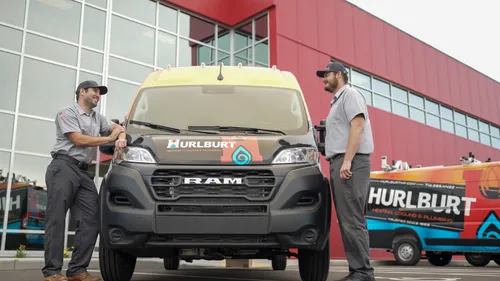
Hurlburt Heating & Plumbing is a family-owned home services provider serving Minneapolis, MN, and surrounding areas. Since 1959, they have offered a wide range of services including HVAC installation and repair, plumbing, and electrical work. Their HVAC services cover air conditioner and furnace repair, heat pump and mini split installation, indoor air quality solutions, and HVAC tune-ups. Hurlburt also provides whole-home air scrubbers, purifiers, humidifiers, and dehumidifiers to improve indoor air quality. With over six decades of experience, they combine modern technology with personalized service to address customer needs.

Nice Heating & Air
24 Onville Rd suite 101-9, Stafford, VA 22556
Nice Heating & Air is an HVAC company serving Minneapolis, MN, specializing in air conditioning, heating, and indoor air quality services. They provide installation, repair, and maintenance for systems including ductless mini splits, heat pumps, furnaces, and water heaters. The company has many years of experience and focuses on delivering high-quality products and services with a commitment to customer satisfaction. Their capabilities include HVAC tune-ups and indoor air quality improvements such as air purifier installation and ventilation services.

Furnace Doctors
102 County Rd C West, Little Canada, MN 55117
Furnace Doctors is an HVAC company based in Minneapolis, MN, offering a range of heating and cooling services. Their expertise includes furnace repair and replacement, air conditioner repair and installation, ductless system installation, and indoor air quality solutions such as air filtration and humidity control systems. The company emphasizes maximizing HVAC system performance and has installers with over 25 years of experience. Furnace Doctors also provides annual maintenance plans to help keep systems running efficiently.

Pronto Heating and Air Conditioning - Minneapolis
7415 Cahill Rd, Minneapolis, MN 55439
Pronto Heating and Air Conditioning - Minneapolis is an HVAC company serving Minneapolis, MN, and nearby communities. They provide installation, repair, and maintenance for heating and cooling systems including furnaces, air conditioners, boilers, heat pumps, and ductless mini splits. The company is a Bryant Factory Authorized Dealer with expertise in indoor air quality solutions such as air purification and advanced thermostats. Pronto Heating and Air Conditioning offers emergency service with a commitment to respond within 24 hours and has a history of recognized performance as a multiple Bryant Dealer of the Year finalist and winner.
Stafford Home Service
6225 Cambridge St, Minneapolis, MN 55416
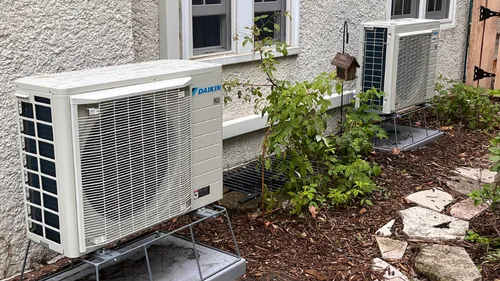
Stafford Home Service is a family-operated company based in Minneapolis, MN, offering residential HVAC and electrical services. They provide repairs, installations, and maintenance for heating and cooling systems including furnaces, heat pumps, boilers, mini-split systems, and air conditioning units. The company features licensed technicians with over 70 years of combined experience and emphasizes transparent pricing and customer satisfaction. Stafford Home Service also offers advanced HVAC solutions with Daikin products, known for energy efficiency and zoning capabilities. Since 2007, the company has continued a legacy of quality workmanship under current ownership. They serve Minneapolis and surrounding communities with a range of home comfort services.
What is a Ductless Mini-Split System?
A ductless mini-split, often simply called a mini-split or ductless system, consists of two main components: an outdoor compressor/condenser unit and one or more indoor air-handling units. These are connected by a small conduit that houses refrigerant lines, power cables, and a condensate drain, which only requires a small hole in the wall. Unlike traditional central HVAC, which pushes air through a network of ducts, a ductless system delivers conditioned air directly into each room or "zone" it serves.
The primary appeal of this setup is its flexibility. You can install a single-zone system for one problematic room or a multi-zone system with several indoor units connected to a single outdoor unit to manage your entire home's climate. This technology is particularly well-suited for Minnesota's varied climate, providing efficient heat even in cold weather and effective cooling during humid summers.
Key Benefits for Eagan Homes
Choosing a ductless air conditioner and heater offers several compelling advantages for local residents.
- No Ductwork Needed: This is the most significant benefit for older homes, room additions, sunrooms, garages, or spaces where installing ducts is impractical or too costly 1. It's a perfect retrofit solution.
- Superior Energy Efficiency: Central forced-air systems can lose up to 30% of their energy through duct leaks and heat transfer in unconditioned spaces like attics 2. By eliminating ducts entirely, mini-splits avoid these losses, which can lead to noticeably lower utility bills.
- Individualized Zoning: Each indoor unit operates independently, allowing you to heat or cool only the rooms you're using. This zoning capability prevents wasting energy on empty spaces, offering both comfort control and energy savings.
- Quiet Operation: The noisiest component-the compressor-is located outside. Indoor air handlers operate very quietly, making them ideal for bedrooms, home offices, and living areas.
System Types and Indoor Unit Placement
Selecting the right system configuration and placement is crucial for performance and comfort.
System Types:
- Single-Zone Systems: Comprise one outdoor unit connected to one indoor unit. This is a cost-effective solution for conditioning a single space, such as a basement apartment, home office, or garage workshop 3.
- Multi-Zone Systems: A single outdoor unit can connect to multiple indoor units (often up to eight or more). This allows you to customize the temperature in several bedrooms, living areas, and other zones simultaneously from one efficient system.
Indoor Unit Placement: Proper placement ensures optimal airflow and comfort. The most common type is the wall-mounted unit, which should be installed high on a wall, centrally within the room, and away from large furniture or curtains that could obstruct airflow. Other options include ceiling cassette units (recessed into the ceiling for a discreet look) and floor-mounted units, which are excellent for rooms with high ceilings or limited wall space.
Outdoor Unit Considerations
The outdoor condenser unit requires careful planning for longevity and efficiency.
- Location: It should be placed on a stable, level surface, typically a concrete pad or specialized mounting brackets attached to the side of the house. The location should be easily accessible for future maintenance.
- Clearances: Adequate clearance around the unit is non-negotiable for proper airflow and heat exchange. Installers will ensure it is positioned away from walls, shrubs, fences, and other obstructions as specified by the manufacturer 4. In snowy Eagan winters, consider a location protected from direct snow drift or install a protective cover.
- Line Set Routing: The conduit containing the refrigerant lines must be run from the outdoor unit to each indoor handler. The path (through a basement, attic, or along an exterior wall) affects the installation's complexity, cost, and final aesthetics 5.
Understanding Installation Costs in Eagan
The cost of a ductless mini-split installation varies based on system size, complexity, and equipment quality. Here's a general breakdown for the Eagan area:
- Single-Zone System: Installation typically ranges from $3,000 to $8,0006 7. The final price depends on the unit's efficiency (SEER2 rating), brand, and any necessary electrical upgrades.
- Multi-Zone System (2-3 zones): Costs generally start around $5,000 and can exceed $10,000 for high-efficiency models or complex installations 8 9.
- Key Cost Factors:
- Number of Zones & Units: More indoor air handlers increase material and labor costs.
- System Efficiency: Higher SEER2 ratings indicate better energy efficiency but come at a higher upfront cost.
- Electrical Work: Most systems require a dedicated electrical circuit from your main panel, which adds to the cost if your panel is full 10 11.
- Labor & Complexity: Installations that require long refrigerant line runs, difficult wall penetrations, or extensive mounting work will be more expensive.
Find the perfect mini-split installers for your needs
Get personalized recommendations and expert advice
The Professional Installation Process
A professional installation is critical for system performance, safety, and preserving the manufacturer's warranty. The process generally follows these steps:
- Site Evaluation & Load Calculation: A technician assesses your home to determine the correct system size (BTUs needed) and optimal unit placement.
- Mounting: The indoor air handler(s) and outdoor condenser are securely mounted.
- Drilling & Connection: A small hole (typically 3 inches) is drilled to connect the indoor and outdoor units. The refrigerant line set, electrical wiring, and condensate drain line are run through the conduit.
- Electrical Connection: A licensed electrician ensures proper connection to your home's electrical system, often installing a new dedicated circuit.
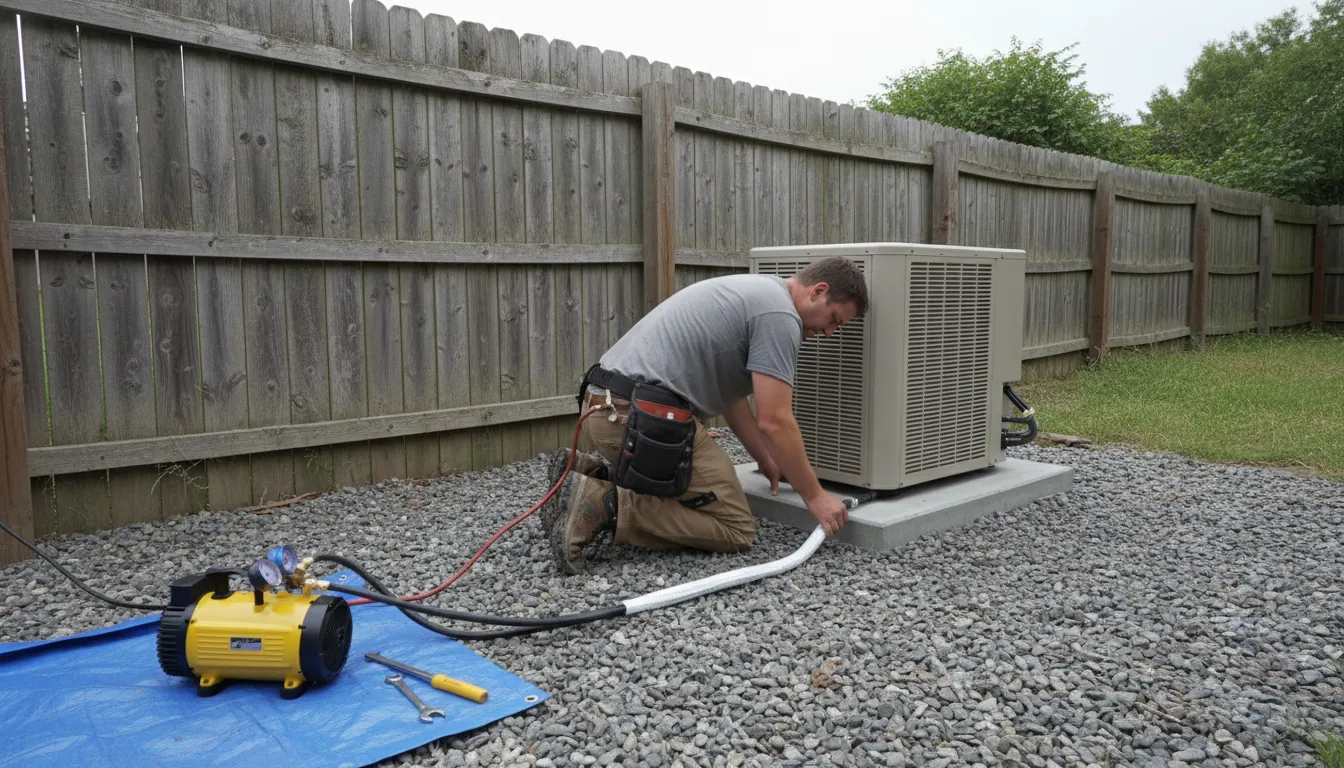
- System Evacuation & Charging: The refrigerant lines are vacuumed to remove moisture and air before the system is charged with refrigerant.
- Testing & Commissioning: The system is started, tested for proper operation, and the homeowner is instructed on using the remote controls or smart thermostat.
Professional installers will also handle necessary permits and ensure the work complies with local Eagan building codes.
Important Pre-Installation Considerations
Before committing to an installation, consider these factors:
- Electrical Panel Capacity: Have an electrician verify your panel has space for the new dedicated circuit required by the mini-split.
- Drainage: Condensate from cooling mode must drain away. This can often be done via gravity, but in some installations, a condensate pump may be needed 12.
- Local Incentives: Check for available rebates from utility companies like Xcel Energy or state/federal tax credits for installing high-efficiency equipment, which can offset the initial cost 13.
- Brand & Warranty: Research different manufacturers and compare warranty terms. Professional installation is almost always required to activate the full equipment warranty.
Frequently asked questions
Sources
Footnotes
-
Ductless mini-split installation: Cool 2025 Guide - Southern Air - https://www.southern-air.com/blog/ductless-mini-split-installation ↩
-
Ductless Mini Split Setup: An Ultimate Guide - Airflow Heating & Air - https://www.goairflow.com/blog/ductless-mini-split-installation/ ↩
-
Cost to Install Mini Split AC System in 2025 - https://dellahome.com/blogs/della-blog/cost-to-install-mini-split-ac-system ↩
-
Mini-Split Placement Guide: Best and Worst Spots for Installation - https://gulfshorecooling.com/mini-split-placement-guide/ ↩
-
Ductless Mini Split Installation Guide: What Every Homeowner ... - https://www.aceanda.com/blog/ductless-mini-split-installation-guide-what-every-homeowner-should-know/ ↩
-
Ductless Mini Split Installation Costs in 2026 - Carrier - https://www.carrier.com/residential/en/us/products/ductless-mini-splits/ductless-mini-split-installation-cost/ ↩
-
Mini Split System Average Cost in Minnesota (2025 Update) - https://genzryan.com/blog/mini-split-system-cost/ ↩
-
Ductless Mini-Split Installation Cost in 2025: Full Breakdown - https://osborneheatingncooling.com/ductless-mini-split-installation-cost/ ↩
-
How Much Does It Cost to Install a Mini-Split? [2026 Data] | Angi - https://www.angi.com/articles/how-much-does-it-cost-install-ductless-mini-split-ac.htm ↩
-
Mini-Splits Explained: Costs, Benefits, and Use Cases - https://petermanhvac.com/about-us/blog/mini-splits-complete-guide/ ↩
-
Ductless Mini-Splits: A Comprehensive Cost Breakdown - https://www.myfivestarhomeservices.com/ductless-mini-splits-a-comprehensive-cost-breakdown/ ↩
-
Whole House Ductless Mini Split Walk Through - https://www.youtube.com/watch?v=lDwutt_ywsA&t=2 ↩
-
Ductless Mini-Split Installation Costs in Minnesota - https://www.aircomfortmn.com/blog/ductless-mini-split-installation-costs-in-minnesota ↩