Find the Best Mini-Split Installers for Your Business
No obligation • Fast responses • Nationwide coverage

Why you can trust HVAC Firms
HVAC Firms is a leading United States resource for evaluating HVAC service providers. Our team researches companies, checks credentials, and reviews customer feedback to present clear, unbiased information. Listings and rankings are based on merit, and companies cannot pay to change our editorial content.
Search providers near you
Best Mini-Split Installers in Minnesota Ranked
Installing a ductless mini-split system is an excellent way to add efficient, zoned heating and cooling to your Minnesota home. These systems are particularly valuable for room additions, older homes without ductwork, or for targeting specific areas for comfort. A successful installation requires navigating state and local regulations, selecting the right equipment, and ensuring professional execution to maximize efficiency and qualify for valuable incentives. This guide will help you understand the key requirements, costs, and steps to find qualified local professionals for your project.
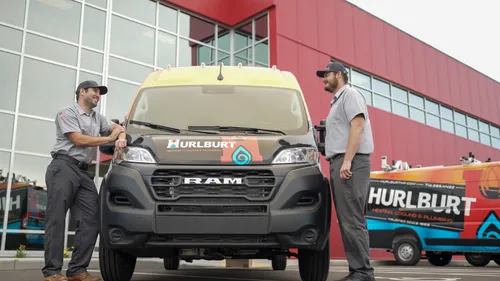
Hurlburt Heating & Plumbing
1000 County Rd E Suite 115, Shoreview, MN 55126
Hurlburt Heating & Plumbing is a family-owned home services provider serving Minneapolis, MN, and surrounding areas. Since 1959, they have offered a wide range of services including HVAC installation and repair, plumbing, and electrical work. Their HVAC services cover air conditioner and furnace repair, heat pump and mini split installation, indoor air quality solutions, and HVAC tune-ups. Hurlburt also provides whole-home air scrubbers, purifiers, humidifiers, and dehumidifiers to improve indoor air quality. With over six decades of experience, they combine modern technology with personalized service to address customer needs.

Nice Heating & Air
24 Onville Rd suite 101-9, Stafford, VA 22556
Nice Heating & Air is an HVAC company serving Minneapolis, MN, specializing in air conditioning, heating, and indoor air quality services. They provide installation, repair, and maintenance for systems including ductless mini splits, heat pumps, furnaces, and water heaters. The company has many years of experience and focuses on delivering high-quality products and services with a commitment to customer satisfaction. Their capabilities include HVAC tune-ups and indoor air quality improvements such as air purifier installation and ventilation services.
Furnace Doctors
102 County Rd C West, Little Canada, MN 55117
Furnace Doctors is an HVAC company based in Minneapolis, MN, offering a range of heating and cooling services. Their expertise includes furnace repair and replacement, air conditioner repair and installation, ductless system installation, and indoor air quality solutions such as air filtration and humidity control systems. The company emphasizes maximizing HVAC system performance and has installers with over 25 years of experience. Furnace Doctors also provides annual maintenance plans to help keep systems running efficiently.

Pronto Heating and Air Conditioning - Minneapolis
7415 Cahill Rd, Minneapolis, MN 55439
Pronto Heating and Air Conditioning - Minneapolis is an HVAC company serving Minneapolis, MN, and nearby communities. They provide installation, repair, and maintenance for heating and cooling systems including furnaces, air conditioners, boilers, heat pumps, and ductless mini splits. The company is a Bryant Factory Authorized Dealer with expertise in indoor air quality solutions such as air purification and advanced thermostats. Pronto Heating and Air Conditioning offers emergency service with a commitment to respond within 24 hours and has a history of recognized performance as a multiple Bryant Dealer of the Year finalist and winner.
Stafford Home Service
6225 Cambridge St, Minneapolis, MN 55416
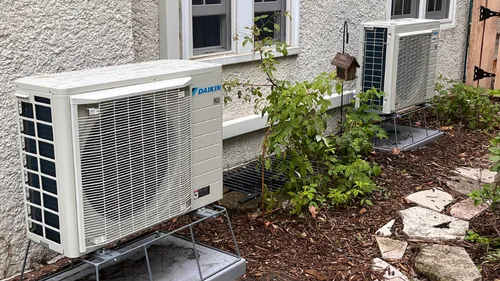
Stafford Home Service is a family-operated company based in Minneapolis, MN, offering residential HVAC and electrical services. They provide repairs, installations, and maintenance for heating and cooling systems including furnaces, heat pumps, boilers, mini-split systems, and air conditioning units. The company features licensed technicians with over 70 years of combined experience and emphasizes transparent pricing and customer satisfaction. Stafford Home Service also offers advanced HVAC solutions with Daikin products, known for energy efficiency and zoning capabilities. Since 2007, the company has continued a legacy of quality workmanship under current ownership. They serve Minneapolis and surrounding communities with a range of home comfort services.
Understanding Minnesota's Regulations and Codes
Before purchasing a mini-split, it's crucial to understand the legal and regulatory framework in Minnesota. Most installations are not simple DIY projects due to technical and legal requirements.
Permits: The vast majority of ductless mini-split installations in Minnesota will require a local building permit. This is because the work involves both electrical and mechanical modifications to your home. The permit process ensures the installation is inspected for safety and compliance with state and local codes. Skipping this step can result in fines, problems when selling your home, and could void your equipment warranty 1.
Licensing Requirements: Key components of the installation must be handled by licensed professionals. A licensed electrician is required to install the dedicated electrical circuit that powers the system. Furthermore, any technician who handles the refrigerant-a crucial part of connecting the indoor and outdoor units-must hold EPA Section 608 certification. Hiring a licensed HVAC contractor ensures all personnel meet these requirements.
Energy Efficiency Standards: As of 2023, new federal efficiency standards (SEER2 and HSPF2) are in effect. In Minnesota, new central air conditioners and heat pumps must meet minimum ratings. For ductless mini-split heat pumps, the minimum is 15 SEER and 8.8 HSPF 2. Installing a system that meets or exceeds these standards is not only a legal requirement but also the key to lower energy bills and eligibility for rebates and tax credits.
The Critical Importance of Professional Installation
While some online resources may suggest a DIY approach, professional installation is highly recommended for performance, safety, and warranty protection.
System Sizing and Design: A professional will perform a Manual J load calculation to determine the exact heating and cooling capacity (in BTUs) needed for your space. Incorrect sizing is a common and costly mistake. An oversized system will short-cycle, turning on and off frequently, leading to poor humidity control, uneven temperatures, and increased wear. An undersized system will struggle to maintain comfort during Minnesota's extreme winters and summers 3.
Optimal Unit Placement: The location of both the indoor air handler and the outdoor condenser is critical for efficiency and airflow. Professionals know how to place the indoor unit for optimal air distribution while avoiding drafts. They will also site the outdoor unit in a location with adequate clearance, away from obstructions, and consider factors like sun exposure and noise 4.
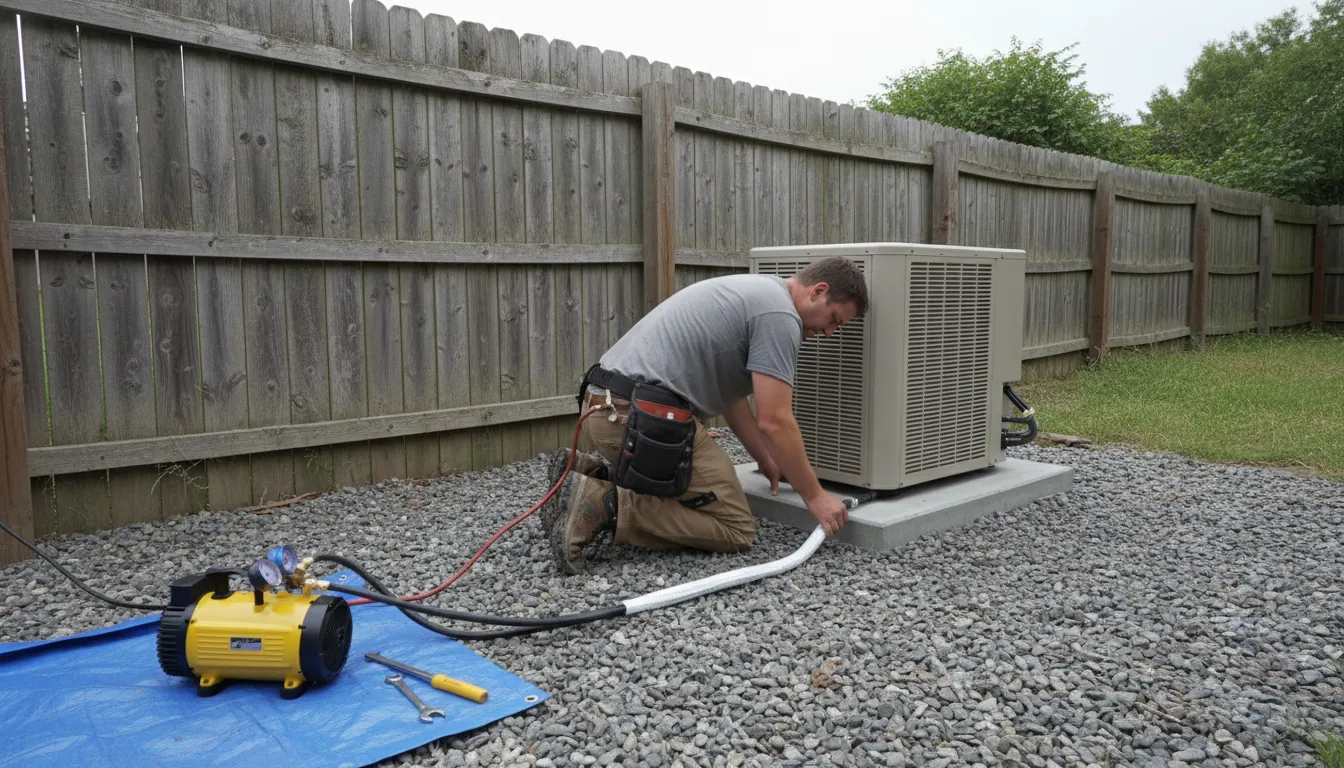
Electrical Work and Refrigerant Lines: Installing a dedicated circuit is an electrical job for a pro. Properly handling the refrigerant lines requires specialized tools and knowledge to vacuum the lineset, ensuring no moisture or contaminants are inside, which is essential for system longevity and efficiency 5. Improper installation can lead to leaks, reduced capacity, and compressor failure.
Warranty Preservation: Most manufacturers require professional installation by a certified technician to validate the equipment warranty. A DIY installation could leave you responsible for the full cost of any future repairs.
Financial Incentives: Tax Credits and Rebates
Investing in a high-efficiency mini-split system can be offset by significant financial incentives at both the federal and local level.
Federal Tax Credit: The Inflation Reduction Act (IRA) provides a tax credit for qualified energy-efficient home improvements. You can claim 30% of the project cost, up to $2,000 per year, for the purchase and installation of an ENERGY STAR certified ductless mini-split heat pump 6 7 8. This credit is applied directly to your federal income tax liability.
Minnesota Utility Rebates: Many local utility companies offer rebates to customers who install high-efficiency equipment. For example, Minnesota Power and other providers often have programs that provide cash-back incentives for qualifying ENERGY STAR heat pumps 9 10. These rebates are typically offered in addition to the federal tax credit. Eligibility almost always requires professional installation by a licensed contractor and the submission of specific documentation.
Combining Incentives: It's common and advantageous to stack these incentives. You can use a utility rebate to lower your upfront cost and still claim the full federal tax credit on the net cost, maximizing your total savings.
Find the perfect mini-split installers for your needs
Get personalized recommendations and expert advice
Cost Breakdown for Mini-Split Installation in Minnesota
The total cost of a mini-split project depends on the system's complexity, the brand, and the specifics of your home. Here's a general breakdown for Minnesota as of 2025:
- Single-Zone System: For cooling and heating one room or open area, expect a total installed cost ranging from $3,500 to $8,000. This includes the equipment, all labor, and standard materials.
- Multi-Zone System: To condition multiple rooms (e.g., 2-5 zones) with one outdoor condenser, costs typically range from $7,500 to $15,000 or more. This is often more cost-effective per zone than installing multiple single-zone systems.
- Additional Cost Factors:
- Permits: Local permit fees can add $250 or more to your project cost 11.
- Electrical Work: If a new dedicated circuit or electrical panel upgrade is needed, budget an additional $250+ for the electrician's work 12 13.
- Installation Complexity: Costs increase for difficult installations, such as those requiring long refrigerant line sets, second-story work, or custom mounting solutions.
- Accessories: Condenser pads, protective covers, or specialized wall mounts may add to the cost.
Key Steps in the Installation Process
When you hire a professional, the installation will generally follow these steps:
- Initial Consultation and Load Calculation: A technician visits your home to assess the space, discuss your needs, and perform the essential load calculation.
- System Design and Proposal: The contractor presents a design showing unit placements, provides equipment options, and delivers a detailed written estimate.
- Permitting: The contractor typically pulls the required local building permits on your behalf.
- Site Preparation: This includes installing the dedicated electrical circuit by a licensed electrician and preparing the mounting locations.
- Mounting Units: The outdoor condenser and indoor air handler(s) are securely mounted.
- Running Connections: A small hole (about 3") is drilled to pass the refrigerant lineset, condensate drain line, and electrical conduit between units. The lineset is carefully connected.
- Electrical and Vacuum Process: All electrical connections are made. A vacuum pump is then used to remove all air and moisture from the refrigerant lines, a critical step for system health.
- System Charging and Testing: The system is charged with refrigerant, activated, and thoroughly tested for proper operation in both heating and cooling modes. The technician will also show you how to use the controls.
- Final Inspection: The local building inspector visits to approve the work (if a permit was required).
Choosing the Right Contractor in Minnesota
Selecting a qualified installer is the most important decision you'll make. Look for a licensed, insured, and experienced HVAC contractor who specializes in ductless systems. Ask for references, verify they will handle permitting, and ensure their quote includes a detailed Manual J calculation. A reputable professional will be transparent about all costs, explain the incentive qualification process, and provide a clear warranty for both labor and equipment.
Frequently asked questions
Sources
Footnotes
-
Is It Legal to Install a Ductless Mini Split Without Permission? - https://dellahome.com/blogs/della-blog/is-it-legal-to-install-a-ductless-mini-split-without-permission ↩
-
New 2023 SEER HVAC Regulations in Minnesota Explained - https://genzryan.com/blog/new-2023-seer-hvac-regulations-in-minnesota/ ↩
-
How To Install a Ductless Mini Split AC - Carrier - https://www.carrier.com/residential/en/us/products/ductless-mini-splits/install-ductless-ac/ ↩
-
Ductless mini-split installation: Cool 2025 Guide - Southern Air - https://www.southern-air.com/blog/ductless-mini-split-installation ↩
-
Do Mini Splits Need Permits? Installation Requirements Guide - https://www.greecomfort.com/news-and-events/do-mini-splits-need-permits/ ↩
-
Explore Discounts & Mini Split Tax Credits in 2025 - Carrier - https://www.carrier.com/residential/en/us/products/ductless-mini-splits/tax-credits/ ↩
-
Ductless Mini-Split Installation Cost in 2025: Full Breakdown - https://osborneheatingncooling.com/ductless-mini-split-installation-cost/ ↩
-
Energy Efficiency and Tax Credits: Do Ductless Mini-Splits Qualify? - https://thefurnaceoutlet.com/blogs/hvac-tips/energy-efficiency-and-tax-credits-do-ductless-mini-splits-qualify ↩
-
Mini Split Installation Minneapolis, MN | Expert Service - https://www.staffordhomeservice.com/mini-split/mini-split-installation-minneapolis-mn ↩
-
Mini Split ACs: What to Know Before You Install - Zero Homes - https://www.zerohomes.io/the-latest/mini-splits ↩
-
Ductless Mini-Split Installation Costs in Minnesota - https://www.aircomfortmn.com/blog/ductless-mini-split-installation-costs-in-minnesota ↩
-
Is a Ductless Mini-Split Installation a DIY Project A Complete Guide - https://www.heating-ac.com/blog/is-a-ductless-mini-split-installation-a-diy-project-a-complete-guide ↩
-
Mini Split System Average Cost in Minnesota (2025 Update) - https://genzryan.com/blog/mini-split-system-cost/ ↩