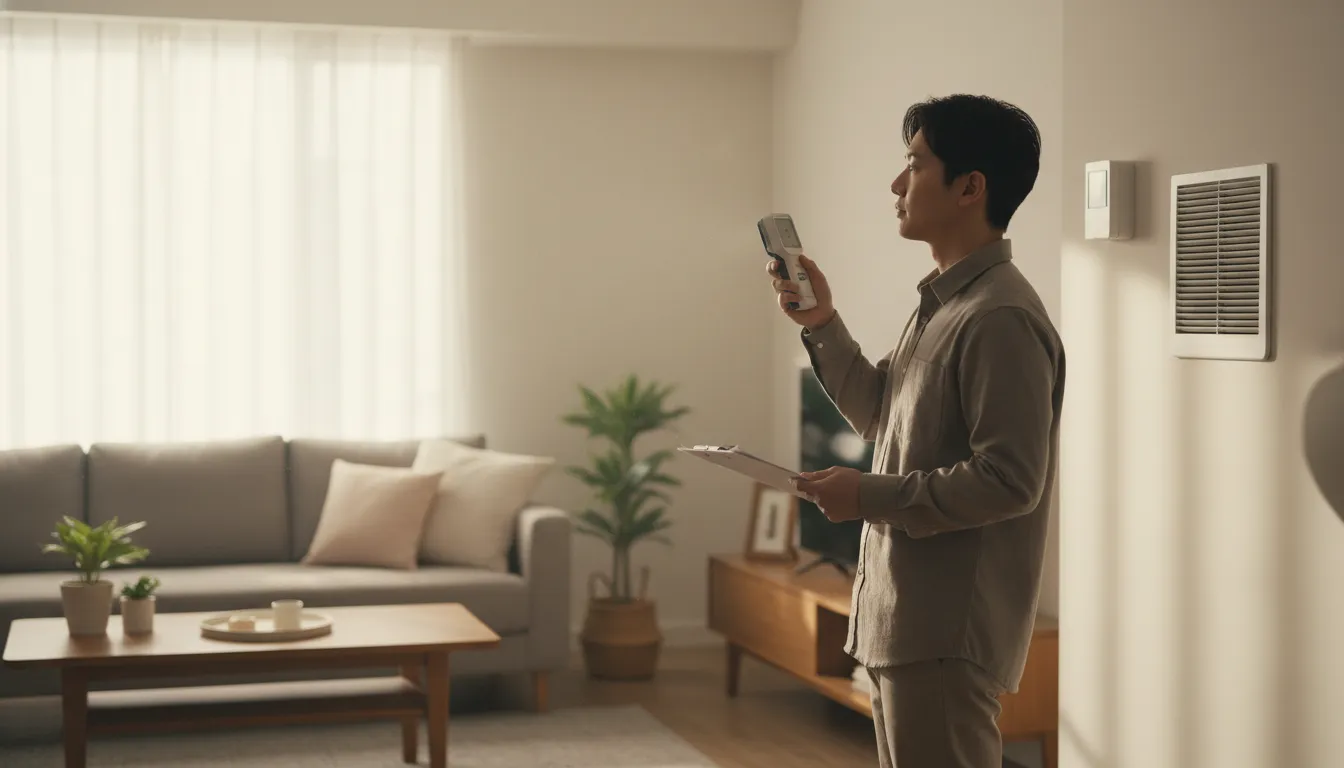
Find the Best Indoor Air Quality Service Providers for Your Business
No obligation • Fast responses • Nationwide coverage

Why you can trust HVAC Firms
HVAC Firms is a leading United States resource for evaluating HVAC service providers. Our team researches companies, checks credentials, and reviews customer feedback to present clear, unbiased information. Listings and rankings are based on merit, and companies cannot pay to change our editorial content.
Search providers near you
Top Indoor Air Quality Service Providers in Lincoln, Nebraska Ranked
The air you breathe inside your home or office in Lincoln directly impacts your health, comfort, and productivity. Indoor air quality (IAQ) refers to the condition of the air within and around buildings, especially as it relates to the health and well-being of occupants. With local factors like wildfire smoke, agricultural dust, and rapid development, managing your indoor environment is more critical than ever. This guide will help you understand the unique air quality challenges in Lincoln and connect you with the resources and professional services available to create a cleaner, healthier indoor space.

Star City Heating, Cooling, Electrical & Plumbing
5401 Cornhusker Hwy, Lincoln, NE 68504
Star City Heating, Cooling, Electrical & Plumbing has been serving homes and businesses in Lincoln, NE since 1983. They offer a wide range of services including HVAC installation, repair, and tune-ups, as well as plumbing and electrical work. Their licensed technicians handle all makes and models and provide 24/7 emergency service to ensure year-round comfort. Known for their expertise, Star City specializes in furnace and air conditioning installation and repair, and they back their work with a satisfaction guarantee.
Duct Decontaminators
2800 Woods Blvd #910, Lincoln, NE 68502
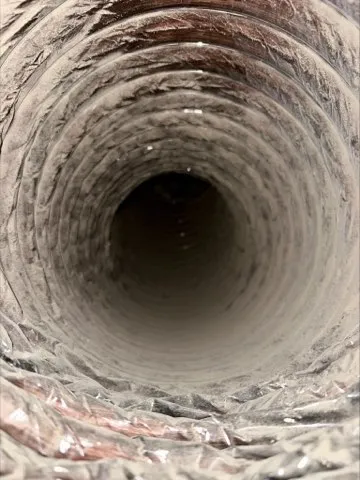
Duct Decontaminators is a duct cleaning company based in Lincoln, NE, specializing in improving indoor air quality for homes and businesses. They use advanced RamAir technology to thoroughly clean and sanitize air ducts, removing dust, debris, mold, bacteria, and odors to create healthier indoor environments. The company emphasizes detailed service to enhance HVAC system efficiency and customer satisfaction. While the business history is not explicitly stated, the team is experienced and committed to quality work.
Action Plumbing, Heating, A/C & Electrical
4101 S 8th St, Lincoln, NE 68502
Action Plumbing, Heating, A/C & Electrical is a service provider based in Lincoln, NE, offering indoor air quality solutions among other services. They provide advanced air purification systems like the APCO-X or Air Scrubber, designed to remove allergens, bacteria, viruses, and other pollutants from indoor environments. Their licensed electricians and technicians also handle plumbing, heating, and electrical work, ensuring safety and expertise in their projects.
Dave's Heating and Air
3401 S 7th St, Lincoln, NE 68502
Dave's Heating and Air is an HVAC company based in Lincoln, NE, specializing in heating and cooling repairs, installations, and indoor air quality services. As a Bryant Factory Authorized Dealer with a NATE-certified team, they provide expertise in Bryant systems and stay current with the latest technology and innovations. Their services include HVAC tune-ups and emergency repairs, with availability beyond regular business hours and no overtime fees.
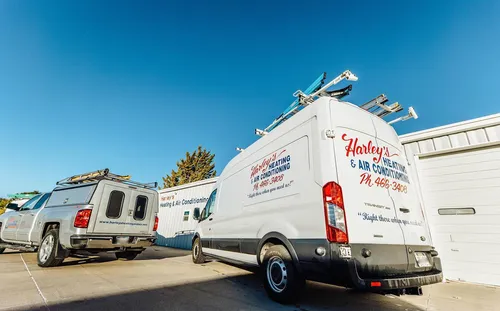
Harley's Heating & Air Conditioning
4224 Progressive Ave, Lincoln, NE 68504
Harley's Heating & Air Conditioning is a family-owned HVAC company serving Lincoln, NE, and surrounding areas since 1970. They provide a full range of heating and cooling services, including installation, repair, and maintenance of furnaces, heat pumps, boilers, air conditioners, and indoor air quality systems. Their NATE-certified technicians handle complex diagnostics and offer transparent solutions focused on energy efficiency and system reliability. Harley's also offers 24/7 emergency service without overtime fees, ensuring support when urgent heating or cooling issues arise.
Understanding Lincoln's Indoor Air Quality Challenges
Lincoln's unique environment presents several specific challenges for maintaining clean indoor air. The region's susceptibility to seasonal wildfires, its agricultural surroundings, and its ongoing growth all contribute to a complex IAQ landscape. Often, the air inside can be two to five times more polluted than outdoor air due to the accumulation of contaminants 1.
Key pollutants of concern include:
- Particulate Matter (PM2.5): Fine particles from wildfire smoke, construction dust, and agricultural activities that can penetrate deep into the lungs and bloodstream.
- Volatile Organic Compounds (VOCs): Gases emitted from new building materials, furniture, paints, and common household cleaning products, especially prevalent in newer homes and developments.
- Biological Contaminants: Mold, mildew, dust mites, and pet dander, which thrive in areas with high humidity or moisture intrusion2.
- Combustion Byproducts: Nitrogen dioxide (NO2) and carbon monoxide from gas stoves, furnaces, and fireplaces.
- Legacy Hazards: In older buildings, renovation can disturb materials like asbestos and lead-based paint, releasing harmful fibers and dust into the air.
Common Sources of Indoor Pollution in Lincoln Homes
Identifying where pollutants come from is the first step toward mitigation. In Lincoln, sources are often a mix of environmental, structural, and lifestyle factors.
Environmental Intrusion: Wildfire smoke is a significant seasonal threat, with PM2.5 levels often causing "poor" air quality days (AQI over 100) that can seep into homes through windows, doors, and ventilation systems3 4. Similarly, dust from nearby agricultural operations and ongoing construction sites can infiltrate indoor spaces.
Building-Related Sources: New construction and renovations are common in Lincoln's growing communities. These activities introduce VOCs from paints, adhesives, and composite wood products5. Older homes may have hidden issues like mold in crawl spaces or attics due to past water damage or inadequate ventilation. Improperly maintained HVAC systems can recirculate dust and allergens throughout the home.
Everyday Activities: Common household actions contribute more than most people realize. Cooking without using an exhaust fan releases particulates and gases6. Using aerosol sprays, scented candles, and harsh chemical cleaners increases VOC levels. Even activities like printing or crafting can release particles and chemicals into the air.
How to Test and Monitor Your Indoor Air
You can't manage what you don't measure. Assessing your indoor air is crucial for identifying specific problems and tracking the effectiveness of solutions.
Professional IAQ Assessment: For a comprehensive analysis, especially before a major renovation or if health symptoms are present, a professional assessment is recommended. Local environmental firms offer testing for specific contaminants like mold spores, asbestos fibers, lead dust, and VOC concentrations7. These services typically involve air and surface sampling, with costs ranging from $250 for basic assessments to over $1,000 for detailed pollutant-specific analysis8. Professionals can also evaluate your home's ventilation efficiency and HVAC system performance9.
DIY Monitoring and Tools: For ongoing awareness, affordable home air quality monitors are highly effective. Devices like the Airthings View Plus track real-time levels of PM2.5, VOCs, carbon dioxide (CO2), humidity, and radon10. Monitoring humidity is particularly important, as levels consistently above 60% can encourage mold growth. You can also utilize public resources, such as the Placer County Air Pollution Control District's monitoring network, to understand outdoor conditions that affect your indoor environment11.
Find the perfect indoor air quality service providers for your needs
Get personalized recommendations and expert advice
Effective Strategies for Improving Indoor Air in Lincoln
Improving your home's air doesn't always require major investment. A layered approach, starting with source control and ventilation, is most effective.
Source Control and Ventilation: The most effective strategy is to prevent pollutants from entering or being created in your home.
- Use Exhaust Fans: Always run kitchen exhaust fans while cooking and bathroom fans during and after showers to remove moisture, gases, and particles at the source12.
- Increase Fresh Air: When outdoor air quality is good (check local AQI), open windows to dilute indoor pollutants. Consider installing an energy recovery ventilator (ERV) or heat recovery ventilator (HRV) for balanced, filtered ventilation year-round.
- Choose Low-VOC Products: Opt for paints, cleaners, and building materials labeled as low-VOC or no-VOC.
- Manage Humidity: Use dehumidifiers in damp areas like basements and ensure your HVAC system is properly sized to control moisture levels13.
Filtration and Air Cleaning: When ventilation isn't enough or during smoke events, filtration is key.
- Upgrade HVAC Filters: Install a high-efficiency filter (rated MERV 13 or higher if your system allows) in your central heating and air system to capture fine particles14.
- Use Portable Air Cleaners: Select CARB-certified portable air purifiers with HEPA filters for rooms where you spend the most time. California law requires all portable cleaners sold in the state to meet strict ozone emission limits, ensuring they clean the air without creating a new pollutant15 16.
- Consider Whole-Home Solutions: For integrated protection, professionals can install in-duct air purifiers, UV-C lights to neutralize biological contaminants, or dedicated whole-home air filtration systems.
HVAC Maintenance: Your heating and cooling system is the lungs of your home. Regular professional maintenance is non-negotiable for good IAQ. This includes annual inspections, duct cleaning to remove accumulated dust and debris, and ensuring the system is properly sealed and balanced to provide adequate fresh air exchange 17.
Interpreting Results and Taking Action
Understanding your IAQ test results is crucial. Professional reports will often compare your levels to established guidelines or thresholds. For example, mold spore counts are compared to outdoor baselines, and VOC levels are measured against health-based reference concentrations18. Don't just focus on a single number; look for patterns and elevated levels of specific contaminants. A qualified professional can help you translate these results into a prioritized action plan, which may include fixing a water leak, improving ventilation in a specific room, or undertaking a targeted cleaning or remediation project18.
Frequently asked questions
Sources
Footnotes
-
Indoor Air Quality - K. Kelly, Inc. - https://www.kkellyinc.com/indoor-air-quality.html ↩
-
Indoor Air Quality - Overview - OSHA - https://www.osha.gov/indoor-air-quality ↩
-
Lincoln, CA Air Quality & Pollen - Weather Underground - https://www.wunderground.com/health/us/ca/lincoln/95648 ↩
-
Lincoln, CA Poor Air Quality Map and Forecast | First Street - https://firststreet.org/city/lincoln-ca/641474_fsid/air ↩
-
Indoor Air Quality & Exposure | California Air Resources Board - https://ww2.arb.ca.gov/our-work/topics/indoor-air-quality-exposure ↩
-
Indoor Air Quality - County of Los Angeles Public Health - http://www.publichealth.lacounty.gov/Eh/safety/indoor-air-quality.htm ↩
-
Lincoln, CA | Mold & Asbestos Testing - mse environmental - https://msenational.com/lincoln-california ↩
-
How Much Does Professional Home Indoor Air Quality Testing Cost? - https://www.airpf.com/how-much-does-a-home-indoor-air-quality-testing-cost/ ↩
-
Indoor Air Quality Services In Lincoln CA - TRC Heating & Air - https://www.sacairrepair.com/indoor-air-quality ↩
-
How to test indoor air quality in your home - Airthings - https://www.airthings.com/resources/how-to-test-air-quality-in-your-home ↩
-
Air Quality Monitoring | Placer County, CA - https://www.placer.ca.gov/8082/Air-Quality-Monitoring ↩
-
Guidelines to Indoor Air Quality Standards (IAQ) | TRADESAFE - https://trdsf.com/blogs/news/indoor-air-quality-standards-iaq ↩
-
Indoor Air - California Air Resources Board - CA.gov - https://ww2.arb.ca.gov/our-work/programs/indoor-air ↩
-
Indoor Air Quality Services in Roseville, CA - https://maverickelectricalservices.com/indoor-air-quality/ ↩
-
Indoor Air - California Air Resources Board - CA.gov - https://ww2.arb.ca.gov/our-work/programs/indoor-air ↩
-
Indoor Air Quality Services In Lincoln, CA - https://socoheatingair.com/indoor-air-quality-services-in-lincoln-ca/ ↩
-
Commercial HVAC Cleaning: Ensuring Optimal Air Quality - https://evolutionmechanical.net/blog/commercial-hvac-cleaning-ensuring-optimal-air-quality/ ↩
-
What Your IAQ Test Results Really Mean: From Numbers To Action Plan - https://modernpurair.com/understanding-iaq-test-results/ ↩ ↩2