Find the Best Indoor Air Quality Service Providers for Your Business
No obligation • Fast responses • Nationwide coverage

Why you can trust HVAC Firms
HVAC Firms is a leading United States resource for evaluating HVAC service providers. Our team researches companies, checks credentials, and reviews customer feedback to present clear, unbiased information. Listings and rankings are based on merit, and companies cannot pay to change our editorial content.
Search providers near you
Top Indoor Air Quality Service Providers in Wilson, North Carolina Ranked
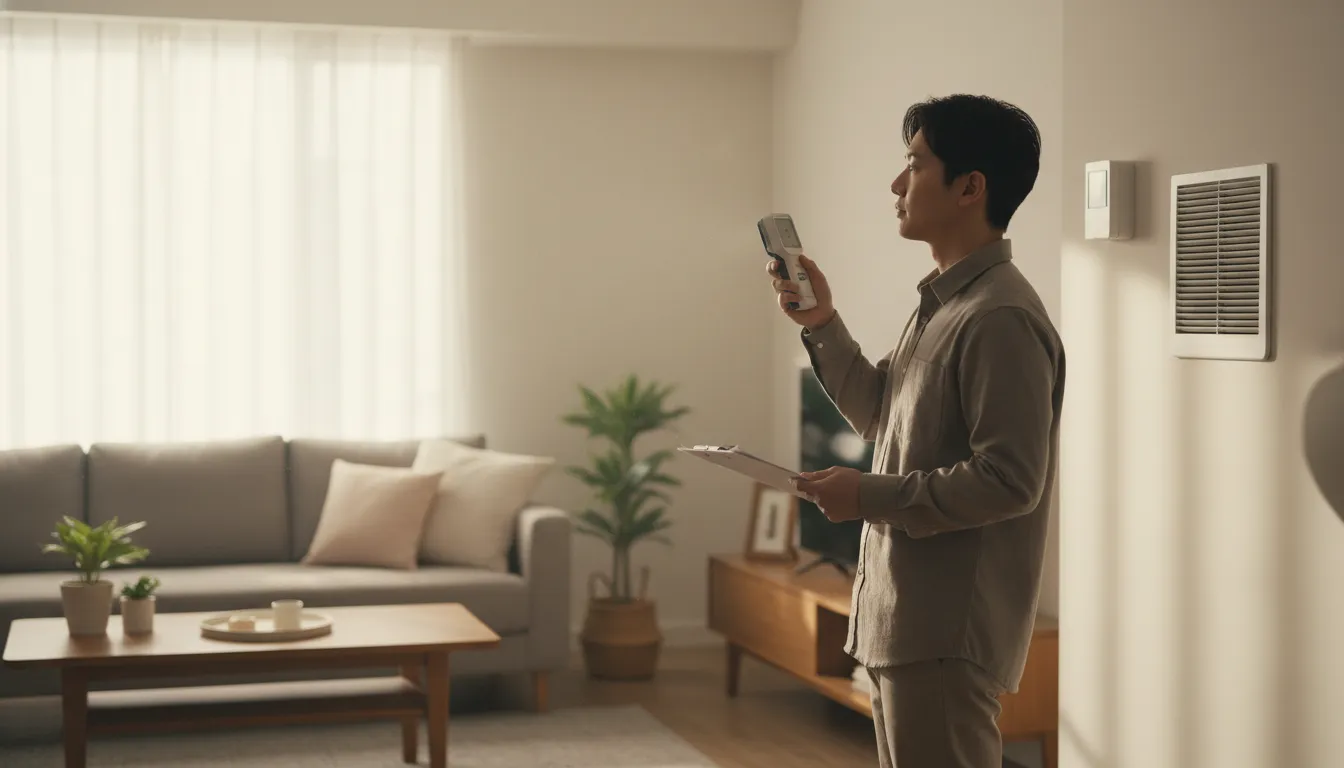
The air you breathe inside your home or workplace has a direct impact on your health, comfort, and productivity. Indoor Air Quality (IAQ) refers to the condition of the air within and around buildings, particularly as it relates to the health and well-being of occupants. In Wilson, local climate and building factors can create unique challenges, making proactive management essential. This guide explains common local concerns, practical testing methods, and effective improvement strategies to help you find the right solutions for your space.
DUCK DUCT, LLC
138 Curling Crk Dr, Clayton, NC 27527
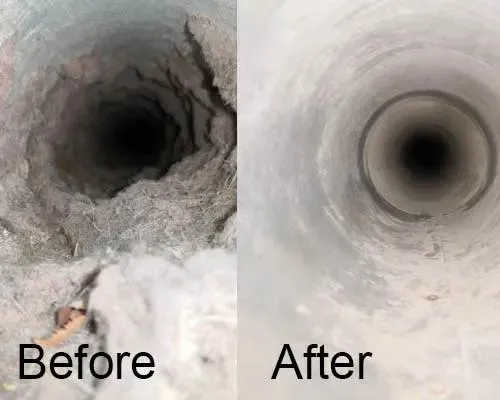
DUCK DUCT, LLC provides air duct and dryer vent cleaning, as well as insulation services in Raleigh, NC. Serving nearby areas including Wake Forest, Cary, Clayton, Garner, and Apex, the company focuses on improving indoor air quality and energy efficiency for both residential and commercial properties. Their certified technicians specialize in duct and vent cleaning, dryer vent installation, and home insulation to enhance HVAC performance and reduce fire risks. With over a decade of experience, DUCK DUCT, LLC holds NADCA certification, ensuring adherence to industry standards.

Call Pernell Heat and Air
111 E Oak St, Selma, NC 27576
Call Pernell Heat and Air is an HVAC company serving Raleigh, NC, and the surrounding Johnston County area. Established in 1977, they provide a wide range of heating and cooling services including furnace, heat pump, boiler, and air conditioner repair and installation. Their expertise also covers indoor air quality improvements, ductless mini-splits, and geothermal heat pump systems. With nearly five decades of experience, Call Pernell offers specialized capabilities such as real-time quotes and onsite estimates through an efficient dispatch system. They also provide 24/7 emergency service by appointment to address urgent HVAC needs.

Aire Serv of East Raleigh
Raleigh, NC
Aire Serv of East Raleigh provides heating and air conditioning services in Raleigh, NC, and surrounding areas including Clayton, Wendell, Zebulon, and Knightdale. They offer air conditioner repair and replacement, heater repair and installation for heat pumps and furnaces, HVAC tune-ups, and indoor air quality improvements with air purification systems. The company is equipped to handle a range of HVAC brands and performs thorough evaluations such as Heat Gain/Heat Loss assessments to ensure proper system sizing. Aire Serv also offers 24-hour emergency service and after-hours availability at participating locations.
Pappy's Heating & Air Inc.
143 Albemarle Dr, Clayton, NC 27527
Pappy's Heating & Air Inc. provides HVAC repair, installation, and maintenance services in Raleigh, NC, and surrounding Johnston County areas. They handle a variety of systems including air conditioners, furnaces, heat pumps, ductless mini splits, and geothermal HVAC units. The company also offers indoor air quality solutions such as duct cleaning and dehumidifier installation. Pappy's is known for its 10-year labor warranties and a comprehensive worry-free program covering parts, labor, maintenance, and service calls. They support public service professionals with special rebates and financing options.
Alford Mechanical
495 Main St, Bunn, NC 27508
Alford Mechanical is an HVAC company serving Raleigh, NC, and surrounding areas including Franklin and Wake Counties. Since 2000, they have provided installation, maintenance, and repair services for heating and cooling systems such as furnaces, air conditioners, heat pumps, boilers, ductless mini-splits, and geothermal systems. The company also offers indoor air quality products like air purifiers, humidifiers, and UV lamps. They provide 24/7 emergency services and support both residential and light commercial HVAC needs. Alford Mechanical is experienced in ductless air conditioning and geothermal heat pump systems, offering specialized knowledge in these energy-efficient technologies.
Understanding Wilson's Indoor Air Quality Challenges
Wilson's climate and environment contribute to specific indoor air pollutants that residents and business owners should be aware of. The humid subtropical climate of Eastern North Carolina is a primary driver for several common issues.
High Humidity and Mold Growth: Persistent humidity provides an ideal breeding ground for mold, mildew, and dust mites. These biological contaminants are significant triggers for allergies and asthma, and controlling indoor moisture is often the first step in improving air quality in Wilson homes.
Particulate Matter: Fine particles (PM2.5) and coarse particles (PM10) from sources like pollen, dust, vehicle exhaust, and even indoor activities like cooking can accumulate in your air. These particles can penetrate deep into the lungs and affect respiratory health 1.
Chemical Pollutants (VOCs): Volatile Organic Compounds are gases emitted from a wide array of everyday products. In Wilson homes, common sources include cleaning supplies, paints, new furniture, adhesives, and building materials. Reducing exposure to these off-gassing chemicals is a key component of a healthy indoor environment.
Other Local Concerns: Allergens such as pollen and pet dander are prevalent. Radon, a naturally occurring radioactive gas that can seep from the ground into buildings, is a concern across North Carolina and requires specific testing. Furthermore, modern, energy-efficient homes can sometimes suffer from poor ventilation, trapping all these pollutants inside.
How to Test and Monitor Your Indoor Air
Before implementing solutions, it's helpful to understand the specific pollutants in your space. Testing and monitoring provide a baseline and help you track the effectiveness of any improvements.
DIY Air Quality Monitors: A great starting point is an affordable, consumer-grade monitor. These devices can track key metrics in real-time, such as levels of particulate matter (PM2.5), carbon dioxide (CO2), temperature, and relative humidity. They offer immediate feedback and can help you identify patterns, like high CO2 levels when a room is occupied or spikes in humidity.
Professional IAQ Assessment: For a comprehensive analysis, especially if health symptoms are present or you suspect a specific issue like mold, a professional assessment is recommended. Certified industrial hygienists or environmental consultants use advanced, calibrated equipment to test for a wider range of contaminants. This can include detailed mold spore analysis, identification of specific VOCs, allergen counts, and checks for combustion gases 2 3. Professionals can also help pinpoint the source of problems, such as leaky ductwork or improper outdoor air intake.
Find the perfect indoor air quality service providers for your needs
Get personalized recommendations and expert advice
Effective Strategies for Cleaner Indoor Air
Improving your indoor environment involves a layered approach, often summarized as Source Control, Ventilation, and Air Cleaning. Implementing strategies from each category provides the most robust defense.
1. Source Control: Prevent Pollutants at the Origin
This is the most cost-effective strategy. By reducing or eliminating the sources of pollution, you prevent them from entering the air in the first place.
- Manage Moisture: Use exhaust fans in bathrooms and kitchens, fix leaks promptly, and consider a dehumidifier for damp basics or crawl spaces to inhibit mold growth.
- Choose Low-VOC Products: Opt for paints, sealants, cleaning supplies, and furnishings labeled as low-VOC or no-VOC.
- Maintain Cleanliness: Regular vacuuming with a HEPA-filter vacuum, dusting with a damp cloth, and controlling pet dander reduces particulate matter and allergens.
2. Enhance Ventilation: Dilute with Fresh Air
Bringing in fresh outdoor air dilutes the concentration of indoor pollutants.
- Natural Ventilation: Simply opening windows and doors when weather and outdoor air quality permit is an excellent zero-cost method 4.
- Mechanical Ventilation: For a constant, controlled solution, consider installing an Energy Recovery Ventilator (ERV) or Heat Recovery Ventilator (HRV). These systems efficiently exchange stale indoor air for fresh outdoor air while preserving indoor temperature, making them ideal for Wilson's climate. Installation costs for whole-home systems can range into the thousands but provide a significant long-term benefit.
- Spot Ventilation: Always use exhaust fans vented to the outside during cooking and showering.
3. Air Cleaning and Filtration: Remove Contaminants
When source control and ventilation aren't enough, air cleaning devices capture pollutants that are already airborne.
- Upgrade HVAC Filters: The simplest upgrade is to use a higher-efficiency filter in your central heating and cooling system, such as a MERV 13 rating, if your system can accommodate it 5.
- Portable Air Purifiers: Standalone units with true HEPA filters are highly effective at removing particles like dust, pollen, and mold spores. They are a flexible solution for individual rooms, with costs typically between $50 and $200 for a quality unit 6 7.
- Whole-Home Air Cleaners: These are installed directly into your HVAC ductwork and can provide filtration, and sometimes additional purification technologies, for the entire house. These represent a more significant investment, often ranging from $500 to $2,000 or more for the unit and installation 8.
Balancing Health, Comfort, and Cost in Wilson
For Wilson residents and businesses, creating a healthy indoor environment is an investment in well-being. The costs associated with improvement vary widely based on the chosen strategies-from the minimal cost of using unscented cleaners and opening windows to the more substantial investment in whole-home ERV or air cleaning systems 9.
The key is to start with the fundamentals: control moisture, increase fresh air where possible, and use good filtration. Using a simple monitor can guide your efforts and help you make informed decisions about where to invest for the greatest impact on your specific indoor air quality concerns 10.
Frequently asked questions
Sources
Footnotes
-
Chapter: 4 Air Quality - https://www.nationalacademies.org/read/13115/chapter/6 ↩
-
Introduction to Indoor Air Quality | US EPA - https://www.epa.gov/indoor-air-quality-iaq/introduction-indoor-air-quality ↩
-
Indoor air quality monitoring and source apportionment using ... - https://iopscience.iop.org/article/10.1088/2515-7620/ad1cad/pdf ↩
-
THREE BASIC STRATEGIES TO IMPROVE INDOOR AIR QUALITY - https://airquip.com/three-basic-strategies-to-improve-indoor-air-quality/ ↩
-
Indoor Environmental Quality (IEQ) | Environment, Health & Safety - UCLA - https://ehs.ucla.edu/request-consultation/indoor-air-quality ↩
-
Green Housing = Improved Health: A Winning Combination - https://nchh.org/resource-library/report_green-housing=improved-health_a-winning-combination.pdf ↩
-
Indoor Air Quality in Green Vs Conventional Multifamily Low-Income ... - https://www.researchgate.net/publication/263289291_Indoor_Air_Quality_in_Green_Vs_Conventional_Multifamily_Low-Income_Housing ↩
-
Chapter: 5 Management of Chemicals in Indoor Environments - https://www.nationalacademies.org/read/26228/chapter/7 ↩
-
The Impact of the Built Environment on Health Infrastructure ... - https://nciom.org/wp-content/uploads/2022/10/Chapter-4-1.pdf ↩
-
IAQ / LEED Testing | DFW Metroplex - https://www.ttilabs.com/testing-services/iaq-leed-testing/ ↩