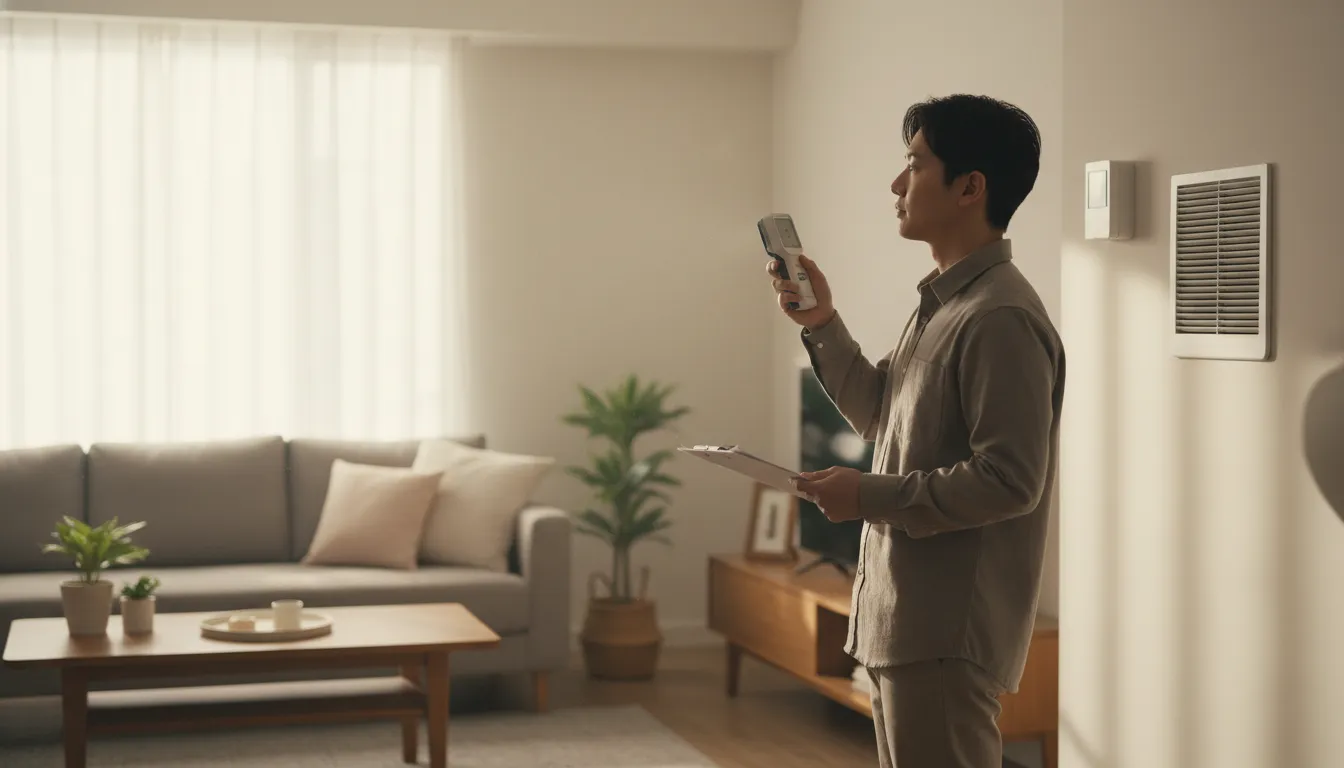
Find the Best Indoor Air Quality Service Providers for Your Business
No obligation • Fast responses • Nationwide coverage

Why you can trust HVAC Firms
HVAC Firms is a leading United States resource for evaluating HVAC service providers. Our team researches companies, checks credentials, and reviews customer feedback to present clear, unbiased information. Listings and rankings are based on merit, and companies cannot pay to change our editorial content.
Search providers near you
Top Indoor Air Quality Service Providers in Rocky Mount, North Carolina Ranked
The air you breathe inside your home or office in Rocky Mount has a direct impact on your health, comfort, and well-being. Indoor air quality, or IAQ, refers to the condition of the air within and around buildings, and in our region, it's uniquely challenged by high humidity, local industry, and older home construction. Addressing concerns like mold, radon, allergens, and chemical pollutants is not just about comfort-it's a critical component of maintaining a safe living environment. This guide will help you understand the specific air quality challenges in the Twin Counties area and the professional solutions available to test, monitor, and improve your indoor environment.
Alford Mechanical
495 Main St, Bunn, NC 27508
Alford Mechanical is an HVAC company serving Raleigh, NC, and surrounding areas including Franklin and Wake Counties. Since 2000, they have provided installation, maintenance, and repair services for heating and cooling systems such as furnaces, air conditioners, heat pumps, boilers, ductless mini-splits, and geothermal systems. The company also offers indoor air quality products like air purifiers, humidifiers, and UV lamps. They provide 24/7 emergency services and support both residential and light commercial HVAC needs. Alford Mechanical is experienced in ductless air conditioning and geothermal heat pump systems, offering specialized knowledge in these energy-efficient technologies.
A & K Heating and Air Conditioning, LLC
Durham, NC
A & K Heating and Air Conditioning, LLC is a licensed and insured family-owned business serving Durham, NC, and the surrounding Triangle area. They provide heating and air conditioning services, including repairs, installations, and annual tune-ups to maintain system efficiency. The company also offers indoor air quality services to help prevent mold and toxins in the home environment.
Why Rocky Mount Homes Face Unique Air Quality Challenges
Rocky Mount's environment presents a distinct set of factors that can compromise the air inside local homes and businesses. The combination of North Carolina's humid climate and the prevalence of older, tightly sealed homes creates a perfect storm for indoor pollutants to accumulate. Furthermore, the mix of rural landscapes with agricultural activity and pockets of industry introduces external contaminants that can easily find their way indoors, especially through inadequate ventilation systems 1.
The Persistent Problem of Humidity and Mold
North Carolina's climate is a primary driver of indoor air issues. High humidity levels lead to condensation on windows, damp basements, and that familiar musty odor-all telltale signs of excess moisture. This moisture provides the ideal breeding ground for mold and mildew, which can grow hidden within walls, under floors, and in attics. Spores from these growths then become airborne, potentially causing allergic reactions, asthma attacks, and other respiratory problems.
Invisible Threats: Radon and Gases
A less visible but significant concern is radon gas. Due to the underlying geology, many areas in North Carolina, including Nash and Edgecombe counties, have a high potential for radon accumulation. This radioactive, odorless gas can seep into homes from the ground and is the second leading cause of lung cancer. The EPA recommends testing all homes below the third floor. Another silent threat comes from combustion appliances; malfunctioning or poorly vented gas stoves, heaters, and fireplaces can release dangerous levels of carbon monoxide (CO) and nitrogen dioxide (NO₂) into your living space.
Everyday Pollutants: VOCs, Allergens, and Particles
Daily life introduces a host of other contaminants. Volatile Organic Compounds (VOCs) are gases emitted from common household products like paints, cleaning supplies, adhesives, and even new furniture. These can cause headaches, dizziness, and long-term health effects. Additionally, particulate matter such as dust, pollen, and pet dander is prevalent. In Rocky Mount, seasonal pollen from surrounding vegetation and occasional odors from agricultural or industrial activities can infiltrate homes, aggravating allergies and asthma 2.
Professional Assessment: The First Step to Cleaner Air
Because many air quality problems are invisible or have nonspecific symptoms, a professional evaluation is often the most reliable way to identify issues. Local specialists use a variety of tools and methods to diagnose the exact problems in your Rocky Mount home or office.
Comprehensive Inspection and Air Sampling
A thorough assessment typically begins with a visual and instrumental inspection of the property. Professionals look for signs of moisture intrusion, water damage, and mold growth using tools like thermal imaging cameras and moisture meters to find hidden problems 3. For mold, the industry standard is non-viable air sampling, where spore traps collect airborne particles that are then sent to an accredited laboratory for analysis. This identifies the types and concentrations of mold spores present in your air.
Testing for Specific Contaminants
Beyond mold, targeted tests can measure other risks:
- Radon Testing: Experts recommend testing for radon at least every two years in North Carolina 4. This can be done with short-term (2-7 day) or long-term (90+ day) detectors placed in the lowest lived-in level of the home.
- VOC and Gas Monitoring: Technicians use direct-reading instruments to measure levels of total VOCs, carbon monoxide, and carbon dioxide (CO₂) 5. High CO₂ levels can indicate inadequate ventilation.
- Environmental Monitoring: Data loggers are used to track temperature and humidity levels over time. Maintaining indoor relative humidity between 30% and 50% is key to discouraging mold growth and dust mites 6 7.
Find the perfect indoor air quality service providers for your needs
Get personalized recommendations and expert advice
Effective Solutions for Healthier Indoor Air
Once the specific issues in your home are identified, a range of effective solutions can be implemented. These range from simple, DIY steps to major system upgrades installed by qualified professionals.
Moisture Control and Mold Remediation
Controlling moisture is the single most important step in preventing mold. For many Rocky Mount homes with crawl spaces, encapsulation-sealing the space with a heavy-duty vapor barrier-is a highly effective solution to prevent ground moisture from evaporating into the home. Repairing leaks, improving drainage, and using dehumidifiers are also crucial. If mold is found, professional remediation involves safely containing and removing the contaminated materials and treating the area to prevent regrowth.
Advanced Air Cleaning and Filtration Technology
Integrating air purification with your HVAC system can dramatically reduce airborne particles and gases. Local providers offer advanced systems like the Trane CleanEffects™ air cleaner, which can remove up to 99.98% of particles from the air that passes through it, including allergens, bacteria, and viruses 8. Other technologies, such as Pür Plasma or UV-C germicidal lamps, are designed to neutralize mold spores, bacteria, and VOCs directly within the ductwork 8 9.
Ventilation and Source Control
Improving ventilation is essential for diluting indoor pollutants. Ensure bathroom and kitchen exhaust fans are used and vented to the outside. Consider an Energy Recovery Ventilator (ERV) or Heat Recovery Ventilator (HRV), which brings in fresh outdoor air while conserving energy by tempering it with the exhaust air. Source control is equally important: choose low-VOC paints and cleaning products, maintain combustion appliances properly, and ban smoking indoors 10.
Routine Maintenance and Monitoring
The best systems require regular care. Change your HVAC system's high-efficiency particulate air (HEPA) or MERV-rated filters every 1-3 months 11. Have your ductwork professionally cleaned if needed, and ensure your HVAC system is serviced annually to maintain proper airflow and dehumidification. Install and regularly test battery-operated carbon monoxide detectors on every level of your home 12.
Finding the Right Local Expertise
For homeowners in Rocky Mount, partnering with a knowledgeable local company is key. Firms like Homeworks Environmental specialize in mold and moisture inspections, while HVAC specialists like Performance Heating and Air can integrate whole-home air purification and dehumidification solutions with your existing system. When selecting a provider, look for certifications in mold inspection, HVAC excellence, and a strong understanding of North Carolina's specific IAQ challenges.
Frequently asked questions
Sources
Footnotes
-
Indoor Air Quality Consultants - North Carolina - https://iaq-solutions-consulting-inc.com/indoor-air-quality-consultants-north-carolina/ ↩
-
Identifying Signs of Poor Home Air Quality and How to Improve It - https://www.lunsprocarolina.com/blog/identifying-signs-of-poor-home-air-quality-and-how-to-improve-it ↩
-
Mold Testing | Rocky Mount NC - https://homeworksnc.com/mold-inspection-in-rocky-mount-nc/ ↩
-
How Common Are Indoor Air Contaminants in North Carolina ... - https://www.getmapleair.com/blog-post/how-common-are-indoor-air-contaminants-in-north-carolina-homes ↩
-
Indoor Air Quality (IAQ) Testing and Monitoring - Pace Analytical - https://www.pacelabs.com/analytical-environmental/air/indoor-air-quality/ ↩
-
Air Quality Control LLC - Rocky Mount - MapQuest - https://www.mapquest.com/us/north-carolina/air-quality-control-llc-3227102 ↩
-
Indoor Air Quality Testing / Industrial Hygiene Services - Safex - https://www.safex.us/our-services/indoor-air-quality/ ↩
-
Indoor Air Quality | Rocky Mount, NC> - https://www.performancehvac.com/services/indoor-air-quality.php ↩ ↩2
-
What to Expect During a Mold Inspection Service - https://www.puroclean.com/zephyrhills-fl-puroclean-certified-restoration-specialists/blog/mold-inspection-service/ ↩
-
Improving Indoor Air Quality | US EPA - https://www.epa.gov/indoor-air-quality-iaq/improving-indoor-air-quality ↩
-
How to Improve Indoor Air Quality - Strada Services - https://stradaservices.com/about-us/blog/how-to-improve-indoor-air-quality/ ↩
-
The Inside Story: A Guide to Indoor Air Quality | CPSC.gov - https://www.cpsc.gov/Safety-Education/Safety-Guides/Home/The-Inside-Story-A-Guide-to-Indoor-Air-Quality ↩