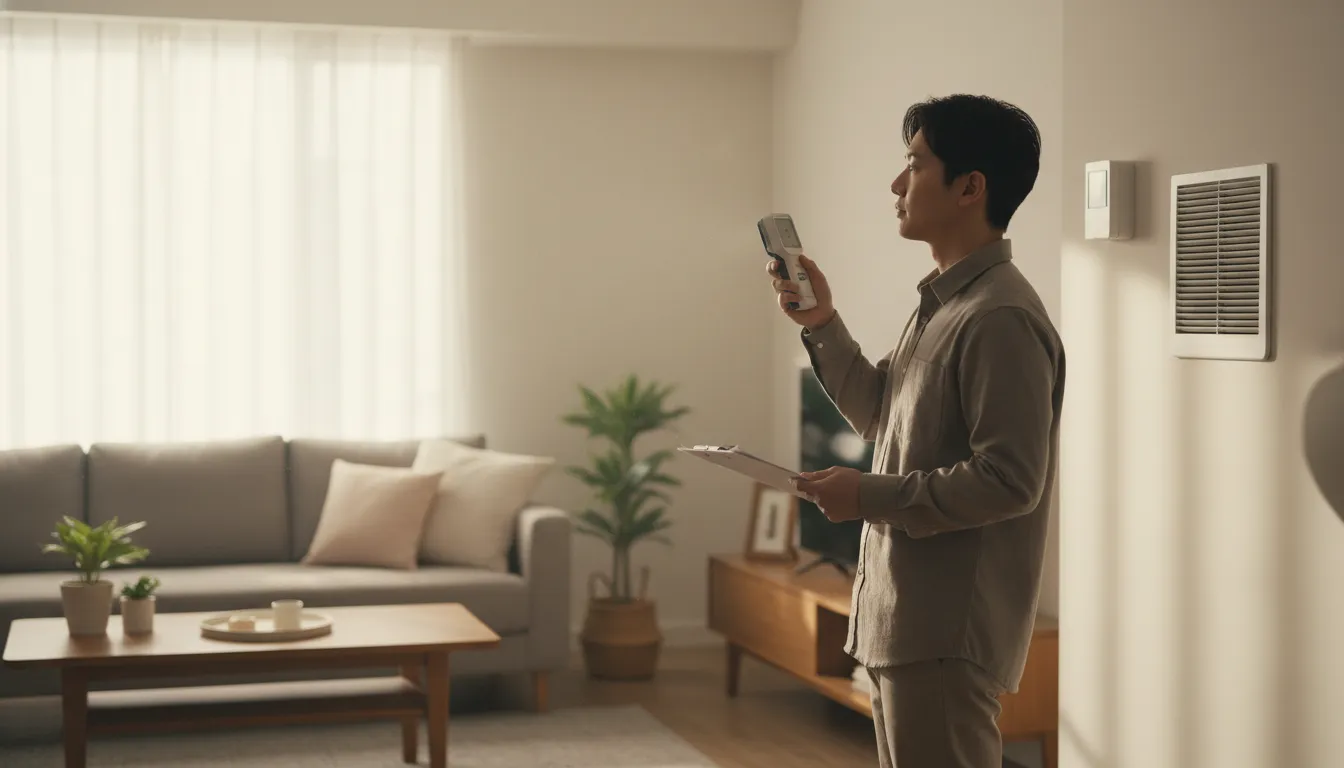
Find the Best Indoor Air Quality Service Providers for Your Business
No obligation • Fast responses • Nationwide coverage

Why you can trust HVAC Firms
HVAC Firms is a leading United States resource for evaluating HVAC service providers. Our team researches companies, checks credentials, and reviews customer feedback to present clear, unbiased information. Listings and rankings are based on merit, and companies cannot pay to change our editorial content.
Search providers near you
Top Indoor Air Quality Service Providers in National City, California Ranked
The air you breathe inside your home or business in National City directly impacts your health, comfort, and well-being. Indoor air quality (IAQ) refers to the condition of the air within and around buildings, especially as it relates to the health of the occupants. Given the city's unique location near major industrial, maritime, and transportation corridors, managing your indoor environment is particularly important. This guide explains the local air quality challenges, outlines effective solutions, and helps you connect with certified professionals who can test and improve the air in your space.
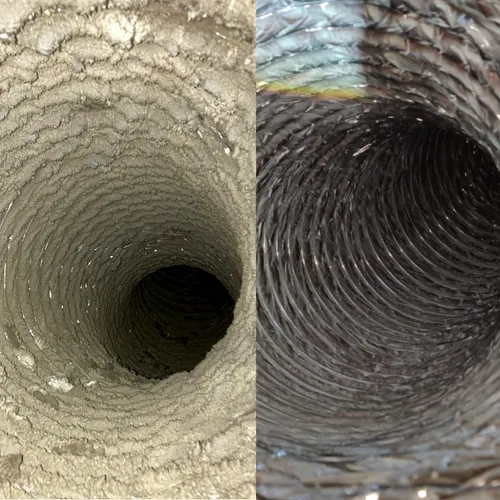
Absolute Duct & Chimney Cleaning
8733 Magnolia Ave Suite 203, Santee, CA 92071
Absolute Duct & Chimney Cleaning is a family-owned business serving San Diego, CA, specializing in commercial and residential air duct, dryer vent, and chimney cleaning. Their services help improve indoor air quality and reduce the risk of fires caused by lint and flammable buildup. The company employs OSHA-trained and certified professionals who accommodate customer schedules and prioritize safety for homes with children and pets.
JPM Heating & Air Inc.
1551 Cuyamaca St, El Cajon, CA 92020
JPM Heating & Air Inc. is a family-owned HVAC contractor serving San Diego, CA, with over 20 years of experience. They provide a range of services including installation, repair, and maintenance of air conditioning, furnaces, heat pumps, and ductwork. As a Bryant Factory Authorized Dealer, they offer reliable HVAC solutions backed by warranties on labor and parts. Their services also include indoor air quality improvements such as air purifiers and humidifiers. JPM Heating & Air offers emergency response within 24 hours and same-day installation estimates, emphasizing clear communication and community values.
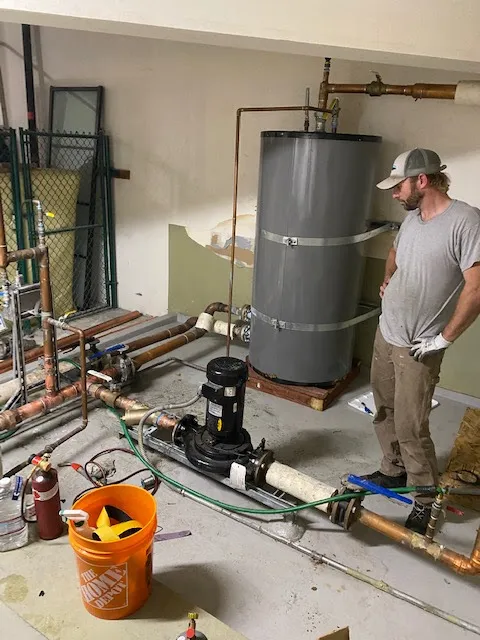
Flite Mechanical Heating & Air Professionals
3781 El Canto Dr, Spring Valley, CA 91977
Flite Mechanical Heating & Air Professionals provides HVAC installation, repair, and indoor air quality services in San Diego, CA. They handle air conditioning, furnace, mini split, and new construction HVAC systems. The company is equipped with skilled technicians who focus on accurate and reliable service to maintain comfortable indoor environments year-round. Serving homeowners and businesses in San Diego and nearby areas, Flite Mechanical is committed to supporting both residential and commercial HVAC needs.
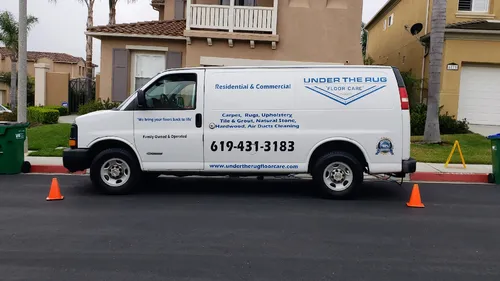
Under The Rug Floorcare Carpet Cleaning San Diego
5722 El Cajon Blvd, San Diego, CA 92115
Under The Rug Floorcare Carpet Cleaning San Diego offers a variety of cleaning services in Chula Vista, CA, including carpet, rug, upholstery, tile and grout, natural stone, and air duct cleaning to improve indoor air quality. The company uses high-quality, eco-friendly products and proven techniques to clean and rejuvenate surfaces safely. With over fifteen years of combined experience, this husband and wife team is certified by the Institute of Inspection Cleaning and Restoration Certification and provides flexible scheduling to meet customer needs.
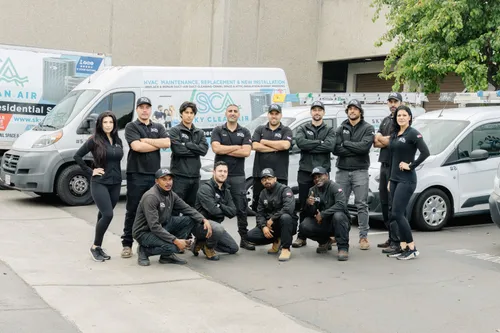
G&G Indoor Services
9484 Black Mountain Rd Suite C, San Diego, CA 92126
G&G Indoor Services is a family-owned HVAC company serving San Diego, CA, with over 15 years of experience. They provide a wide range of heating and air conditioning services including installation, repair, and maintenance of AC units, furnaces, heat pumps, ductless systems, and ductwork. The company also offers indoor air quality solutions such as duct cleaning, insulation services, and rodent proofing to enhance home comfort and efficiency. G&G Indoor Services is EPA-certified and works with all major brands, offering manufacturer warranties and heat pump installation rebates to support energy-efficient upgrades.
Understanding National City's Unique Air Quality Challenges
National City faces distinct indoor air quality pressures that stem from its environment. Situated adjacent to the Port of San Diego, the BNSF Railyard, and the I-5 and I-94 freeways, many residential areas are classified as having some of the highest pollution burdens in the state 1 2. This external pollution readily infiltrates homes and buildings, mixing with internally generated contaminants to create a complex IAQ profile. The coastal climate adds another layer, with humidity contributing to moisture-related issues. Being aware of these primary sources is the first step toward creating a healthier indoor space.
Primary Outdoor Pollutants Infiltrating Homes
The quality of your indoor air is often directly tied to the air outside. In National City, several outdoor sources are significant contributors.
- Diesel Particulate Matter (PM2.5): Emissions from port activity, rail yards, and heavy freeway traffic are a major concern 3. These fine particles, especially diesel soot, can easily enter buildings through windows, doors, and ventilation systems, posing respiratory and cardiovascular risks.
- Industrial Off-Gassing and VOCs: Proximity to shipping, manufacturing, and auto body shops can lead to elevated levels of Volatile Organic Compounds (VOCs) in the ambient air 4. These chemicals, which can originate from fuels, solvents, and industrial processes, volatilize into the air and find their way indoors.
Common Indoor Pollutant Sources
While outdoor air sets the baseline, activities and conditions inside a building are equally critical.
- Mold and Biological Contaminants: Coastal humidity provides ideal conditions for mold growth, particularly in poorly ventilated bathrooms, kitchens, and basements or in aging housing stock with moisture intrusion issues.
- Combustion Pollutants: Common indoor sources include gas stoves, space heaters, water heaters, and tobacco smoke. These can produce carbon monoxide (CO) and nitrogen dioxide (NO₂), which are harmful at elevated levels.
- Household VOCs and Particles: Everyday products like aerosol sprays, cleaning supplies, air fresheners, scented candles, and even new furniture can off-gas VOCs. Cooking, burning candles, and general activity also generate fine particles.
How to Assess Your Indoor Air in National City
Before investing in solutions, it's wise to understand the specific contaminants present in your air. Several assessment methods are available, from DIY monitoring to professional-grade analysis.
Professional Indoor Air Quality Testing
Hiring a certified professional provides the most accurate and comprehensive assessment. Local environmental testing firms offer services tailored to area-specific concerns 5.
- Airborne Mold and Spore Testing: This is a common service, especially when a musty odor is present or after a water leak. Samples are collected and analyzed in a certified lab to identify mold types and concentrations.
- VOC and Chemical Testing: Professionals may use SUMMA-type canister sampling or other methods to capture a broad spectrum of volatile organic compounds, providing a detailed breakdown of chemical pollutants 6.
- Combustion Pollutant Testing: Specific tests for carbon monoxide and nitrogen dioxide levels can check for unsafe concentrations from gas appliances or vehicle ingress.
- Comprehensive IAQ Inspection: A full evaluation often includes measuring particulate levels (PM2.5), humidity, carbon dioxide (CO₂) for ventilation assessment, and temperature.
Community and DIY Monitoring Tools
For ongoing awareness, low-cost sensor (LCS) technology has become more accessible. These devices can provide real-time readings for parameters like PM2.5, VOCs, humidity, and temperature.
- Understanding Limitations: It's important to know that consumer-grade sensors have limitations in accuracy and precision compared to professional equipment, but they are excellent for identifying trends and patterns 7.
- Local Programs: National City residents, particularly in port-adjacent neighborhoods, have previously had access to community initiatives like the Portside Air Quality Improvement and Relief (PAIR) program, which provided free air quality monitors to eligible households.
Effective Strategies for Healthier Indoor Air
Improving your building's air involves a multi-pronged approach often summarized as Source Control, Ventilation, and Filtration.
1. Source Control: Eliminate Pollutants at the Origin
The most effective way to improve IAQ is to prevent pollutants from entering the air in the first place.
- Manage Moisture: Use exhaust fans in bathrooms and kitchens, fix leaks promptly, and use a dehumidifier if needed to keep relative humidity between 30% and 50% to inhibit mold growth 8 9.
- Choose Low-VOC Products: Opt for unscented or naturally-scented cleaning products, paints, and building materials. Reduce use of aerosol sprays and air fresheners.
- Maintain Combustion Appliances: Ensure gas stoves, furnaces, and water heaters are properly installed, vented to the outside, and serviced annually to minimize CO and NO₂ emissions 10.
2. Ventilation: Dilute Stale Air with Fresh Air
Proper ventilation reduces pollutant concentration by bringing in outdoor air.
- Natural Ventilation: When outdoor air quality is good (check local air quality indexes), open windows and doors to create cross-ventilation.
- Mechanical Ventilation: Use bathroom and kitchen exhaust fans that vent outdoors. Consider upgrading your HVAC system to include an energy recovery ventilator (ERV) or heat recovery ventilator (HRV), which brings in fresh air while conserving energy.
3. Filtration: Clean the Air That Circulates
Air cleaning devices capture pollutants that source control and ventilation miss.
- Upgrade HVAC Filters: One of the most cost-effective steps is upgrading the filter in your central heating and cooling system to a MERV 13 rating. These filters are highly effective at capturing fine particles like PM2.5 and typically cost between $4 and $9 each 11 12.
- Use Portable Air Purifiers: For rooms where you spend the most time, such as bedrooms or living rooms, a portable air cleaner with a true HEPA filter is recommended. HEPA filters capture 99.97% of particles as small as 0.3 microns. Ensure the unit is properly sized for the room 13.
Find the perfect indoor air quality service providers for your needs
Get personalized recommendations and expert advice
Professional Services Available Locally
Beyond testing, local specialists offer remediation and enhancement services to tackle identified problems.
- Mold Remediation: If testing confirms a mold issue, certified remediation professionals can safely contain, remove, and clean affected areas to restore a healthy environment.
- HVAC System Cleaning and Maintenance: Specialized cleaning of air conditioning coils and ductwork can remove accumulated mold, dust, and debris that contribute to "dirty sock syndrome" and circulate contaminants 14. This service is often paired with applying EPA-registered disinfectants.
- Air Purifier Installation: For whole-home solutions, professionals can install in-duct air purification systems, such as UV-C lights or advanced electronic air cleaners, that work with your existing HVAC system.
Financial Assistance: Residents should inquire about local assistance programs. Past initiatives like the PAIR program and the ongoing AIRE program through the San Diego County Air Pollution Control District have provided free portable air purifiers to qualifying households in impacted communities 15 16.
Maintaining Your Indoor Environment
Good indoor air quality is an ongoing commitment. Simple habits make a big difference: run exhaust fans during and after showers and cooking, vacuum regularly with a HEPA-filtered vacuum, change your HVAC filters every 1-3 months, and be mindful of the products you bring into your home. Periodically checking in with a low-cost sensor can help you stay aware of conditions. For residents in areas with high outdoor pollution, keeping windows closed on poor air quality days and relying on filtration becomes especially important 17 18.
By understanding the unique mix of challenges in National City and proactively employing the strategies of source control, ventilation, and filtration, you can significantly improve the air you breathe indoors every day.
Frequently asked questions
Sources
Footnotes
-
EHC-Nomination-Portside-Neighborhoods.pdf - https://www.sdapcd.org/content/dam/sdapcd/documents/capp/EHC-Nomination-Portside-Neighborhoods.pdf ↩
-
Communities - National City - https://www.environmentalhealth.org/communities/national-city/ ↩
-
Indoor Air Quality - County of Los Angeles Public Health - http://www.publichealth.lacounty.gov/Eh/safety/indoor-air-quality.htm ↩
-
What is Indoor Air Quality? - https://ehsp.com/what-is-indoor-air-quality/ ↩
-
Best Environmental Testing near National City, CA - Yelp - https://m.yelp.com/search?find_desc=Environmental+Testing&find_loc=National+City%2C+CA ↩
-
Indoor Air Quality Testing - Southern California, Arizona, Nevada - https://www.ellisenvironmental.com/services/southern-california-indoor-air-quality-testing ↩
-
Guidance: Low-Cost Sensors for Healthier Indoor Air - https://ww2.arb.ca.gov/sites/default/files/2025-05/CARB%20LCS%20Guidance%20Document.pdf ↩
-
Indoor Air - California Air Resources Board - https://ww2.arb.ca.gov/our-work/programs/indoor-air ↩
-
What Are the Most Common Indoor Air Pollutants? - https://candcheat.com/what-are-the-most-common-indoor-air-pollutants/ ↩
-
Combustion Pollutants & Indoor Air Quality - https://ww2.arb.ca.gov/resources/documents/combustion-pollutants-indoor-air-quality ↩
-
Air Doctor Testing - https://airdoctortesting.com/ ↩
-
Indoor Air Quality Resources - CDPH - https://www.cdph.ca.gov/Programs/CCDPHP/DEODC/OHB/Pages/IndoorAirQualityResources.aspx ↩
-
Air Cleaning Devices for the Home - https://ww2.arb.ca.gov/resources/fact-sheets/air-cleaning-devices-home ↩
-
Indoor Air Quality Experts in San Diego, CA - https://www.carinihome.com/indoor-air-quality/ ↩
-
PORTSIDE AIR QUALITY IMPROVEMENT AND RELIEF (PAIR) ... - https://www.sdapcd.org/content/sdapcd/grants/grants-equipment/portside-air-quality-improvement-and-relief--pair--program.html ↩
-
AIRE Program - San Diego County Air Pollution Control District - https://www.sdapcd.org/AIRE.html ↩
-
Indoor Air - California Air Resources Board - CA.gov - https://ww2.arb.ca.gov/our-work/programs/indoor-air ↩
-
Indoor Air Quality in Commercial and Institutional Buildings - https://www.osha.gov/sites/default/files/publications/3430indoor-air-quality-sm.pdf ↩