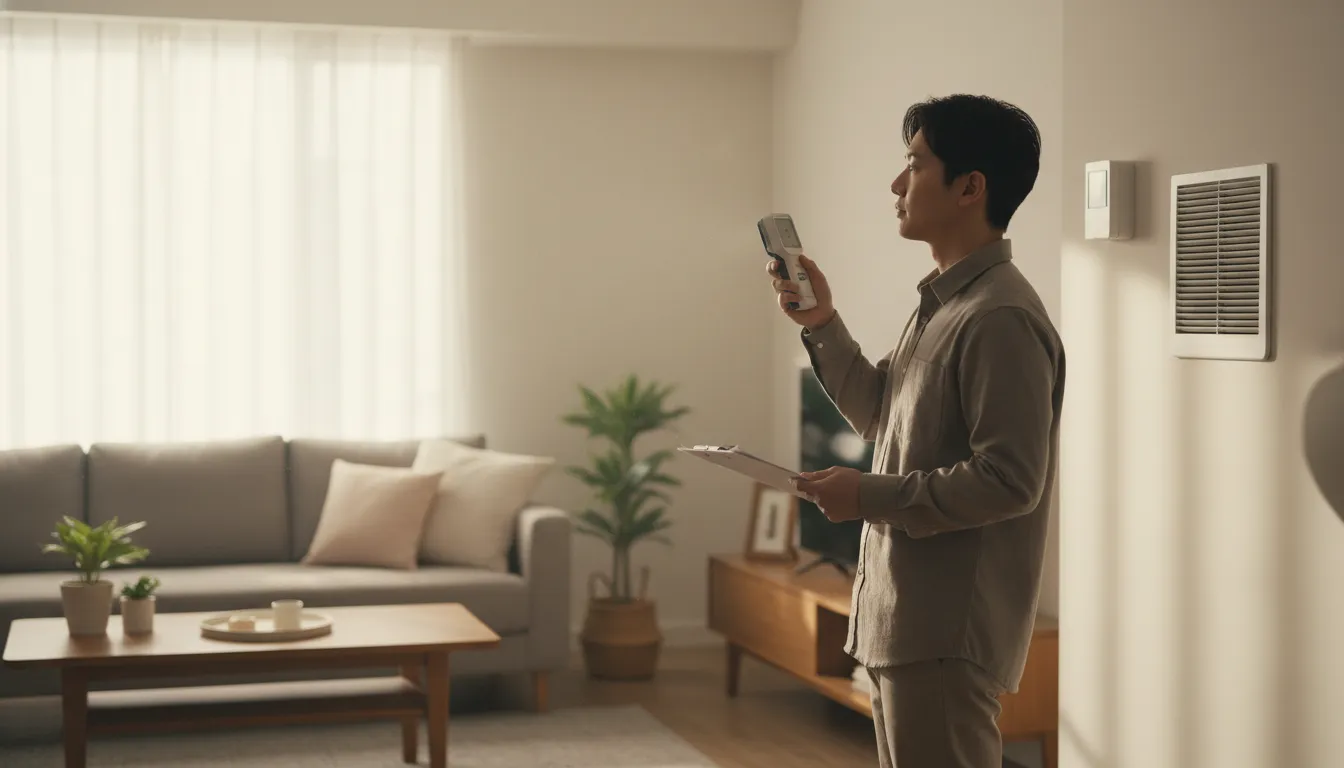
Find the Best Indoor Air Quality Service Providers for Your Business
No obligation • Fast responses • Nationwide coverage

Why you can trust HVAC Firms
HVAC Firms is a leading United States resource for evaluating HVAC service providers. Our team researches companies, checks credentials, and reviews customer feedback to present clear, unbiased information. Listings and rankings are based on merit, and companies cannot pay to change our editorial content.
Search providers near you
Top Indoor Air Quality Service Providers in Mesa, Arizona Ranked
The quality of the air you breathe inside your home or business is a critical component of health, comfort, and productivity. In Mesa, Arizona, the unique desert climate creates specific challenges for maintaining clean indoor air. This guide explains the common pollutants found in Mesa buildings, how to test for them, and the solutions available to improve your environment. Use this information to understand your needs and connect with qualified local professionals who can assess and enhance your indoor air.
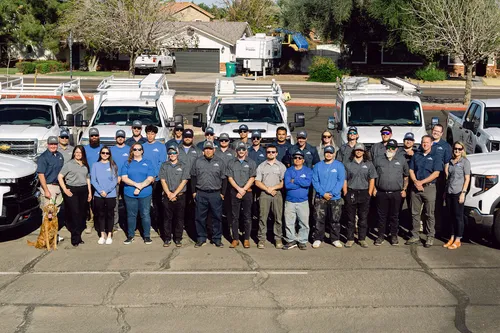
Mountain Peak Air
Mesa, AZ
Mountain Peak Air is a family-owned HVAC company based in Mesa, AZ, specializing in air conditioning repair, installation, heating, and indoor air quality services. They focus on maintaining and improving home comfort by offering AC repairs, system installations, and advanced air purification using NASA technology. The company provides tailored solutions suited to the desert climate of Mesa, ensuring both cooling efficiency and clean air for residents. Mountain Peak Air emphasizes repairing before replacing systems and offers maintenance plans to keep units in optimal condition.

Everest Air LLC
1455 E University Dr, Mesa, AZ 85203
Everest Air LLC is a licensed and insured HVAC company serving Mesa, AZ, specializing in air conditioning and heating services for residential and commercial clients. They offer a full range of services including installation, repair, maintenance, and replacement of air conditioning and heating systems. Everest Air works with leading manufacturers like Carrier, Trane, Rheem, and American Standard to ensure quality equipment and precise installation. The company also provides indoor air quality services to help maintain healthier environments. With a team of certified technicians, Everest Air is committed to meeting local codes and delivering reliable HVAC solutions in Mesa and nearby areas.
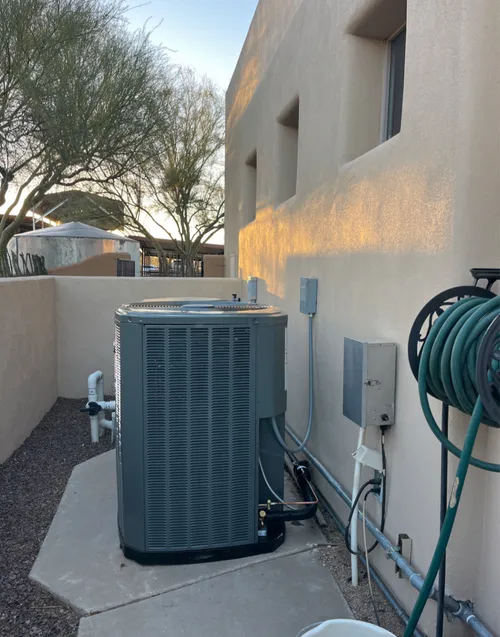
Cave Creek Cooling Company
Scottsdale, AZ
Cave Creek Cooling Company provides heating, cooling, and indoor air quality services in Scottsdale, AZ, and surrounding Northern Phoenix communities. They offer HVAC tune-ups, furnace and air conditioner repairs, and maintenance to help systems run efficiently and reliably, especially during extreme seasonal conditions. The company serves a wide area including Cave Creek, Carefree, New River, Anthem, and more.
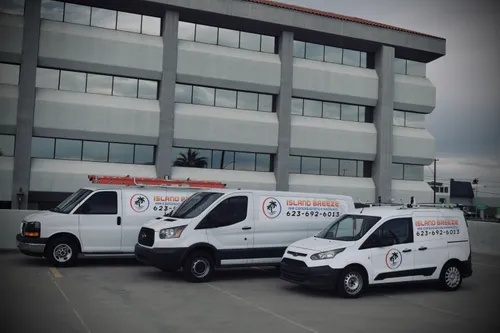
Island Breeze Air Conditioning & Heating LLC
809 E Fairmount Ave, Phoenix, AZ 85014
Island Breeze Air Conditioning & Heating LLC is a firefighter-owned HVAC company serving Phoenix, AZ, and surrounding areas including Gilbert, Mesa, Peoria, and Surprise. They provide residential and light commercial services such as air conditioning, furnace, heat pump, and ductless HVAC installation, repair, and maintenance. Their NATE-certified technicians focus on energy-efficient solutions and indoor air quality improvements. The company emphasizes integrity, accountability, and continuous improvement in their work. Island Breeze also offers after-hours service to address urgent HVAC needs.

AZ Home Services Group AC Repair & Plumbing Services of Fountain Hills
16930 E Palisades Blvd #100, Fountain Hills, AZ 85268
AZ Home Services Group AC Repair & Plumbing Services of Fountain Hills provides HVAC and plumbing services in Scottsdale, AZ. They offer air conditioning repair, HVAC installation, mini-split installation, thermostat installation, indoor air quality solutions, and plumbing repairs. The company handles emergency HVAC and plumbing services, including 24/7 availability. Their capabilities include ductless mini-split installation, hydro-jetting for drains, and whole-home air purification system installations. Licensed and certified, they serve residential and light commercial customers in the area.
Why Indoor Air Quality Matters in Mesa
While the Arizona sun shines brightly outside, the air inside your Mesa home or office can be up to five times more polluted than outdoor air. This is largely due to the local climate strategy: to combat extreme heat, buildings are sealed tightly for air conditioning efficiency. While this saves energy, it also traps pollutants inside, allowing them to recirculate continuously through your HVAC system. Poor indoor air quality (IAQ) is linked to a range of issues from short-term irritation-like headaches, fatigue, and allergy symptoms-to more serious long-term respiratory and cardiovascular problems. For families, employees, and sensitive individuals, proactively managing the indoor environment is an investment in well-being.
Common Indoor Air Pollutants in Mesa Homes
Understanding the specific threats is the first step toward remediation. Mesa's environment contributes to a distinct mix of indoor air contaminants.
Dust and Allergens (Particulate Matter)
The desert is a prolific generator of fine dust (PM2.5) and pollen. These microscopic particles easily infiltrate buildings through doors, windows, and on clothing. Once inside a sealed home, they are stirred up by daily activity and constantly recirculated by your forced-air HVAC system, leading to persistent allergy symptoms and respiratory irritation for occupants 1.
Mold and Mildew Spores
Mesa's climate is predominantly dry, but the intense summer monsoon season introduces bursts of high humidity. This moisture can lead to rapid mold growth in poorly ventilated areas like bathrooms, under sinks, around windows, and in basements or crawl spaces. Mold spores released into the air can trigger severe allergic reactions and asthma attacks 2.
Volatile Organic Compounds (VOCs)
These are gases emitted from a wide array of common household products and materials. Sources in Mesa homes include new furniture, paints, varnishes, cleaning supplies, air fresheners, and building materials like pressed wood. In a tightly sealed home with limited ventilation, VOC concentrations can build up to levels that cause headaches, dizziness, and long-term health concerns.
Radon Gas
A serious and often overlooked threat, radon is a colorless, odorless radioactive gas that seeps from the soil. It can enter any home, old or new, through cracks in the foundation, construction joints, and gaps around pipes. The U.S. Environmental Protection Agency (EPA) considers radon the second leading cause of lung cancer. Testing is the only way to know if your Mesa home has elevated levels 3.
Other Pollutants
Additional common indoor air concerns include:
- Pet Dander: A potent allergen that clings to surfaces and circulates in the air.
- Carbon Monoxide (CO): A deadly gas produced by malfunctioning fuel-burning appliances like furnaces, water heaters, and stoves.
- Chemical Residues: From pesticides, herbicides, and tracked-in pollutants.
- Legacy Hazards: In older Mesa buildings, asbestos fibers from insulation or lead dust from paint can become airborne during renovations 4.
How to Test Your Indoor Air Quality in Mesa
You can't fix a problem you haven't measured. There are several approaches to testing, ranging from DIY kits to comprehensive professional assessments.
Professional IAQ Testing and Assessment
Hiring a certified professional is the most reliable method for obtaining an accurate and complete picture of your air quality. A qualified technician will conduct a thorough visual inspection, use calibrated equipment to measure pollutant levels in real-time, and may collect air or surface samples for laboratory analysis. They can identify hidden sources, like mold behind walls or radon entry points, and provide a detailed report with prioritized remediation recommendations 5. For commercial properties, these assessments are even more critical and comprehensive.
Do-It-Yourself (DIY) Testing Kits
DIY kits are available for specific contaminants, most commonly for radon or mold. They are an affordable starting point and involve placing a sampler in your home for a set period and then mailing it to a lab for analysis. While useful for screening a single pollutant, they may lack the accuracy, context, and breadth of a professional evaluation. They also do not provide expert guidance on next steps.
Continuous Monitoring and Awareness
For certain gases, continuous monitoring is essential. Every home in Mesa should have working carbon monoxide detectors on each level. Smart air quality monitors that track PM2.5, VOCs, and humidity are also becoming more popular for ongoing awareness. Furthermore, residents can check the Maricopa County Air Quality Department reports or local sensor networks like PurpleAir. This is especially helpful on high-pollution days to decide when to close fresh air intakes and rely on filtered, recirculated indoor air6 7.
Find the perfect indoor air quality service providers for your needs
Get personalized recommendations and expert advice
Solutions for Improving Indoor Air Quality
Once testing identifies the issues, a range of solutions can be implemented, often in conjunction with your home's HVAC system.
Source Control
The most effective strategy is to eliminate or reduce the source of pollution.
- Use low-VOC paints and cleaning products.
- Ensure gas appliances are properly vented and maintained.
- Fix water leaks promptly to prevent mold.
- Use high-quality doormats and remove shoes at the entrance to reduce tracked-in dust and chemicals.
Ventilation Improvements
Diluting stale indoor air with fresh outdoor air is key, but in Mesa, this must be balanced with heat and dust concerns.
- Energy Recovery Ventilators (ERVs) or Heat Recovery Ventilators (HRVs): These systems efficiently exchange indoor and outdoor air while preconditioning the incoming air (removing excess heat/humidity or dust), making increased ventilation practical in our climate.
- Use exhaust fans in bathrooms and kitchens to remove moisture and odors at the source.
Air Cleaning and Filtration
When pollutants cannot be eliminated at the source, air cleaning is necessary.
- High-Efficiency HVAC Filters: Upgrade the filter in your central air system to a Minimum Efficiency Reporting Value (MERV) 13-rated filter, if your system can handle the increased airflow resistance. This can capture a significant portion of dust, pollen, and mold spores.
- Whole-House Air Purifiers: These systems, such as advanced HEPA filtration or electronic air cleaners, are integrated directly into your ductwork, cleaning all the air that circulates through your home.
- Ultraviolet (UV) Germicidal Lights: Installed inside the HVAC ductwork, UV-C lights can help neutralize mold spores, bacteria, and viruses as air passes by the lamps8.
Humidity Control
Managing moisture is crucial for comfort and preventing mold.
- Ensure your air conditioning system is properly sized and maintained to remove humidity effectively.
- In areas prone to dampness, a standalone dehumidifier can be used.
Specialized Remediation
Some pollutants require targeted, professional abatement:
- Radon Mitigation: A professional will typically install a sub-slab depressurization system, which uses a fan to draw radon gas from beneath the foundation and vent it safely above the roofline9.
- Mold Remediation: This involves containing the affected area, removing contaminated materials, and thoroughly cleaning surfaces with antimicrobial agents. It is not a DIY job, as improper handling can spread spores throughout the home.
- Duct Cleaning or Replacement: Over time, ducts can accumulate significant dust, debris, and even mold. Professional cleaning or, in cases of severe contamination or damage, full duct replacement can restore clean airflow.
Understanding the Costs of IAQ Services in Mesa
Investing in better air has a cost range that depends on the scope of testing and the solutions required.
- Professional IAQ Testing: For a standard residential assessment in Mesa, you can expect to pay between $292 and $584, with more comprehensive evaluations reaching up to $1,000. Commercial inspections are more involved, typically ranging from $1,000 to $3,000+.
- Specific Pollutant Testing: Targeted professional tests vary: mold inspection ($300-$1,000), radon testing ($150-$800), VOC testing ($200-$400 per sample), and asbestos testing ($250-$800)10.
- Remediation and Improvement Costs: Implementing solutions represents a larger investment. Mold removal averages $1,200 to $3,800. Installing a radon mitigation system averages $800 to $1,300. The cost for whole-house air purification systems or advanced HVAC upgrades depends entirely on the equipment chosen and the complexity of installation11 12 13.
Frequently asked questions
Sources
Footnotes
-
The Importance of Indoor Air Quality in Mesa County Homes - https://www.gjappliances.com/post/the-importance-of-indoor-air-quality-in-mesa-county-homes ↩
-
Indoor Air Quality Testing Guide For Homes in Las Vegas - https://nrs.vegas/blog/your-comfort/indoor-air-quality-testing-guide-for-homes-in ↩
-
Indoor Air Quality Information - School Facilities Board - https://sfb.az.gov/sites/default/files/2022-04/web%20Indoor%20Air%20Quality%20Info%20July%202019.pdf ↩
-
Arizona Indoor Air Quality & Environmental Testing | Mesa, AZ - https://www.aziaqtesting.com/indoor-air-quality-testing ↩
-
Mesa Youth Climate Action Fund - https://www.mesaaz.gov/Environment-Sustainability/Living-Green/Mesa-Youth-Climate-Action-Fund ↩
-
Mesa Indoor Air Quality: A 2025 Guide to Improvement - https://www.aacoolingaz.com/blog/indoor-air-quality-mesa-guide ↩
-
Halo by Erlab Reveals Hidden Costs of Air Quality - https://iaq.erlab.com/contaminated-indoor-air-is-costing-your-organization-more-than-you-can-see/ ↩
-
Indoor Air Quality | Aire Serv of East Valley - https://www.aireserv.com/east-valley/services/indoor-air-quality/ ↩
-
Indoor Air Quality Services Mesa AZ - https://www.justcalljohns.com/indoor-air-quality ↩
-
How Much Does Indoor Air Quality Testing Cost? [2026 Data] - https://www.angi.com/articles/how-much-does-indoor-air-quality-testing-cost.htm ↩
-
Indoor Air Quality | Aire Serv of East Valley - https://www.aireserv.com/east-valley/services/indoor-air-quality/ ↩
-
How Much Does Indoor Air Quality Testing Cost? [2025 Data] - https://www.homeadvisor.com/cost/environmental-safety/test-indoor-air-quality/ ↩
-
Indoor Air Quality Phoenix | UV, HEPA, Ductwork, Insulation - https://www.goettl.com/location/phoenix-arizona/indoor-air-quality/ ↩