Find the Best Indoor Air Quality Service Providers for Your Business
No obligation • Fast responses • Nationwide coverage

Why you can trust HVAC Firms
HVAC Firms is a leading United States resource for evaluating HVAC service providers. Our team researches companies, checks credentials, and reviews customer feedback to present clear, unbiased information. Listings and rankings are based on merit, and companies cannot pay to change our editorial content.
Search providers near you
Best Indoor Air Quality Service Providers in Arizona Ranked
The quality of the air inside your Arizona home directly impacts your health, comfort, and well-being. While the state's arid climate presents unique challenges-from pervasive dust to potential radon gas-managing indoor air quality (IAQ) is primarily the responsibility of homeowners and tenants, guided by federal standards and professional recommendations. This resource explains the common pollutants in Arizona homes, outlines practical strategies for improvement, and provides guidance on when to seek professional testing and solutions to ensure you and your family are breathing clean, healthy air.
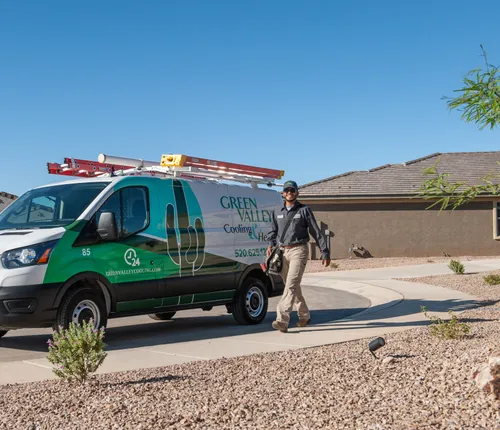
Green Valley Cooling & Heating
645 W Ward Ln, Green Valley, AZ 85614
Green Valley Cooling & Heating is an HVAC company serving Tucson, AZ, and surrounding communities including Green Valley, Sahuarita, and Vail. They provide a wide range of services including air conditioning and heating installation, repair, and maintenance, as well as duct cleaning and indoor air quality solutions. The company is a Certified Daikin Comfort Pro Dealer and offers expertise in energy-efficient upgrades and whole-home comfort systems. Established in 1968, Green Valley Cooling & Heating has over fifty years of experience in the industry. Their licensed and insured technicians are available 24/7 for emergency repair services.
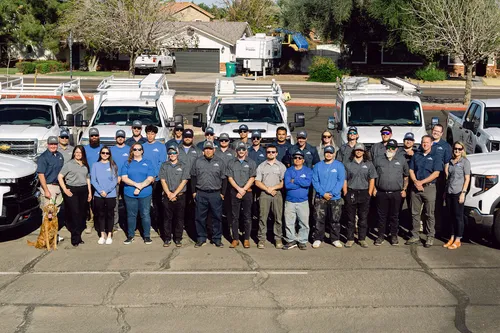
Mountain Peak Air
Mesa, AZ
Mountain Peak Air is a family-owned HVAC company based in Mesa, AZ, specializing in air conditioning repair, installation, heating, and indoor air quality services. They focus on maintaining and improving home comfort by offering AC repairs, system installations, and advanced air purification using NASA technology. The company provides tailored solutions suited to the desert climate of Mesa, ensuring both cooling efficiency and clean air for residents. Mountain Peak Air emphasizes repairing before replacing systems and offers maintenance plans to keep units in optimal condition.

Everest Air LLC
1455 E University Dr, Mesa, AZ 85203
Everest Air LLC is a licensed and insured HVAC company serving Mesa, AZ, specializing in air conditioning and heating services for residential and commercial clients. They offer a full range of services including installation, repair, maintenance, and replacement of air conditioning and heating systems. Everest Air works with leading manufacturers like Carrier, Trane, Rheem, and American Standard to ensure quality equipment and precise installation. The company also provides indoor air quality services to help maintain healthier environments. With a team of certified technicians, Everest Air is committed to meeting local codes and delivering reliable HVAC solutions in Mesa and nearby areas.
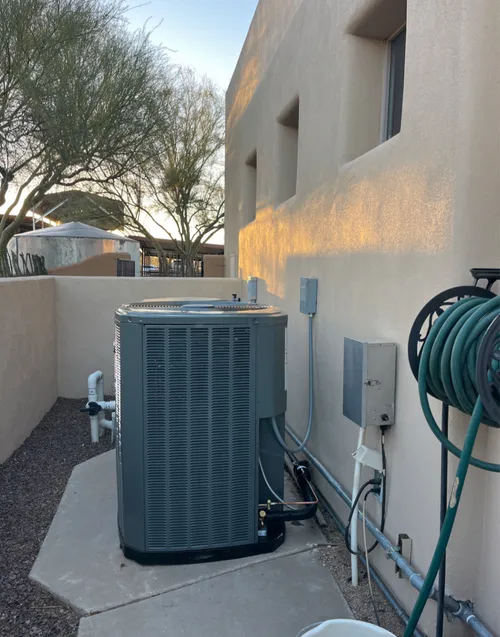
Cave Creek Cooling Company
Scottsdale, AZ
Cave Creek Cooling Company provides heating, cooling, and indoor air quality services in Scottsdale, AZ, and surrounding Northern Phoenix communities. They offer HVAC tune-ups, furnace and air conditioner repairs, and maintenance to help systems run efficiently and reliably, especially during extreme seasonal conditions. The company serves a wide area including Cave Creek, Carefree, New River, Anthem, and more.

Island Breeze Air Conditioning & Heating LLC
809 E Fairmount Ave, Phoenix, AZ 85014
Island Breeze Air Conditioning & Heating LLC is a firefighter-owned HVAC company serving Phoenix, AZ, and surrounding areas including Gilbert, Mesa, Peoria, and Surprise. They provide residential and light commercial services such as air conditioning, furnace, heat pump, and ductless HVAC installation, repair, and maintenance. Their NATE-certified technicians focus on energy-efficient solutions and indoor air quality improvements. The company emphasizes integrity, accountability, and continuous improvement in their work. Island Breeze also offers after-hours service to address urgent HVAC needs.
Understanding Arizona's Indoor Air Landscape
Arizona lacks comprehensive statewide residential IAQ regulations, so residents often rely on guidelines from the U.S. Environmental Protection Agency (EPA), standards from organizations like ASHRAE (the American Society of Heating, Refrigerating and Air-Conditioning Engineers), and general advice from the Arizona Department of Environmental Quality (ADEQ) 1 2 3. This makes proactive homeowner education and action essential. The dry climate influences the primary pollutants, but issues like moisture and chemical vapors can still pose significant risks indoors.
Common Indoor Air Pollutants in Arizona Homes
Several key contaminants are prevalent in Arizona residences, each with distinct sources and health implications.
Particulate Matter (Dust)
Arizona's signature pollutant is windblown dust, classified as PM10 (coarse particles) and the finer, more dangerous PM2.5. Sources include desert soil, construction activity, unpaved roads, wood-burning fireplaces, and seasonal wildfires. These particles can penetrate deep into the lungs, exacerbating allergies, asthma, and other respiratory conditions.
Radon Gas
This colorless, odorless radioactive gas occurs naturally in soil and rock and can seep into homes through cracks in foundations, floors, and walls 4. Radon is the second leading cause of lung cancer in the United States. Testing is crucial, as Arizona homes can have elevated levels despite the arid environment.
Volatile Organic Compounds (VOCs)
These are gases emitted from a wide array of household products, including paints, varnishes, cleaning supplies, disinfectants, air fresheners, new furniture, and building materials. Concentrations can be many times higher indoors than outdoors, leading to headaches, eye and throat irritation, and long-term health effects.
Mold and Biological Contaminants
While Arizona is dry, mold can thrive anywhere moisture is present. Common sources include plumbing leaks, roof leaks, poor bathroom ventilation, evaporative coolers ("swamp coolers"), and even over-humidification5. Mold spores can trigger allergic reactions and asthma attacks.
Carbon Monoxide (CO) and Combustion Pollutants
This lethal, odorless gas is produced by improperly vented fuel-burning appliances like gas stoves, furnaces, water heaters, and fireplaces. Ensuring proper appliance venting and installing CO detectors on every floor are non-negotiable safety measures.
Tobacco Smoke
Secondhand and thirdhand smoke contain thousands of chemicals, many toxic6. The ADEQ strongly recommends smoking outdoors to protect indoor air, as residues can linger on surfaces and in dust long after smoking has ceased.
Core Strategies for Healthier Indoor Air
Improving your home's air doesn't always require major investment. These foundational practices form the first line of defense.
1. Source Control
The most effective way to improve IAQ is to eliminate or reduce pollutant sources.
- Choose low-VOC products: Opt for paints, cleaners, and furnishings labeled as low-VOC or green.
- Maintain appliances: Have furnaces, water heaters, and gas stoves inspected annually to prevent CO leaks.
- Address moisture immediately: Fix leaks promptly, use exhaust fans, and ensure proper drainage around your home's foundation to prevent mold.
- Establish smoke-free rules: Prohibit smoking indoors.
2. Enhanced Ventilation
Diluting stale indoor air with fresh outdoor air is critical. The EPA recommends following ASHRAE Standard 62.2, which sets minimum ventilation rates for homes7 8.
- Use exhaust fans: Run bathroom fans during and for 20 minutes after showers. Use kitchen exhaust hoods that vent outdoors when cooking.
- Open windows strategically: When outdoor air quality is good (check local AQI), cross-ventilate your home.
- Consider mechanical ventilation: For tightly sealed modern homes, an energy recovery ventilator (ERV) or heat recovery ventilator (HRV) can provide fresh, filtered air without significant energy loss.
3. Effective Filtration
Your HVAC system's filter is your primary weapon against particulate matter.
- Upgrade your filter: Use a pleated filter with a Minimum Efficiency Reporting Value (MERV) rating of 11-13 for the best balance of particle capture and airflow 9.
- Change filters regularly: Replace filters every 30-90 days, more frequently during dusty seasons or if you have pets.
- Seal ductwork: Leaky ducts can pull dust from attics or crawl spaces into your living areas. Have ducts inspected and sealed by a professional.
Find the perfect indoor air quality service providers for your needs
Get personalized recommendations and expert advice
When and How to Test Your Indoor Air
If you experience persistent health symptoms, notice musty odors, or live in an older home, professional testing can identify specific problems. DIY test kits are available but may be less accurate than professional analysis 10.
Types of Professional IAQ Testing & Costs
Costs vary based on home size, location, and the pollutants tested 11.
- Comprehensive IAQ Test: A general assessment for multiple pollutants typically ranges from $300 to $500, with more extensive testing exceeding $1,000 12.
- Radon Testing: Average costs range from $150 to $800.
- Mold Inspection and Testing: Generally costs between $300 and $1,000.
- VOC Testing: Averages $200 to $400.
- Asbestos Testing (common in older homes): Can cost $250 to $800.
- Carbon Monoxide Testing: Usually $100 to $20013.
Solutions for Identified Problems
Once testing pinpoints issues, targeted solutions are available.
Radon Mitigation
If radon levels are high (at or above 4 pCi/L), a mitigation system is recommended. These systems use a vent pipe and fan to pull gas from beneath the home and exhaust it safely above the roof. Average installation costs in Arizona are around $800 to $1,300 14.
Mold Remediation
This involves containing the affected area, removing contaminated materials, and thoroughly cleaning surfaces. Costs vary widely with the extent of growth, averaging $1,200 to $3,80015 16. The key to permanent resolution is fixing the underlying moisture problem.
Advanced Air Purification
For homes with severe allergies, asthma, or persistent particulate issues, standalone air purifiers with HEPA filters or whole-home air purification systems integrated into the HVAC can be highly effective. These systems supplement your standard HVAC filtration.
Duct Cleaning and Sealing
Over time, ducts accumulate dust, debris, and sometimes mold or pest droppings. Professional duct cleaning removes this buildup. Combined with duct sealing, this can significantly improve system efficiency and air quality17 18.
HVAC Maintenance and Upgrades
Regular professional maintenance of your heating and cooling system ensures it operates efficiently and doesn't become a source of pollution. In some cases, upgrading an old system or adding advanced filtration technology can be a worthwhile investment for long-term air quality and comfort 19.
Special Considerations for Arizona's Climate
- Dust Storms & Wildfire Smoke: During events like haboobs or nearby wildfires, outdoor air quality can become hazardous20. Keep windows and doors closed, run your HVAC fan to circulate air through the filter, and consider using a portable HEPA air purifier in main living areas.
- Evaporative Coolers: While energy-efficient, "swamp coolers" add significant moisture to the air. They require diligent maintenance to prevent mineral buildup and microbial growth in the pads and water reservoir.
- Low Humidity: Extremely dry air can cause respiratory irritation. A whole-home humidifier, properly maintained to prevent mold, can add comfort during dry winter months.
Frequently asked questions
Sources
Footnotes
-
Indoor Air Quality - Overview - OSHA - https://www.osha.gov/indoor-air-quality ↩
-
South Mesa Water Quality Assurance Revolving Fund (WQARF) Site - https://static.azdeq.gov/wqarf/cab/smesa_040208m.pdf ↩
-
State Tier Ratings And Emission Standards In Texas And Arizona - https://turnkey-industries.com/understanding-emission-standards-across-texas-arizona-and-beyond ↩
-
Indoor Air Quality Testing Phoenix AZ - https://airmd.com/areas-served/arizona/phoenix/indoor-air-quality-testing/ ↩
-
Indoor Air Quality Issues for Child Care Facilities - https://legacy.azdeq.gov/function/about/download/indoorair.pdf ↩
-
P2 Week | Breathe Easy: Out With The Bad Air, In With The Good - https://azdeq.gov/p2_GoodAir ↩
-
How much ventilation do I need in my home to improve indoor air ... - https://www.epa.gov/indoor-air-quality-iaq/how-much-ventilation-do-i-need-my-home-improve-indoor-air-quality ↩
-
State Guide for Clean Indoor Air - Environmental Law Institute - https://www.eli.org/sites/default/files/files-pdf/State%20Guide%20for%20Clean%20Indoor%20Air%20-%20ELI%20Website.pdf ↩
-
How the air quality is affected and ways to improve it - https://www.jkpi.org/how-the-air-quality-is-affected-and-ways-to-improve-it/ ↩
-
Indoor Air Quality Testing in Pittsburgh, PA - https://www.aireserv.com/sewickley/other-services/indoor-air-quality-testing/ ↩
-
How Much Does an Indoor Air Quality Test Cost? - Ambient Edge - https://www.ambientedge.com/faqs/how-much-does-an-indoor-air-quality-test-cost/ ↩
-
How Much Does a Home Indoor Air Quality Test Cost? Key Analyses - https://skycleanair.com/how-much-does-a-home-indoor-air-quality-test-cost/ ↩
-
How Much Does Indoor Air Quality Testing Cost? [2026 Data] - https://www.angi.com/articles/how-much-does-indoor-air-quality-testing-cost.htm ↩
-
Expert Indoor Air Quality Solutions & Humidifiers in Tucson, AZ - https://www.idesignac.com/services/indoor-air-quality-tucson ↩
-
How Much Does Indoor Air Quality Testing Cost? [2025 Data] - https://www.homeadvisor.com/cost/environmental-safety/test-indoor-air-quality/ ↩
-
Why You Shouldn't Ignore Poor Indoor Air Quality - https://www.bryansunited.com/poor-indoor-air-quality-in-your-home-why-you-shouldnt-ignore-it/ ↩
-
Tips for Better Indoor Air Quality | Arizona Comfort Specialists - https://arizonacomfortspecialists.com/tips-for-better-indoor-air-quality/ ↩
-
Arizona Indoor Air Quality Tips | Phoenix, Sun City, AZ - https://desertdiamondhvac.com/arizona-indoor-air-quality-tips/ ↩
-
NATE-Certified Indoor Air Quality Services in Chandler, AZ - https://www.chandlerair.com/services/indoor-air-quality ↩
-
Arizona Dust Storm 2025: How AQI Increased to Hazardous Levels - https://www.aqi.in/blog/arizona-dust-storm-2025/ ↩