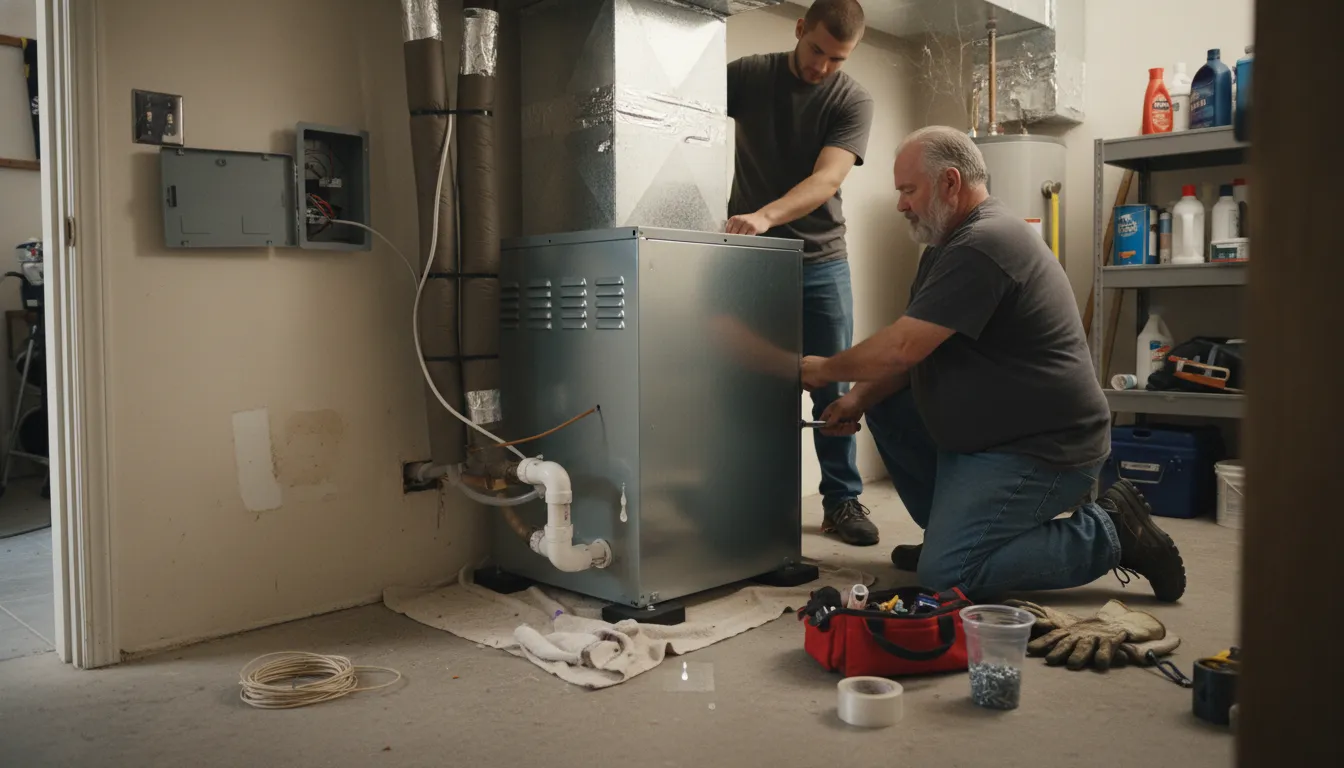
Find the Best HVAC Installers for Your Business
No obligation • Fast responses • Nationwide coverage

Why you can trust HVAC Firms
HVAC Firms is a leading United States resource for evaluating HVAC service providers. Our team researches companies, checks credentials, and reviews customer feedback to present clear, unbiased information. Listings and rankings are based on merit, and companies cannot pay to change our editorial content.
Search providers near you
Top HVAC Installers in Greenville, North Carolina Ranked
Installing a new heating and cooling system is a significant investment in your home's comfort, efficiency, and value. For Greenville residents, understanding the process, options, and local considerations is key to a successful project. This guide provides a detailed look at HVAC installation, helping you navigate the choices and connect with qualified local professionals to ensure your system is tailored to your home and the Eastern North Carolina climate.
Understanding Your HVAC System Options
Choosing the right system is the first and most critical step in your installation project. The climate in Greenville, with its hot, humid summers and relatively mild winters, influences which systems are most effective and efficient. Here are the most common choices for residential heating and air conditioning installation.
Central Air Conditioner & Furnace This traditional split system remains a popular choice for whole-home comfort. It consists of an outdoor air conditioning condenser and an indoor furnace, often powered by natural gas, propane, or electricity. This setup provides powerful, separate systems for cooling and heating, making it a reliable option for year-round climate control.
Heat Pumps For energy efficiency, a heat pump is an excellent solution. It functions as an all-in-one system, providing both heating and cooling by transferring heat rather than generating it. Modern air-source heat pumps are highly effective in Greenville's climate and can significantly reduce energy bills. They are often installed with a supplemental or backup heating system for the coldest days 1.
Ductless Mini-Split Systems If your home lacks existing ductwork, or you're looking to add comfort to a specific area like a sunroom or garage, ductless mini-splits are ideal. These systems involve an outdoor compressor unit connected to one or more indoor air handlers mounted on walls or ceilings. They offer zoned heating and cooling, allowing for personalized temperature control in different rooms.
The Step-by-Step Installation Process
A professional HVAC setup is a multi-stage project that requires careful planning and execution. Knowing what to expect can help you prepare your home and communicate effectively with your contractor.
1. Initial Site Evaluation and Planning A reputable contractor will begin with a thorough assessment of your home. This includes calculating the heating and cooling load (Manual J calculation), inspecting existing ductwork, evaluating electrical service, and discussing your comfort goals. This step is crucial for determining the correct system size and type. The contractor will also handle pulling any required local permits.
2. Removal of the Old System Once preparations are complete, the old furnace, air conditioner, or heat pump is safely disconnected and removed from your home. This includes proper recovery of refrigerant from old AC units in accordance with EPA regulations.
3. Ductwork Assessment and Modification The installer will inspect your home's ductwork for leaks, damage, or inadequate sizing. For optimal efficiency and comfort, repairs, sealing, or modifications may be necessary before connecting the new system. In some cases, all new ducting may be installed.
4. Installation of New Equipment This is the core phase. The new indoor unit (furnace or air handler) is positioned and secured. The outdoor condenser or heat pump unit is placed on a stable, level pad. Refrigerant lines, electrical connections, and condensate drain lines are carefully run between the indoor and outdoor units.
5. Electrical, Thermostat, and Final Connections The system is connected to your home's electrical panel. A new, modern thermostat (often programmable or smart) is installed to control the system. All connections are tightened and checked for safety.
6. System Testing, Startup, and Commissioning The final and most important step is startup. The technician will charge the system with refrigerant, start it up, and test all modes of operation. They will measure airflow, check temperature differentials, verify safety controls, and ensure the system is running at its advertised efficiency. You'll receive a walkthrough on how to operate your new system and the thermostat 2.
What to Expect: Timelines and Scheduling
The duration of your HVAC replacement project depends on the system's complexity and the scope of work involved.
- Standard System Replacement: A straightforward swap of a central air conditioner and furnace or a heat pump system, with no major ductwork changes, can typically be completed in a single day.
- Complex Installations: Projects that involve installing new ductwork throughout the home, upgrading electrical service, or installing specialized systems like geothermal can take several days to over a week 3 4.
Most contractors will provide a clear timeline during the initial estimate. It's wise to plan for some household disruption during the installation day, as technicians will need access to your attic, basement, utility closets, and the exterior of your home.
Find the perfect hvac installers for your needs
Get personalized recommendations and expert advice
Investment and Cost Considerations in Greenville
The cost of a new HVAC system in Greenville varies widely based on several factors. Understanding these can help you interpret quotes and budget effectively.
Primary Cost Factors:
- Home Size and Layout: Larger homes require larger, more expensive systems with higher capacity.
- System Type and Efficiency: High-efficiency models (with higher SEER2 ratings for cooling and HSPF for heat pumps) have a higher upfront cost but offer lower operating costs. Heat pumps and systems with advanced features like variable-speed motors also command a premium 5.
- Equipment Brand: Premium brands often cost more than standard ones.
- Ductwork Modifications: Repairing, replacing, or installing new ducts is a significant labor and material cost.
- Labor and Contractor Expertise: Rates vary, and highly experienced, licensed contractors may charge more for their expertise.
Estimated Cost Ranges: For a full system replacement in the Greenville area, homeowners can expect a broad range. A standard-efficiency central AC and furnace system for an average-sized home might start around $5,000 to $8,000. Mid-range to high-efficiency systems, including heat pumps, often fall between $8,000 and $15,000+. Complex jobs with extensive ductwork can exceed this range 6 7 8.
Potential Savings and Incentives: Always ask about available rebates and tax credits. Duke Energy Progress may offer rebates for installing high-efficiency equipment. At the federal level, the Energy Efficient Home Improvement Credit allows you to claim 30% of the project cost (up to a $2,000 annual limit) for qualifying heat pumps and biomass stoves/boilers 9. This can substantially reduce your net investment.
Choosing a Contractor in Greenville: Key Questions
Selecting the right professional is as important as choosing the right equipment. Here's what to look for:
- Licensing and Insurance: Verify the contractor holds a valid North Carolina HVAC license and carries both liability and worker's compensation insurance.
- Experience and References: Choose a company with a proven track record in Greenville. Ask for and contact local references.
- Detailed Written Estimates: Obtain at least three detailed, written quotes that break down equipment model numbers, labor, materials, and permit fees. This allows for an apples-to-apples comparison.
- Load Calculations: Ensure the proposal is based on a proper Manual J load calculation, not just the size of your old unit. An improperly sized system will not perform efficiently.
- Warranties: Understand the warranties offered on both parts and labor. Reputable contractors stand behind their work.
Maintaining Your New System
After your new heating and cooling system is installed, protect your investment with regular maintenance. Schedule annual tune-ups-one for cooling in the spring and one for heating in the fall. This professional service includes cleaning, inspection, and adjustments that keep your system running efficiently, prevent breakdowns, and extend its lifespan. Changing your air filter every 1-3 months is the most important task you can do yourself.
Frequently asked questions
Sources
Footnotes
-
How Much to Install Central AC: A Comprehensive Cost Breakdown - https://www.leokobco.com/post/how-much-to-install-central-ac ↩
-
Step-by-Step HVAC Installation Guide | Carrier - https://www.carrier.com/residential/en/us/products/air-conditioners/hvac-installation/ ↩
-
Residential HVAC Installation Process: A Comprehensive Guide - https://precisionairhc.com/blog/residential-hvac-installation-process/ ↩
-
How Long Does It Take To Replace Your HVAC System? - https://downeyplumbing.com/blog/how-long-does-it-take-to-replace-your-hvac-system/ ↩
-
How Much Does an Air Conditioner Cost for a 1,200-Square-Foot Home? - https://www.thisoldhouse.com/heating-cooling/air-conditioner-cost-for-1200-square-foot-home ↩
-
How Much Does an HVAC Cost to Replace in North Carolina? - https://lmwilson.com/blog/how-much-does-an-hvac-cost-to-replace-in-north-carolina/ ↩
-
Affordable A/C Installation Costs in Greenville, SC - https://carolinaheating.com/about-us/blog/air-conditioning-installation-costs-greenville-sc/ ↩
-
How much is a new AC unit for a 1500 sq ft house? - https://stevesultimateair.com/how-much-is-a-new-ac-unit-for-a-1500-sq-ft-house/ ↩
-
Learn About Federal HVAC Tax Credits - Carrier - https://www.carrier.com/residential/en/us/homeowner-resources/federal-tax-credits/ ↩