Find the Best Heat Pump Installation & Replacement Contractors for Your Business
No obligation • Fast responses • Nationwide coverage

Why you can trust HVAC Firms
HVAC Firms is a leading United States resource for evaluating HVAC service providers. Our team researches companies, checks credentials, and reviews customer feedback to present clear, unbiased information. Listings and rankings are based on merit, and companies cannot pay to change our editorial content.
Search providers near you
Top Heat Pump Installation & Replacement Contractors in Richmond, Virginia Ranked
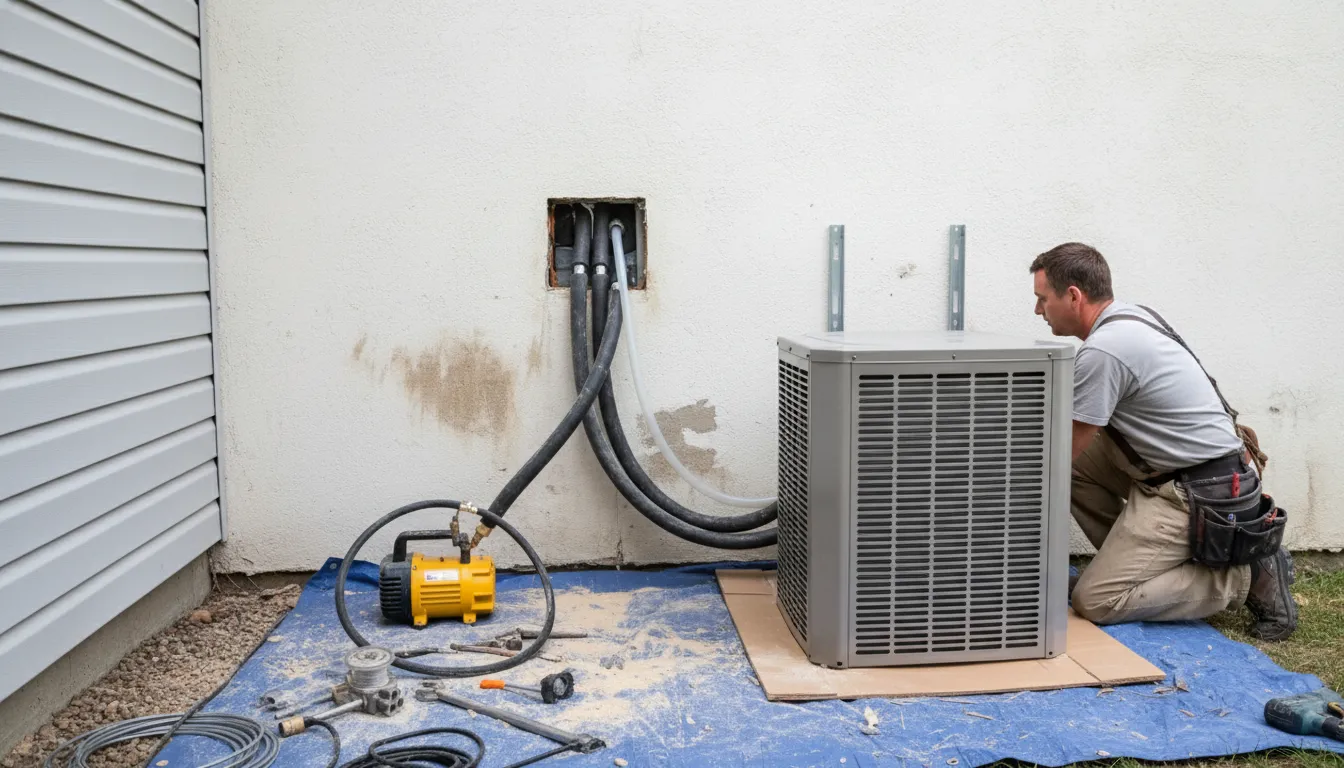
Upgrading your home's heating and cooling system to a heat pump is a smart move for Richmond residents. This efficient technology provides both heating and cooling from a single unit, offering year-round comfort while reducing energy bills and your home's carbon footprint. Richmond's mild Bay Area climate is particularly well-suited for heat pump operation, allowing these systems to work efficiently throughout the year. This guide will help you understand your options, from ductless mini-splits to whole-home systems, and how to find qualified local professionals for your project.

Mid Atlantic Mechanical and Repair, LLC
Richmond, VA
Mid Atlantic Mechanical and Repair, LLC is an HVAC company serving Richmond, VA, and surrounding areas. They provide repair, installation, and maintenance services for air conditioning, heating, heat pumps, ductless mini-splits, and indoor air quality systems for both residential and commercial customers. The company is EPA certified, holds a master HVAC license, and operates as a Class-A contractor. Their technicians have extensive experience working with electric, oil, and gas HVAC systems. Financing options are available to assist with repair and installation costs.
AeroTech Mechanical LLC
6366 Mechanicsville Tpke Ste. 204A, Mechanicsville, VA 23111
AeroTech Mechanical LLC is a locally owned HVAC company serving Richmond, VA, and surrounding areas in central Virginia. They provide installation, repair, and maintenance services for air conditioners, heat pumps, mini-splits, furnaces, humidifiers, dehumidifiers, and air cleaners. Their technicians are trained to handle all makes and models, offering preventive maintenance plans to help maintain system efficiency. Established in 2009, AeroTech Mechanical has over a decade of experience in heating and air conditioning services.
DNA Heating and Cooling
Richmond, VA
DNA Heating and Cooling is an HVAC company based in Richmond, VA, offering repair, installation, and maintenance services for a wide range of heating and cooling systems. Their expertise includes heat pumps, gas furnaces, boilers, aquatherms, and ductless systems. They provide comprehensive system evaluations focused on performance, safety, and longevity, along with expert repairs and installations tailored to customer needs. DNA Heating and Cooling also offers customizable maintenance plans to help keep HVAC systems running efficiently throughout the year.

Woodfin - Your Home Team
1823 N Hamilton St, Richmond, VA 23230
Woodfin - Your Home Team is a home services company based in Richmond, VA, offering HVAC, plumbing, electrical, and fuel delivery services. They provide heating and cooling system repairs and installations, including heat pumps, boilers, and mini splits, along with indoor air quality solutions. With over 47 years of experience since 1977, Woodfin serves the Richmond community with a broad range of home comfort and safety services.
Comfort Assurance Heating and Air, LLC
Richmond, VA
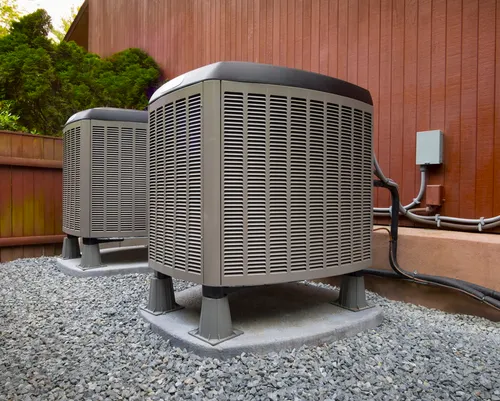
Comfort Assurance Heating and Air, LLC is an HVAC contractor based in Richmond, VA. They provide a full range of heating, ventilation, and air conditioning repair and installation services, including work on furnaces, boilers, heat pumps, and air conditioning systems. The company has built a reputation over many years for professionalism and timely service in the Richmond area.
Why Choose a Heat Pump in Richmond?
Richmond's temperate weather, characterized by cool winters and warm summers, creates an ideal environment for air-source heat pumps. Unlike traditional furnaces that generate heat, a heat pump transfers existing heat, making it significantly more energy-efficient. In the winter, it extracts heat from the outside air (even when it's cool) and moves it indoors. In the summer, the process reverses to cool your home by removing indoor heat. This dual functionality means you can replace both your air conditioner and furnace with one streamlined system.
The primary benefit is substantial energy savings. By moving heat instead of creating it, a high-efficiency heat pump can cut your heating costs dramatically compared to electric resistance heating or older gas furnaces1. Furthermore, with California's push toward electrification and away from natural gas, installing a heat pump is a forward-thinking upgrade that can increase your home's value and comfort while utilizing cleaner energy, especially when paired with solar panels.
Types of Heat Pump Systems
Understanding the different types of heat pump systems is key to choosing the right one for your Richmond home. The main categories are defined by how they distribute air.
Ducted Air-Source Heat Pumps This is the most common type for homes that already have a functional ductwork system for central air. A ducted system uses one outdoor unit connected to an indoor air handler that distributes conditioned air throughout the home via ducts. It's an excellent choice for a whole-home replacement of an existing central AC and furnace. The condition of your existing ducts is a major factor; leaky or poorly insulated ducts will need to be sealed or replaced to ensure the new system operates at peak efficiency.
Ductless Mini-Split Heat Pumps For homes without existing ducts, like older Richmond properties, additions, or rooms that are difficult to condition, ductless mini-splits are a perfect solution. These systems consist of an outdoor compressor unit connected to one or more indoor wall-mounted units via a small refrigerant line. Each indoor unit can be controlled independently, allowing for "zoning" where you heat or cool only the rooms you're using. This targeted approach can lead to even greater energy savings. Installation is generally less invasive and can be more affordable upfront than installing all new ductwork.
Geothermal (Ground-Source) Heat Pumps While less common due to higher installation costs, geothermal systems offer the highest efficiency. Instead of exchanging heat with the outside air, they use stable ground temperatures to heat and cool your home. This involves installing loops of pipe buried in your yard2. The significant excavation work makes them more expensive initially, but they provide unparalleled efficiency and low operating costs over the system's very long lifespan.
Find the perfect heat pump installation & replacement contractors for your needs
Get personalized recommendations and expert advice
Key Factors Influencing Cost and Performance
The final price and effectiveness of your new heat pump system depend on several critical factors unique to your home.
System Sizing (Tonnage) Perhaps the most important step is a proper load calculation, often called a Manual J calculation. This determines the correct system size (measured in tons) needed to heat and cool your home efficiently. An oversized unit will short-cycle (turn on and off too frequently), wasting energy, failing to dehumidify properly, and wearing out faster. An undersized unit will struggle to maintain comfortable temperatures. A reputable contractor will always perform this calculation; be wary of anyone who simply recommends the same size as your old system without an assessment.
Efficiency Ratings When comparing models, pay close attention to efficiency ratings. For cooling, look at the SEER2 (Seasonal Energy Efficiency Ratio) rating. For heating, look at the HSPF2 (Heating Seasonal Performance Factor) rating. In both cases, a higher number indicates greater efficiency and lower operating costs. Investing in a unit with high SEER2 and HSPF2 ratings will pay dividends on your monthly utility bills for years to come.
Home-Specific Considerations
- Electrical Service: Heat pumps require a dedicated electrical circuit. If your home's electrical panel is older or near capacity, you may need an upgrade to support the new system, which adds to the project cost.
- Ductwork Evaluation: For ducted systems, the existing ducts must be inspected. Old, leaky, or poorly sized ducts can reduce system efficiency by 30% or more. Repairing, resealing, or replacing ductwork is a significant but often necessary part of the project3 4.
- Labor and Permits: Professional installation is non-negotiable for safety, performance, and warranty validation. Costs will vary between contractors based on experience, reputation, and the complexity of the job. All installations in Richmond require permits, which your contractor should handle5.
Understanding Installation Costs and Incentives
In Richmond, the total installed cost for a heat pump system typically ranges from $8,000 to over $20,0006 7. A ductless mini-split for a single zone might start around $7,000, while a complete, high-efficiency ducted system for a whole house can easily reach $15,000 to $20,000 or more8 9. Geothermal systems start at a significantly higher price point due to the ground loop installation.
The great news is that substantial financial incentives can dramatically reduce your net cost.
- Federal Tax Credit: The federal government offers a tax credit of up to $2,000 for the installation of a qualified heat pump system10. This is a direct dollar-for-dollar reduction of your tax liability.
- Local Utility Rebates: Richmond residents should check with their energy providers for additional rebates. Pacific Gas & Electric (PG&E) and programs like Bay Area Climate Control or Silicon Valley Clean Energy (SVCE) often have rebate programs that can provide thousands of dollars in upfront savings 11.
- Example Net Cost: A homeowner might pay $17,500 for a high-efficiency ducted system installation. After applying a $2,000 federal tax credit and a $3,000 local rebate, the final net investment could be reduced to $12,50012. Always ask your contractor to help you identify and apply for all eligible incentives.
Choosing the Right Richmond Contractor
Selecting a qualified installer is as important as choosing the right equipment. Look for a licensed, insured, and experienced HVAC contractor who specializes in heat pump installations. They should conduct a thorough home evaluation, provide a detailed written estimate that includes equipment model numbers, labor, permits, and any necessary ancillary work (like electrical or duct modifications). Ask for references from recent heat pump jobs and verify they will pull the required city permits. A good contractor will also be knowledgeable about the latest incentive programs and can help you navigate the application process.
Frequently asked questions
Sources
Footnotes
-
How Much Does it Cost to Install Heat Pump in Southern California? - https://www.burgesons.com/blog/how-much-does-it-cost-to-install-a-heat-pump-in-southern-california ↩
-
Heat Pump Installation: What California Homeowners Need To Know - https://bakerhomeenergy.com/kc/heat-pump-installation-bk/ ↩
-
HVAC & Heat Pump Services in Richmond, CA - https://bayareaclimatecontrol.com/richmond/ ↩
-
Cost of a Heat Pump Installation in 2025 - https://www.cabshvac.com/heat-pump-installation-cost/ ↩
-
What's The Cost To Install A Heat Pump In CA? - https://truehomehvac.com/blog/cost-install-heat-pump-ca ↩
-
Heat Pumps in California: Everything You Need to Know - https://www.quitcarbon.com/blog/heat-pumps/california ↩
-
Heat Pump Installation Cost California - HVAC - Modernize - https://modernize.com/hvac/heating-repair-installation/heat-pump/california ↩
-
Heat Pump Installation in Richmond, CA | High-Efficiency HVAC - https://bayareaclimatecontrol.com/heat-pump-installation-richmond/ ↩
-
Heat Pump Installation Cost Guide: Types, Factors & Savings - https://statclimate.ca/heat-pump-installation-cost-guide/ ↩
-
Heat Pump HVAC 101: A Comprehensive Guide for Silicon Valley ... - https://svcleanenergy.org/2025/08/20/heat-pump-hvac-101/ ↩
-
Anyone in the bay get a heat pump recently? how much did it cost? - https://www.reddit.com/r/bayarea/comments/1clwymt/anyone_in_the_bay_get_a_heat_pump_recently_how/ ↩
-
New Heat Pump Installation Costs in Southern California - https://www.callwiseowl.com/blog/new-heat-pump-installation-costs-in-southern-california/ ↩