
Find the Best Geothermal Heat Pump Contractors for Your Business
No obligation • Fast responses • Nationwide coverage

Why you can trust HVAC Firms
HVAC Firms is a leading United States resource for evaluating HVAC service providers. Our team researches companies, checks credentials, and reviews customer feedback to present clear, unbiased information. Listings and rankings are based on merit, and companies cannot pay to change our editorial content.
Search providers near you
Top Geothermal Heat Pump Contractors in Spokane, Washington Ranked
A geothermal heat pump is a highly efficient heating and cooling system that leverages the stable temperatures underground to provide year-round comfort for your home. For Spokane residents, this technology offers a powerful solution to manage both chilly winters and warm summers while significantly reducing energy bills. This guide explains how ground-source heat pumps work, what installation entails, and how you can find qualified local experts to assess your property for this sustainable upgrade.
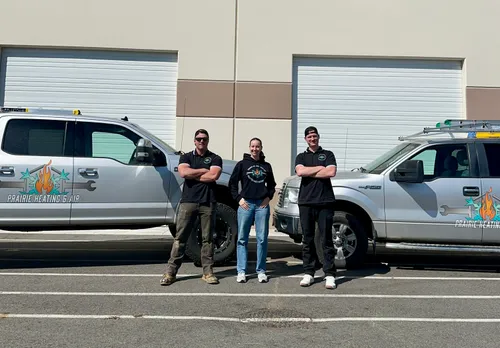
Prairie Heating and Air
Spokane, WA
Prairie Heating and Air is an HVAC company serving Spokane, WA, and nearby areas including Post Falls and Coeur d'Alene. They provide a full range of heating and cooling services such as installation and repair of air conditioners, furnaces, heat pumps, boilers, mini splits, and geothermal heat pumps. The company offers 24/7 emergency services to address urgent HVAC issues at any time. Prairie Heating and Air emphasizes honesty and transparency in their work and is locally owned and operated, serving communities in both Washington and Idaho.

HVAC1
7611 N Market St, Spokane, WA 99217
HVAC1 is a heating and cooling service provider located in Spokane, WA. They offer maintenance, repair, and installation services for a wide range of systems, including air conditioners, furnaces, heat pumps, boilers, mini splits, and geothermal heat pumps. Their capabilities cover comprehensive HVAC system tune-ups and installations, serving residential and commercial customers in the Spokane area.
Sturm Heating & Air Conditioning
1112 N Nelson St, Spokane, WA 99202
Sturm Heating & Air Conditioning is a Spokane, WA-based company providing a wide range of HVAC and plumbing services. Serving Spokane and surrounding areas, they offer heating, cooling, duct cleaning, indoor air quality solutions, and plumbing services. Established in 1945, Sturm brings decades of experience to residential and commercial projects. They provide 24/7 availability for emergency heating, cooling, and plumbing needs. Their team is skilled in handling various HVAC systems and plumbing fixtures, ensuring professional installation, repair, and maintenance.
Advanced Mechanical Systems
6315 E Sharp Ave, Spokane Valley, WA 99212
Advanced Mechanical Systems is an HVAC company based in Spokane, WA, serving the Spokane and Coeur d'Alene region. They provide installation and repair services for heating and cooling systems including air conditioners, furnaces, heat pumps, boilers, geothermal heat pumps, and mini splits. The company also offers indoor air quality services and handles sheet metal venting and ducting. With over 30 years of experience, Advanced Mechanical Systems has worked with various commercial and residential clients, installing and servicing thousands of HVAC units. They partner with well-known manufacturers and provide advanced climate control systems for efficient energy use and improved indoor comfort.
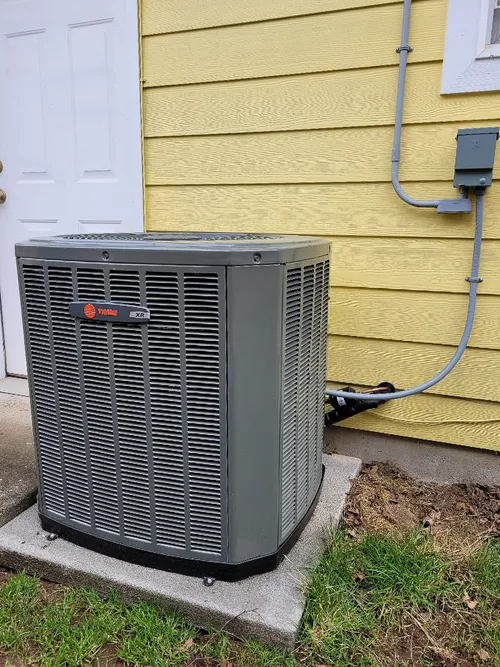
Dynamik HVAC
Spokane, WA
Dynamik HVAC is a locally owned company based in Spokane, WA, offering a wide range of heating and cooling services for residential and commercial clients. Their expertise includes repair and maintenance of heat pumps, furnaces, air conditioners, ductless systems, geothermal units, boilers, and rooftop/package units. They also provide indoor air quality solutions such as air cleaners, humidifiers, dehumidifiers, and energy recovery ventilators. Dynamik HVAC offers 24/7 on-demand repair service and is licensed, bonded, and insured.
How Geothermal Systems Work: Tapping into the Earth's Energy
The core principle behind a geothermal heating and cooling system is remarkably simple: it uses the earth as a constant-temperature battery. Just a few feet below the surface, the ground maintains a nearly steady temperature of around 50°F year-round, regardless of the weather above. A geothermal system, or ground-source heat pump, capitalizes on this stability.
Here's the basic process:
- Heat Exchange: A loop of pipes, called a ground loop, is buried in your yard. A water-based solution circulates through these pipes, absorbing the earth's warmth in the winter.
- Concentration and Distribution: This warmed fluid is pumped to an indoor heat pump unit. The unit concentrates the low-grade heat and distributes it as warm air throughout your home via standard ductwork 1.
- Summer Reversal: In the summer, the process reverses. The system extracts heat from your home, transfers it to the fluid in the ground loop, and releases it into the cooler earth, effectively providing air conditioning 2 3.
This elegant exchange of thermal energy with the ground is what makes geothermal technology so efficient compared to conventional systems that fight against outside air temperatures.
Types of Ground Loop Systems for Spokane Properties
The buried ground loop is the heart of the system, and its configuration depends on your land and soil conditions. Local installers will perform a detailed site assessment to recommend the best option.
Horizontal Ground Loops This is often the most cost-effective choice for properties with sufficient space. Contractors excavate trenches four to six feet deep and lay pipes in a series of loops. This method is particularly well-suited for new construction where the land is already being excavated 4.
Vertical Ground Loops For homes with smaller yards, a vertical loop system is the ideal solution. Installers drill boreholes deep into the ground-typically 150 to 450 feet-and insert U-shaped pipes into each hole. While drilling costs can be higher, this method minimizes surface disruption and is excellent for retrofitting existing homes 5 6 7.
Pond or Lake Loops If your property has access to a sufficiently deep and large body of water, a closed-loop system can be installed at the bottom of the pond. This can be a very efficient option, eliminating the need for extensive digging or drilling.
The Installation Process: What Spokane Homeowners Can Expect
Installing a geothermal HVAC system is a significant project that requires professional expertise. Understanding the steps can help you prepare.
- Comprehensive Site Evaluation: A qualified installer will assess your property's soil composition, geology, available land, and existing ductwork. This evaluation is crucial for designing an effective and efficient system.
- System Design & Permitting: The installer designs the loop field and selects the proper indoor heat pump unit. For vertical borehole systems, obtaining local drilling permits is a necessary step.
- Loop Field Installation: This is the major excavation phase. For horizontal systems, trenches are dug. For vertical systems, a drilling rig creates the boreholes. The high-density polyethylene pipes are then placed and connected into a continuous loop.
- Indoor Unit & Connection: The indoor heat pump unit is installed, typically in a basement, utility room, or garage. The ground loop is connected to the unit, and the system is filled with fluid and pressurized 8.
- Ductwork Integration & Startup: The system is connected to your home's ductwork. Finally, the installer charges the system, tests it thoroughly, and ensures you understand its operation.
Find the perfect geothermal heat pump contractors for your needs
Get personalized recommendations and expert advice
Benefits of Choosing Geothermal in Spokane's Climate
Spokane's climate, with its cold winters and warm, dry summers, is perfectly suited for geothermal heat pump technology. Here's why making the switch offers long-term advantages:
- Substantial Energy Savings: This is the most compelling benefit. By moving heat rather than generating it through combustion, geothermal systems operate with exceptional efficiency. Homeowners can typically reduce their energy use for heating and cooling by 30% to 70% 9. Over the lifespan of the system, these savings can completely offset the higher initial investment.
- Long-Term Reliability and Value: The underground loop system is incredibly durable, with a lifespan often exceeding 50 years. The indoor heat pump unit typically lasts 20-25 years-longer than conventional furnaces and air conditioners. This longevity, combined with energy savings, adds significant value to your home.
- Consistent, Quiet Comfort: Unlike air-source heat pumps that struggle in extreme cold, a ground-source system provides steady, draft-free heat all winter. In summer, it delivers efficient, dehumidifying cooling. The equipment runs very quietly, with no noisy outdoor condenser unit 10.
- Environmental Sustainability: Geothermal systems have a minimal environmental footprint. They use renewable thermal energy from the ground and electricity, which in the Pacific Northwest is often generated from clean hydroelectric sources. They produce no on-site emissions, contributing to cleaner air in the Spokane community.
Understanding Costs and Financial Considerations
The upfront cost of a geothermal heating and cooling installation is higher than that of a conventional gas furnace and air conditioner. For a typical Spokane home, a complete system can range from $20,000 to $40,000 or more, influenced by the loop type, home size, and existing infrastructure 11 12.
However, it's essential to view this as a long-term investment. The dramatic reduction in monthly utility bills leads to a payback period, often estimated between 4 and 15 years 13. Furthermore, homeowners should explore available incentives, such as federal tax credits for renewable energy installations, which can substantially reduce the net cost. The combination of lower operating costs, exceptional durability, and increased home value makes a geothermal system a financially sound decision for many.
Frequently asked questions
Sources
Footnotes
-
All You Need to Know About Home Geothermal Heating & Cooling - Dandelion Energy - https://dandelionenergy.com/all-you-need-to-know-about-home-geothermal-heating-cooling ↩
-
Geothermal Heating and Cooling - https://geothermal.colorado.gov/geothermal-heating-and-cooling ↩
-
How Geothermal Heat Pumps Work - https://www.youtube.com/watch?v=XxlTnBukweI&t=37 ↩
-
Geothermal Heat Pump | DSO Electric Cooperative - https://dsoelectric.com/geothermal-heat-pump ↩
-
Geothermal heat pumps: The ultimate guide to ground-source ... - https://termo-plus.com/blog/geothermal-ultimate-guide-to-ground-source-heat-pumps/ ↩
-
How Does A Geothermal Heat Pump Work? Complete 2025 Guide - https://solartechonline.com/blog/how-does-geothermal-heat-pump-work/ ↩
-
Geothermal heating & cooling, heat pumps, heat exchange ... - https://aztechgeo.com/residential-geothermal/how-it-works/ ↩
-
How It Works: The Geothermal Installation Process - https://www.awheatingandcooling.com/blog/geothermal-service/how-it-works-the-geothermal-installation-process/ ↩
-
How it Works: Ground Source (Geothermal) Heat Pumps (GSHP) - https://www.youtube.com/watch?v=uhXUV2Xm5fQ ↩
-
Geothermal Heat Pumps - Department of Energy - https://www.energy.gov/energysaver/geothermal-heat-pumps ↩
-
Geothermal Basics | Kliemann Brothers | Tacoma, WA - https://kliemannbros.com/geothermal-basics/ ↩
-
Geothermal Heat Pump Guide: Installation Costs, Types And Benefits - https://modernize.com/hvac/heating-repair-installation/heat-pump/geothermal ↩
-
Everything You Need to Know About Geothermal Heat Pumps - https://www.familyhandyman.com/article/everything-you-need-to-know-about-geothermal-heat-pumps/ ↩