
Find the Best Geothermal Heat Pump Contractors for Your Business
No obligation • Fast responses • Nationwide coverage

Why you can trust HVAC Firms
HVAC Firms is a leading United States resource for evaluating HVAC service providers. Our team researches companies, checks credentials, and reviews customer feedback to present clear, unbiased information. Listings and rankings are based on merit, and companies cannot pay to change our editorial content.
Search providers near you
Top Geothermal Heat Pump Contractors in Seattle, Washington Ranked
Geothermal heat pumps, also known as ground-source heat pumps, are one of the most efficient and sustainable ways to heat and cool your Seattle home. By tapping into the earth's stable underground temperature, these systems can drastically reduce your energy bills and carbon footprint. This guide explains how geothermal heating and cooling works, what to expect from installation, and how you can find qualified local specialists to assess your property.
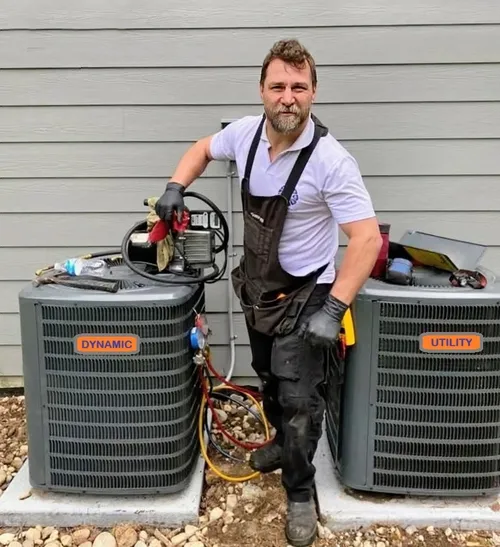
Dynamic Utility Services, Inc.
531 N 188th St, Shoreline, WA 98133
Dynamic Utility Services, Inc. is an HVAC contractor based in Seattle, WA, offering a wide range of heating and cooling services. They handle installation, repair, and maintenance of air conditioning, furnaces, heat pumps, boilers, mini split systems, geothermal heat pumps, and thermostats. The company also provides gas piping, sheet metal work, and fireplace services. Established in 2006, Dynamic Utility Services serves the greater Seattle area and offers 24-hour emergency services for urgent HVAC needs.
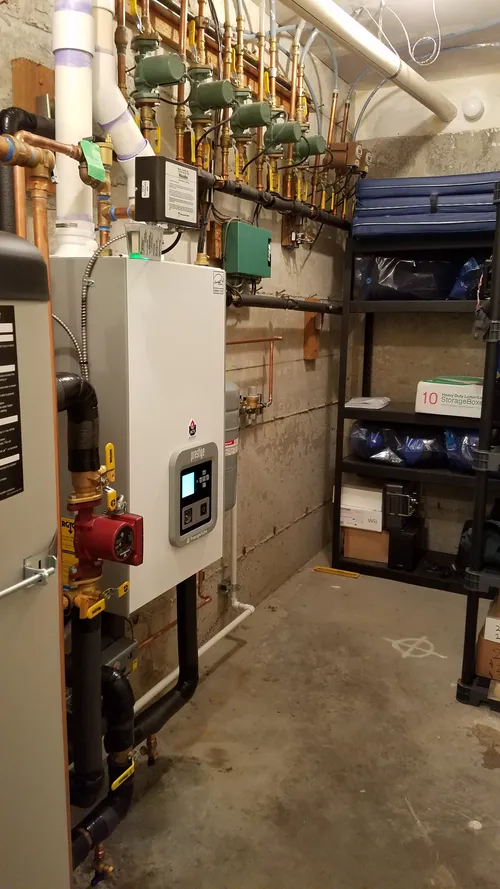
Weekend LLC
Seattle, WA
Weekend LLC is a home comfort service provider based in Seattle, WA. They offer a wide range of HVAC services including repair, replacement, installation, and maintenance for systems such as air conditioners, furnaces, heat pumps, boilers, and mini splits. Their expertise extends to hydronic systems, gas and electric boilers, geothermal heat pumps, and indoor air quality solutions. Weekend LLC handles both minor repairs and large-scale projects, providing comprehensive support for residential heating and cooling needs.
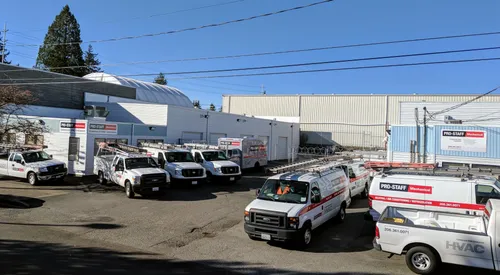
Pro-Staff Mechanical, Inc
902 N 127th St, Seattle, WA 98133
Pro-Staff Mechanical, Inc is a full-service commercial heating, air conditioning, and refrigeration contractor based in Seattle, WA. They offer a wide range of HVAC services including system design, installation, duct work fabrication, and indoor air quality solutions. Serving the Puget Sound area, Pro-Staff Mechanical provides 24-hour emergency service and customized preventive maintenance programs to support their commercial clients.
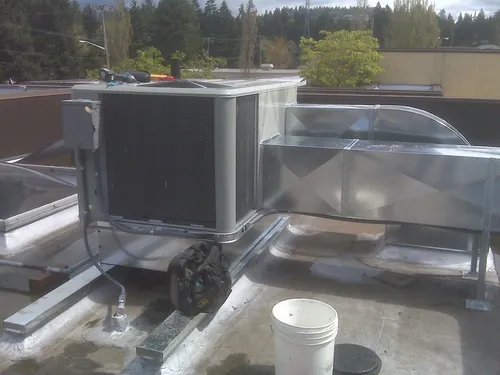
EarthHeat Geothermal, Heat Pumps and Radiant flooring
21002 Ricci Rd, Monroe, WA 98272
EarthHeat Geothermal, Heat Pumps and Radiant Flooring is a geothermal heat pump contractor based in Seattle, WA. They specialize in installing geothermal systems that use the earth's natural heat to provide sustainable heating and cooling solutions. Their services focus on eco-friendly energy options that deliver consistent comfort and energy efficiency.
How Geothermal Systems Work in the Pacific Northwest
The core principle of a geothermal system is elegant in its simplicity: it moves heat rather than creating it. Beneath the surface in the Seattle area, the earth maintains a relatively constant temperature of 50-60°F year-round. A geothermal heat pump leverages this stable thermal resource through a series of buried pipes, called a ground loop.
In the winter, a fluid circulating through these underground loops absorbs the earth's warmth. This warmed fluid is brought to a heat pump unit inside your home, where the heat is concentrated and transferred to your home's air (via ducts) or water (via radiant floor systems) for distribution 1 2. The process reverses in the summer; the system extracts heat from your indoor air and transfers it into the cooler ground loop, effectively providing air conditioning3. This method of heat exchange is what allows geothermal, or earth-coupled, systems to achieve such remarkable efficiency, cutting heating and cooling bills by up to 65% compared to traditional systems.
Types of Ground-Source Heat Pump Systems
There are several configurations for the critical ground loop component, and the right choice depends heavily on your property's characteristics.
Closed-Loop Systems are the most common. They involve a continuous loop of high-density polyethylene (HDPE) pipe filled with a water-antifreeze solution that circulates through the ground and back to the heat pump.
- Vertical Closed-Loop: This is often the ideal choice for Seattle's typically smaller, urban residential lots. Contractors drill deep boreholes-typically 150 to 400 feet deep-and insert U-shaped loop pipes into each hole. While drilling is more expensive than trenching, it requires minimal surface land.
- Horizontal Closed-Loop: This configuration involves excavating long, shallow trenches (usually 4 to 6 feet deep) and laying loops of pipe horizontally. It requires more available land area and is less common within Seattle city limits but may be suitable for properties with ample yard space.
Open-Loop Systems use groundwater from a well or a pond as the heat exchange fluid. After passing through the heat pump, the water is returned to a second well or discharged to the surface. These systems can be highly efficient but require an adequate, consistent water source and must comply with local codes regarding water discharge 4.
The Installation Process for Seattle Homes
Installing a geothermal HVAC system is a significant project that requires expert planning and execution. Here's a typical step-by-step process:
- Site Assessment and Design: A qualified installer will evaluate your property, considering soil composition (which affects heat transfer), available space, and your home's heating and cooling loads. This assessment determines the optimal loop type and size 5.
- Loop Field Installation: For a vertical system, a drilling rig will create the necessary boreholes. For a horizontal system, a trenching machine will excavate the required area. The HDPE pipe is then placed and the trenches or boreholes are backfilled with a special grout to ensure good thermal conductivity6.
- Heat Pump and Distribution Connection: The indoor heat pump unit, which is about the size of a traditional furnace, is installed. The ground loops are connected to this unit. Finally, the system is integrated with your home's existing ductwork or radiant heating distribution system 7.
- System Startup and Testing: The installer fills the loops, purges air from the system, and starts the unit. They will test and balance the entire system to ensure it operates at peak efficiency.
Find the perfect geothermal heat pump contractors for your needs
Get personalized recommendations and expert advice
Key Considerations for Seattle Properties
Seattle's unique urban landscape and geology present specific factors for homeowners to consider.
- Space Constraints: The vertical closed-loop system is a perfect technological match for the city. It allows for geothermal installation on standard city lots where horizontal trenches would be impossible, making this renewable technology accessible to many urban homeowners 8.
- Soil and Geology: The thermal conductivity of your local soil and rock affects the required length of the ground loop. Seattle's varied geology may mean deeper drilling is necessary in some areas to achieve the needed heat exchange capacity, which can influence the project's scope and cost9 10.
- Long-Term Investment Perspective: While the upfront cost is substantial, it's crucial to view a geothermal system as a long-term investment in your home's efficiency and comfort.
Understanding Costs, Savings, and Incentives
The decision to install a geothermal system involves weighing higher initial costs against decades of operational savings.
Upfront Installation Costs: For a typical Seattle home, a complete geothermal heating and cooling system installation generally ranges from $20,000 to over $40,000, with complex projects or larger homes potentially reaching $50,000 or more. The single largest cost variable is the ground loop installation (drilling or trenching). The vertical loops common in Seattle are more expensive per foot to install than horizontal loops but require less total pipe length.
Operational Savings and Longevity: This is where geothermal shines. By using significantly less electricity to move heat, homeowners often see a reduction of 30% to 65% on their heating and cooling bills11 12 13. Furthermore, the system components are built to last. The underground loop assembly is typically warranted for 50 years and can last for generations, while the indoor heat pump unit often has a lifespan of 20 to 25 years-longer than conventional air conditioners and furnaces14 11 15.
Financial Incentives: To offset the initial investment, explore available incentives. These can include federal tax credits, which can cover a significant percentage of the installation cost, as well as potential rebates from local utility companies like Seattle City Light. A knowledgeable local installer will be up-to-date on the latest incentive programs.
Finding the Right Local Expertise
Choosing an experienced installer is the most critical step in your geothermal project. Look for contractors with specific certification from organizations like the International Ground Source Heat Pump Association (IGSHPA). They should conduct a detailed Manual J load calculation for your home and provide a clear, comprehensive quote that includes all drilling, equipment, and labor. Be sure to check reviews, ask for local references, and verify their experience with the vertical borehole installations common in our area.
Frequently asked questions
Sources
Footnotes
-
FAQs • What types of ground-source heat pumps and configurat - https://concordma.gov/FAQ.aspx?QID=484 ↩
-
How a Geothermal Heat Pump Works | This Old House - https://www.youtube.com/watch?v=d5Tbsx3R2T8 ↩
-
Geothermal (Ground Source) Heat Pumps - NY.gov - https://cleanheat.ny.gov/geothermal-heat-pumps/ ↩
-
Geothermal Heating, Cooling, and Hot Water Systems - https://igshpa.org/wp-content/uploads/Homeowners-Guide-to-Geothermal.pdf ↩
-
Geothermal Heat Pumps, Explained - Bosch Home Comfort - https://www.bosch-homecomfort.com/us/en/residential/connect/blog/geothermal-heat-pumps-go-green-save-green/ ↩
-
Geothermal Heat Pumps - Department of Energy - https://www.energy.gov/energysaver/geothermal-heat-pumps ↩
-
All You Need to Know About Home Geothermal Heating & ... - https://dandelionenergy.com/all-you-need-to-know-about-home-geothermal-heating-cooling ↩
-
Verticle Closed Loop System | Residential - https://www.rhienergies.com/verticleclosedresidential ↩
-
Geothermal System Design - Water Well Journal - https://waterwelljournal.com/geothermal-system-design-2/ ↩
-
Going Underground: Geothermal - https://taylorstudios.com/blog/going-underground-geothermal/ ↩
-
5 Things You Should Know about Geothermal Heat Pumps - https://www.energy.gov/cmei/articles/5-things-you-should-know-about-geothermal-heat-pumps ↩ ↩2
-
Geothermal HVAC Systems: Harnessing the Earth for ... - https://www.iccsafe.org/building-safety-journal/bsj-technical/geothermal-hvac-systems-harnessing-the-earth-for-sustainable-comfort/ ↩
-
Geothermal Heat Pump Guide: Installation Costs, Types And Benefits - https://modernize.com/hvac/heating-repair-installation/heat-pump/geothermal ↩
-
How Does A Geothermal Heat Pump Work? Complete 2025 Guide - https://solartechonline.com/blog/how-does-geothermal-heat-pump-work/ ↩
-
Guide to Geothermal Heat Pumps - https://www.energy.gov/sites/prod/files/guide_to_geothermal_heat_pumps.pdf ↩