Find the Best Geothermal Heat Pump Contractors for Your Business
No obligation • Fast responses • Nationwide coverage

Why you can trust HVAC Firms
HVAC Firms is a leading United States resource for evaluating HVAC service providers. Our team researches companies, checks credentials, and reviews customer feedback to present clear, unbiased information. Listings and rankings are based on merit, and companies cannot pay to change our editorial content.
Search providers near you
Top Geothermal Heat Pump Contractors in Spokane Valley, Washington Ranked
A geothermal heat pump, also known as a ground-source heat pump, is a highly efficient system for heating and cooling your home by leveraging the earth's stable underground temperature. For homeowners in Spokane Valley, this technology offers a reliable way to manage indoor climate year-round while significantly reducing energy consumption and utility costs. This guide explains how these systems work, what installation entails, and how you can connect with qualified local professionals to explore this sustainable option for your property.
Prairie Heating and Air
Spokane, WA
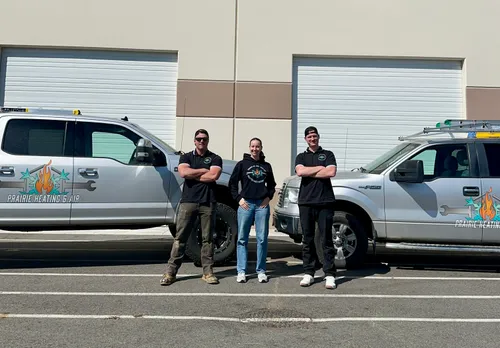
Prairie Heating and Air is an HVAC company serving Spokane, WA, and nearby areas including Post Falls and Coeur d'Alene. They provide a full range of heating and cooling services such as installation and repair of air conditioners, furnaces, heat pumps, boilers, mini splits, and geothermal heat pumps. The company offers 24/7 emergency services to address urgent HVAC issues at any time. Prairie Heating and Air emphasizes honesty and transparency in their work and is locally owned and operated, serving communities in both Washington and Idaho.

HVAC1
7611 N Market St, Spokane, WA 99217
HVAC1 is a heating and cooling service provider located in Spokane, WA. They offer maintenance, repair, and installation services for a wide range of systems, including air conditioners, furnaces, heat pumps, boilers, mini splits, and geothermal heat pumps. Their capabilities cover comprehensive HVAC system tune-ups and installations, serving residential and commercial customers in the Spokane area.
Sturm Heating & Air Conditioning
1112 N Nelson St, Spokane, WA 99202
Sturm Heating & Air Conditioning is a Spokane, WA-based company providing a wide range of HVAC and plumbing services. Serving Spokane and surrounding areas, they offer heating, cooling, duct cleaning, indoor air quality solutions, and plumbing services. Established in 1945, Sturm brings decades of experience to residential and commercial projects. They provide 24/7 availability for emergency heating, cooling, and plumbing needs. Their team is skilled in handling various HVAC systems and plumbing fixtures, ensuring professional installation, repair, and maintenance.
Advanced Mechanical Systems
6315 E Sharp Ave, Spokane Valley, WA 99212
Advanced Mechanical Systems is an HVAC company based in Spokane, WA, serving the Spokane and Coeur d'Alene region. They provide installation and repair services for heating and cooling systems including air conditioners, furnaces, heat pumps, boilers, geothermal heat pumps, and mini splits. The company also offers indoor air quality services and handles sheet metal venting and ducting. With over 30 years of experience, Advanced Mechanical Systems has worked with various commercial and residential clients, installing and servicing thousands of HVAC units. They partner with well-known manufacturers and provide advanced climate control systems for efficient energy use and improved indoor comfort.
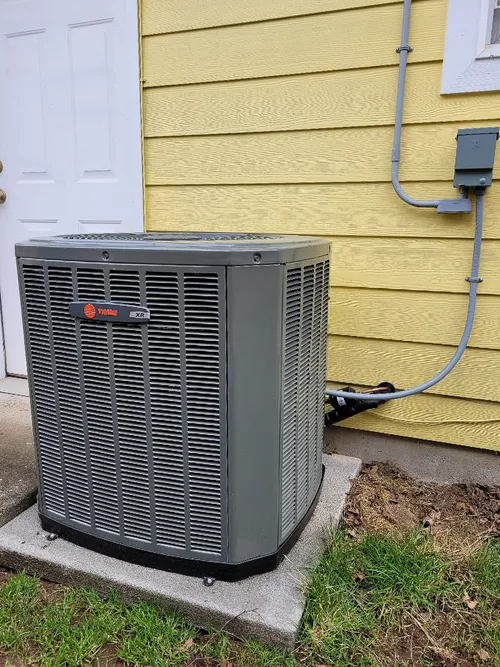
Dynamik HVAC
Spokane, WA
Dynamik HVAC is a locally owned company based in Spokane, WA, offering a wide range of heating and cooling services for residential and commercial clients. Their expertise includes repair and maintenance of heat pumps, furnaces, air conditioners, ductless systems, geothermal units, boilers, and rooftop/package units. They also provide indoor air quality solutions such as air cleaners, humidifiers, dehumidifiers, and energy recovery ventilators. Dynamik HVAC offers 24/7 on-demand repair service and is licensed, bonded, and insured.
How Geothermal Heating and Cooling Works
The core principle behind a geothermal system is simple: it uses the earth as a giant thermal battery. Just a few feet below the surface, the ground maintains a nearly constant temperature of approximately 50-60°F, regardless of Spokane Valley's cold winters or warm summers. A ground-source heat pump taps into this stable energy source through a network of buried pipes, called a ground loop.
- In Winter (Heating Mode): A fluid circulating through the underground loop absorbs the earth's natural heat. This warmed fluid is carried to the heat pump unit inside your home. The unit, operating like a refrigerator in reverse, concentrates this low-grade heat and transfers it to your home's air or water distribution system, providing comfortable warmth through your existing ducts or radiant floor heating.
- In Summer (Cooling Mode): The process reverses. The system extracts heat and humidity from your indoor air. This unwanted heat is transferred to the fluid in the loop, which then carries it and deposits it into the cooler earth. The now-chilled air is circulated back into your living spaces 1.
This elegant heat exchange process is what makes geothermal technology so efficient, as it moves existing heat rather than generating it through combustion or intense electrical resistance.
Types of Ground Loop Systems
The underground portion of the system, the loop field, can be configured in several ways depending on your property's characteristics. The right choice impacts installation cost, land use, and long-term performance.
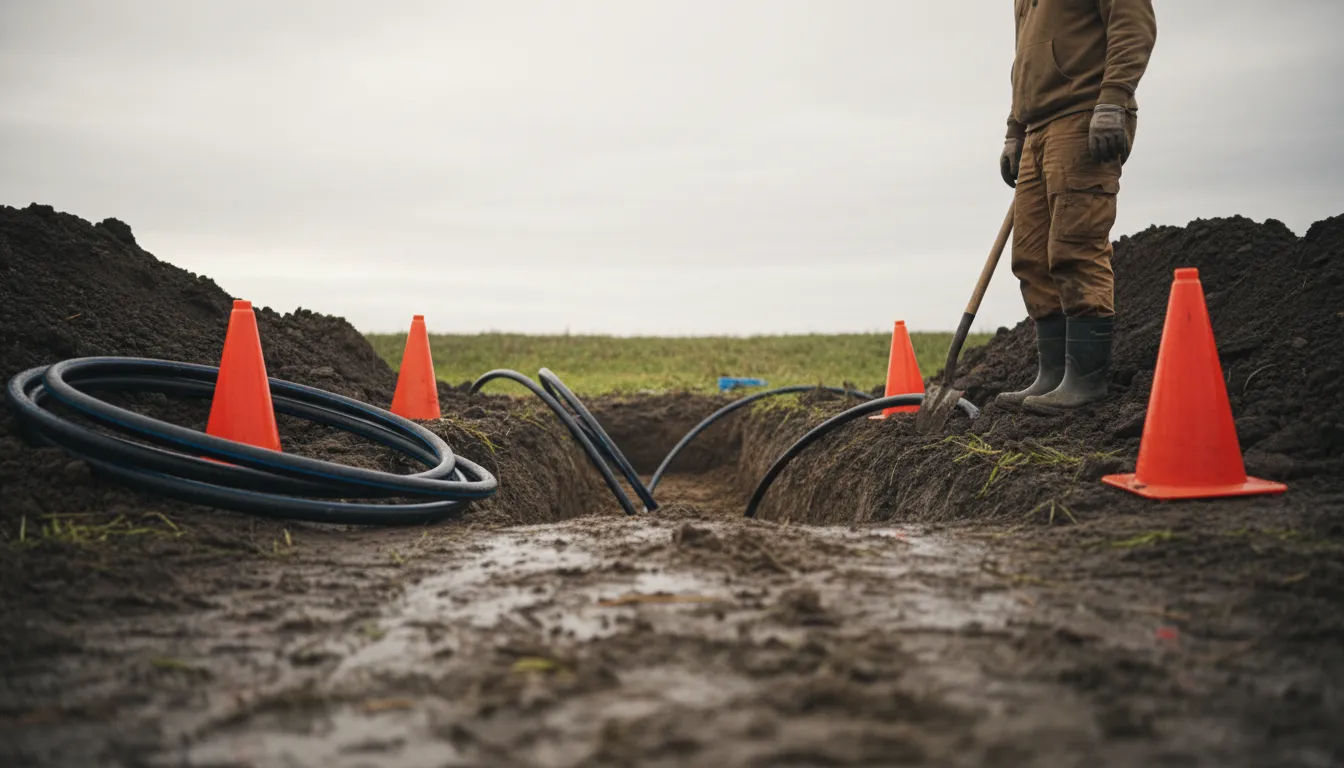
- Horizontal Closed Loop: This is often the most cost-effective option if you have sufficient land. Contractors excavate trenches four to eight feet deep in a series of parallel rows or slinky-coil patterns. High-density polyethylene (HDPE) pipes are laid in these trenches and then backfilled 2. This method typically requires about half an acre or more of usable land.
- Vertical Closed Loop: Ideal for homes in Spokane Valley with smaller lots, this configuration involves drilling boreholes 150 to 250 feet deep for each ton of system capacity. U-shaped pipes are inserted into each borehole, which are then sealed with a special grout to ensure good thermal contact with the earth 3 4. While drilling increases upfront costs, it minimizes surface disruption and is excellent for properties with limited space.
- Pond/Lake Loop: If you have access to a suitably sized and deep body of water, a loop can be submerged at the bottom. This can be a very efficient and lower-cost installation method, avoiding the need for extensive trenching or drilling 5.
- Open Loop System: This less common system uses groundwater from a well as the direct heat exchange fluid. After passing through the heat pump, the water is discharged back into a second well or a suitable surface drainage area. Local regulations and water availability in Spokane County are critical factors for this option.
The Installation Process: What to Expect
Installing a geothermal heating and cooling system is a significant project that requires professional expertise. Understanding the steps can help you prepare.
- Site Assessment and Design: A qualified installer will evaluate your property's soil composition, available land, and your home's heating and cooling loads. This assessment determines the optimal loop type and size for maximum efficiency 6.
- Loop Field Installation: For a horizontal system, excavation equipment digs the necessary trenches. For a vertical system, a drilling rig creates the boreholes. The durable HDPE pipe is then placed and all connections are fused to create a continuous, leak-proof loop.
- Connection and Backfilling: The ends of the ground loop are connected to pipes that run into your home. Trenches are carefully backfilled, or boreholes are grouted, to protect the loop and restore your landscape.
- Indoor Unit Installation: The geothermal heat pump unit-which is compact and quiet-is installed in a basement, utility closet, or garage. It is connected to your home's existing ductwork or to a hydronic system for radiant heat.
- System Startup and Testing: The installer fills the loop with fluid, purges air from the lines, and starts the system. They will test and calibrate all components to ensure everything operates safely and at peak performance.
Find the perfect geothermal heat pump contractors for your needs
Get personalized recommendations and expert advice
Key Considerations for Spokane Valley Homes
When evaluating a geothermal system for your home, several local factors come into play.
- Property Size and Layout: Your available land is the primary determinant for loop type. A spacious yard may accommodate a cost-effective horizontal loop, while a compact urban lot will likely require a vertical system 7 8.
- Upfront Cost vs. Long-Term Savings: The initial investment for a complete geothermal system in Spokane Valley typically ranges from $20,000 to $40,000 or more for a residential installation 9 10. This is higher than a conventional furnace and air conditioner. However, the dramatic reduction in energy use-often cutting heating and cooling bills by 30% to 70%-means the system can pay for itself in 5 to 10 years through utility savings 11 12. With a lifespan of 20-25 years for the heat pump and 50+ years for the underground loop, the long-term financial and comfort benefits are substantial 13.
- Existing Home Infrastructure: Most geothermal heat pumps can integrate seamlessly with standard forced-air ductwork. If your home uses radiant heat or has no ducts, the system can be adapted, which may influence the overall project scope and cost 14.
- Incentives and Rebates: Federal tax credits for qualified geothermal heat pump installations can significantly reduce the net cost. It's essential to consult with your installer and a tax professional about current available incentives at the time of your project.
Benefits Beyond Energy Savings
While lower utility bills are a major advantage, geothermal systems offer other compelling benefits for Spokane Valley residents.
- Exceptional Comfort: These systems provide consistent, even heating and cooling without the hot blasts or cold drafts associated with traditional systems. They also excel at dehumidifying during the cooling season.
- Quiet Operation: With no noisy outdoor condenser unit (like a standard air conditioner or air-source heat pump), the system runs very quietly. The primary mechanical components are indoors.
- Durability and Low Maintenance: The protected underground loops have a very long lifespan. The indoor heat pump unit, sheltered from the elements, also tends to last longer than conventional outdoor HVAC equipment. Maintenance typically involves routine checks of the pump, filters, and fluid levels.
- Environmental Impact: By using renewable thermal energy from the ground and electricity only to move heat (not create it), geothermal systems have a very low carbon footprint and reduce your home's overall environmental impact 15.
Frequently asked questions
Sources
Footnotes
-
How a Geothermal Heat Pump Works | This Old House - https://www.youtube.com/watch?v=d5Tbsx3R2T8 ↩
-
Geothermal Heating, Cooling, and Hot Water Systems - https://igshpa.org/wp-content/uploads/Homeowners-Guide-to-Geothermal.pdf ↩
-
Ground-Source Heat Pumps | Building America Solution Center - https://basc.pnnl.gov/resource-guides/ground-source-heat-pumps ↩
-
Geothermal Heat Pump Installation: What To Expect For Your ... - https://jomory.com/geothermal-heat-pump-installation-what-to-expect-for-your-property/ ↩
-
How Do Geothermal Systems Work for Residential Homes? - https://www.davisheat.com/blog/how-do-geothermal-systems-work-for-residential-homes/ ↩
-
Geothermal Systems - What You Need to Know - The Severn ... - https://www.theseverngroup.com/geothermal-systems-what-you-need-to-know/ ↩
-
Geothermal heat pumps: The ultimate guide to ground-source ... - https://termo-plus.com/blog/geothermal-ultimate-guide-to-ground-source-heat-pumps/ ↩
-
how do ground source heat pumps work? (explained & alternatives) - https://boilercentral.com/heat-pumps/how-do-ground-source-heat-pumps-work/ ↩
-
Geothermal Heat Pumps - Department of Energy - https://www.energy.gov/energysaver/geothermal-heat-pumps ↩
-
Geothermal Heat Pump Guide: Installation Costs, Types And Benefits - https://modernize.com/hvac/heating-repair-installation/heat-pump/geothermal ↩
-
How Does A Geothermal Heat Pump Work? Complete 2025 Guide - https://solartechonline.com/blog/how-does-geothermal-heat-pump-work/ ↩
-
5 Things You Should Know about Geothermal Heat Pumps - https://www.energy.gov/cmei/articles/5-things-you-should-know-about-geothermal-heat-pumps ↩
-
Guide to Geothermal Heat Pumps - https://www.energy.gov/sites/prod/files/guide_to_geothermal_heat_pumps.pdf ↩
-
All You Need to Know About Home Geothermal Heating & Cooling - Dandelion Energy - https://dandelionenergy.com/all-you-need-to-know-about-home-geothermal-heating-cooling ↩
-
Geothermal Heating & Cooling - Department of Energy - https://www.energy.gov/eere/geothermal/geothermal-heating-cooling ↩