
Find the Best Geothermal Heat Pump Contractors for Your Business
No obligation • Fast responses • Nationwide coverage

Why you can trust HVAC Firms
HVAC Firms is a leading United States resource for evaluating HVAC service providers. Our team researches companies, checks credentials, and reviews customer feedback to present clear, unbiased information. Listings and rankings are based on merit, and companies cannot pay to change our editorial content.
Search providers near you
Top Geothermal Heat Pump Contractors in Kent, Washington Ranked
A geothermal heat pump is a highly efficient heating and cooling system that uses the earth's stable underground temperature to regulate your home's climate. This technology, also known as a ground-source heat pump, is a smart long-term investment for homeowners in Kent, offering significant energy savings and environmental benefits. This guide explains how these systems work, what installation entails, and how you can find qualified local professionals to evaluate your property for a geothermal solution.
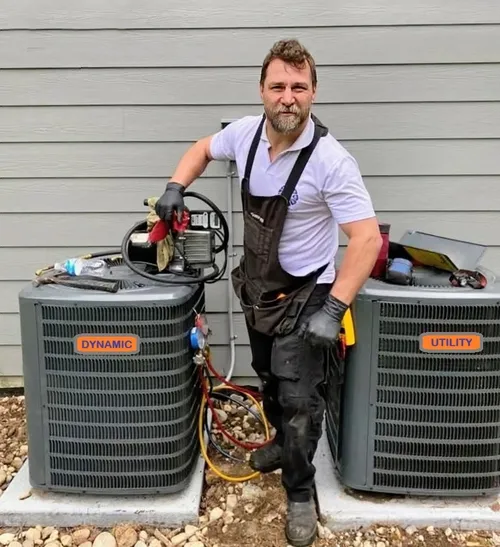
Dynamic Utility Services, Inc.
531 N 188th St, Shoreline, WA 98133
Dynamic Utility Services, Inc. is an HVAC contractor based in Seattle, WA, offering a wide range of heating and cooling services. They handle installation, repair, and maintenance of air conditioning, furnaces, heat pumps, boilers, mini split systems, geothermal heat pumps, and thermostats. The company also provides gas piping, sheet metal work, and fireplace services. Established in 2006, Dynamic Utility Services serves the greater Seattle area and offers 24-hour emergency services for urgent HVAC needs.
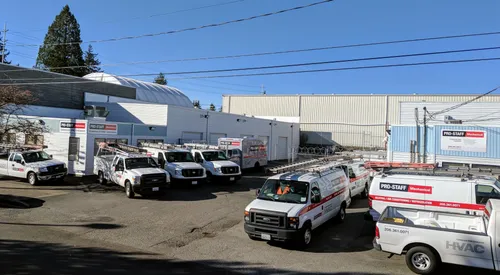
Pro-Staff Mechanical, Inc
902 N 127th St, Seattle, WA 98133
Pro-Staff Mechanical, Inc is a full-service commercial heating, air conditioning, and refrigeration contractor based in Seattle, WA. They offer a wide range of HVAC services including system design, installation, duct work fabrication, and indoor air quality solutions. Serving the Puget Sound area, Pro-Staff Mechanical provides 24-hour emergency service and customized preventive maintenance programs to support their commercial clients.
How Geothermal Systems Work
A geothermal heating and cooling system operates on a simple principle of heat exchange. Just a few feet below the surface, the earth maintains a nearly constant temperature of approximately 50°F year-round, regardless of the weather above ground. A geothermal system taps into this stable thermal resource.
For heating, a mixture of water and antifreeze circulates through a loop of durable, high-density polyethylene pipe buried in your yard. This fluid absorbs the earth's natural heat. It is then pumped to an indoor heat pump unit, which concentrates the heat using a refrigeration cycle. Finally, a heat exchanger transfers this warmth to the air in your ductwork or to a hydronic (water-based) system for distribution throughout your home.
For cooling, the process simply reverses. The system extracts heat and humidity from your indoor air. This unwanted heat is transferred to the fluid in the ground loop, which then carries it into the cooler earth. The now-chilled air is circulated back into your living spaces 1. This reversible cycle makes a ground-source heat pump a complete, all-in-one climate control solution.
Types of Ground Loop Systems
The buried pipe network, or ground loop, is the heart of the system. The right configuration for your Kent home depends on your lot size, soil conditions, and budget. There are four primary types of geothermal loop fields.
Horizontal Loops are often the most cost-effective option if you have sufficient land. Trenches are dug about five to eight feet deep in long runs or a "slinky" coiled pattern. This method typically requires about half an acre or more of usable land.
Vertical Loops are ideal for smaller residential lots common in many neighborhoods. Contractors drill boreholes 100 to 400 feet deep and insert U-shaped loops of pipe into each hole. While drilling costs can be higher, vertical loops require the least amount of surface area and are often well-suited to the soil conditions in our region 2 3.
Pond or Lake Loops can be a highly efficient option if you have a suitable body of water on your property. Coils of pipe are submerged at a depth where water temperatures remain stable. This method can lower installation costs by eliminating the need for extensive digging or drilling 4.
Directional Boring is a hybrid technique that uses a steerable drill to install loops horizontally but at greater depths than a traditional trench. This is an excellent solution for retrofitting a system into an existing landscape with mature trees or hardscapes, as it minimizes surface disruption.
The Installation Process for Kent Homes
Installing a geothermal heat pump is a significant project that requires careful planning and skilled execution. Understanding the steps involved can help you prepare.
- Site Assessment & Design: A qualified installer will evaluate your property, considering soil composition, available space, and your home's heating and cooling load. This assessment determines the optimal loop type and size for maximum efficiency.
- Loop Installation: For a horizontal system, a backhoe digs the trenches. For a vertical system, a drilling rig creates the boreholes. The HDPE pipe is then placed and connected into a continuous loop.
- Indoor Unit Connection: The ground loop is connected to the indoor heat pump unit. Your installer will integrate the new unit with your existing ductwork or hydronic distribution system 5 6.
- Backfilling & Restoration: Once the loop is pressure-tested, trenches are backfilled with soil, and boreholes are filled with a special grout to ensure good thermal conductivity. The yard is then restored as closely as possible to its original condition 7.
Key Considerations for Kent Property Owners
Before committing to a geothermal system, several local factors are worth your attention.
- Local Geology & Soil: The soil and rock composition in Kent can affect drilling speed and cost. Clay, sand, and gravel are common, and a professional will know how to work with these conditions to ensure an effective loop field 8 9.
- Space Requirements: Your available yard space is the primary determinant for loop type. A detailed property survey is a crucial first step 10.
- Project Timing & Disruption: The installation is invasive, involving heavy equipment in your yard. Many homeowners find it most convenient during new construction or a major landscape renovation.
Find the perfect geothermal heat pump contractors for your needs
Get personalized recommendations and expert advice
The Long-Term Benefits and Value
The upfront investment in a geothermal system is offset by substantial long-term advantages that make it a compelling choice.
- Substantial Energy Savings: Geothermal heat pumps are 300-600% efficient, meaning they move three to six units of heat for every unit of electricity used. This can translate to savings of 30% to 70% on heating and cooling bills compared to conventional systems, and up to 65% lower operating costs overall 11.
- Excellent Return on Investment: While installation costs typically range from $20,000 to $40,000 or more for a residential system, the dramatic reduction in monthly utility bills often leads to a payback period within 5 to 10 years 12. After that, the savings go directly into your pocket.
- Unmatched System Longevity: The indoor heat pump components have a life expectancy of 20 to 25 years, similar to high-end conventional systems. The buried ground loop, however, is incredibly durable and often comes with warranties of 50 years or more, with a functional life that can exceed a century.
- Quiet Operation & Comfort: With no noisy outdoor condenser unit, geothermal systems operate very quietly. They also provide exceptionally even heating and cooling without the drafts or hot/cold spots associated with fossil fuel systems.
- Environmental Sustainability: By using the renewable thermal energy of the earth, these systems drastically reduce your home's carbon footprint. They use no combustion on-site and have a minimal impact on the local environment once installed.
Understanding Costs and Incentives
The total cost for a residential geothermal installation in Kent is influenced by your home's size, the chosen loop type, soil conditions, and the complexity of connecting to your existing ductwork. As noted, a full system typically ranges from $20,000 to $40,000+ 13 14.
It's important to view this as a long-term investment in your home's infrastructure. The significant reduction in monthly energy bills provides a steady return. Furthermore, homeowners should investigate available financial incentives. These can include federal tax credits, which can cover a substantial percentage of the installation cost, as well as potential rebates from local utility companies. A knowledgeable local installer will be your best resource for navigating the current incentive landscape.
Frequently asked questions
Sources
Footnotes
-
Geothermal (Ground Source) Heat Pumps - NY.gov - https://cleanheat.ny.gov/geothermal-heat-pumps/ ↩
-
How Do Geothermal Systems Work for Residential Homes? - https://www.davisheat.com/blog/how-do-geothermal-systems-work-for-residential-homes/ ↩
-
Geothermal Explained - https://www.geo-inc.com/geothermal-explained ↩
-
Geothermal Heat Pumps - Department of Energy - https://www.energy.gov/energysaver/geothermal-heat-pumps ↩
-
FAQs • What types of ground-source heat pumps and configurat - https://concordma.gov/FAQ.aspx?QID=484 ↩
-
How a Geothermal Heat Pump Works | This Old House - https://www.youtube.com/watch?v=d5Tbsx3R2T8 ↩
-
All You Need to Know About Home Geothermal Heating & ... - https://dandelionenergy.com/all-you-need-to-know-about-home-geothermal-heating-cooling ↩
-
How Geothermal Heating and Cooling Systems Work | Belle Air - https://www.belleairservices.com/how-geothermal-heating-and-cooling-systems-work/ ↩
-
Geothermal Heating and Cooling - https://geothermal.colorado.gov/geothermal-heating-and-cooling ↩
-
Geothermal Heat Pumps - EnergySmart CNY - https://www.energysmartcny.org/heat-pumps/geothermal/ ↩
-
5 Things You Should Know about Geothermal Heat Pumps - https://www.energy.gov/cmei/articles/5-things-you-should-know-about-geothermal-heat-pumps ↩
-
Geothermal HVAC Systems: Harnessing the Earth for ... - https://www.iccsafe.org/building-safety-journal/bsj-technical/geothermal-hvac-systems-harnessing-the-earth-for-sustainable-comfort/ ↩
-
Geothermal Heating, Cooling, and Hot Water Systems - https://igshpa.org/wp-content/uploads/Homeowners-Guide-to-Geothermal.pdf ↩
-
Geothermal Heat Pump Guide: Installation Costs, Types And Benefits - https://modernize.com/hvac/heating-repair-installation/heat-pump/geothermal ↩