
Find the Best Geothermal Heat Pump Contractors for Your Business
No obligation • Fast responses • Nationwide coverage

Why you can trust HVAC Firms
HVAC Firms is a leading United States resource for evaluating HVAC service providers. Our team researches companies, checks credentials, and reviews customer feedback to present clear, unbiased information. Listings and rankings are based on merit, and companies cannot pay to change our editorial content.
Search providers near you
Top Geothermal Heat Pump Contractors in Edmonds, Washington Ranked
A geothermal heat pump is one of the most efficient and sustainable ways to heat and cool your home. By tapping into the Earth's stable underground temperature, these ground-source systems can dramatically reduce your energy bills and environmental footprint. This guide explains how geothermal heating and cooling works in Edmonds, what installation involves, and how you can find qualified local experts to evaluate your property.
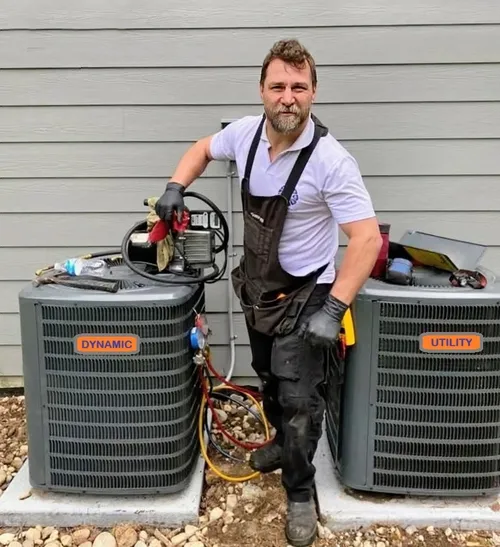
Dynamic Utility Services, Inc.
531 N 188th St, Shoreline, WA 98133
Dynamic Utility Services, Inc. is an HVAC contractor based in Seattle, WA, offering a wide range of heating and cooling services. They handle installation, repair, and maintenance of air conditioning, furnaces, heat pumps, boilers, mini split systems, geothermal heat pumps, and thermostats. The company also provides gas piping, sheet metal work, and fireplace services. Established in 2006, Dynamic Utility Services serves the greater Seattle area and offers 24-hour emergency services for urgent HVAC needs.
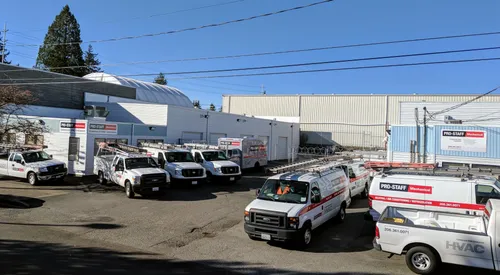
Pro-Staff Mechanical, Inc
902 N 127th St, Seattle, WA 98133
Pro-Staff Mechanical, Inc is a full-service commercial heating, air conditioning, and refrigeration contractor based in Seattle, WA. They offer a wide range of HVAC services including system design, installation, duct work fabrication, and indoor air quality solutions. Serving the Puget Sound area, Pro-Staff Mechanical provides 24-hour emergency service and customized preventive maintenance programs to support their commercial clients.
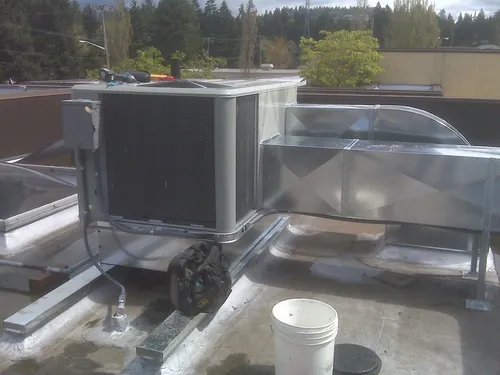
EarthHeat Geothermal, Heat Pumps and Radiant flooring
21002 Ricci Rd, Monroe, WA 98272
EarthHeat Geothermal, Heat Pumps and Radiant Flooring is a geothermal heat pump contractor based in Seattle, WA. They specialize in installing geothermal systems that use the earth's natural heat to provide sustainable heating and cooling solutions. Their services focus on eco-friendly energy options that deliver consistent comfort and energy efficiency.
How Geothermal Systems Work in the Pacific Northwest
The principle behind a geothermal system, often called a ground-source heat pump (GSHP), is elegantly simple. Just a few feet below the surface, the Earth in our region maintains a relatively constant temperature between 50 and 60 degrees Fahrenheit year-round. A geothermal system uses this stable thermal energy as a renewable resource.
The process involves a closed loop of pipes, called a ground loop, buried in your yard. A water-based fluid circulates through these pipes, absorbing the Earth's warmth in the winter and carrying excess heat from your home back into the ground in the summer. An indoor heat pump unit then concentrates this low-grade thermal energy to provide comfortable heating or cooling for your home through your existing ductwork or a hydronic system. This method of heat exchange is vastly more efficient than traditional air-source heat pumps that struggle with Edmonds' cooler winter air temperatures.
Types of Ground Loops for Edmonds Properties
Choosing the right type of ground loop is a critical first step, heavily dependent on your property's characteristics. Local geothermal professionals will conduct a thorough site assessment to determine the best option.
- Horizontal Ground Loops: This is often the most cost-effective method if you have sufficient land. Trenches are dug 4 to 6 feet deep, and pipes are laid in a series of loops before being backfilled. This approach typically requires between a quarter to three-quarters of an acre of usable land for a standard home.
- Vertical Ground Loops: For homes in Edmonds with smaller lots, steep slopes, or rocky soil, vertical loops are the ideal solution. Using a drilling rig, boreholes are drilled 150 to over 400 feet deep. U-shaped pipe loops are inserted into each borehole, offering a high-efficiency exchange in a compact footprint, though drilling costs are generally higher.
- Pond/Lake Loops: If you have a sufficient body of water on your property, a coiled loop can be submerged at the bottom. This can be a very efficient and lower-cost installation option, provided the pond meets depth and volume requirements1.
- Open Loop Systems: Less common in residential settings, an open loop system uses groundwater from a well as the direct heat exchange fluid, pumping it through the heat pump and then discharging it. This requires an abundant, clean water source and often has more regulatory considerations.
The Geothermal Installation Process: What to Expect
Installing a geothermal heating and cooling system is a significant project that requires specialized expertise. Understanding the steps can help you prepare.
- Comprehensive Site Evaluation: A qualified installer will visit your home to assess your heating and cooling needs, evaluate your property's soil composition, lot size, and layout, and recommend the optimal loop type and size.
- Ground Loop Installation: This is the major exterior work. For a horizontal system, a trencher or backhoe will dig the necessary trenches. For a vertical system, a drilling rig will be brought in. The high-density polyethylene pipes are then placed, connected, and pressure-tested to ensure integrity before being backfilled or grouted 2.
- Indoor Unit Installation: The geothermal heat pump unit, which is typically about the size of a small furnace, is installed in your basement, utility closet, or garage. It is much quieter than traditional HVAC equipment.
- System Connection and Startup: The fluid lines from the ground loop are connected to the indoor unit. The system is connected to your home's electrical panel and ductwork or radiant distribution system. Finally, the system is charged with fluid, purged of air, and started up, with performance verified by the technician 3.
Find the perfect geothermal heat pump contractors for your needs
Get personalized recommendations and expert advice
Trenching vs. Drilling: Key Considerations for Your Yard
The choice between trenching (horizontal) and drilling (vertical) impacts cost, timeline, and landscape disruption.
- Trenching for Horizontal Loops: This method usually has a lower installation cost per foot of loop. However, it requires a large, clear area of land and causes significant disruption to your yard, similar to a major landscaping project. It is often most economical when coordinated with new home construction4 5.
- Drilling for Vertical Loops: Drilling minimizes the surface footprint, making it perfect for smaller, established yards in Edmonds. The disruption is concentrated to the drill rig's access points. While the cost per foot is higher due to the specialized equipment and expertise required, the superior efficiency and smaller land requirement make it a preferred choice for many urban and suburban lots6 7.
Understanding Costs, Savings, and Incentives
The investment in a geothermal heat pump system is substantial upfront but pays dividends over time through exceptional efficiency and available incentives.
- Installation Cost: A complete residential geothermal system in the Edmonds area typically ranges from $20,000 to $40,000 or more, with the ground loop installation constituting a significant portion of the total cost. Vertical systems tend to be on the higher end of this range.
- Operational Savings: The dramatic efficiency of geothermal technology can reduce your heating and cooling energy bills by 40% to 65% compared to conventional systems8 9. This translates to ongoing monthly savings that help offset the initial investment.
- Major Federal Incentive: The federal government offers a 30% tax credit on the total cost of purchasing and installing a qualifying geothermal heat pump system. This credit, established under the Inflation Reduction Act, applies through 2032 and can reduce your net cost by thousands of dollars.
- Payback Period: When factoring in the 30% federal tax credit and ongoing utility savings, the payback period for a geothermal system often falls between 5 and 10 years10 11. After that, you enjoy decades of significantly lower operating costs.
Long-Term Benefits and Environmental Impact
Beyond cost savings, geothermal systems offer unparalleled advantages. They are incredibly durable, with the underground piping often carrying warranties of 50 years or more, and the indoor heat pump units lasting 20+ years 12. They provide exceptional comfort with steady, even temperatures and very quiet operation. Most importantly, by using renewable thermal energy from the ground, they drastically reduce your home's carbon footprint, eliminating on-site fossil fuel combustion for heating13 14.
Frequently asked questions
Sources
Footnotes
-
All You Need to Know About Home Geothermal Heating & ... - https://dandelionenergy.com/all-you-need-to-know-about-home-geothermal-heating-cooling ↩
-
How a Geothermal Heat Pump Works | This Old House - https://www.youtube.com/watch?v=d5Tbsx3Rbsx3R2T8 ↩
-
How Geothermal Heat Pumps Work - https://www.youtube.com/watch?v=XxlTnBukweI&t=37 ↩
-
Geothermal Installation Steps Explained - https://ultrageothermal.com/geothermal-installation-steps-explained/ ↩
-
Geothermal Heat Pumps | WBDG - https://www.wbdg.org/resources/geothermal-heat-pumps ↩
-
Geothermal Ground Loop FAQs - Dandelion Energy - https://dandelionenergy.com/geothermal-ground-loop-frequently-asked-questions ↩
-
How Does A Geothermal Heat Pump Work? Complete 2025 Guide - https://solartechonline.com/blog/how-does-geothermal-heat-pump-work/ ↩
-
Geothermal HVAC Systems: Harnessing the Earth for ... - https://www.iccsafe.org/building-safety-journal/bsj-technical/geothermal-hvac-systems-harnessing-the-earth-for-sustainable-comfort/ ↩
-
Geothermal Heat Pumps - Department of Energy - https://www.energy.gov/energysaver/geothermal-heat-pumps ↩
-
Geothermal Heat Pump Guide: Installation Costs, Types And Benefits - https://modernize.com/hvac/heating-repair-installation/heat-pump/geothermal ↩
-
Everything You Need to Know About Geothermal Heat Pumps - https://www.familyhandyman.com/article/everything-you-need-to-know-about-geothermal-heat-pumps/ ↩
-
Geothermal heat pumps are among the most earth-friendly home ... - https://www.whispervalleyaustin.com/geothermal-heat-pumps-are-among-the-most-earth-friendly-home-energy-sources-experts-say/ ↩
-
Geothermal Heating, Cooling, and Hot Water Systems - https://igshpa.org/wp-content/uploads/Homeowners-Guide-to-Geothermal.pdf ↩
-
Geothermal Heating and Cooling - https://geothermal.colorado.gov/geothermal-heating-and-cooling ↩