
Find the Best Geothermal Heat Pump Contractors for Your Business
No obligation • Fast responses • Nationwide coverage

Why you can trust HVAC Firms
HVAC Firms is a leading United States resource for evaluating HVAC service providers. Our team researches companies, checks credentials, and reviews customer feedback to present clear, unbiased information. Listings and rankings are based on merit, and companies cannot pay to change our editorial content.
Search providers near you
Top Geothermal Heat Pump Contractors in Burien, Washington Ranked
Geothermal heat pumps are a highly efficient method for heating and cooling your home by leveraging the stable temperature of the earth. For Burien residents, this technology offers a path to significant energy savings and reduced environmental impact, especially when paired with the region's climate. This guide explains how these systems work, the installation process, and how you can find qualified local experts to assess your property and provide a tailored solution.
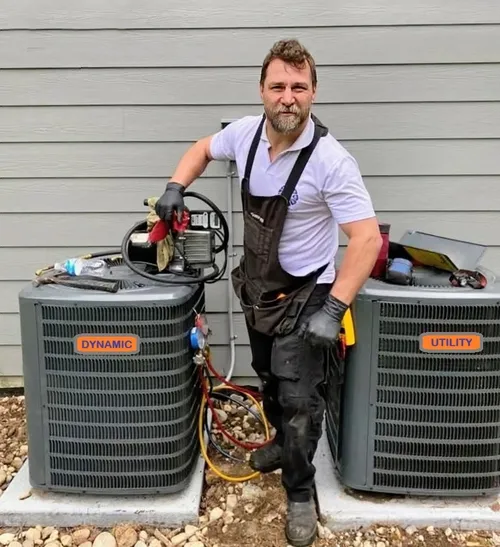
Dynamic Utility Services, Inc.
531 N 188th St, Shoreline, WA 98133
Dynamic Utility Services, Inc. is an HVAC contractor based in Seattle, WA, offering a wide range of heating and cooling services. They handle installation, repair, and maintenance of air conditioning, furnaces, heat pumps, boilers, mini split systems, geothermal heat pumps, and thermostats. The company also provides gas piping, sheet metal work, and fireplace services. Established in 2006, Dynamic Utility Services serves the greater Seattle area and offers 24-hour emergency services for urgent HVAC needs.
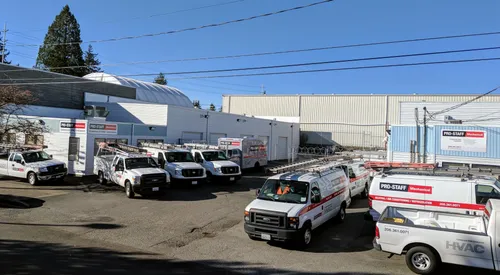
Pro-Staff Mechanical, Inc
902 N 127th St, Seattle, WA 98133
Pro-Staff Mechanical, Inc is a full-service commercial heating, air conditioning, and refrigeration contractor based in Seattle, WA. They offer a wide range of HVAC services including system design, installation, duct work fabrication, and indoor air quality solutions. Serving the Puget Sound area, Pro-Staff Mechanical provides 24-hour emergency service and customized preventive maintenance programs to support their commercial clients.
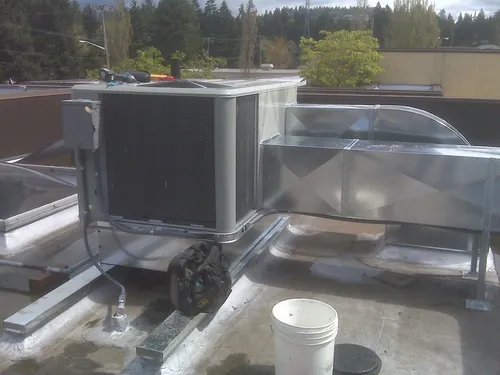
EarthHeat Geothermal, Heat Pumps and Radiant flooring
21002 Ricci Rd, Monroe, WA 98272
EarthHeat Geothermal, Heat Pumps and Radiant Flooring is a geothermal heat pump contractor based in Seattle, WA. They specialize in installing geothermal systems that use the earth's natural heat to provide sustainable heating and cooling solutions. Their services focus on eco-friendly energy options that deliver consistent comfort and energy efficiency.
How Geothermal Systems Work: Harnessing the Earth's Energy
A geothermal heat pump, often called a ground-source heat pump, operates on a simple principle of heat transfer. Unlike conventional systems that generate heat, it moves existing heat from one place to another. The key to its efficiency is the earth's remarkably stable underground temperature, which remains around 50°F year-round just a few feet below the surface in Burien.
Heating Mode: During the winter, a fluid (usually water or antifreeze) circulates through a loop of pipes buried underground, called the ground loop. This fluid absorbs the gentle heat from the earth. It then returns to the heat pump unit inside your home, where a compressor concentrates this low-grade heat into a higher temperature. Finally, the warm air is distributed throughout your home via your existing ductwork or a radiant floor system.
Cooling Mode: In the summer, the process elegantly reverses. The system extracts heat and humidity from your indoor air. This heat is transferred to the fluid in the ground loop, which then carries it back into the earth, where it is dissipated. The now-cooled fluid cycles back to absorb more heat from your home. Because the ground is cooler than the summer air, the system works much more efficiently than a standard air conditioner or air-source heat pump 1.
This constant, reliable exchange with the earth's thermal mass is what allows geothermal heating and cooling to achieve such high efficiency ratings, often 300-600% efficient, meaning they deliver 3 to 6 units of energy for every 1 unit of electricity they consume.
Types of Ground Loop Systems for Burien Properties
The underground pipe network is the heart of a geothermal system. The right type for your Burien home depends on your lot size, soil composition, and access to water. A professional site assessment is crucial for determining the best option.
Horizontal Closed-Loop
This is often the most cost-effective method if you have sufficient land. Contractors dig trenches 4 to 6 feet deep and lay pipes in a series of loops. This configuration requires a larger, open area but involves less specialized drilling equipment. It's a common choice for properties with ample yard space.
Vertical Closed-Loop
For homes in Burien with smaller lots, rocky soil, or limited yard space, a vertical loop is the standard solution. Contractors drill boreholes typically 150 to 400 feet deep and insert U-shaped pipe loops. While drilling costs can be higher, this method minimizes surface disruption and is very effective, making it a frequent choice for suburban residential installations 2 3.
Pond/Lake Loop
If your property has access to a suitable, deep pond or lake, this can be an excellent option. Coils of pipe are submerged at the bottom of the water body. Water is an excellent conductor of heat, making this loop type very efficient. It requires less excavation and can be lower cost, but it is entirely dependent on having an adequate, permitted water source nearby 4 5.
Open Loop System
This system uses groundwater directly. It requires a high-quality well to supply water, which is pumped through the heat pump and then discharged back into a second well, a pond, or a stream (following local codes). While potentially very efficient, open loops depend on a consistent supply of clean water and have more permitting considerations.
The Geothermal Installation Process: What to Expect
Installing a ground-source heat pump is a significant project that requires careful planning and skilled professionals. Understanding the steps can help you prepare.
-
Comprehensive Site Assessment: A qualified installer will visit your Burien home to evaluate your heating and cooling needs, inspect your existing ductwork or hydronic system, and assess your property. They will examine soil conditions, available space, and accessibility to determine the optimal loop type and size for your system.
-
Ground Loop Installation: This is the major excavation phase. For a horizontal system, a backhoe will dig the necessary trenches. For a vertical system, a drilling rig will create the boreholes. The high-density polyethylene pipes are then placed, connected into a continuous loop, and pressure-tested to ensure there are no leaks before being buried or grouted 6.
-
Heat Pump Unit Installation: The indoor heat pump unit, which is typically about the size of a small furnace, is installed in your basement, utility room, or garage. It is connected to your home's distribution system-either the ductwork for forced air or piping for a radiant floor. The refrigerant lines and control wiring are also connected at this stage 7.
-
System Hookup and Final Testing: The ground loop is connected to the heat pump unit, creating a sealed, pressurized circuit. The system is connected to your home's electrical panel. The installer will then charge the system, power it on, and perform thorough testing to verify proper heating, cooling, and thermostat operation. Once everything is confirmed, the excavation sites are backfilled and restored.
Find the perfect geothermal heat pump contractors for your needs
Get personalized recommendations and expert advice
Financial Considerations: Cost, Savings, and Incentives
The decision to install a geothermal system is a long-term investment in your home's comfort and efficiency.
Upfront Costs: The initial investment for a complete geothermal heat pump system in Burien is higher than for a conventional furnace and air conditioner combination. Total costs, including the ground loop and unit installation, typically range from $20,000 to $40,000 or more, with vertical loops generally at the higher end of the spectrum due to drilling expenses.
Long-Term Savings and Payback: The operational savings are where geothermal shines. By using the earth's free thermal energy, these systems can reduce your heating and cooling energy consumption by 40% to 70% compared to conventional systems 8 9 10. This dramatic cut in utility bills means the higher upfront cost is often recouped through savings within 5 to 15 years. Furthermore, the components are built to last: the indoor heat pump unit often lasts 20-25 years, while the underground polyethylene piping can have a lifespan of 50 years or more 11 12.
Available Incentives: To improve affordability, significant financial incentives are often available. The federal government periodically offers tax credits for installing qualified geothermal heat pumps. It is essential to check the Database of State Incentives for Renewables & Efficiency (DSIRE) for the most current federal, state, and even local utility rebates available to Burien homeowners. These incentives can reduce your net cost by thousands of dollars, accelerating the payback period 13.
Is a Geothermal System Right for Your Burien Home?
Geothermal heating and cooling is an outstanding technology, but it's not a one-size-fits-all solution. It is an excellent fit for homeowners who plan to stay in their home long enough to realize the full financial savings, are interested in maximizing energy efficiency and reducing their carbon footprint, and have the property suitable for a ground loop. For those undergoing major renovations, building a new home, or replacing an aging, inefficient HVAC system, it is a particularly opportune time to evaluate geothermal.
The most critical step is to consult with experienced, certified installers who service the Burien area. They can provide a detailed analysis of your home's suitability, accurate cost estimates, projected savings, and guide you through the incentive application process.
Frequently asked questions
Sources
Footnotes
-
How a Geothermal Heat Pump Works | This Old House - https://www.youtube.com/watch?v=d5Tbsx3R2T8 ↩
-
Geothermal Heat Pumps, Explained - Bosch Home Comfort - https://www.bosch-homecomfort.com/us/en/residential/connect/blog/geothermal-heat-pumps-go-green-save-green/ ↩
-
Geothermal Heat Pump Installation: What To Expect For Your Property - https://jomory.com/geothermal-heat-pump-installation-what-to-expect-for-your-property/ ↩
-
Geothermal heating & cooling, heat pumps, heat exchange ... - https://aztechgeo.com/residential-geothermal/how-it-works/ ↩
-
Geothermal Heating, Cooling, and Hot Water Systems - https://igshpa.org/wp-content/uploads/Homeowners-Guide-to-Geothermal.pdf ↩
-
Geothermal Heat Pumps - EnergySmart CNY - https://www.energysmartcny.org/heat-pumps/geothermal/ ↩
-
Geothermal Heat Pumps | WBDG - https://www.wbdg.org/resources/geothermal-heat-pumps ↩
-
Geothermal Heat Pumps - Department of Energy - https://www.energy.gov/energysaver/geothermal-heat-pumps ↩
-
5 Things You Should Know about Geothermal Heat Pumps - https://www.energy.gov/cmei/articles/5-things-you-should-know-about-geothermal-heat-pumps ↩
-
How Does A Geothermal Heat Pump Work? Complete 2025 Guide - https://solartechonline.com/blog/how-does-geothermal-heat-pump-work/ ↩
-
Guide to Geothermal Heat Pumps - https://www.energy.gov/sites/prod/files/guide_to_geothermal_heat_pumps.pdf ↩
-
Geothermal Heat Pump Guide: Installation Costs, Types And Benefits - https://modernize.com/hvac/heating-repair-installation/heat-pump/geothermal ↩
-
Everything You Need to Know About Geothermal Heat Pumps - https://www.familyhandyman.com/article/everything-you-need-to-know-about-geothermal-heat-pumps/ ↩