
Find the Best Geothermal Heat Pump Contractors for Your Business
No obligation • Fast responses • Nationwide coverage

Why you can trust HVAC Firms
HVAC Firms is a leading United States resource for evaluating HVAC service providers. Our team researches companies, checks credentials, and reviews customer feedback to present clear, unbiased information. Listings and rankings are based on merit, and companies cannot pay to change our editorial content.
Search providers near you
Top Geothermal Heat Pump Contractors in Bothell, Washington Ranked
For Bothell homeowners seeking a comfortable, efficient, and sustainable home climate solution, geothermal heat pumps represent a powerful long-term investment. These systems, also known as ground-source heat pumps or geoexchange systems, leverage the earth's stable temperature to provide both heating and cooling. This guide explains how geothermal technology works, what installation entails for Bothell properties, and the significant benefits you can expect. Use the information here to understand your options and connect with qualified local experts for a site-specific assessment.
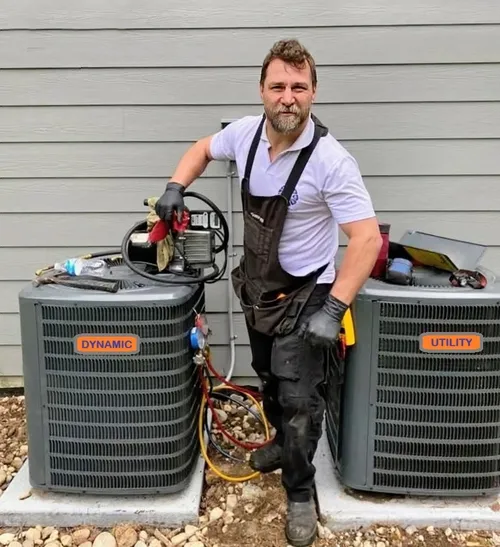
Dynamic Utility Services, Inc.
531 N 188th St, Shoreline, WA 98133
Dynamic Utility Services, Inc. is an HVAC contractor based in Seattle, WA, offering a wide range of heating and cooling services. They handle installation, repair, and maintenance of air conditioning, furnaces, heat pumps, boilers, mini split systems, geothermal heat pumps, and thermostats. The company also provides gas piping, sheet metal work, and fireplace services. Established in 2006, Dynamic Utility Services serves the greater Seattle area and offers 24-hour emergency services for urgent HVAC needs.
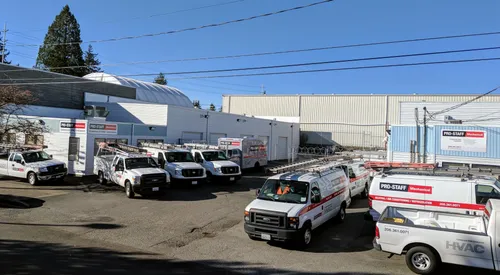
Pro-Staff Mechanical, Inc
902 N 127th St, Seattle, WA 98133
Pro-Staff Mechanical, Inc is a full-service commercial heating, air conditioning, and refrigeration contractor based in Seattle, WA. They offer a wide range of HVAC services including system design, installation, duct work fabrication, and indoor air quality solutions. Serving the Puget Sound area, Pro-Staff Mechanical provides 24-hour emergency service and customized preventive maintenance programs to support their commercial clients.
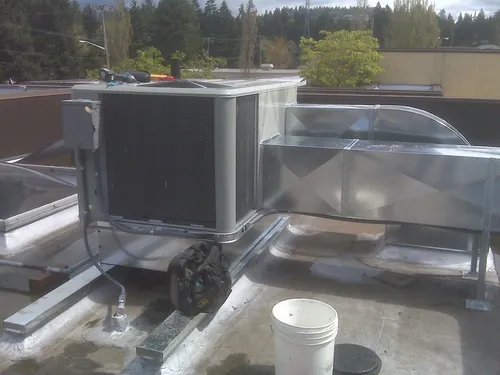
EarthHeat Geothermal, Heat Pumps and Radiant flooring
21002 Ricci Rd, Monroe, WA 98272
EarthHeat Geothermal, Heat Pumps and Radiant Flooring is a geothermal heat pump contractor based in Seattle, WA. They specialize in installing geothermal systems that use the earth's natural heat to provide sustainable heating and cooling solutions. Their services focus on eco-friendly energy options that deliver consistent comfort and energy efficiency.
How a Geothermal System Works: Harnessing the Earth's Energy
Unlike conventional furnaces or air conditioners that burn fuel or fight outdoor air temperatures, a geothermal heat pump moves heat. It uses the earth just a few feet below the surface, which maintains a relatively constant temperature between 40-90°F year-round, as a source of heat in the winter and a place to dump heat in the summer.
The process centers on a closed-loop of pipes (often called the ground loop) buried in your yard and filled with a water-based fluid. In the heating mode, this fluid circulates through the underground pipes, absorbing the earth's warmth. The now-warmed fluid returns to the heat pump unit inside your home. The unit, which is about the size of a small furnace, uses a refrigeration cycle to concentrate that low-grade heat and distribute it as warm air through your existing ductwork1 2.
For cooling, the system simply reverses. The heat pump extracts heat and humidity from your indoor air and transfers it into the circulating fluid. The now-warmed fluid travels through the ground loop, where the cooler earth absorbs the heat, and the cooled fluid returns to begin the cycle again3 4. This elegant exchange of heat with the ground is why these systems are so remarkably efficient, moving three to five units of heat for every one unit of electricity used to run the system.
Types of Geothermal Ground Loops
The design of the underground piping system is critical and depends on your property's characteristics. There are three primary types of geothermal loops.
Vertical Closed-Loop This is the most common choice for residential properties in Bothell, especially those with smaller yards. Contractors drill several boreholes, typically 100 to 400 feet deep and spaced about 15-20 feet apart. A U-shaped pipe is inserted into each hole, which is then grouted for optimal heat transfer. Vertical systems cause minimal disruption to your landscaping and are effective in most soil types, though they require specialized drilling equipment.
Horizontal Closed-Loop If you have ample, clear land, a horizontal loop can be more cost-effective to install. Contractors use excavation equipment to dig long trenches, usually 4 to 6 feet deep and several hundred feet long5. Pipes are laid in a coiled or slinky pattern in the trenches before they are backfilled. This method avoids the cost of deep drilling but requires significantly more surface area6.
Open-Loop System This system uses groundwater from a well as the heat exchange fluid. Water is pumped from one well, passes through the heat pump to exchange heat, and is then discharged back into the ground via a second well or a suitable surface body of water. While potentially the most efficient, open-loop systems are less common due to strict requirements for adequate, clean water supply and local permitting for water use and discharge.
The Geothermal Installation Process in Bothell
Installing a residential geothermal system is a significant project that typically takes several days to a couple of weeks. Understanding the steps can help you prepare.
- Site Assessment & Design: A qualified installer will evaluate your property's soil composition, available land, and geology. They'll also assess your home's heating and cooling loads. This information determines the optimal loop type and size for maximum efficiency.
- Loop Field Installation: This is the major outdoor work. For a vertical system, a drilling rig will create the boreholes. For a horizontal system, a backhoe will dig the trenches. The high-density polyethylene pipes are then placed, connected into a continuous loop, and pressure-tested for leaks. Finally, a trench is dug to connect the loop field to your house foundation.
- Indoor Unit Installation: The geothermal heat pump unit is installed in your basement, utility room, or garage. Your installer will connect it to your home's existing ductwork and electrical system. If you don't have ducts, ductless options are available. The unit is also connected to the pipes coming from the ground loop7.
- System Startup & Commissioning: The loop is filled with fluid, the system is purged of air, and the heat pump is powered on. The technician will calibrate the controls, check all system functions, and ensure it is operating at peak efficiency before handing it over to you.
Find the perfect geothermal heat pump contractors for your needs
Get personalized recommendations and expert advice
Why Bothell is Ideal for Geothermal Technology
The Pacific Northwest climate and geology are particularly well-suited for geothermal heat pumps. Bothell's soil provides excellent thermal conductivity, allowing for efficient heat exchange with the buried loops 8. Our region experiences both heating and cooling demands, allowing a geothermal system to deliver year-round savings and comfort. Furthermore, while the upfront cost is higher than a traditional HVAC system, the combination of high efficiency and relatively stable local electricity rates leads to predictable and substantial utility bill reductions.
Financial Benefits and Long-Term Value
The decision to install a geothermal system is a long-term financial play centered on operational savings and durability.
- Substantial Energy Savings: Homeowners typically see a 50-70% reduction in their heating, cooling, and even hot water costs compared to conventional systems like electric resistance heat or standard air-source heat pumps9 10 11. This is because you are tapping into the free, renewable thermal energy stored in the ground.
- Favorable Payback Period: While the initial installation cost can be two to three times that of a high-efficiency furnace and air conditioner, the dramatic monthly savings mean the system often pays for itself through lower utility bills within 5 to 10 years12 13. Federal tax credits and potential local utility rebates can significantly improve this payback timeline.
- Exceptional System Lifespan: The indoor heat pump unit has a lifespan of 25 years or more, which is comparable to high-end conventional equipment. The real advantage is in the ground loop. Made of durable polyethylene, the buried piping system often comes with warranties of 50 years and is expected to last for generations with no maintenance. This longevity adds to the property's value.
Key Considerations for Bothell Homeowners
Before moving forward, consider these local factors:
- Soil and Land: Your installer's site survey will determine if your soil is suitable and if you have enough space for a horizontal trench or adequate access for a drilling rig for a vertical system.
- Existing Infrastructure: The installation integrates with your home's ductwork and electrical panel. Older homes may need updates to accommodate the new system optimally.
- Long-Term Home Plans: Because the greatest financial benefits are realized over many years, geothermal is an ideal investment if you plan to stay in your home long-term. It also serves as a compelling feature for future eco-conscious buyers.
Frequently asked questions
Sources
Footnotes
-
How Does A Geothermal Heat Pump Work? Complete 2025 Guide - https://solartechonline.com/blog/how-does-geothermal-heat-pump-work/ ↩
-
How Do Geothermal Systems Work for Residential Homes? - https://www.davisheat.com/blog/how-do-geothermal-systems-work-for-residential-homes/ ↩
-
All About Geothermal Installation for Your Home | Scott-Lee - https://scottleeheating.com/all-about-geothermal-installation-for-your-home/ ↩
-
How a Geothermal Heat Pump Works | This Old House - https://www.youtube.com/watch?v=d5Tbsx3R2T8 ↩
-
Geothermal Heat Pump Installation: What To Expect For Your ... - https://jomory.com/geothermal-heat-pump-installation-what-to-expect-for-your-property/ ↩
-
Geothermal Heat Pumps - EnergySmart CNY - https://www.energysmartcny.org/heat-pumps/geothermal/ ↩
-
All You Need to Know About Home Geothermal Heating & Cooling - Dandelion Energy - https://dandelionenergy.com/all-you-need-to-know-about-home-geothermal-heating-cooling ↩
-
Geothermal Heat Pumps | WBDG - https://www.wbdg.org/resources/geothermal-heat-pumps ↩
-
How Does a Geothermal System Work? - ClimateMaster - https://www.climatemaster.com/homeowner/side-links/how-it-works ↩
-
Geothermal Heat Pumps - Department of Energy - https://www.energy.gov/energysaver/geothermal-heat-pumps ↩
-
Geothermal Basics | Kliemann Brothers | Tacoma, WA - https://kliemannbros.com/geothermal-basics/ ↩
-
5 Things You Should Know about Geothermal Heat Pumps - https://www.energy.gov/cmei/articles/5-things-you-should-know-about-geothermal-heat-pumps ↩
-
Geothermal Heating, Cooling, and Hot Water Systems - https://igshpa.org/wp-content/uploads/Homeowners-Guide-to-Geothermal.pdf ↩