Find the Best Geothermal Heat Pump Contractors for Your Business
No obligation • Fast responses • Nationwide coverage

Why you can trust HVAC Firms
HVAC Firms is a leading United States resource for evaluating HVAC service providers. Our team researches companies, checks credentials, and reviews customer feedback to present clear, unbiased information. Listings and rankings are based on merit, and companies cannot pay to change our editorial content.
Search providers near you
Top Geothermal Heat Pump Contractors in Auburn, Washington Ranked
Geothermal heat pumps, also known as ground-source heat pumps, are a highly efficient method for heating and cooling your home by leveraging the earth's stable underground temperature. This technology matters because it can dramatically reduce your energy bills and environmental footprint while providing reliable comfort year-round. For Auburn residents, finding the right local expertise for installation, maintenance, and repair is the first step toward harnessing this sustainable energy source.
How Geothermal Systems Work in Auburn
At its core, a geothermal system is a heat exchange process. It doesn't create heat by burning fuel; instead, it moves existing heat from one place to another. In the winter, the system extracts heat from the ground-where temperatures in the Puget Sound area remain a relatively constant 50-60°F-and concentrates it to warm your home 1 2. In the summer, the process reverses: the system pulls heat from your indoor air and transfers it into the cooler ground, effectively providing air conditioning 3.
This constant, moderate temperature of the earth is the key to the system's efficiency. Unlike air-source heat pumps that must work harder as outdoor air temperatures become extreme, a ground-source system has a reliable and stable thermal resource just a few feet below the surface. This results in significant energy savings and consistent performance, regardless of Auburn's seasonal weather swings.
Types of Ground Loop Systems
The heart of any geothermal installation is the ground loop-a series of pipes buried underground that circulate a fluid to exchange heat with the earth. The right type of loop for your Auburn property depends on your land, soil conditions, and budget.
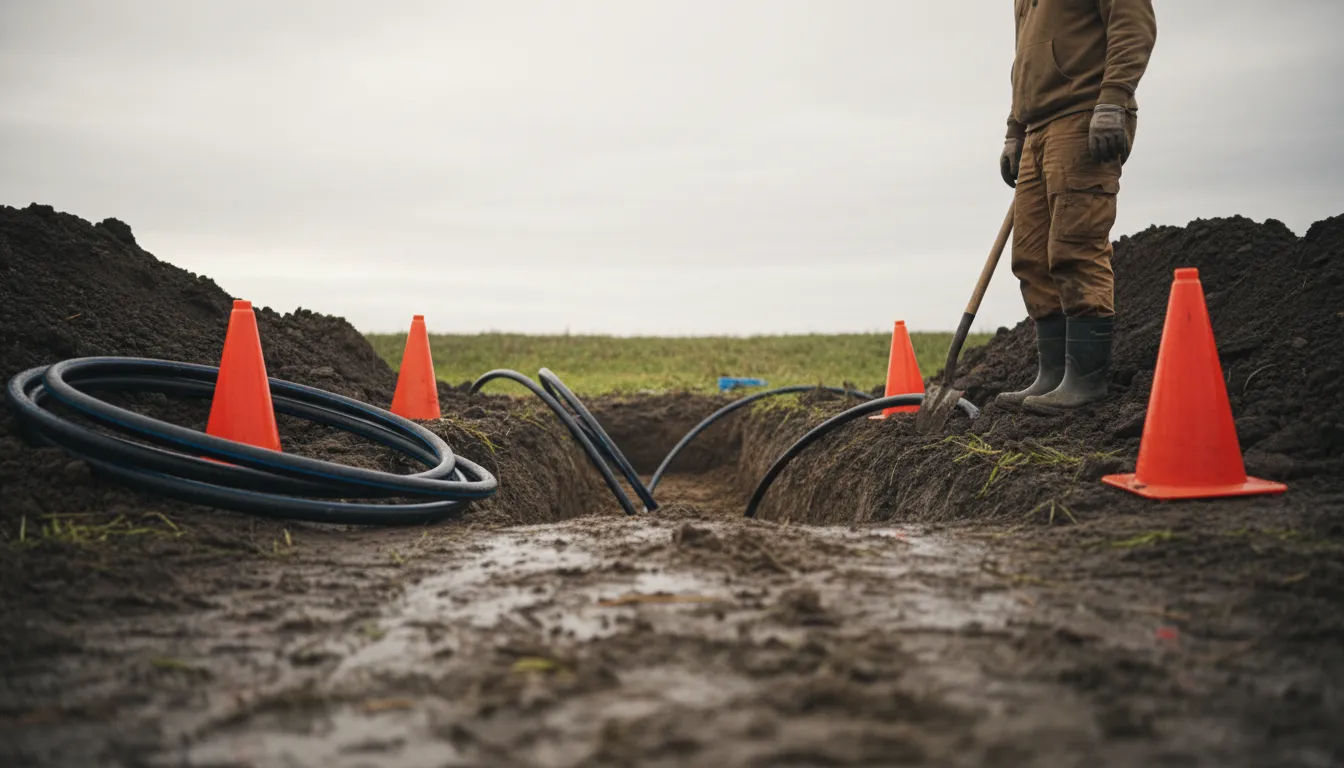
- Horizontal Closed Loops: This is often the most cost-effective option if you have sufficient land. Pipes are laid in trenches that are typically 4 to 6 feet deep 4 5. This configuration is common in new construction where the yard can be excavated easily.
- Vertical Closed Loops: For properties with limited space, such as many existing homes in Auburn, vertical loops are the ideal solution. Contractors drill boreholes 150 to 400 feet deep and insert U-shaped loop pipes. While more expensive due to the specialized drilling equipment required, this system has a smaller surface footprint.
- Pond or Lake Loops: If you have a suitable water body on or near your property, this can be the lowest-cost loop option. Coils of pipe are submerged at an adequate depth to utilize the water's stable temperature 6.
A professional installer will conduct a thorough site assessment to determine the best loop configuration for your specific situation, considering soil composition, rock content, and available space.
The Installation Process: What Auburn Homeowners Can Expect
Installing a geothermal heating and cooling system is a significant project that requires careful planning and skilled execution. Understanding the process can help you prepare.
- Site Assessment and Design: A qualified installer will evaluate your property's soil, geology, and layout. They will also locate all underground utilities. This assessment is crucial for designing an efficient and code-compliant loop field and system.
- Permitting: In Washington State, vertical ground loops are regulated by the Department of Ecology under WAC 173-160, which governs well construction. Your contractor should handle securing the necessary permits, which ensure the loop is installed properly to protect groundwater. Horizontal loops follow local land-use and building codes.
- Loop Installation: This is the major excavation phase. For a horizontal system, trenches are dug. For a vertical system, a drilling rig is brought in to create the boreholes. The high-density polyethylene pipes are then placed, connected, and pressure-tested 7.
- Indoor Unit Installation: The geothermal heat pump unit itself is installed inside your home, typically in a basement, utility closet, or garage. It is connected to your home's existing ductwork or to a hydronic (water-based) system for radiant floor heating 8.
- System Startup and Commissioning: Once everything is connected, the system is filled with fluid, purged of air, and started. The contractor will test and balance the system to ensure it operates at peak efficiency.
Find the perfect geothermal heat pump contractors for your needs
Get personalized recommendations and expert advice
Benefits for Auburn Residents
Investing in a geothermal system offers compelling advantages that go beyond just temperature control.
- Substantial Energy Savings: By using the earth's free thermal energy, geothermal heat pumps are exceptionally efficient. Homeowners can see a reduction of up to 65% on their heating and cooling energy bills compared to conventional systems 9. This translates to significant long-term savings that help offset the initial installation cost.
- Longevity and Reliability: The underground loop system is incredibly durable, with a lifespan often exceeding 50 years. The indoor heat pump unit typically lasts 20-25 years, which is longer than many traditional air conditioners and furnaces. This means decades of reliable comfort with fewer major replacements.
- Quiet and Discreet Operation: Since there is no loud outdoor condenser unit (like with a standard air conditioner or air-source heat pump), geothermal systems operate very quietly. The only mechanical components are indoors, contributing to a peaceful outdoor environment.
- Environmental Sustainability: Geothermal systems use electricity to move heat, not to generate it by combustion. When paired with a clean electricity grid, they offer a very low-carbon heating and cooling solution. They also don't require an outdoor unit that emits heat, reducing the urban "heat island" effect.
Costs and Financial Considerations
The upfront cost for a complete geothermal system in Auburn, including the heat pump unit and ground loop installation, typically ranges from $20,000 to $50,000 or more 10 11 12. This wide range is due to variables like loop type (vertical drilling is more costly than horizontal trenching), system size, property characteristics, and the existing infrastructure in your home.
While this initial investment is higher than that of a traditional HVAC system, the dramatically lower operating costs create a compelling financial picture over time. The energy savings accumulate year after year, leading to a favorable return on investment. Homeowners should also investigate available federal tax credits for renewable energy systems, as well as any local utility rebates that may be offered in the Puget Sound region to help improve affordability.
Local Considerations: Soil and Regulations in Auburn
The success of a geothermal system depends heavily on local ground conditions. Fortunately, soils in the Puget Sound area are generally suitable for ground-source heat exchange. Soil with good moisture content transfers heat more effectively than dry, sandy soil. Your installer's site assessment will confirm the thermal properties of your specific property.
As noted, regulatory compliance is key. The Washington State University Energy Program highlights that vertical boreholes are considered "closed-loop heat exchange wells" and are regulated to prevent groundwater contamination and ensure proper construction 13. Working with a licensed and experienced installer who is familiar with Washington's regulations (WAC 173-160) is essential for a smooth and legal installation process.
Frequently asked questions
Sources
Footnotes
-
Geothermal Heating and Cooling - https://geothermal.colorado.gov/geothermal-heating-and-cooling ↩
-
Geothermal Heating & Cooling - Department of Energy - https://www.energy.gov/eere/geothermal/geothermal-heating-cooling ↩
-
Geothermal (Ground Source) Heat Pumps - NY.gov - https://cleanheat.ny.gov/geothermal-heat-pumps/ ↩
-
A Regulatory Guide to Low Temperature Geothermal Development ... - https://www.energy.wsu.edu/Documents/WA_Regulatory%C2%ADGuide%C2%AD_for_Low_Temp_Geothermal.pdf ↩
-
Geothermal Heat Pumps: How They Work | AHRI - https://www.ahrinet.org/scholarships-education/education/homeowners/how-things-work/geothermal-heat-pumps-how-they-work ↩
-
Geothermal Heat Pumps - Department of Energy - https://www.energy.gov/energysaver/geothermal-heat-pumps ↩
-
FAQs • What types of ground-source heat pumps and configurat - https://concordma.gov/FAQ.aspx?QID=484 ↩
-
Geothermal HVAC Installation: What You Need to Know - https://keepfloridacool.com/ac-university/geothermal-hvac-installation-what-you-need-to-know/ ↩
-
5 Things You Should Know about Geothermal Heat Pumps - https://www.energy.gov/cmei/articles/5-things-you-should-know-about-geothermal-heat-pumps ↩
-
Geothermal HVAC Systems: Harnessing the Earth for ... - https://www.iccsafe.org/building-safety-journal/bsj-technical/geothermal-hvac-systems-harnessing-the-earth-for-sustainable-comfort/ ↩
-
How Do Geothermal Systems Work for Residential Homes? - https://www.davisheat.com/blog/how-do-geothermal-systems-work-for-residential-homes/ ↩
-
Geothermal Heat Pump Guide: Installation Costs, Types And Benefits - https://modernize.com/hvac/heating-repair-installation/heat-pump/geothermal ↩
-
Geothermal Heat Pump Installation: What To Expect For Your Property - https://jomory.com/geothermal-heat-pump-installation-what-to-expect-for-your-property/ ↩