Find the Best Geothermal Heat Pump Contractors for Your Business
No obligation • Fast responses • Nationwide coverage

Why you can trust HVAC Firms
HVAC Firms is a leading United States resource for evaluating HVAC service providers. Our team researches companies, checks credentials, and reviews customer feedback to present clear, unbiased information. Listings and rankings are based on merit, and companies cannot pay to change our editorial content.
Search providers near you
Top Geothermal Heat Pump Contractors in Spring Hill, Tennessee Ranked
Geothermal heat pumps, also known as ground-source heat pumps, are a highly efficient method for heating and cooling your home by leveraging the earth's stable underground temperature. This technology matters because it can dramatically reduce your energy bills and environmental footprint while providing reliable comfort year-round. For homeowners in Spring Hill, this guide explains how these systems work, what installation entails, and how to connect with qualified local professionals who can assess your property and provide expert installation and service.
How a Geothermal System Works
A geothermal or ground-source heating and cooling system operates on a simple principle of heat exchange. Unlike a furnace that creates heat, a geothermal heat pump moves existing heat from one place to another. It uses a network of buried pipes, called a ground loop, filled with a water-based solution. In the winter, this fluid absorbs the earth's consistent warmth (typically 50-60°F in Tennessee) and carries it to the heat pump inside your home. The heat pump then concentrates this thermal energy and distributes warm air through your ductwork 1.
During Spring Hill's humid summers, the process reverses. The system extracts heat from your home's air and transfers it into the cooler ground via the loop fluid. This provides air conditioning that is often more efficient and effective than standard air-source units because it's rejecting heat into a much cooler medium (the earth) than the outside air 2. This constant, efficient exchange with the stable ground temperature is the key to the system's remarkable performance and savings.
Types of Ground Loop Systems
The heart of any geothermal installation is the ground loop. The right type for your Spring Hill home depends on your lot size, soil conditions, and budget. The most common configuration is a closed-loop system, where the fluid is permanently sealed within a high-density polyethylene pipe circuit.
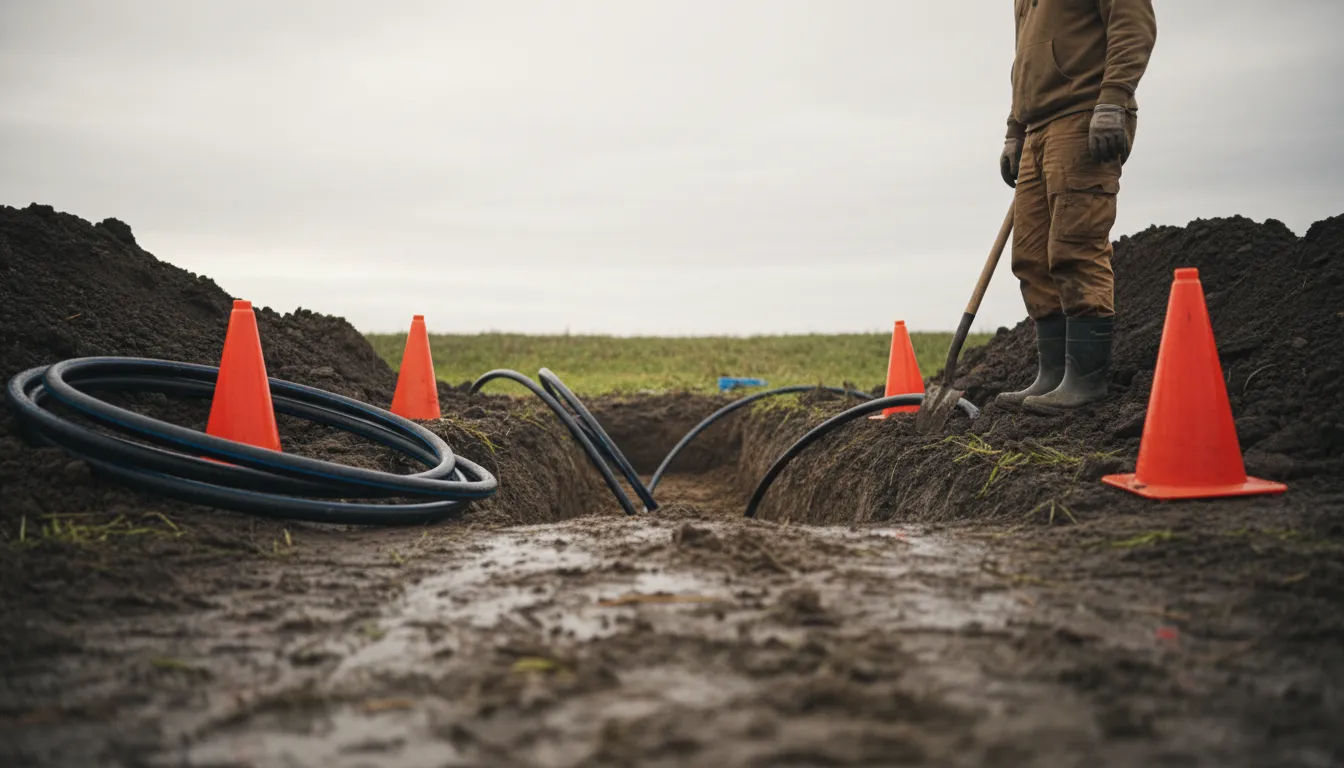
- Horizontal Loops: This is often the most cost-effective method if space allows. Trenches are dug about six feet deep across a sizable area of your yard. Pipes are laid in these trenches and then backfilled. This approach requires a larger, clear plot of land but generally involves lower excavation costs than drilling.
- Vertical Loops: For homes in Spring Hill with smaller lots or rocky soil, vertical loops are the ideal solution. A drilling rig bores holes 150 to 400 feet deep. U-shaped loop pipes are inserted into each borehole, which is then grouted for optimal heat transfer. While the drilling cost is higher, this method minimizes landscape disruption and is excellent for properties with limited usable yard space 3.
- Pond/Lake Loops: If you have a sufficient body of water on your property, a loop can be submerged at the bottom. This can be a very efficient and lower-cost installation option, but it is less common and depends entirely on having a suitable, accessible water source 4.
The Installation Process in Spring Hill
Understanding what to expect during a geothermal heat pump installation can help you plan effectively. The process is more involved than replacing a traditional HVAC system but is managed efficiently by experienced crews.
- Site Assessment & Design: A qualified installer will first conduct a detailed evaluation of your home's heating and cooling loads, your property's soil composition, and available space. This data is used to design a properly sized loop field and select the correct indoor heat pump unit.
- Loop Field Installation: This is the major exterior work. For a horizontal system, an excavator will dig the necessary trenches. For a vertical system, a drilling rig will be brought in. The loop pipes are then placed, connected into a manifold, pressure-tested for leaks, and finally buried or grouted. This phase causes temporary yard disruption, which is restored after the pipes are in place.
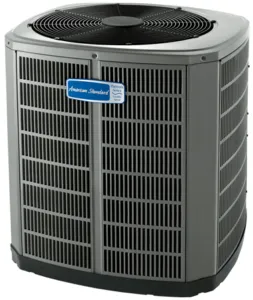
- Indoor Unit & Connection: The geothermal heat pump unit-which is typically about the size of a small refrigerator-is installed in your garage, basement, or utility closet. It is connected to your home's existing ductwork and electrical system. The loop pipes are brought into the home and connected to the heat pump's heat exchanger 5.
- System Startup & Commissioning: Once everything is connected, the system is filled with fluid, purged of air, and started. The installer will calibrate the thermostat, check all system pressures and flows, and ensure everything is operating at peak efficiency before handing it over to you.
Find the perfect geothermal heat pump contractors for your needs
Get personalized recommendations and expert advice
Financial and Efficiency Benefits
The decision to install a geothermal system is a significant investment with compelling long-term returns. The primary advantage is exceptional energy efficiency, which translates directly into lower utility bills.
- Substantial Energy Savings: Homeowners can typically expect a 50% to 70% reduction in heating and cooling energy costs compared to conventional systems like standard air conditioners and electric furnaces 6. For a home in Spring Hill with high summer cooling demands and variable winter heating needs, these savings are realized every month.
- Understanding the Investment & Payback: The upfront cost for a complete residential geothermal system in Tennessee often ranges from $20,000 to over $40,0007 8. This includes the ground loop, heat pump unit, and all installation labor. The key metric is the payback period-the time it takes for your energy savings to equal the initial investment. Due to the high efficiency, this period is typically between 5 and 10 years9 10 7. After that, you enjoy drastically lower operating costs for the life of the system.
- Long-Term Value & Durability: A geothermal system is a durable, long-life investment. The indoor heat pump components often last 25 years or more, while the underground polyethylene piping has a lifespan exceeding 50 years. This longevity, combined with minimal maintenance requirements, makes it a cornerstone of a home's infrastructure.
Is Geothermal Right for Your Spring Hill Home?
Geothermal heating and cooling is an excellent option for many, but not all, properties. It is ideally suited for homeowners who plan to stay in their residence long enough to realize the full financial payback through energy savings. It's also a perfect match for new construction, where the loop field can be integrated into the site plan from the beginning, often at a lower cost than a retrofit.
For existing homes, having adequate yard space for a horizontal trench or vertical drilling is essential. A professional assessment is the only way to know for sure. Furthermore, while the federal government and sometimes local utilities offer tax credits or incentives for geothermal installations, these can significantly improve the financial outlook, making the system more accessible.
Maintenance and Service
One of the appealing aspects of a ground-source heat pump is its relatively low maintenance needs. The underground loop is virtually maintenance-free. Annual or bi-annual maintenance typically focuses on the indoor heat pump unit, similar to a traditional HVAC system: checking refrigerant levels, cleaning coils, inspecting electrical connections, and ensuring the air handler and ductwork are clean and functional. Establishing a relationship with a local provider familiar with geothermal technology ensures your system maintains its peak efficiency and longevity for decades.
Frequently asked questions
Sources
Footnotes
-
Geothermal (Ground Source) Heat Pumps - NY.gov - https://cleanheat.ny.gov/geothermal-heat-pumps/ ↩
-
How Does a Geothermal System Work? - ClimateMaster - https://www.climatemaster.com/homeowner/side-links/how-it-works ↩
-
Geothermal Basics - Central City Heating & Air Conditioning - https://centralcityhvac.com/geothermal-basics/ ↩
-
Geothermal Heat Pump Installation: What To Expect For Your ... - https://jomory.com/geothermal-heat-pump-installation-what-to-expect-for-your-property/ ↩
-
All You Need to Know About Home Geothermal Heating & ... - https://dandelionenergy.com/all-you-need-to-know-about-home-geothermal-heating-cooling ↩
-
5 Things You Should Know about Geothermal Heat Pumps - https://www.energy.gov/cmei/articles/5-things-you-should-know-about-geothermal-heat-pumps ↩
-
Geothermal Heat Pump Guide: Installation Costs, Types And Benefits - https://modernize.com/hvac/heating-repair-installation/heat-pump/geothermal ↩ ↩2
-
Geothermal Heating, Cooling, and Hot Water Systems - https://igshpa.org/wp-content/uploads/Homeowners-Guide-to-Geothermal.pdf ↩
-
How Does A Geothermal Heat Pump Work? Complete 2025 Guide - https://solartechonline.com/blog/how-does-geothermal-heat-pump-work/ ↩
-
Geothermal Heat Pumps - Department of Energy - https://www.energy.gov/energysaver/geothermal-heat-pumps ↩