
Find the Best Geothermal Heat Pump Contractors for Your Business
No obligation • Fast responses • Nationwide coverage

Why you can trust HVAC Firms
HVAC Firms is a leading United States resource for evaluating HVAC service providers. Our team researches companies, checks credentials, and reviews customer feedback to present clear, unbiased information. Listings and rankings are based on merit, and companies cannot pay to change our editorial content.
Search providers near you
Best Geothermal Heat Pump Contractors in Tennessee Ranked
Geothermal heat pumps (GHPs), also known as ground-source heat pumps, offer a highly efficient way to heat and cool your Tennessee home by exchanging heat with the stable temperature of the earth. This technology matters because it can dramatically reduce your energy bills and environmental footprint while providing reliable comfort year-round. This guide will help you understand the benefits, costs, regulations, and incentives specific to Tennessee, empowering you to connect with qualified local professionals for your project.
Right Time HVAC
5300 Old Hickory Blvd, Nashville, TN 37218
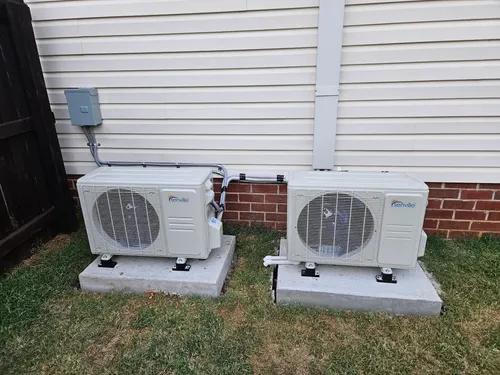
Right Time HVAC is a full-service heating, cooling, and geothermal contractor serving Nashville, TN. They offer installation, repair, and maintenance for air conditioners, furnaces, heat pumps, and geothermal systems, along with indoor air quality solutions for homes and businesses. The company specializes in advanced HVAC technologies including hydronics and inverter systems, and provides ductwork services to improve airflow and comfort. With over 30 years of combined experience among their technicians, Right Time HVAC focuses on honest, customer-focused solutions to meet diverse home comfort needs.

Automatic Air Conditioning, Heating, Plumbing & Electric
3470 Tchulahoma Rd, Memphis, TN 38118
Automatic Air Conditioning, Heating, Plumbing & Electric has been serving Memphis, TN, and the surrounding areas since 1943. The company offers a wide range of services including HVAC installation, repair, and maintenance, as well as plumbing and electrical work. They are experienced in handling air conditioning, furnace, boiler, and geothermal heat pump systems, and provide 24/7 emergency service for HVAC, plumbing, and electrical needs. As a long-standing Carrier partner since 1956, they install locally manufactured units and support the local economy.
Parker's Heating & Cooling
640 W Burton St, Murfreesboro, TN 37130
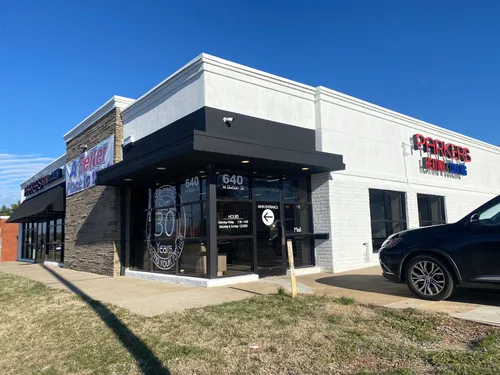
Parker's Heating & Cooling is a family-owned HVAC company serving Nashville, TN, and the surrounding Middle Tennessee area. Since 1992, they have provided residential and commercial heating and cooling services including air conditioner, furnace, heat pump, and geothermal system installation, repair, and maintenance. Their team of NATE-certified technicians is licensed, bonded, and insured, ensuring work that follows the latest industry standards. Parker's offers comprehensive HVAC tune-ups and system replacements, backed by extended warranties and clear pricing. They also provide financing options to help customers manage their comfort needs.
Comfortable LLC
356 New Byhalia Rd #4, Collierville, TN 38017
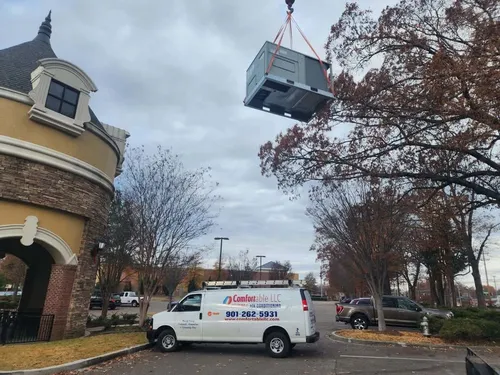
Comfortable LLC is an HVAC and electrical service provider located in Memphis, TN. They offer a wide range of services including installation, repair, and maintenance of heating and cooling systems such as air conditioners, furnaces, heat pumps, boilers, mini splits, and geothermal heat pumps. Comfortable LLC also provides indoor air quality solutions and electrical and lighting services. As a Trane dealer, they supply various indoor comfort products and specialize in emergency service available 24/7. With over ten years of experience, they serve Memphis and surrounding communities including Collierville, Germantown, Cordova, and East Memphis.

Aire Serv of Clarksville
Nashville, TN
Aire Serv of Clarksville provides heating and air conditioning services in Nashville, TN, and surrounding areas. They offer repair, installation, and maintenance for air conditioners, furnaces, heat pumps, boilers, and mini split systems. Their services also include duct cleaning, thermostat installation, and indoor air quality solutions such as air purification systems. The company serves both residential and commercial customers, with capabilities that include geothermal heating and cooling systems. Aire Serv of Clarksville emphasizes regular HVAC tune-ups to improve system efficiency and longevity. They provide 24/7 customer service to address urgent heating and cooling needs.
Why Consider a Geothermal System in Tennessee?
Tennessee's climate and geology create a favorable environment for geothermal systems. The state experiences a mix of hot, humid summers and cool winters, making efficient year-round climate control a priority for homeowners. A geothermal heat pump excels in these conditions because it leverages the earth's constant underground temperature (typically 50-60°F in Tennessee) as a heat source in winter and a heat sink in summer. This process is far more efficient than generating heat or fighting outdoor air temperatures with a conventional system 1.
The primary benefits are substantial energy savings and increased comfort. By moving heat rather than creating it, a GHP system can reduce your heating and cooling energy consumption by up to 50% compared to traditional HVAC systems 2. This translates directly to lower utility bills. Furthermore, these systems provide exceptionally even temperatures, improved humidity control, and quiet operation since there's no noisy outdoor condenser unit. With a lifespan of over 20 years for the heat pump unit and 50+ years for the underground ground loop, it's a long-term investment in your home's efficiency and value.
Understanding Costs, Savings, and Payback
The decision to install a geothermal system involves understanding the upfront investment and the long-term financial return.
Installation Costs: In Tennessee, the total installed cost for a residential geothermal heat pump system typically ranges from $18,000 to $30,000, though complex projects or larger homes can exceed $40,000 3. This price includes the heat pump unit, the ground loop installation (which is the most significant cost component), and all labor. The final cost is influenced by your home's size and layout, the chosen loop type (vertical, horizontal, or pond), local soil and rock conditions, and the system's capacity.
Operating Costs & Savings: While the initial price is higher than a conventional air-source system, the operational savings are where geothermal shines. Homeowners often see their heating and cooling bills cut in half. For example, where a conventional system might cost $2,000 to $3,500 annually to operate, a GHP system could bring that cost down to between $1,200 and $2,000 4 5. These savings make the monthly cost of ownership very competitive, especially when financing is considered.
Payback Period: The "payback period" is the time it takes for your energy savings to equal the initial investment. In Tennessee, thanks to strong energy savings and available financial incentives, the payback period for a geothermal system often falls within 5 to 10 years. After that, the continued savings go directly into your pocket for the decades-long life of the system.
Find the perfect geothermal heat pump contractors for your needs
Get personalized recommendations and expert advice
Tennessee Regulations and Permitting
Installing the ground loop portion of a geothermal system is regulated in Tennessee to protect groundwater resources. The Tennessee Department of Environment and Conservation (TDEC) oversees these regulations 6.
Key Licensing Requirement: Anyone drilling a borehole deeper than twenty feet for a closed-loop geothermal system must be a state-licensed water well driller 7. This ensures the installer follows proper procedures to prevent aquifer contamination. Always verify your installer holds this license.
Permitting Process: The process is usually managed by your licensed installer. It may involve:
- Site Assessment: Evaluating your property for the best loop type and location.
- State Permits: Submitting a well installation notification and, upon completion, a report to TDEC within 60 days 8.
- Local Permits: Obtaining building or electrical permits from your city or county.
- Special Circumstances: If the installation disturbs over one acre of land, a National Pollutant Discharge Elimination System (NPDES) stormwater permit may be required 9. Additionally, systems with five or more boreholes located within a designated "wellhead protection area" need prior written approval from TDEC 10.
Working with an experienced, licensed professional is crucial to navigating this process smoothly and ensuring your system is compliant and safe.
Financial Incentives and Rebates
Significant financial incentives are available to help offset the upfront cost of a geothermal heat pump system in Tennessee.
Federal Tax Credit: The most substantial incentive is the Residential Clean Energy Credit. This provides a 30% federal income tax credit on the total cost of purchasing and installing a qualifying geothermal heat pump system. There is no upper dollar limit on this credit, and it is available for systems installed and placed in service before January 1, 2026 11 12.
Tennessee-Specific Programs:
- Home Energy Rebate Programs: Tennessee is implementing federal Inflation Reduction Act funding to launch state-administered rebate programs. These may offer rebates of up to $8,000 for whole-home energy efficiency retrofits, which can include geothermal systems, with amounts based on household income and projected energy savings 13.
- TVA EnergyRight®: The Tennessee Valley Authority often provides incentives for energy-efficient upgrades through local power companies. It's essential to check the EnergyRight® website or ask your installer about current local rebate offers for geothermal installations 14.
- Financing Options: Some utility companies and state programs offer low-interest loan programs specifically for clean energy upgrades, making the initial investment more manageable.
Soil, Climate, and System Design for Tennessee Homes
Tennessee's diverse geography, from the rocky soils of East Tennessee to the denser soils of the Central Basin, influences system design and cost.
Climate Suitability: Tennessee's mild climate is ideal for geothermal. The system doesn't have to work as hard in extreme cold as it might in northern states, allowing for optimal efficiency and performance year-round 15 16.
Soil Conditions and Loop Design: The soil's ability to transfer heat (thermal conductivity) is a key factor.
- Vertical Loops: Common in areas with rocky soil or smaller lots, like parts of East Tennessee. Drilling is more expensive here, but vertical loops are a reliable solution 17 18.
- Horizontal Loops: Typically the most cost-effective option if you have sufficient land area. They require trenches to be dug, which works well in areas with dense clay or moist soils that facilitate good heat exchange 19 20.
- Pond/Lake Loops: If you have a suitable water body, this can be a very efficient and lower-cost loop option.
A professional installer will conduct a thorough site evaluation, which should include a soil thermal conductivity test, to recommend the most effective and economical loop design for your specific property 21.
Choosing a Qualified Installer in Tennessee
Selecting the right contractor is the most critical step for a successful geothermal installation. Look for a company with:
- Specific Geothermal Experience: Ask how many systems they have installed and request references from past GHP customers.
- Proper Licensing: Ensure they employ a TDEC-licensed water well driller for the ground loop work and hold all necessary state contractor licenses.
- Comprehensive Service: They should handle the entire process: load calculation, system design, permitting, installation, and post-installation support.
- Industry Certifications: Look for certifications from organizations like the International Ground Source Heat Pump Association (IGSHPA).
- Detailed Proposals: Get multiple, itemized quotes that clearly break down equipment, loop installation, labor, and any permitting fees.
Frequently asked questions
Sources
Footnotes
-
Geothermal Frequently Asked Questions | A & C Trades - https://www.acgeothermaltn.com/geothermal-frequently-asked-questions/ ↩
-
Guide to Geothermal Heat Pumps - https://www.energy.gov/sites/prod/files/guide_to_geothermal_heat_pumps.pdf ↩
-
Geothermal Heat Pump Costs: Your Complete Pricing Guide - https://znfu.com/geothermal-heat-pump-costs/ ↩
-
Understanding Geothermal HVAC Cost in Middle Tennessee - https://www.righttimehvac.com/geothermal-hvac-cost/ ↩
-
Ground Source Heat Pump Cost: How Much Will You Pay in ... - https://www.energysage.com/heat-pumps/costs-benefits-geothermal-heat-pumps/ ↩
-
Section One General Information - https://www.blounttn.gov/DocumentCenter/Home/View/254 ↩
-
Water Well Licensing Regulations and Well Construction ... - https://publications.tnsosfiles.com/rules/0400/0400-45/0400-45-09.20150917.pdf ↩
-
Well Water - TN.gov - https://www.tn.gov/environment/program-areas/wr-water-resources/water-quality/well-water.html ↩
-
Environmental Permits Section - TN.gov - https://www.tn.gov/tdot/environmental-home/environmental-engineering-office/environmental-permits.html ↩
-
Tenn. Comp. R. & Regs. 0400-45-09-.17 | State Regulations - https://www.law.cornell.edu/regulations/tennessee/Tenn-Comp-R-Regs-0400-45-09-.17 ↩
-
30% Federal Tax Credit on GeoThermal Heat Pumps - https://symbiontservice.com/services/geothermal-air-conditioning/federal-tax-credit/ ↩
-
Geothermal Heat Pumps Tax Credit | ENERGY STAR - https://www.energystar.gov/about/federal-tax-credits/geothermal-heat-pumps ↩
-
Home Energy Rebate Programs - TN.gov - https://www.tn.gov/environment/program-areas/energy/state-energy-office--seo-/programs-projects/programs-and-projects/inflation-reduction-act/home-energy-rebate-programs.html ↩
-
How Much Should a New HVAC System Cost in Tennessee (2025)? - https://milanheatingandair.com/f/how-much-should-a-new-hvac-system-cost-in-tennessee-2025 ↩
-
Is Geothermal Heating a Viable Option for Mild Climates? - https://whitemechanical.com/is-geothermal-heating-and-cooling-a-viable-option-for-homes-in-mild-climates/ ↩
-
GROUND SOURCE HEAT PUMPS - https://racetozero.org.uk/wp-content/uploads/2024/04/Ground-Source-Heat-Pumps-v2-GGM2301-02.pdf ↩
-
Tennessee's Geothermal Heating & Cooling Experts - https://precisionairtn.com/service/geothermal/ ↩
-
The Good Earth - Edge Magazine - https://edgemagonline.com/article/the-good-earth/ ↩
-
Testing for Geothermal Heating and Cooling Capacity - https://tremontfuture.org/testing-for-geothermal-heating-and-cooling-capacity/ ↩
-
Geothermal Basics | Central City Heating & Air Conditioning - https://centralcityhvac.com/geothermal-basics/ ↩
-
Geothermal Heating and Cooling - https://adaairconditioning.com/geothermal/ ↩