
Find the Best Geothermal Heat Pump Contractors for Your Business
No obligation • Fast responses • Nationwide coverage

Why you can trust HVAC Firms
HVAC Firms is a leading United States resource for evaluating HVAC service providers. Our team researches companies, checks credentials, and reviews customer feedback to present clear, unbiased information. Listings and rankings are based on merit, and companies cannot pay to change our editorial content.
Search providers near you
Top Geothermal Heat Pump Contractors in Murfreesboro, Tennessee Ranked
Geothermal heat pumps, also known as ground-source heat pumps, offer a highly efficient way to heat and cool your Murfreesboro home by tapping into the Earth's stable underground temperature. This technology can lead to substantial energy savings and increased comfort year-round. This guide explains how these systems work, what installation entails, and how you can find qualified local professionals to assess your property and provide a tailored solution.
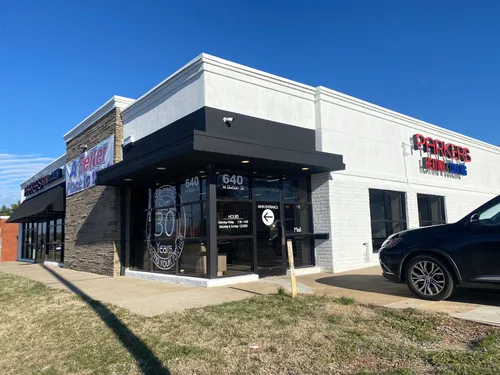
Parker's Heating & Cooling
640 W Burton St, Murfreesboro, TN 37130
Parker's Heating & Cooling is a family-owned HVAC company serving Nashville, TN, and the surrounding Middle Tennessee area. Since 1992, they have provided residential and commercial heating and cooling services including air conditioner, furnace, heat pump, and geothermal system installation, repair, and maintenance. Their team of NATE-certified technicians is licensed, bonded, and insured, ensuring work that follows the latest industry standards. Parker's offers comprehensive HVAC tune-ups and system replacements, backed by extended warranties and clear pricing. They also provide financing options to help customers manage their comfort needs.
MJ Frick Company, Inc.
3651 Trousdale Dr, Nashville, TN 37204
MJ Frick Company, Inc. is an experienced HVAC contractor serving Nashville, TN, for over 31 years. They provide installation, repair, and maintenance services for residential and commercial heating, ventilation, and air conditioning systems, including furnaces, heat pumps, mini splits, and geothermal units. The company offers same-day service and specializes in AC unit replacement, furnace repair, and comprehensive HVAC maintenance plans to ensure efficient system operation year-round. In addition to HVAC, MJ Frick Co. also provides plumbing services and tankless water heater installation and repair.
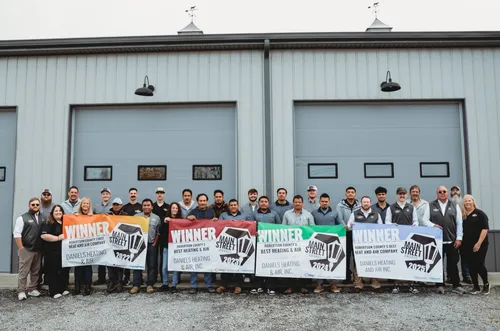
Estes Heating & Cooling
250 Donelson Pike, Nashville, TN 37214
Estes Heating & Cooling is an HVAC company serving Nashville, TN, and the surrounding communities. They offer a range of services including installation, repair, and tune-ups for air conditioners, furnaces, heat pumps, mini splits, geothermal systems, and thermostats. The company specializes in indoor air quality solutions and provides service agreements to maintain system performance. With over 30 years of experience, Estes Heating & Cooling is a licensed contractor known for installing and servicing a variety of heating and cooling equipment. They also provide emergency service when needed.
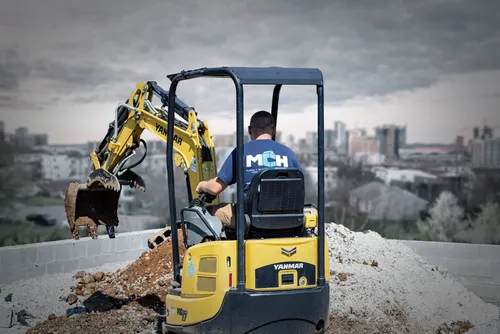
MCH Nashville, LLC
4113 Old Hickory Blvd, Old Hickory, TN 37138
MCH Nashville, LLC is an HVAC and home systems contractor based in Nashville, TN. They provide a wide range of services including air conditioning, heating, mini-splits, ductwork, plumbing, electrical wiring, and solar and geothermal system installations. Their expertise covers new construction and remodel projects, with capabilities such as geothermal heat pump installation and electrical panel upgrades.
Jones & Stone Drilling
838 Carthage Hwy, Lebanon, TN 37087
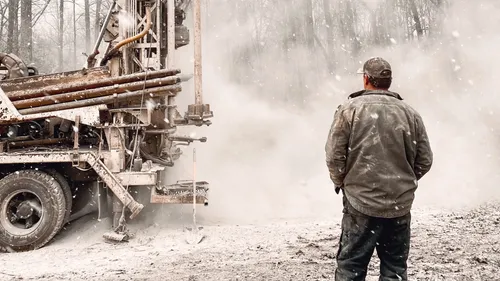
Jones & Stone Drilling is a geothermal heat pump contractor based in Lebanon, serving the Nashville, TN area and all of Middle Tennessee. With over 50 years of combined drilling experience since 1977, they specialize in residential and commercial vertical drilling, including traditional water wells, quarry drilling, and geothermal heating and cooling systems. Their licensed and bonded team offers expertise in geothermal technology, providing energy-efficient heating and cooling solutions for homes and businesses.
How Geothermal Systems Work
A geothermal heating and cooling system operates on a simple but brilliant principle: it uses the ground as a heat source in winter and a heat sink in summer. Just a few feet below the surface, the Earth maintains a relatively constant temperature between 40°F and 70°F, regardless of the season above ground. A geothermal heat pump leverages this stable temperature to provide efficient climate control.
Here's the basic process:
- Heating Mode: In the winter, a fluid (typically a water and antifreeze mix) circulates through a loop of pipes buried in the ground, absorbing the Earth's stored heat. This warmed fluid is brought back to the heat pump unit inside your home, where the heat is extracted and concentrated, then distributed through your ductwork as warm air.
- Cooling Mode: In the summer, the process reverses. The system extracts heat from your home's air and transfers it into the circulating fluid. The now-warmed fluid travels through the underground loop, where it rejects the heat into the cooler earth, and returns cooled to begin the cycle again.
This method of heat exchange is far more efficient than generating heat through combustion or fighting the extreme outdoor air temperatures with a standard air conditioner, which is why ground-source heat pumps can achieve such significant energy savings.
Types of Ground Loop Systems
The buried pipe network, called the ground loop, is the heart of the system. The right type for your Murfreesboro property depends on your land, soil composition, and budget. The three main configurations are:
Horizontal Closed Loop This is often the most cost-effective option if space allows. Contractors dig trenches six to ten feet deep in long, straight lines or coiled "slinky" patterns across a wide area of your yard. The pipes are laid in these trenches and buried. This approach requires a larger, clear plot of land but generally involves lower excavation costs than drilling 1 2.
Vertical Closed Loop For homes with smaller lots, which is common in many Murfreesboro neighborhoods, a vertical loop is the ideal solution. Contractors use a drilling rig to bore holes 100 to 400 feet deep. U-shaped pipes are inserted into each borehole, which are then grouted. While the drilling equipment makes this option more expensive upfront, it requires minimal surface area and is less disruptive to existing landscaping.
Pond/Lake Loop (Open or Closed) If you have a sufficiently large and deep pond or lake on your property, this can be a very efficient and lower-cost loop option. For a closed-loop system, coils of pipe are simply submerged at the bottom of the water body. The consistent temperature of the water provides excellent heat exchange. An open-loop system uses well water, but is less common due to water quality and regulatory considerations 3 4.
The Installation Process in Murfreesboro
Installing a geothermal HVAC system is a significant project that requires professional expertise. Understanding the steps can help you know what to expect.
- Site Assessment and Load Calculation: A qualified installer will first evaluate your property. They'll assess soil conditions, available land, and rock composition to recommend the best loop type. Crucially, they will perform a Manual J load calculation to determine your home's exact heating and cooling needs, ensuring the system is correctly sized.
- Ground Loop Installation: This is the major excavation phase. For a horizontal system, trenching equipment will dig the necessary network. For a vertical system, a drilling rig will be brought in to create the boreholes. The high-density polyethylene pipes are then placed, connected, and pressure-tested before being buried or grouted 5.
- Indoor Unit and Ductwork Connection: The geothermal heat pump unit itself is installed inside your home, typically in a basement, utility closet, or garage. It resembles a traditional furnace. Your installer will connect it to your home's existing ductwork. If you don't have ducts, they can install a ductless mini-split version or add new ductwork 6.
- System Startup and Testing: Once everything is connected, the system is charged with refrigerant and the loop is filled with its heat-transfer fluid. The contractor will start the system, calibrate it, and test all components to ensure everything is operating at peak efficiency before handing it over to you.
Find the perfect geothermal heat pump contractors for your needs
Get personalized recommendations and expert advice
Why Geothermal is a Smart Choice for Middle Tennessee
Murfreesboro and the surrounding Middle Tennessee region present favorable conditions for geothermal technology. The geology supports feasible drilling for vertical loops, and the climate-with both hot, humid summers and chilly winters-allows a geothermal system to deliver maximum savings by efficiently handling both extremes.
The primary advantage is long-term energy efficiency. Homeowners can save up to 65% on heating and cooling bills compared to conventional systems like standard air conditioners and furnaces 7 8. While the upfront investment is higher, often ranging from $18,000 to $45,000 or more depending on system size and loop type, the payback period is attractive. Many homeowners see the initial cost offset by lower utility bills in 5 to 10 years, especially when combined with available incentives 8 9.
Furthermore, these systems are built to last. The indoor heat pump unit typically has a lifespan of 20 years or more, while the underground piping often comes with warranties of 50 years and can last for generations with no maintenance 10. This durability, combined with quiet operation and reduced carbon footprint, makes a ground-source heat pump a valuable upgrade for your home.
Understanding Costs and Incentives
The total cost for a residential geothermal installation in Murfreesboro varies widely. Key factors include:
- Home Size & Load: Larger homes require larger capacity systems (measured in tons).
- Loop Type: Vertical loops are more expensive than horizontal loops due to drilling costs. Pond loops can be very cost-effective if available.
- Existing Infrastructure: The condition of your ductwork or the need for new ducts adds to the project.
- Soil and Rock Conditions: Difficult drilling conditions can increase costs.
A useful rough estimate is $4,000 to $8,000 per ton of system capacity, with most homes requiring 3 to 5 tons 11 12. It's essential to get detailed quotes from multiple contractors that include all excavation, equipment, and labor.
To improve affordability, explore financial incentives:
- Federal Tax Credit: The federal Residential Clean Energy Credit offers a significant tax credit for qualifying geothermal heat pump installations.
- Local Utility Rebates: Check with Middle Tennessee Electric (MTE) or other local utilities for any available rebates or special loan programs for energy-efficient upgrades.
- Financing: Many HVAC companies offer financing options to help manage the upfront cost, allowing you to pay with monthly payments that may be offset by your immediate energy savings.
Frequently asked questions
Sources
Footnotes
-
Geothermal Heat Pump Installation: What To Expect For Your ... - https://jomory.com/geothermal-heat-pump-installation-what-to-expect-for-your-property/ ↩
-
Geothermal Basics | Heating & Cooling Services In Kingston - https://centralcityhvac.com/geothermal-basics/ ↩
-
Geothermal Heat Pumps - Department of Energy - https://www.energy.gov/energysaver/geothermal-heat-pumps ↩
-
Geothermal heating & cooling, heat pumps, heat exchange ... - https://aztechgeo.com/residential-geothermal/how-it-works/ ↩
-
Geothermal (Ground Source) Heat Pumps - NY.gov - https://cleanheat.ny.gov/geothermal-heat-pumps/ ↩
-
Geothermal Heat Pumps - EnergySmart CNY - https://www.energysmartcny.org/heat-pumps/geothermal/ ↩
-
5 Things You Should Know about Geothermal Heat Pumps - https://www.energy.gov/cmei/articles/5-things-you-should-know-about-geothermal-heat-pumps ↩
-
Guide to Geothermal Heat Pumps - https://www.energy.gov/sites/prod/files/guide_to_geothermal_heat_pumps.pdf ↩ ↩2
-
How Do Geothermal Systems Work for Residential Homes? - https://www.davisheat.com/blog/how-do-geothermal-systems-work-for-residential-homes/ ↩
-
Geothermal Heating & Cooling - Department of Energy - https://www.energy.gov/eere/geothermal/geothermal-heating-cooling ↩
-
Understanding Geothermal HVAC Cost in Middle Tennessee - https://www.righttimehvac.com/geothermal-hvac-cost/ ↩
-
How Does A Geothermal Heat Pump Work? Complete 2025 Guide - https://solartechonline.com/blog/how-does-geothermal-heat-pump-work/ ↩