Find the Best Geothermal Heat Pump Contractors for Your Business
No obligation • Fast responses • Nationwide coverage

Why you can trust HVAC Firms
HVAC Firms is a leading United States resource for evaluating HVAC service providers. Our team researches companies, checks credentials, and reviews customer feedback to present clear, unbiased information. Listings and rankings are based on merit, and companies cannot pay to change our editorial content.
Search providers near you
Top Geothermal Heat Pump Contractors in Franklin, Tennessee Ranked
Geothermal heat pumps, also known as ground-source heat pumps, are a highly efficient method for heating and cooling your home by leveraging the earth's stable underground temperature. For Franklin residents, this technology offers a reliable way to reduce energy bills and environmental impact. This guide explains how these systems work, the installation process specific to our area, and how you can connect with qualified local professionals to explore your options.
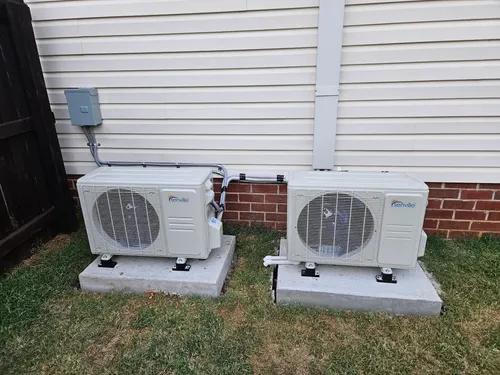
Right Time HVAC
5300 Old Hickory Blvd, Nashville, TN 37218
Right Time HVAC is a full-service heating, cooling, and geothermal contractor serving Nashville, TN. They offer installation, repair, and maintenance for air conditioners, furnaces, heat pumps, and geothermal systems, along with indoor air quality solutions for homes and businesses. The company specializes in advanced HVAC technologies including hydronics and inverter systems, and provides ductwork services to improve airflow and comfort. With over 30 years of combined experience among their technicians, Right Time HVAC focuses on honest, customer-focused solutions to meet diverse home comfort needs.
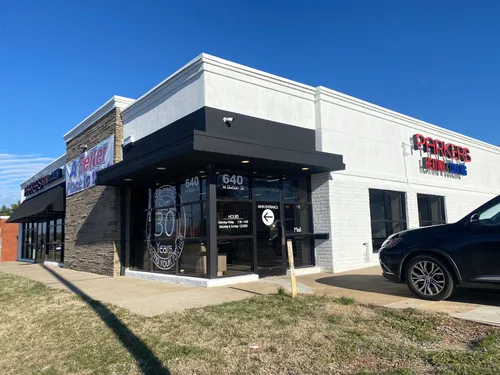
Parker's Heating & Cooling
640 W Burton St, Murfreesboro, TN 37130
Parker's Heating & Cooling is a family-owned HVAC company serving Nashville, TN, and the surrounding Middle Tennessee area. Since 1992, they have provided residential and commercial heating and cooling services including air conditioner, furnace, heat pump, and geothermal system installation, repair, and maintenance. Their team of NATE-certified technicians is licensed, bonded, and insured, ensuring work that follows the latest industry standards. Parker's offers comprehensive HVAC tune-ups and system replacements, backed by extended warranties and clear pricing. They also provide financing options to help customers manage their comfort needs.
MJ Frick Company, Inc.
3651 Trousdale Dr, Nashville, TN 37204
MJ Frick Company, Inc. is an experienced HVAC contractor serving Nashville, TN, for over 31 years. They provide installation, repair, and maintenance services for residential and commercial heating, ventilation, and air conditioning systems, including furnaces, heat pumps, mini splits, and geothermal units. The company offers same-day service and specializes in AC unit replacement, furnace repair, and comprehensive HVAC maintenance plans to ensure efficient system operation year-round. In addition to HVAC, MJ Frick Co. also provides plumbing services and tankless water heater installation and repair.
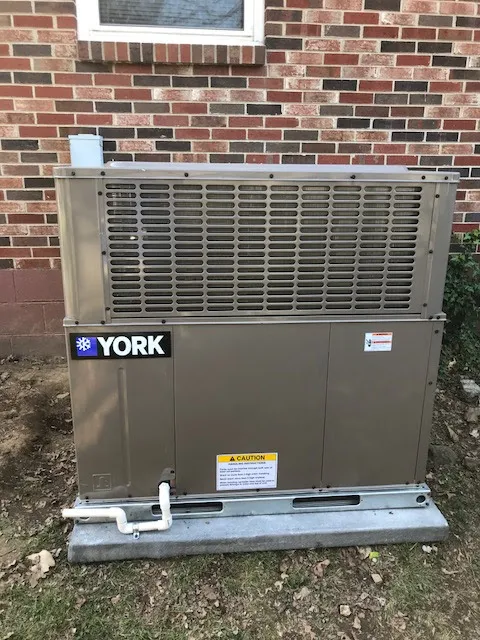
Covenant Heating and Cooling
176-A Molly Walton Dr, Hendersonville, TN 37075
Covenant Heating and Cooling is an HVAC and electrical service provider based near Nashville, TN, serving Hendersonville and surrounding areas. Established in 2010, the company offers a range of services including air conditioning, furnace, heat pump, and geothermal system installation and repair, as well as indoor air quality solutions and duct cleaning. Their certified technicians handle both residential and commercial projects, with expertise in dual fuel systems and geothermal heat pumps.
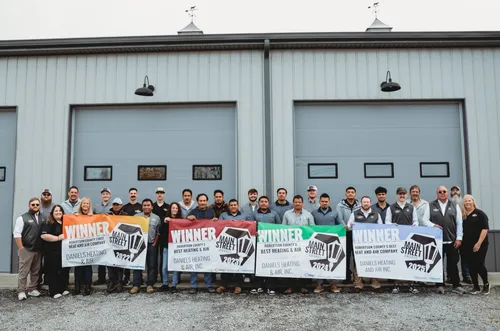
Estes Heating & Cooling
250 Donelson Pike, Nashville, TN 37214
Estes Heating & Cooling is an HVAC company serving Nashville, TN, and the surrounding communities. They offer a range of services including installation, repair, and tune-ups for air conditioners, furnaces, heat pumps, mini splits, geothermal systems, and thermostats. The company specializes in indoor air quality solutions and provides service agreements to maintain system performance. With over 30 years of experience, Estes Heating & Cooling is a licensed contractor known for installing and servicing a variety of heating and cooling equipment. They also provide emergency service when needed.
How Geothermal Heating and Cooling Works
At its core, a geothermal system is a heat exchange process. Unlike traditional systems that burn fuel or battle outdoor air temperatures, a ground-source heat pump transfers heat to and from the earth. Just a few feet below the surface, the ground maintains a nearly constant temperature of 50-60°F year-round, regardless of the weather above 1 2. A fluid, typically water or an antifreeze solution, circulates through a loop of pipes buried underground, called a ground loop. In the winter, this fluid absorbs the earth's natural warmth. The heat pump then concentrates this low-grade thermal energy and transfers it indoors to warm your home. In the summer, the process reverses: the system extracts heat from your house and deposits it into the cooler ground, providing efficient air conditioning 3.
This elegant exchange of thermal energy is what makes geothermal technology so remarkably efficient. For every unit of electrical energy used to power the system, it can move three to five units of heating or cooling energy. This coefficient of performance (COP) far exceeds that of even the most advanced traditional furnaces and air conditioners, leading to significant energy savings.
Types of Ground Loop Systems in Franklin
The underground piping, or ground loop, is the critical component that connects your home to the earth's thermal energy. The right type of loop for your Franklin property depends on your land's characteristics, including soil composition, bedrock depth, and available space. There are three primary configurations:
Vertical Closed-Loop Systems This is the most common and often preferred method for properties in Franklin and across New Jersey, especially where lot size is limited 4. A licensed drilling contractor bores vertical holes, typically 150 to 400 feet deep. U-shaped pipes are inserted into each borehole, which are then backfilled with a special grout to enhance heat transfer. A system for a typical home may require 2 to 6 of these boreholes 4. While the upfront drilling cost can be higher, vertical systems minimize surface disruption and are less affected by seasonal temperature changes in the upper soil layers.
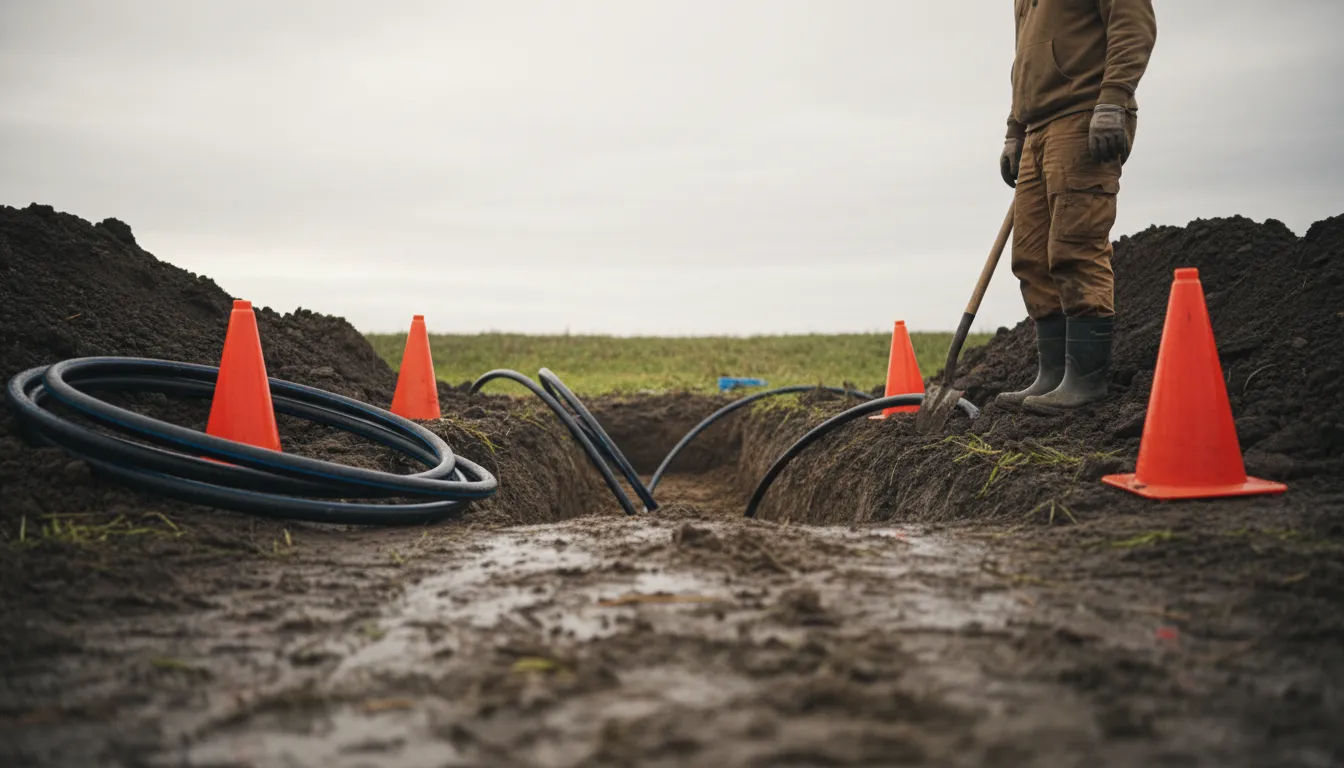
Horizontal Closed-Loop Systems If you have ample, open land, a horizontal loop may be an option. Trenches are dug about 5 to 10 feet deep, and pipes are laid in a series of parallel runs or coiled into "slinky" configurations to fit more pipe length in a given trench 5 6. This method generally has lower excavation costs than vertical drilling but requires a much larger land area and is more susceptible to temperature fluctuations from the surface.
Open-Loop Systems Less common in New Jersey, an open-loop system uses groundwater from a well or pond as the heat exchange fluid. After passing through the heat pump, the water is returned to a second well or discharged to a suitable location 7. These systems are highly sensitive to local geology and water quality regulations. Due to environmental permitting complexities and the state's focus on protecting groundwater resources, open-loop installations are rare and require rigorous approval.
The Installation Process: What Franklin Homeowners Can Expect
Installing a geothermal system is a significant project that requires careful planning and licensed expertise. Understanding the steps involved can help you prepare.
- Site Evaluation and Design: A qualified installer will assess your property, home's heating/cooling load, and soil conditions. This evaluation is crucial for determining the optimal loop type and size. In Sussex County, the presence of bedrock can influence drilling methods and costs.
- Permitting: New Jersey has specific regulations for geothermal installations. Most critically, any vertical borehole is considered a "well" and requires a permit from the New Jersey Department of Environmental Protection (NJDEP) under N.J.A.C. 7:9D. Your installer should handle this process, ensuring all work meets state code.
- Loop Field Installation: This is the major excavation phase. For a vertical system, a well-drilling rig will bore the holes and install the loop pipes. For a horizontal system, a backhoe will dig the necessary trenches. This work is typically completed in a few days.
- Heat Pump and Ductwork Installation: The indoor heat pump unit, which is similar in size to a traditional furnace, is installed in your basement, garage, or mechanical closet. It is connected to the ground loop and to your home's existing ductwork or a new hydronic (water-based) distribution system.
- System Startup and Testing: Once everything is connected, the system is charged with fluid, purged of air, and tested for proper operation and efficiency.
Find the perfect geothermal heat pump contractors for your needs
Get personalized recommendations and expert advice
Key Benefits for Your Franklin Home
Choosing a geothermal heat pump is a long-term investment in your home's comfort, efficiency, and value.
- Substantial Energy Savings: By leveraging the earth's consistent temperature, geothermal systems operate with exceptional efficiency, often cutting heating and cooling bills by 30% to 70% compared to conventional systems 8 9. While the initial installation cost is higher, these savings typically allow homeowners to recoup the investment within a 5- to 10-year payback period 8 10. In some cases, the monthly energy savings can even offset the added cost of financing the system, creating positive cash flow from the start 8.
- Long-Term Reliability and Durability: The mechanical components of the heat pump unit indoors have a long lifespan, often 25 years or more. The underground loop system is even more durable, frequently carrying warranties of 50 years and an expected lifespan that can exceed a century with proper installation 11. This makes it one of the most permanent home comfort solutions available.
- Enhanced Comfort and Quiet Operation: Geothermal systems provide steady, even heating and cooling without the drafts and temperature swings associated with fossil fuel systems. They also operate very quietly, as there is no loud outdoor condenser unit.
- Environmental Stewardship: By drastically reducing fossil fuel consumption or the high electrical draw of standard air conditioners, a ground-source heat pump significantly lowers your home's carbon footprint. It's a clean, renewable technology that aligns with New Jersey's clean energy goals.
Navigating Local Considerations: Geology and Regulations
Franklin's specific landscape plays a role in geothermal feasibility. The geology, particularly the depth to bedrock, can impact drilling speed and cost for vertical loops 12. A reputable local installer will have experience with the soils and rock formations in Sussex County.
As highlighted, state permitting is a critical step. The NJDEP's oversight ensures that groundwater resources are protected during the drilling and grouting process 13 14. Always verify that your chosen installer is fully licensed and familiar with these regulations. Furthermore, homeowners should explore available incentives, such as federal tax credits and potential local utility rebates, which can substantially reduce the net project cost and improve the financial return.
Frequently asked questions
Sources
Footnotes
-
How Does A Geothermal Heat Pump Work? Complete 2025 Guide - https://solartechonline.com/blog/how-does-geothermal-heat-pump-work/ ↩
-
Clean Energy 101: Geothermal Heat Pumps - RMI - https://rmi.org/clean-energy-101-geothermal-heat-pumps/ ↩
-
Geothermal (Ground Source) Heat Pumps - NY.gov - https://cleanheat.ny.gov/geothermal-heat-pumps/ ↩
-
Geothermal Heat Pump Installation: What To Expect For Your Property - https://jomory.com/geothermal-heat-pump-installation-what-to-expect-for-your-property/ ↩ ↩2
-
Geothermal Heating and Cooling - Open Energy Information - https://openei.org/wiki/GeoBridge/Heating_and_Cooling ↩
-
Geothermal Heating & Cooling Systems in South Jersey - https://connmechanical.com/services/geothermal/ ↩
-
Going Underground: Geothermal - https://taylorstudios.com/blog/going-underground-geothermal/ ↩
-
Geothermal Heat Pumps - Department of Energy - https://www.energy.gov/energysaver/geothermal-heat-pumps ↩ ↩2 ↩3
-
Guide to Geothermal Heat Pumps - https://www.energy.gov/sites/prod/files/guide_to_geothermal_heat_pumps.pdf ↩
-
How Geothermal Energy Works - https://www.ucs.org/resources/how-geothermal-energy-works ↩
-
5 Things You Should Know about Geothermal Heat Pumps - https://www.energy.gov/cmei/articles/5-things-you-should-know-about-geothermal-heat-pumps ↩
-
NR Geothermal Heat Pumps - NJ Green Building Manual - https://greenmanual.rutgers.edu/nr-geothermal-heat-pumps/ ↩
-
New Jersey Ground Source Heat Pump Baseline Report - https://dep.nj.gov/wp-content/uploads/cleanenergy/new-jersey-ground-source-heat-pump-baseline-report_final.pdf ↩
-
NJDEP| Clean Buildings | GSHP - https://dep.nj.gov/cleanbuildings/gshp/ ↩