
Find the Best Geothermal Heat Pump Contractors for Your Business
No obligation • Fast responses • Nationwide coverage

Why you can trust HVAC Firms
HVAC Firms is a leading United States resource for evaluating HVAC service providers. Our team researches companies, checks credentials, and reviews customer feedback to present clear, unbiased information. Listings and rankings are based on merit, and companies cannot pay to change our editorial content.
Search providers near you
Top Geothermal Heat Pump Contractors in Gresham, Oregon Ranked
A geothermal heat pump, also known as a ground-source heat pump, is a highly efficient heating and cooling system that leverages the earth's stable underground temperature. For Gresham homeowners, this technology offers a reliable way to manage indoor climate year-round while significantly reducing energy consumption and utility bills. This guide explains how these systems work, what installation entails, and how you can find qualified local professionals to assess your property and provide a quote for a geothermal solution.
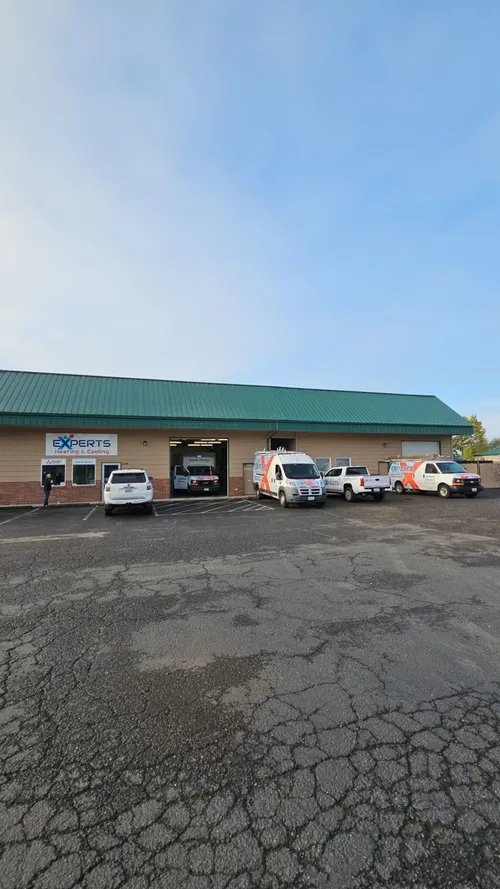
Experts Heating & Cooling, Inc.
3136 Evergreen Way, Washougal, WA 98671
Experts Heating & Cooling, Inc. is an HVAC company serving Portland, OR, and nearby communities. They provide a range of services including installation and repair of air conditioners, furnaces, heat pumps, boilers, mini splits, and geothermal heat pumps. The company also offers HVAC tune-ups and sells high-quality filters through an online store. Established in 2016, Experts Heating & Cooling, Inc. has built experience in handling residential and commercial HVAC needs in the region.

Oregon Climate Tech
402 Beavercreek Rd #112, Oregon City, OR 97045
Oregon Climate Tech is an HVAC company based near Portland, OR, specializing in heating, ventilation, and air conditioning services. They offer repair and installation for air conditioners, furnaces, heat pumps, boilers, mini splits, and geothermal heat pumps. The company partners with Trane to provide reliable HVAC equipment and comprehensive tune-up services. Oregon Climate Tech serves the Portland area with a full range of HVAC solutions.
West-Tech Air
Portland, OR
West-Tech Air is a licensed and insured HVAC company serving Portland, OR, and the surrounding metro area. They provide a range of heating and cooling services including repair and installation of air conditioners, furnaces, heat pumps, boilers, mini splits, and geothermal heat pumps. Their experienced technicians also offer HVAC tune-up services to maintain system efficiency. West-Tech Air covers multiple nearby communities such as Clackamas, Gladstone, Happy Valley, Lake Oswego, Milwaukie, Oregon City, and Tualatin.
Global Quality Heating and Cooling
29101 SE Hwy 212 unit 1, Boring, OR 97009
Global Quality Heating and Cooling is a licensed HVAC contractor based near Portland, OR, serving Multnomah, Clackamas, Washington, Yamhill, Marion, and Clark counties. They specialize in the installation, repair, and maintenance of heating and cooling systems including air conditioners, furnaces, heat pumps, boilers, mini splits, and geothermal heat pumps. The company focuses on improving indoor air quality and energy efficiency for residential and small commercial properties. Their certified team works across the Portland metro area, including Sandy, Gresham, Happy Valley, and Oregon City.
Gresham Heating and Air Conditioning
24023 NE Shea Ln STE 110, Wood Village, OR 97060
Gresham Heating and Air Conditioning is a family-owned HVAC company serving Portland, OR, and nearby areas. Since 1992, they have provided heating, air conditioning, and indoor air quality services, including installation, repair, and maintenance of furnaces, heat pumps, ductless mini splits, and geothermal systems. Their licensed technicians offer specialized capabilities such as refrigerant leak repair and smart thermostat installation. The company emphasizes energy-efficient solutions tailored to each home's needs.
How Geothermal Systems Harness the Earth's Energy
The core principle behind a geothermal heating and cooling system is remarkably simple: it uses the earth as a giant thermal battery. Just a few feet below the surface, the ground maintains a nearly constant temperature of around 50°F year-round, regardless of Gresham's seasonal swings above ground. A geothermal system capitalizes on this stability.
The process involves a closed-loop of pipes, called a ground loop, buried in your yard. A water-based fluid circulates through these pipes. In the winter, this fluid absorbs the earth's natural warmth and carries it to a heat pump unit inside your home. The heat pump concentrates this low-grade heat and transfers it to your home's air or water distribution system 1 2. In the summer, the system reverses: it extracts heat from your home and deposits it into the cooler ground, effectively providing air conditioning 3 4. This efficient heat exchange is why geothermal systems can achieve efficiencies 300-600% higher than traditional furnaces or air conditioners.
Types of Ground Loops for Gresham Properties
The design of the underground loop field is critical and depends largely on your property's characteristics. Local installers will evaluate your land to recommend the most effective and cost-efficient configuration.
- Horizontal Ground Loops: This is often the most cost-effective option if space allows. Trenches are dug 4 to 8 feet deep, and pipes are laid in a series of loops. A horizontal system typically requires a significant amount of land-often up to half an acre for an average home-but avoids the need for deep drilling.
- Vertical Ground Loops: For homes in Gresham with smaller lots, a vertical loop system is the standard solution. Using a drilling rig, boreholes are drilled 150 to 450 feet deep. U-shaped loops of pipe are inserted into each hole, which is then sealed with a special grout to ensure good thermal contact 5 6. While drilling increases upfront costs, it minimizes landscape disruption and is ideal for properties with limited horizontal space.
- Pond/Lake Loops: If you have a sufficient body of water on your property, a pond loop can be a very efficient option. Coils of pipe are submerged at the bottom of the pond, where the water temperature remains stable.
- Open Loop Systems: Less common for residential use, an open loop system uses groundwater from a well as the heat exchange fluid. After passing through the heat pump, the water is discharged back into a second well or a suitable surface body of water, following local regulations.
The Geothermal Installation Process: What to Expect
Installing a ground-source heat pump is a significant project that requires professional expertise. Understanding the steps can help you prepare.
- Site Evaluation and Design: A certified installer will visit your property to assess soil conditions, lot size, landscaping, and your home's heating and cooling loads. This information is used to design the optimal loop field and select the correctly sized heat pump unit.
- Loop Field Installation: This is the major outdoor work. For a horizontal system, an excavator will dig the necessary trenches. For a vertical system, a drilling rig will be brought in to create the boreholes. The high-density polyethylene pipes are then placed, connected, and pressure-tested to ensure integrity before the trenches are backfilled or the boreholes are grouted 7.
- Indoor Unit Installation: The geothermal heat pump unit, which is about the size of a traditional furnace, is installed inside your home-typically in a basement, utility room, or garage. It is connected to the underground loop and to your home's existing ductwork or hydronic distribution system.
- System Startup and Commissioning: The installer will fill the loop with fluid, purge any air, and start the system. They will test and calibrate all components to ensure everything is operating at peak efficiency and explain the system's controls to you.
Find the perfect geothermal heat pump contractors for your needs
Get personalized recommendations and expert advice
Long-Term Benefits and Financial Considerations
The decision to install a geothermal system is an investment in long-term comfort, savings, and sustainability.
- Substantial Energy Savings: By moving heat rather than creating it through combustion, geothermal heat pumps are extremely efficient. Homeowners typically see a 30% to 70% reduction in their heating and cooling bills compared to conventional systems 8. This is especially valuable in Gresham's climate, where both heating and cooling are needed throughout the year.
- Durability and Low Maintenance: The underground loop system is built to last, with a lifespan often exceeding 50 years. The indoor heat pump unit typically lasts 20 to 25 years-longer than a standard air conditioner or furnace. With few moving parts exposed to the elements, maintenance is generally minimal, involving routine checks of the pump and filters 9.
- Environmental Impact: Geothermal systems use electricity, but they draw renewable thermal energy from the ground. This drastically reduces your home's carbon footprint by eliminating on-site fossil fuel combustion for heating.
- Understanding Costs and Incentives: The upfront cost for a complete geothermal system in Gresham is higher than for a traditional HVAC system, often ranging from $20,000 to $45,000 or more, depending on home size and loop type 10 11 12. However, the financial picture is greatly improved by long-term savings and available incentives. The federal Residential Clean Energy Credit (through the Inflation Reduction Act) provides a tax credit for 30% of the total installation cost, including labor 13 12. When combined with significant monthly utility savings, many homeowners find the payback period falls between 5 and 10 years, after which they enjoy decades of dramatically lower operating costs 14 11.
Finding the Right Local Geothermal Professional
Selecting an experienced installer is the most important step in your geothermal journey. Look for contractors who are specifically trained and certified in geothermal technology, such as those with accreditation from the International Ground Source Heat Pump Association (IGSHPA). A reputable professional will conduct a detailed Manual J load calculation for your home, provide a clear and comprehensive quote, explain the proposed loop design, and offer references from past local installations. They should also be well-versed in navigating local Gresham permitting requirements for drilling and excavation.
Frequently asked questions
Sources
Footnotes
-
Geothermal heat pumps: The ultimate guide to ground-source ... - https://termo-plus.com/blog/geothermal-ultimate-guide-to-ground-source-heat-pumps/ ↩
-
All You Need to Know About Home Geothermal Heating & Cooling - Dandelion Energy - https://dandelionenergy.com/all-you-need-to-know-about-home-geothermal-heating-cooling ↩
-
Geothermal Heat Pumps | WBDG - https://www.wbdg.org/resources/geothermal-heat-pumps ↩
-
How Geothermal Heat Pumps Work - https://www.youtube.com/watch?v=XxlTnBukweI&t=37 ↩
-
Geothermal Heat Pump Installation: What To Expect For Your Property - https://jomory.com/geothermal-heat-pump-installation-what-to-expect-for-your-property/ ↩
-
How Does a Geothermal System Work? - ClimateMaster - https://www.climatemaster.com/homeowner/side-links/how-it-works ↩
-
Geothermal heating & cooling, heat pumps, heat exchange ... - https://aztechgeo.com/residential-geothermal/how-it-works/ ↩
-
5 Things You Should Know about Geothermal Heat Pumps - https://www.energy.gov/cmei/articles/5-things-you-should-know-about-geothermal-heat-pumps ↩
-
How Do Geothermal Systems Work for Residential Homes? - https://www.davisheat.com/blog/how-do-geothermal-systems-work-for-residential-homes/ ↩
-
Ground Source Heat Pumps: A Sustainable Solution for Your ... - https://www.ohmconnect.com/blog/home-improvement/geothermal-energy-and-ground-source-heat-a-sustainable-solution-for-your-home ↩
-
How Does A Geothermal Heat Pump Work? Complete 2025 Guide - https://solartechonline.com/blog/how-does-geothermal-heat-pump-work/ ↩ ↩2
-
Geothermal Heat Pump Guide: Installation Costs, Types And Benefits - https://modernize.com/hvac/heating-repair-installation/heat-pump/geothermal ↩ ↩2
-
Geothermal Heat Pumps - Department of Energy - https://www.energy.gov/energysaver/geothermal-heat-pumps ↩
-
Geothermal Heating, Cooling, and Hot Water Systems - https://igshpa.org/wp-content/uploads/Homeowners-Guide-to-Geothermal.pdf ↩