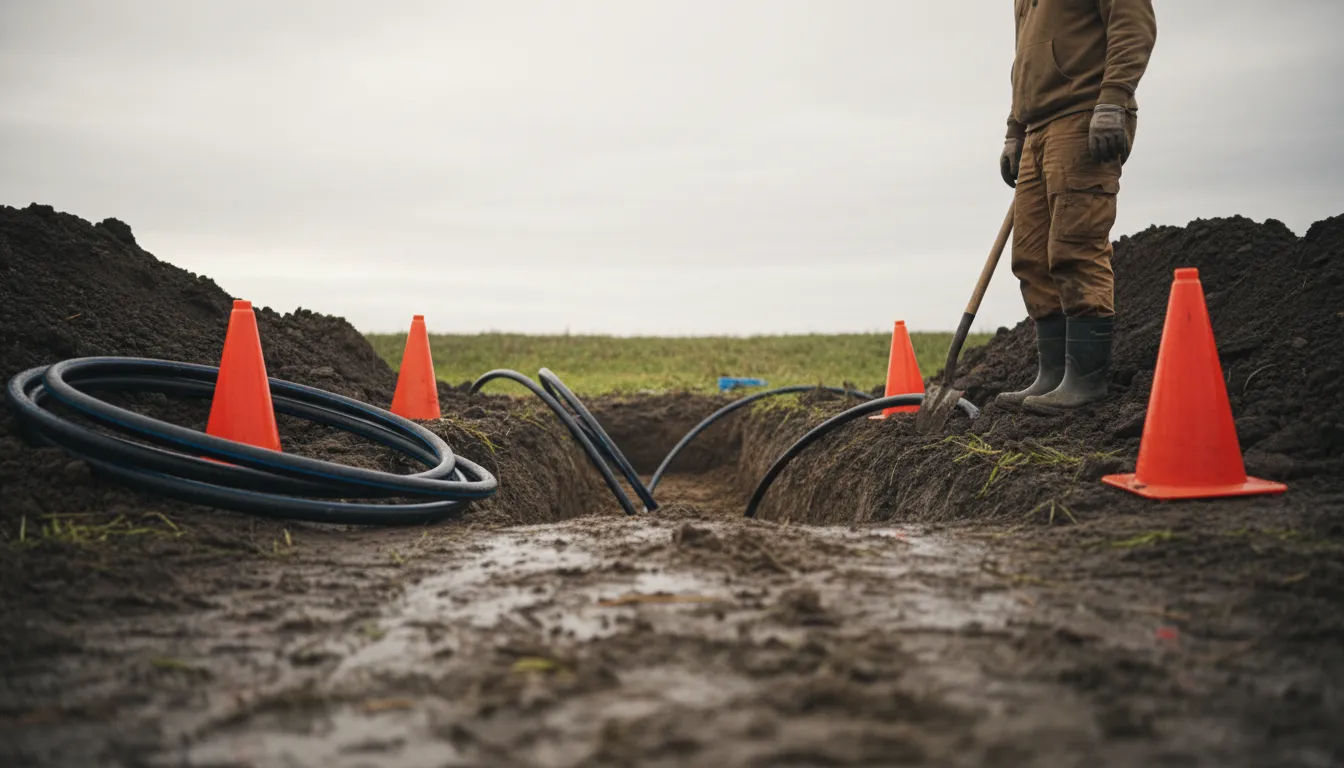
Find the Best Geothermal Heat Pump Contractors for Your Business
No obligation • Fast responses • Nationwide coverage

Why you can trust HVAC Firms
HVAC Firms is a leading United States resource for evaluating HVAC service providers. Our team researches companies, checks credentials, and reviews customer feedback to present clear, unbiased information. Listings and rankings are based on merit, and companies cannot pay to change our editorial content.
Search providers near you
Best Geothermal Heat Pump Contractors in Oregon Ranked
Geothermal heat pumps (GHPs), also known as ground-source heat pumps, are a highly efficient heating and cooling technology that leverages the stable temperatures underground to regulate your home's climate. For Oregon homeowners, this technology offers a path to significant energy savings and reduced carbon footprint, especially when paired with the state's unique climate and available financial incentives. This guide provides a clear overview of what to expect when considering a geothermal system in Oregon, from understanding costs and incentives to navigating the installation process and finding qualified local professionals.
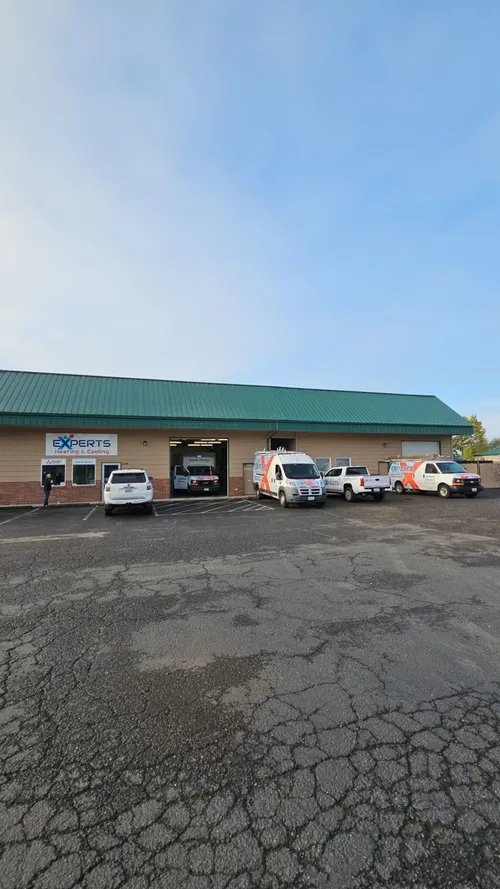
Experts Heating & Cooling, Inc.
3136 Evergreen Way, Washougal, WA 98671
Experts Heating & Cooling, Inc. is an HVAC company serving Portland, OR, and nearby communities. They provide a range of services including installation and repair of air conditioners, furnaces, heat pumps, boilers, mini splits, and geothermal heat pumps. The company also offers HVAC tune-ups and sells high-quality filters through an online store. Established in 2016, Experts Heating & Cooling, Inc. has built experience in handling residential and commercial HVAC needs in the region.

Oregon Climate Tech
402 Beavercreek Rd #112, Oregon City, OR 97045
Oregon Climate Tech is an HVAC company based near Portland, OR, specializing in heating, ventilation, and air conditioning services. They offer repair and installation for air conditioners, furnaces, heat pumps, boilers, mini splits, and geothermal heat pumps. The company partners with Trane to provide reliable HVAC equipment and comprehensive tune-up services. Oregon Climate Tech serves the Portland area with a full range of HVAC solutions.
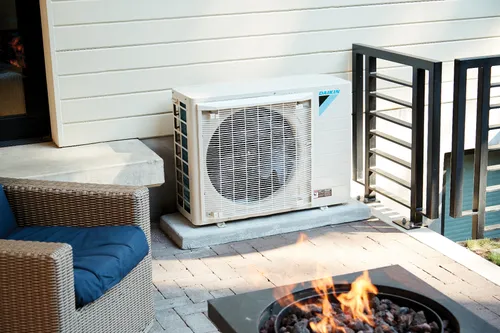
West-Tech Air
Portland, OR
West-Tech Air is a licensed and insured HVAC company serving Portland, OR, and the surrounding metro area. They provide a range of heating and cooling services including repair and installation of air conditioners, furnaces, heat pumps, boilers, mini splits, and geothermal heat pumps. Their experienced technicians also offer HVAC tune-up services to maintain system efficiency. West-Tech Air covers multiple nearby communities such as Clackamas, Gladstone, Happy Valley, Lake Oswego, Milwaukie, Oregon City, and Tualatin.
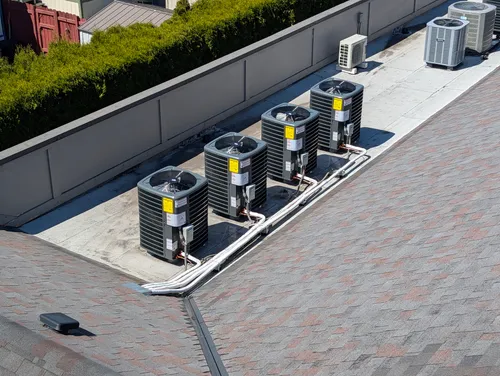
Global Quality Heating and Cooling
29101 SE Hwy 212 unit 1, Boring, OR 97009
Global Quality Heating and Cooling is a licensed HVAC contractor based near Portland, OR, serving Multnomah, Clackamas, Washington, Yamhill, Marion, and Clark counties. They specialize in the installation, repair, and maintenance of heating and cooling systems including air conditioners, furnaces, heat pumps, boilers, mini splits, and geothermal heat pumps. The company focuses on improving indoor air quality and energy efficiency for residential and small commercial properties. Their certified team works across the Portland metro area, including Sandy, Gresham, Happy Valley, and Oregon City.
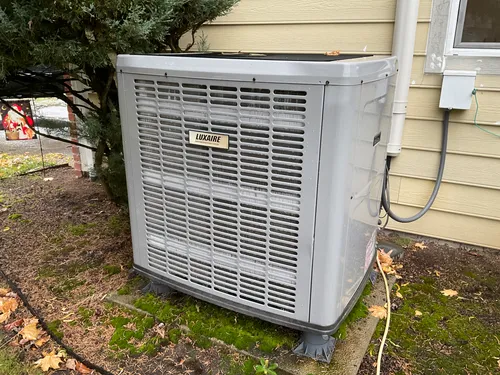
Gresham Heating and Air Conditioning
24023 NE Shea Ln STE 110, Wood Village, OR 97060
Gresham Heating and Air Conditioning is a family-owned HVAC company serving Portland, OR, and nearby areas. Since 1992, they have provided heating, air conditioning, and indoor air quality services, including installation, repair, and maintenance of furnaces, heat pumps, ductless mini splits, and geothermal systems. Their licensed technicians offer specialized capabilities such as refrigerant leak repair and smart thermostat installation. The company emphasizes energy-efficient solutions tailored to each home's needs.
Why Consider a Geothermal System in Oregon?
Oregon's diverse climate, with cool, wet winters and warm, dry summers, is well-suited for geothermal heat pumps. Unlike air-source heat pumps that work harder as outside air temperatures become extreme, a GHP exchanges heat with the ground, which maintains a relatively constant temperature year-round (typically between 45°F and 75°F in Oregon) 1. This results in remarkably consistent and efficient performance. A properly installed geothermal system can reduce your heating and cooling energy use by 40% to 60% compared to conventional systems like furnaces and standard air conditioners. For Oregonians looking to lower utility bills and increase home comfort, a ground-source heat pump is a compelling long-term investment.
Understanding Costs and Financial Incentives
The primary barrier to geothermal adoption is the higher upfront installation cost, which is offset by lower operating expenses and available incentives.
Installation Costs: A complete geothermal heat pump system installation in Oregon typically ranges from $12,000 to over $40,000, with an average cost for a standard 3-ton residential system falling between $20,000 and $25,000 2. This is significantly more than a traditional furnace and air conditioner. The major cost drivers are the ground loop installation-which involves drilling or trenching-and the heat pump unit itself. Costs can vary based on your property's soil conditions, the type of loop system, and the size of your home.
Operating Savings & Payback: The good news is that the operational savings are substantial. Homeowners can expect 40-60% lower utility bills for heating and cooling 3 4. The payback period-the time it takes for energy savings to equal the initial investment-varies but often falls between 2 and 10 years, depending on local energy costs, system design, and incentives used 5. Furthermore, a geothermal system can increase property value and has a long lifespan, with the indoor unit lasting about 18-23 years and the underground loop lasting 50 years or more 4.
Oregon and Federal Incentives
Oregon offers specific programs to make geothermal heat pumps more affordable.
- Oregon Heat Pump Purchase Program (HP3): This state program provides a rebate of up to $2,000 per qualifying heat pump unit 6 7. To be eligible, the system must be installed by an ODOE-approved contractor, meet specific efficiency standards (COP > 3.3 for heating, > 3.5 for cooling), and use AHRI-certified equipment 7. The contractor typically handles much of the application paperwork.
- Oregon Rental Home Heat Pump Program (ORHHPP): Similar rebates are available for installations in qualified rental properties, also requiring an ODOE-approved contractor 8.
- Federal Tax Credit: Homeowners can claim a 30% federal tax credit on the total cost of a qualifying geothermal system installation, including labor and ground loop work 9. This credit can be combined with the state HP3 rebate for maximum savings.
Find the perfect geothermal heat pump contractors for your needs
Get personalized recommendations and expert advice
Site Suitability and Ground Loop Options
Not every property is ideal for a geothermal system. A professional assessment is crucial, but key factors include:
- Soil and Geology: The composition of your soil affects drilling difficulty and heat transfer efficiency. Rocky or difficult terrain can increase drilling costs, while stable ground with good thermal conductivity is ideal. Properties with a high water table may be suitable for certain loop types.
- Available Land: You need adequate space for the ground loop. The three main types of loops have different space requirements:
- Horizontal Loop: Pipes are laid in trenches 4-6 feet deep. This is the most cost-effective option but requires a significant amount of open land.
- Vertical Loop: Pipes are inserted into deep boreholes (150-450 feet). This is ideal for smaller lots and often used in Oregon, though drilling costs are higher 10.
- Pond/Lake Loop: A closed loop of pipe is submerged in a nearby water body. This can be very efficient but requires a sufficiently large and deep pond.
- Water Resource Rules: For systems using deep wells (over 2,000 feet) or direct access to high-temperature groundwater, additional permits from the Oregon Water Resources Department and the Department of Geology and Mineral Industries (DOGAMI) may be required.
The Installation Process in Oregon
Installing a geothermal system is a major project that follows a structured process, especially when utilizing state incentives.
- Find an Approved Contractor: Your first step is to select a contractor approved by the Oregon Department of Energy (ODOE) for the HP3 program. These professionals are familiar with state requirements and can manage the incentive paperwork.
- Site Evaluation and System Design: The contractor will assess your property, heating/cooling loads, and soil conditions to design an efficient system, selecting the appropriate loop type and heat pump size.
- Secure Local Permits: Before work begins, you or your contractor must apply for mechanical and building permits from your local city or county building department.
- Ground Loop Installation: This is the most intensive phase, involving drilling boreholes for a vertical system or excavating trenches for a horizontal system. Pipes are installed and connected, and the area is backfilled or grouted.
- Indoor Unit Installation: The geothermal heat pump unit (which looks similar to a traditional furnace) is installed inside your home, connected to the ground loop and your existing ductwork or hydronic system.
- Inspection and Commissioning: The system must pass a final mechanical inspection by your local building official. For HP3 rebates, the system may also require a "BCD minor label" inspection 11.
- Claim Your Incentives: Your ODOE-approved contractor will submit the final application and documentation to the state to process your HP3 rebate. You will claim the federal tax credit when you file your annual income taxes.
Maintenance and Repair Considerations
Geothermal systems are known for their durability and low maintenance. Most repairs focus on the above-ground components-the heat pump unit itself-such as the compressor, pump, or controls. The buried ground loop is virtually maintenance-free. Regular professional maintenance checks are recommended to ensure the system operates at peak efficiency (maintaining its Coefficient of Performance, or COP). Long-term repair costs are generally lower than for conventional systems due to the GHP's longevity and protected loop system.
Frequently asked questions
Sources
Footnotes
-
State of Oregon: Energy in Oregon - Geothermal - https://www.oregon.gov/energy/energy-oregon/Pages/Geothermal.aspx ↩
-
Ground Source Heat Pump Cost: How Much Will You Pay in ... - https://www.energysage.com/heat-pumps/costs-benefits-geothermal-heat-pumps/ ↩
-
Geothermal Heat Pumps: Cost and Installation - https://www.energyhomes.org/renewable-technology/geoinstallation.html ↩
-
Guide to Geothermal Heat Pumps - https://www.energy.gov/sites/prod/files/guide_to_geothermal_heat_pumps.pdf ↩ ↩2
-
What Does A Geothermal System Cost? | Hillsboro, OR - https://www.hybridhc.com/what-does-a-geothermal-system-cost/ ↩
-
Oregon Heat Pump Purchase Program - INCENTIVES - https://www.oregon.gov/energy/Incentives/Pages/HP3.aspx ↩
-
Heat Pump Purchase Program (HP3) Policies - Oregon.gov - https://www.oregon.gov/energy/Incentives/Documents/Heat-Pump-Purchase-Program-Policies.pdf ↩ ↩2
-
INCENTIVES - Oregon Rental Home Heat Pump Program - https://www.oregon.gov/energy/Incentives/Pages/ORHHPP.aspx ↩
-
GEOTHERMAL POLICY in the U.S. - OSTI.gov - https://www.osti.gov/servlets/purl/1209222 ↩
-
The Complete Guide To Geothermal Heat Pump Installation - https://ultrageothermal.com/the-complete-guide-to-geothermal-heat-pump-installation/ ↩
-
330-070-0070 - Oregon Secretary of State - https://secure.sos.state.or.us/oard/view.action?ruleNumber=330-070-0070 ↩