Find the Best Geothermal Heat Pump Contractors for Your Business
No obligation • Fast responses • Nationwide coverage

Why you can trust HVAC Firms
HVAC Firms is a leading United States resource for evaluating HVAC service providers. Our team researches companies, checks credentials, and reviews customer feedback to present clear, unbiased information. Listings and rankings are based on merit, and companies cannot pay to change our editorial content.
Search providers near you
Top Geothermal Heat Pump Contractors in Norman, Oklahoma Ranked
A geothermal heat pump, often called a ground-source heat pump, is a highly efficient system for heating and cooling your home by tapping into the Earth's stable underground temperature. For Norman residents, this technology offers a way to significantly reduce energy bills while enjoying consistent comfort year-round. This guide explains how these systems work, what installation involves, and how you can find qualified local professionals to assess your property.
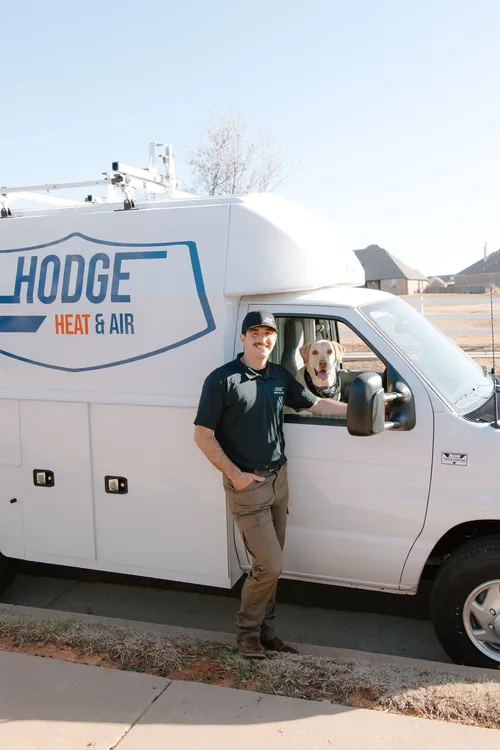
Hodge Heat and Air LLC
11200 Ashford Dr, Yukon, OK 73099
Hodge Heat and Air LLC provides residential HVAC services in Oklahoma City, OK. They specialize in the installation, repair, and maintenance of air conditioners, furnaces, heat pumps, boilers, mini splits, and geothermal heat pumps. The company offers HVAC tune-up services and is available around the clock to address heating and cooling needs. Their team consists of qualified professionals focused on delivering reliable HVAC solutions for home comfort.
Smart Air Solutions, LLC
10 NE 10th St Suite 209, Oklahoma City, OK 73104
Smart Air Solutions, LLC is an HVAC company serving Oklahoma City, OK, specializing in heating and air conditioning repair, installation, and maintenance. Their services cover air conditioners, furnaces, heat pumps, boilers, mini splits, and geothermal heat pumps. The company provides comprehensive system evaluations and customized solutions to fit different needs and budgets. They also offer preventative maintenance plans to help extend the life of HVAC systems. Smart Air Solutions emphasizes clear communication with customers throughout the service process to ensure transparency and satisfaction.

Infinite Air Solution llc
Oklahoma City, OK
Infinite Air Solution llc is an HVAC contractor based in Oklahoma City, OK, serving residential and commercial clients in Oklahoma City and nearby areas including Norman, Edmond, and Moore. They provide a range of services such as HVAC installation, repair, and maintenance for systems including air conditioners, furnaces, heat pumps, mini splits, and geothermal heat pumps. The company offers 24/7 emergency HVAC repair and specializes in installing ClimateMaster geothermal systems known for their long lifespan and energy efficiency. Indoor air quality services are also available to improve home environments.

A-Better Heat & Air Conditioning
2225 N Moore Ave, Moore, OK 73160
A-Better Heat & Air Conditioning is an HVAC company based in Oklahoma City, OK, serving both homeowners and business owners. They offer a wide range of services including air conditioning repair and installation, furnace repair and installation, ductless mini-split systems, geothermal heat pump services, and HVAC tune-ups. The company is a Carrier Factory Authorized Dealer with NATE certified technicians, providing expertise in diagnosing and performing repairs or installations correctly the first time. Established in 1979, A-Better Heat & Air Conditioning brings decades of experience to the local community.
Gentry Service
1210 E State Hwy 152, Mustang, OK 73064
Gentry Service is a family-owned HVAC company serving Oklahoma City, OK, with over 35 years of experience. They provide residential and commercial heating and air conditioning services, including repairs and installations. Their expertise also extends to geothermal heat pump systems, offering specialized solutions for energy-efficient climate control. Founded in 1984, the company continues to operate with a focus on quality and local customer care.
How Geothermal Systems Harness the Earth's Energy
The core principle behind a geothermal heating and cooling system is remarkably simple: it uses the ground beneath Norman as a giant, free battery for thermal energy. Just a few feet below the surface, the Earth maintains a nearly constant temperature of 55-60°F year-round, regardless of summer heat or winter chill 1. A geothermal system, or ground-source heat pump, exploits this stability.
Here's the basic process:
- Heat Exchange: A loop of pipes, called a ground loop, is buried in your property. A water-based fluid circulates through these pipes.
- Winter Heating: In heating mode, the fluid absorbs the Earth's warmth as it travels through the buried loop. This slightly warmed fluid returns to the heat pump unit inside your home.
- Summer Cooling: In cooling mode, the process reverses. The system extracts heat from your home's air and transfers it into the fluid, which then travels into the ground loop to reject that heat into the cooler earth 2 3 4.
- Distribution: The geothermal heat pump unit concentrates this thermal energy and uses your home's existing ductwork or a ductless system to distribute comfortable air throughout your living spaces 5.
This elegant exchange of heat with the ground is far more efficient than generating heat through combustion or fighting the outdoor air temperature with a traditional air-source heat pump.
Types of Ground Loop Systems for Norman Properties
The buried pipe system is the heart of the installation, and its configuration depends on your land. There are three primary types of ground loops considered for homes in the Norman area:
Vertical Loops This is the most common choice for residential properties with limited yard space. Contractors use a drilling rig to bore holes typically 150 to 400 feet deep. U-shaped pipes are inserted into each borehole, and the holes are backfilled with a special grout to ensure good thermal conductivity. Vertical loops are ideal for smaller lots and often have minimal impact on landscaping.
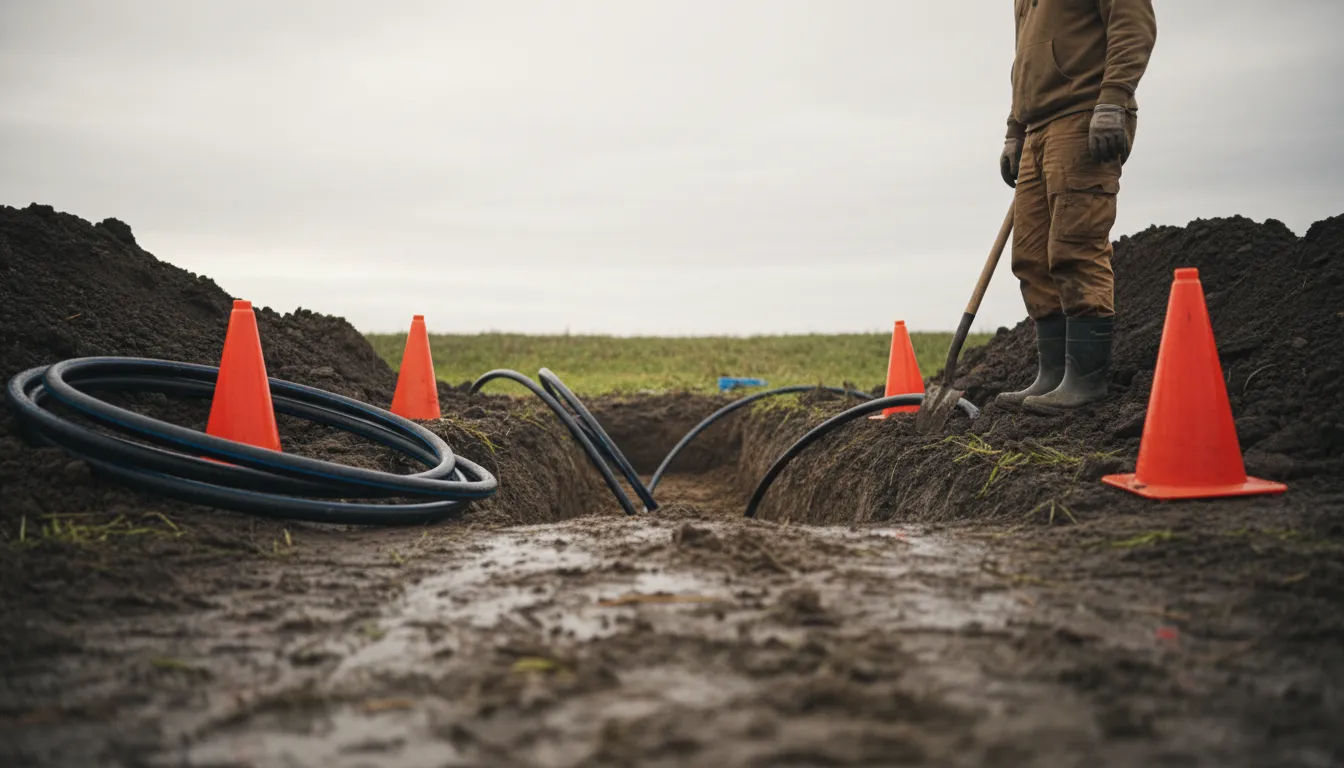
Horizontal Loops If you have ample land, a horizontal loop system may be more cost-effective. This method involves digging long, shallow trenches-usually 4 to 6 feet deep-across your property 6. Coils of pipe are laid in these trenches before they are backfilled. This approach requires more square footage of usable land but can avoid the need for specialized drilling equipment.
Pond/Lake Loops If you have a sufficiently large and deep pond or lake on your property, this can be an excellent option. Coils of pipe are submerged at the bottom of the water body, where temperatures remain stable 7. This method often has the lowest installation cost if the water source is suitable and accessible, as it requires minimal excavation.
The Geothermal Installation Process: What to Expect
Installing a geothermal HVAC system is a significant project that requires careful planning and expert execution. Understanding the steps can help you prepare.
-
Site Assessment and Design: A qualified installer will begin with a thorough evaluation of your property. This includes a survey of your land, an analysis of soil and rock composition (which affects heat transfer), and a detailed calculation of your home's heating and cooling loads. This information is crucial for designing the right size and type of loop system.
-
Ground Loop Installation: This is the major excavation phase. For a vertical system, a drilling rig will be brought in. For a horizontal system, a trencher or backhoe will dig the necessary trenches 8. The high-density polyethylene pipes are then placed, connected into a continuous loop, and pressure-tested for leaks before being buried or grouted.
-
Indoor Unit Setup: The geothermal heat pump unit itself is typically installed in a basement, utility room, or garage. It resembles a traditional furnace. Your installer will connect it to the ground loop, integrate it with your home's electrical system, and attach it to your existing ductwork or install new ducts if needed.
-
Testing and Commissioning: Once everything is connected, the system is filled with fluid, purged of air, and started. The contractor will test and calibrate all components to ensure the system is operating at peak efficiency and delivering the desired comfort levels throughout your home.
Key Factors Influencing Your Norman Geothermal Project
Several local factors will shape the design and cost of your system:
- Soil and Geology: The composition of the ground in Norman-whether it's clay, rock, or sand-directly impacts how efficiently heat is transferred and can influence drilling difficulty and cost 9 10.
- Property Size and Layout: The amount of available land is the primary determinant in choosing between a vertical or horizontal loop system. A professional assessment will identify the best fit.
- Existing Ductwork: Many homes can use their current air ducts with a geothermal system. An installer will inspect your ducts for leaks and proper sizing; sometimes, modifications or new ductwork are recommended for optimal performance.
- Home Insulation and Efficiency: A well-sealed and insulated home requires a smaller, less expensive geothermal system to heat and cool effectively. Addressing insulation first can be a smart investment.
Find the perfect geothermal heat pump contractors for your needs
Get personalized recommendations and expert advice
Understanding Costs and Long-Term Savings
The upfront investment for a geothermal heat pump system is higher than for a conventional air conditioner and furnace. This cost covers the specialized equipment, drilling or trenching, and labor. However, the long-term financial picture is where geothermal shines for Oklahoma homeowners.
The extreme efficiency of moving heat rather than creating it translates to dramatically lower operating costs. Homeowners can see reductions of 40% to 80% on their heating and cooling energy bills compared to traditional systems 11 12. Over the 20+ year lifespan of the heat pump unit (the underground loops can last 50+ years), these monthly savings add up, often paying back the initial investment and then continuing to put money back in your pocket 13 14.
Furthermore, financial incentives can significantly offset the initial cost. The federal government offers a tax credit for residential geothermal installations, and it's worth checking with local Oklahoma utilities or installers for any additional rebates or special financing options.
Frequently asked questions
Sources
Footnotes
-
All You Need to Know About Home Geothermal Heating & Cooling - Dandelion Energy - https://dandelionenergy.com/all-you-need-to-know-about-home-geothermal-heating-cooling ↩
-
5 Things You Should Know about Geothermal Heat Pumps - https://www.energy.gov/cmei/articles/5-things-you-should-know-about-geothermal-heat-pumps ↩
-
Why Geothermal HVAC is the Best Investment for Oklahoma ... - https://comfort.works/geothermal-hvac-investment-for-homeowners/ ↩
-
How Geothermal Heat Pumps Work - https://www.youtube.com/watch?v=XxlTnBukweI&t=37 ↩
-
Geothermal - Geoflow Australia Geoflow Australia generates 4 to 5 units of free geothermal energy for each unit of electricity - https://geoflow.com.au/geothermal/ ↩
-
How Does a Geothermal System Work? - ClimateMaster - https://www.climatemaster.com/homeowner/side-links/how-it-works ↩
-
Geothermal Heat Pumps - Department of Energy - https://www.energy.gov/energysaver/geothermal-heat-pumps ↩
-
Geothermal Heat Pump Installation: What To Expect For Your Property - https://jomory.com/geothermal-heat-pump-installation-what-to-expect-for-your-property/ ↩
-
All About Geothermal Installation for Your Home - Scott-Lee Heating - https://scottleeheating.com/all-about-geothermal-installation-for-your-home/ ↩
-
Ducted and Ductless Heat Pumps - https://groundhoggeothermal.ca/heat-pumps/ ↩
-
Geothermal Heat Pump Installation - Suntech Heat & Air Conditioning & Plumbing - https://suntechokc.com/geothermal-heating-cooling-services/geothermal-heat-pump-installation/ ↩
-
Geothermal Heat Pumps - Airco Service - https://www.aircoservice.com/services/geothermal-heat-pumps/ ↩
-
Oklahoma Paves the Way for Geothermal Heating and Cooling - https://www.climatemaster.com/homeowner/news/geothermal-energy/geothermal-energy/2021-03-29-oklahoma-paves-the-way-for-geothermal-heating-and-cooling ↩
-
Guide to Geothermal Heat Pumps - https://www.energy.gov/sites/prod/files/guide_to_geothermal_heat_pumps.pdf ↩