Find the Best Geothermal Heat Pump Contractors for Your Business
No obligation • Fast responses • Nationwide coverage

Why you can trust HVAC Firms
HVAC Firms is a leading United States resource for evaluating HVAC service providers. Our team researches companies, checks credentials, and reviews customer feedback to present clear, unbiased information. Listings and rankings are based on merit, and companies cannot pay to change our editorial content.
Search providers near you
Best Geothermal Heat Pump Contractors in Oklahoma Ranked
Geothermal heat pumps, also known as ground-source heat pumps, are a highly efficient heating and cooling technology that leverages the stable temperatures underground to regulate your home's climate. For Oklahoma homeowners, this system offers a powerful solution to combat both sweltering summers and chilly winters while significantly reducing energy consumption. Finding a qualified local installer is the most critical step, as proper design and installation tailored to Oklahoma's unique geology and climate are essential for maximizing performance and longevity.
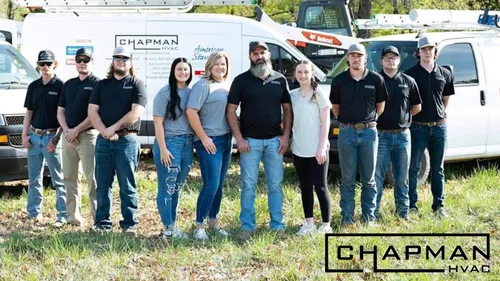
Chapman HVAC
51321 S 36400 Rd, Cleveland, OK 74020
Chapman HVAC is a licensed and insured HVAC company serving Tulsa, OK, and surrounding areas including Cleveland, Mannford, and Sand Springs. They provide a wide range of residential and commercial heating and air conditioning services, including repair, installation, and maintenance of furnaces, heat pumps, mini splits, geothermal systems, and refrigeration equipment. Their team is equipped to handle both heating and cooling needs with expertise in commercial air conditioning and heating solutions. Chapman HVAC offers 24/7 emergency HVAC services to ensure reliable comfort for their customers. With years of experience in the Cleveland area, they focus on delivering dependable HVAC solutions tailored to the specific needs of each client.
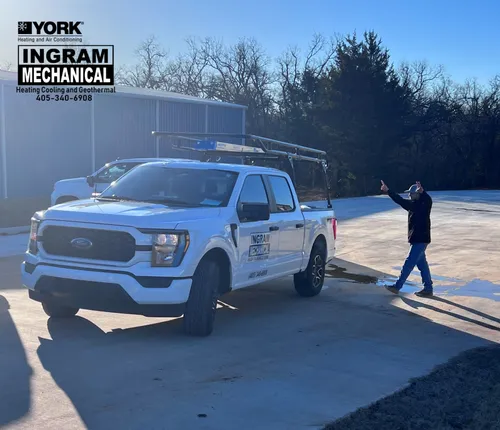
Ingram Mechanical
325 Koloa Ave, Edmond, OK 73034
Ingram Mechanical is an HVAC company serving Oklahoma City, OK, offering a wide range of heating and cooling services. Their expertise includes installation, repair, and maintenance of air conditioners, furnaces, heat pumps, mini splits, and geothermal heat pumps. They also provide tankless water heater services and preventative HVAC maintenance. The company emphasizes doing the job right the first time and uses state-of-the-art diagnostic equipment to efficiently address HVAC issues. Ingram Mechanical has built a reputation for quality service and customer care through years of industry experience.
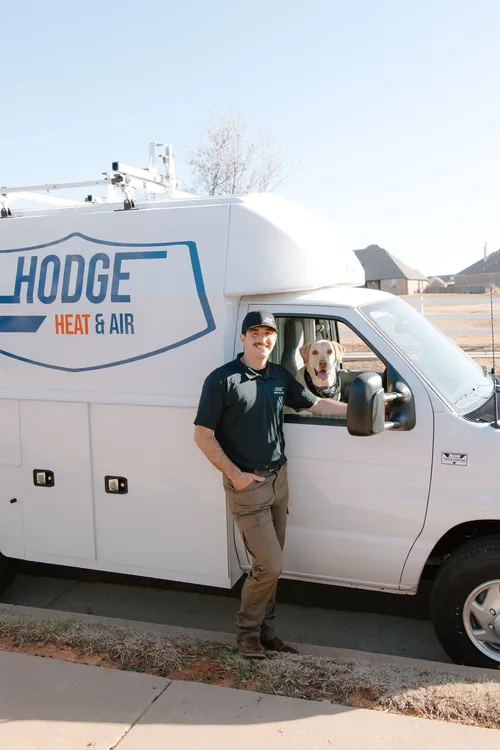
Hodge Heat and Air LLC
11200 Ashford Dr, Yukon, OK 73099
Hodge Heat and Air LLC provides residential HVAC services in Oklahoma City, OK. They specialize in the installation, repair, and maintenance of air conditioners, furnaces, heat pumps, boilers, mini splits, and geothermal heat pumps. The company offers HVAC tune-up services and is available around the clock to address heating and cooling needs. Their team consists of qualified professionals focused on delivering reliable HVAC solutions for home comfort.
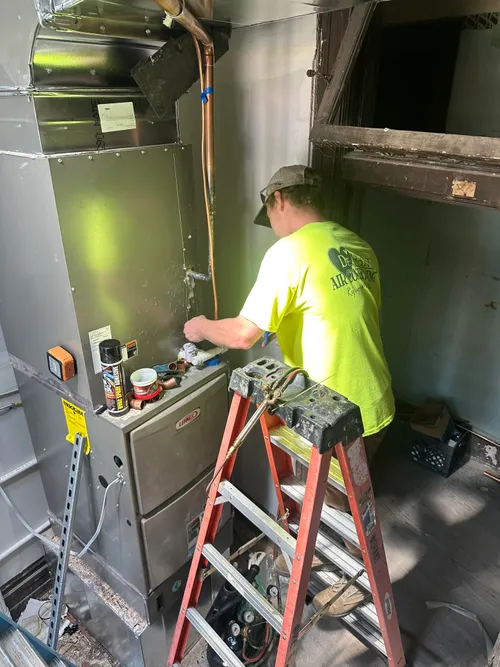
DeHart Air Conditioning
1201 S 4th St #4698, Chickasha, OK 73018
DeHart Air Conditioning serves Oklahoma City, OK, providing a range of HVAC services including air conditioning repair, installation, geothermal system installation, and indoor air quality solutions. The company offers residential and commercial heating and cooling services, with expertise in energy-saving geothermal systems and duct solutions. DeHart has been a family-run business for over 100 years, supporting local customers with comprehensive HVAC installation, maintenance, and repair services.

Route 66 HVAC
501 N Mission St, Sapulpa, OK 74066
Route 66 HVAC is a family-owned heating and air conditioning company serving Tulsa, OK, and the surrounding Northeast Oklahoma region. With over 35 years of combined field and classroom experience, they provide a wide range of HVAC services including installation, repair, and maintenance of air conditioners, furnaces, heat pumps, mini splits, and geothermal systems. They also offer indoor air quality solutions, thermostat installation, and emergency repair services available day and night. Their expertise includes high-efficiency HVAC systems and advanced HVAC testing to ensure optimal performance and energy savings. Route 66 HVAC honors its deep heritage connected to the historic Route 66 and offers special discounts for veterans and first responders.
Understanding Geothermal Technology
A geothermal system works by exchanging heat with the earth, which maintains a relatively constant temperature between 50°F and 60°F just a few feet below the surface. Unlike traditional air-source heat pumps that struggle in extreme outdoor temperatures, a ground-source system uses a network of buried pipes, called a ground loop, to transfer heat. In winter, it extracts warmth from the ground to heat your home. In summer, the process reverses, pulling heat from your house and depositing it into the cooler earth.
This constant, moderate temperature source is what makes geothermal technology exceptionally efficient. It requires significantly less electricity to move heat than to generate it, leading to substantial savings on utility bills. For Oklahoma's climate-characterized by hot, humid summers and cold winters-this efficiency translates directly into year-round comfort and lower operating costs 1.
Why Oklahoma is Ideal for Geothermal Systems
Oklahoma's distinct seasonal shifts make it a prime candidate for geothermal heat pump installation. The technology excels where there is a large difference between indoor desired temperatures and outdoor air temperatures, which is a constant reality in the state.
- Climate Efficiency: During an Oklahoma summer, when air temperatures soar above 100°F, a traditional air conditioner or air-source heat pump must work extremely hard to expel heat into the already-hot outdoor air. A geothermal system, however, rejects that heat into the much cooler earth, operating with far less effort and energy. The same principle applies in winter, drawing heat from the ground, which is warmer than the frigid outdoor air 2.
- Geological Considerations: Oklahoma's soil composition varies, with common types including clay and sandy loam. Clay soils have better thermal conductivity, which can improve heat exchange efficiency for the ground loop 3. A professional installer will conduct a site assessment and often a soil thermal conductivity test to determine the optimal loop design and length for your specific property.
Financial Incentives and Long-Term Savings
The initial investment for a geothermal system is higher than for conventional HVAC equipment, but significant financial incentives and operational savings make it a compelling long-term investment.
Upfront Incentives:
- Federal Tax Credit: The federal government offers a 30% Investment Tax Credit (ITC) for qualified geothermal heat pump systems installed through 2032. This credit is applied directly to your federal income tax liability, substantially reducing the net installed cost 4 5.
- Utility Rebates: Several Oklahoma utility companies, including OG&E and CK Energy, offer rebates for installing geothermal systems. These can range from hundreds to several thousand dollars, depending on the system's capacity and efficiency 6.
- Increased Home Value: Studies have shown that homes with geothermal systems often have higher resale values, as buyers recognize the benefit of low utility costs and modern, efficient technology.
Ongoing Operational Savings: The primary financial benefit comes from dramatically lower monthly energy bills. Geothermal systems can reduce energy consumption for heating and cooling by 25% to 50% compared to conventional systems 7 8. For an Oklahoma homeowner, this can mean saving hundreds of dollars annually, allowing the system to pay for itself over time through utility savings.
Find the perfect geothermal heat pump contractors for your needs
Get personalized recommendations and expert advice
The Installation Process in Oklahoma
Installing a geothermal system is a significant project that requires careful planning and professional execution. The process typically follows these key steps:
- Site Evaluation and Design: A certified contractor will assess your property, considering lot size, soil conditions, and existing ductwork or heating infrastructure. This evaluation determines whether a vertical loop (ideal for smaller lots, with holes drilled 150 to 400 feet deep) or a horizontal loop (requiring more land area, with trenches dug 4 to 6 feet deep) is best for your home 9 10 11.
- Permitting: In Oklahoma, drilling for a geothermal ground loop is regulated. You or your installer must obtain a permit from the Oklahoma Department of Environmental Quality (DEQ) for the construction of a closed-loop heat exchange well. Regulations specify proper construction techniques and setbacks from potential contamination sources 12. Local city or county permits for excavation are also usually required.
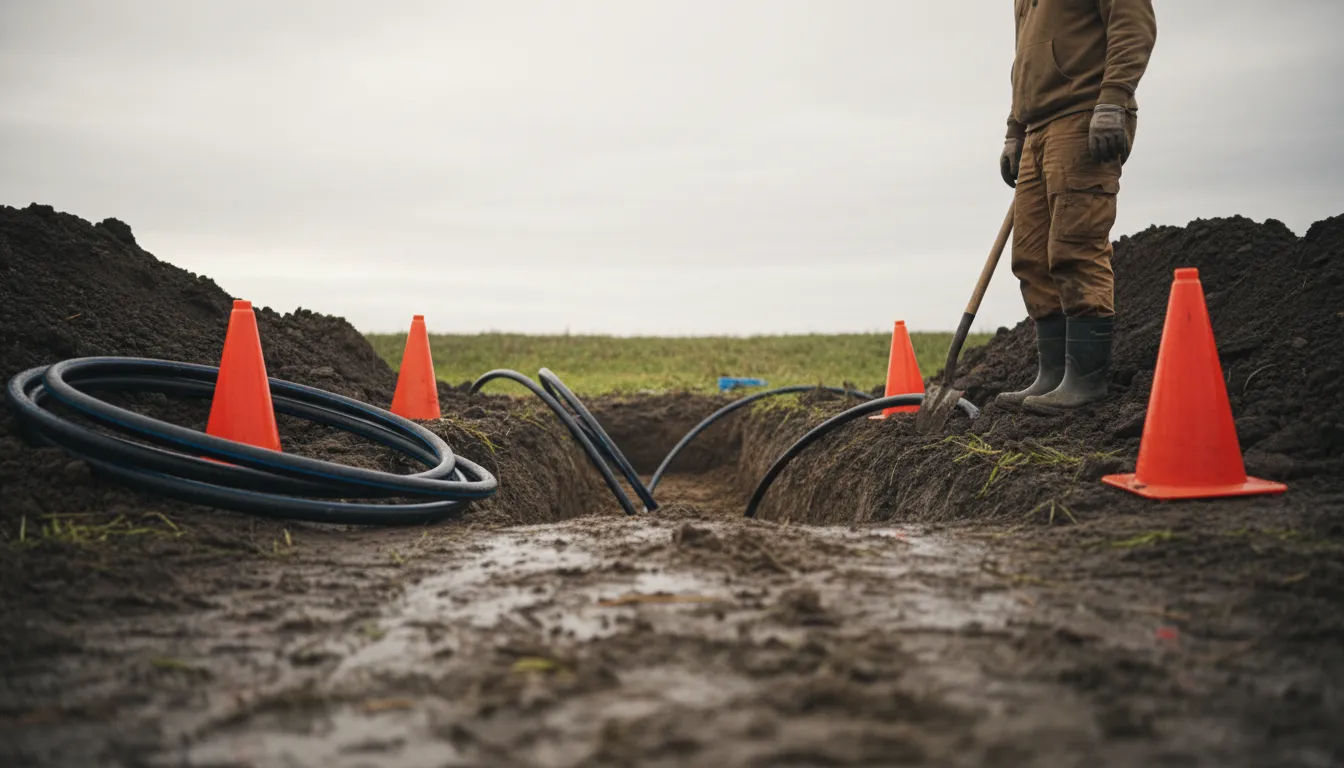
- Loop Field Installation: This is the most equipment-intensive phase. For vertical systems, a drilling rig will bore the necessary holes. For horizontal systems, a backhoe will dig the trenches. High-density polyethylene pipe is placed in the holes or trenches and connected into a continuous loop.
- Indoor Unit and Connection: The geothermal heat pump unit, which is about the size of a small refrigerator, is installed inside your home (often in a basement, utility room, or garage). It is connected to the ground loop and to your home's ductwork or hydronic distribution system.
- System Charging and Testing: The loop is filled with a water-based solution, purged of air, and pressurized. The entire system is then started and tested to ensure it operates at peak efficiency and capacity.
Maintenance and Lifespan
One of the most attractive features of a geothermal system is its durability and low maintenance requirements.
- Longevity: The underground loop system is designed to last for more than 50 years, often carrying a warranty of 25 to 50 years. The indoor heat pump unit typically has a lifespan of 20 to 25 years, which is considerably longer than the 15-year average for conventional furnaces and air conditioners 13.
- Maintenance Needs: Maintenance is straightforward and focuses on the indoor components. It involves standard tasks like checking and cleaning air filters, inspecting electrical connections, and ensuring the pump and fan are operating correctly. The fluid in the loop may need to be checked periodically. Because the system has few moving parts and the major components are protected indoors or underground, repair needs are infrequent 14.
- Professional Service: It is crucial to have a contractor who is specifically trained and experienced in geothermal technology perform any maintenance or repairs. They understand the unique pressures, fluids, and performance metrics of these systems.
Choosing the Right Oklahoma Installer
The performance and reliability of your geothermal system depend almost entirely on the quality of its design and installation. When searching for a provider, look for:
- Certifications: Seek out installers certified by organizations like the International Ground Source Heat Pump Association (IGSHPA), which is headquartered in Stillwater, Oklahoma.
- Local Experience: Choose a company with a proven track record of installing systems in Oklahoma. They will understand local soil conditions, climate challenges, and permitting requirements with the DEQ.
- Comprehensive Service: The best providers offer full-service design, installation, and long-term maintenance support. They should conduct a detailed Manual J load calculation to properly size your system and provide clear explanations of the design choices, costs, and expected savings.
Frequently asked questions
Sources
Footnotes
-
Geothermal Heat Pump Systems - https://c03.apogee.net/mvc/home/hes/land/el?utilityname=ure&spc=goe&id=6450 ↩
-
Why Oklahoma Homeowners Are Embracing Geothermal HVAC - https://wisdomrefrigeration.com/oklahoma-homeowners-are-embracing-geothermal-hvac/ ↩
-
The Best Geothermal Heat Pump Services in Oklahoma City - https://suntechokc.com/geothermal-heating-cooling-services/ ↩
-
The Best Geothermal Heat Pump Services in Oklahoma City - https://suntechokc.com/geothermal-heating-cooling-services/geothermal-heat-pump-installation/ ↩
-
Geothermal Heat Pump Guide: Installation Costs, Types And Benefits - https://modernize.com/hvac/heating-repair-installation/heat-pump/geothermal ↩
-
Top Geothermal Heating Benefits in Oklahoma - https://hartzellsheatair.com/blog/top-geothermal-heating-benefits-in-oklahoma ↩
-
Why Geothermal HVAC is the Best Investment for Oklahoma Homeowners - http://comfort.works/geothermal-hvac-investment-for-homeowners/ ↩
-
Guide to Geothermal Heat Pumps - https://www.energy.gov/sites/prod/files/guide_to_geothermal_heat_pumps.pdf ↩
-
The Complete Guide To Geothermal Heat Pump Installation - https://ultrageothermal.com/the-complete-guide-to-geothermal-heat-pump-installation/ ↩
-
Geothermal Heat Pumps - Department of Energy - https://www.energy.gov/energysaver/geothermal-heat-pumps ↩
-
Geothermal System Installation Stillwater OK - https://www.youneedadvantage.com/geothermal-service ↩
-
Oklahoma Administrative Code, Subchapter 7, Section 785:35 ... - https://regulations.justia.com/states/oklahoma/title-785/chapter-35/subchapter-7/section-785-35-7-1-1/ ↩
-
Geothermal Heat Pumps - Airco Service - https://www.aircoservice.com/services/geothermal-heat-pumps/ ↩
-
geothermal hvac operating costs - http://comfort.works/geothermal-operating-costs/ ↩