Find the Best Geothermal Heat Pump Contractors for Your Business
No obligation • Fast responses • Nationwide coverage

Why you can trust HVAC Firms
HVAC Firms is a leading United States resource for evaluating HVAC service providers. Our team researches companies, checks credentials, and reviews customer feedback to present clear, unbiased information. Listings and rankings are based on merit, and companies cannot pay to change our editorial content.
Search providers near you
Top Geothermal Heat Pump Contractors in Edmond, Oklahoma Ranked
A geothermal heat pump, or ground-source heat pump, is a highly efficient heating and cooling system that leverages the Earth's stable underground temperature. This technology matters because it can drastically reduce your home's energy consumption and utility bills while providing exceptional comfort year-round. For Edmond residents, finding a qualified local installer is the first step to accessing these long-term benefits, and this guide will help you understand the process, costs, and what to look for in a provider.
Ingram Mechanical
325 Koloa Ave, Edmond, OK 73034
Ingram Mechanical is an HVAC company serving Oklahoma City, OK, offering a wide range of heating and cooling services. Their expertise includes installation, repair, and maintenance of air conditioners, furnaces, heat pumps, mini splits, and geothermal heat pumps. They also provide tankless water heater services and preventative HVAC maintenance. The company emphasizes doing the job right the first time and uses state-of-the-art diagnostic equipment to efficiently address HVAC issues. Ingram Mechanical has built a reputation for quality service and customer care through years of industry experience.
Hodge Heat and Air LLC
11200 Ashford Dr, Yukon, OK 73099
Hodge Heat and Air LLC provides residential HVAC services in Oklahoma City, OK. They specialize in the installation, repair, and maintenance of air conditioners, furnaces, heat pumps, boilers, mini splits, and geothermal heat pumps. The company offers HVAC tune-up services and is available around the clock to address heating and cooling needs. Their team consists of qualified professionals focused on delivering reliable HVAC solutions for home comfort.
Smart Air Solutions, LLC
10 NE 10th St Suite 209, Oklahoma City, OK 73104
Smart Air Solutions, LLC is an HVAC company serving Oklahoma City, OK, specializing in heating and air conditioning repair, installation, and maintenance. Their services cover air conditioners, furnaces, heat pumps, boilers, mini splits, and geothermal heat pumps. The company provides comprehensive system evaluations and customized solutions to fit different needs and budgets. They also offer preventative maintenance plans to help extend the life of HVAC systems. Smart Air Solutions emphasizes clear communication with customers throughout the service process to ensure transparency and satisfaction.
Hartzell's Heat & Air
602 S Main St, Kingfisher, OK 73750
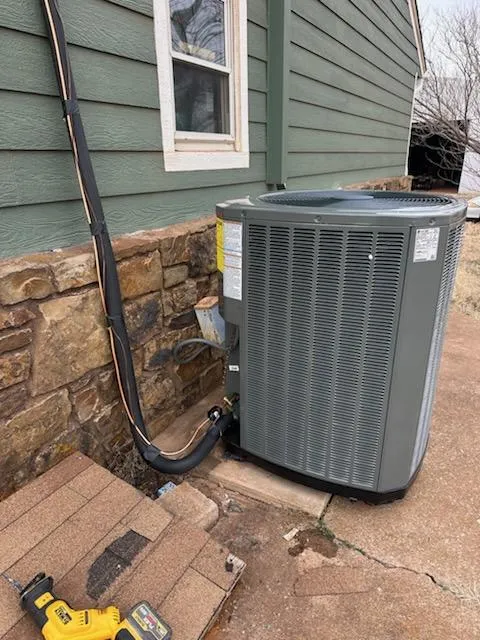
Hartzell's Heat & Air is a family-owned HVAC company serving Kingfisher, OK, and surrounding counties. With over 45 years of experience and an engineering background from Oklahoma State University, they provide heating and cooling services including AC and furnace repair, installation, and tune-ups. They specialize in energy-efficient geothermal heat pump installations and offer 24/7 emergency service to meet the demands of Central Oklahoma's climate.
Infinite Air Solution llc
Oklahoma City, OK
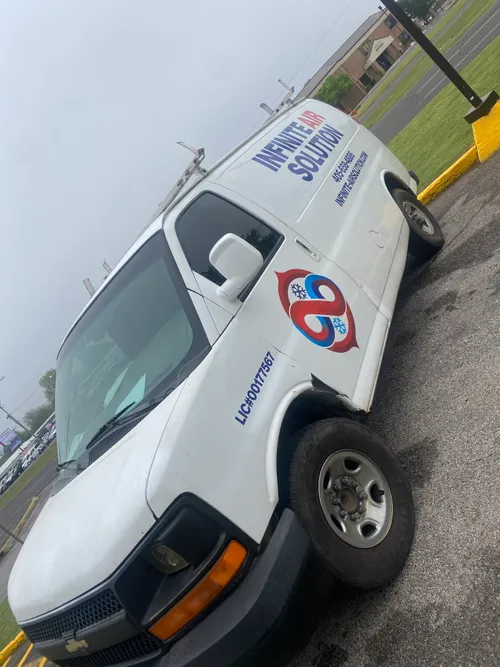
Infinite Air Solution llc is an HVAC contractor based in Oklahoma City, OK, serving residential and commercial clients in Oklahoma City and nearby areas including Norman, Edmond, and Moore. They provide a range of services such as HVAC installation, repair, and maintenance for systems including air conditioners, furnaces, heat pumps, mini splits, and geothermal heat pumps. The company offers 24/7 emergency HVAC repair and specializes in installing ClimateMaster geothermal systems known for their long lifespan and energy efficiency. Indoor air quality services are also available to improve home environments.
How a Geothermal System Works in Edmond
A ground-source heat pump operates on a simple principle of heat transfer. Unlike conventional systems that battle Oklahoma's extreme outdoor air temperatures, a geothermal unit uses the Earth as a constant heat source in winter and a heat sink in summer. Just a few feet below the surface, the ground in Edmond maintains a relatively stable temperature of approximately 50-60°F year-round.
The Heating Cycle: During winter, a fluid (typically a water-antifreeze mixture) circulates through a loop of pipes buried underground, absorbing the Earth's natural warmth. This warmed fluid is pumped to the indoor heat pump unit, where a compressor concentrates the low-grade heat. The resulting high-temperature heat is then distributed throughout your home via standard ductwork or a hydronic system 1.
The Cooling Cycle: In the summer, the process elegantly reverses. The system extracts heat and humidity from your indoor air. This unwanted heat is transferred to the circulating fluid, which then travels back into the underground loop. There, the heat is dissipated into the cooler earth, and the chilled fluid returns to cool your home. This closed-loop exchange is what makes geothermal technology so remarkably efficient.
Types of Geothermal Loop Systems
The heart of any geothermal installation is the ground loop. The type of loop system used depends heavily on your property's characteristics-soil composition, available land, and the presence of a water source. In Edmond, the most common configurations are closed-loop systems.
Closed-Loop Systems
This is the predominant choice for residential properties. A sealed, continuous pipe is buried underground, and the heat-transfer fluid circulates within it, never contacting the ground directly.
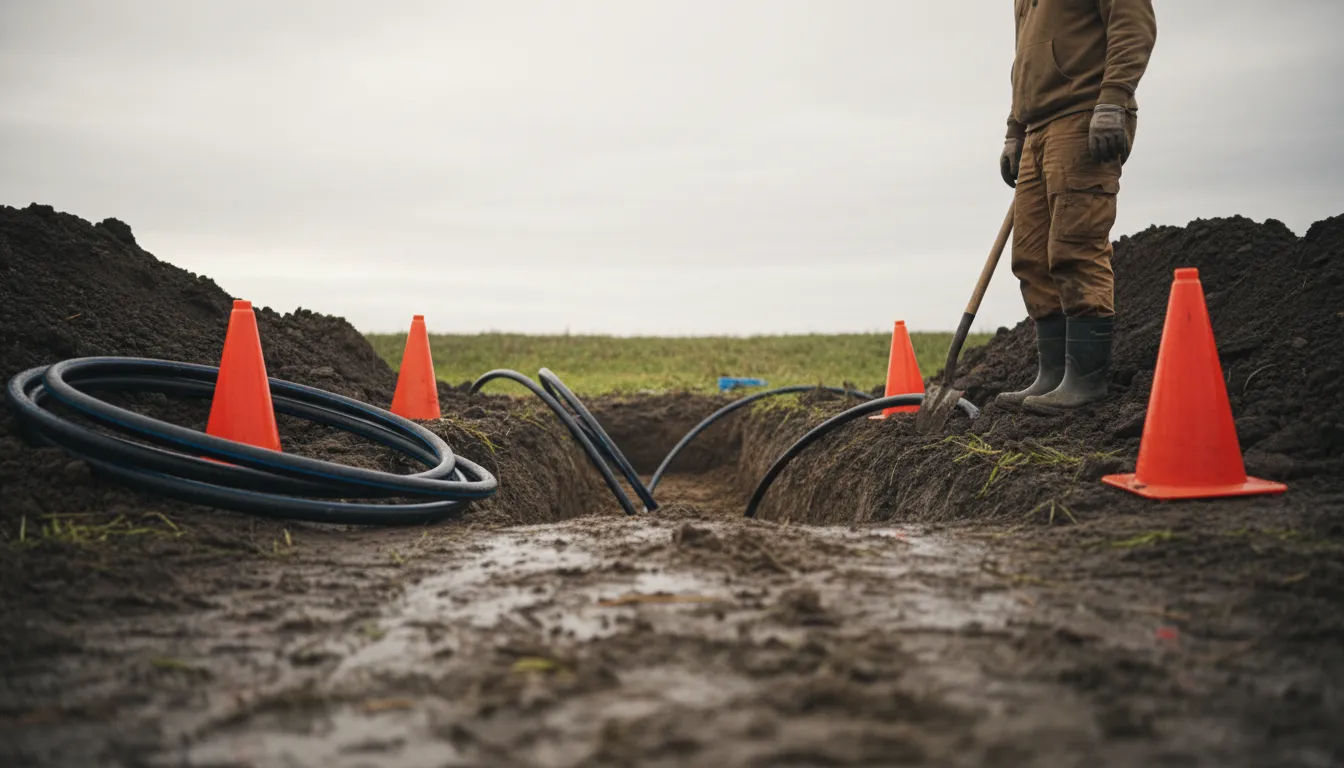
- Horizontal Closed-Loop: This configuration involves excavating long, shallow trenches (typically 4 to 6 feet deep) across a sizable area of your yard. Piping is laid in these trenches in a slinky-coil or straight-run pattern. While often less expensive to install than vertical systems, horizontal loops require a significant amount of open land, which can be a limitation for smaller urban lots in Edmond.
- Vertical Closed-Loop: For properties with limited space, vertical loops are the ideal solution. Contractors use drilling rigs to bore holes 150 to 400 feet deep. U-shaped pipes are inserted into each borehole, which are then grouted for optimal heat transfer. Although the drilling process makes vertical installations more expensive upfront, they offer consistent performance and are perfect for most residential lots in Edmond.
Open-Loop Systems
Less common for standard residential use, an open-loop system uses groundwater from a well or a pond as the direct heat exchange fluid. After passing through the heat pump, the water is discharged back into a second well, a pond, or a stream, depending on local codes. This system can be highly efficient but requires an adequate, clean water source and is subject to more regulatory considerations.
Hybrid Systems
Some installations combine a geothermal ground loop with a smaller, conventional air-source heat pump. This hybrid approach is designed for climates or buildings with extreme peak loads, allowing the geothermal system to handle the base heating and cooling while the air-source unit assists during the highest demand periods, potentially optimizing the initial system cost 2.
The Geothermal Installation Process
Installing a ground-source heat pump is a significant project that requires careful planning and expert execution. Understanding the steps can help you know what to expect from local contractors.
- Comprehensive Site Assessment: A reputable installer will begin with a thorough evaluation of your property. This includes assessing soil conditions, available land area, landscaping, and your home's existing ductwork and insulation. This assessment is critical for determining the most effective and cost-efficient loop type (vertical drilling vs. horizontal trenching) and sizing the system correctly for your home's heating and cooling loads 3 4.
- Ground Loop Installation: This is the most substantial phase of the project. For a vertical system, a drilling rig will create the necessary boreholes. For a horizontal system, a trenching machine will dig the required trenches. The high-density polyethylene piping is then placed, connected, and pressure-tested to ensure there are no leaks before the holes or trenches are backfilled.
- Indoor Unit Installation: The geothermal heat pump unit itself is typically installed indoors, often in a garage, basement, or utility closet. It is connected to your home's existing ductwork or to a new air handler. This unit is notably quieter than traditional outdoor air conditioners or furnaces.
- System Connection and Commissioning: The underground loops are connected to the indoor heat pump, forming a complete, sealed circuit. The system is filled with fluid, purged of air, and the electrical connections are finalized. The installer will then start the system, calibrate it for optimal performance, and walk you through its operation and basic maintenance 5.
Find the perfect geothermal heat pump contractors for your needs
Get personalized recommendations and expert advice
Understanding Costs and Long-Term Value
The decision to invest in a geothermal heating and cooling system involves weighing a higher initial cost against decades of operational savings and other benefits.
Upfront Installation Costs: In Edmond, a complete geothermal system for a typical single-family home can range from $12,000 to over $45,000 6. The final price is highly variable and depends on:
- Loop Type: Vertical drilled loops are more expensive than horizontal trenched loops due to the specialized drilling equipment required 7.
- System Size: The capacity (in tons) needed to heat and cool your home.
- Site Conditions: Rocky soil can increase drilling difficulty and cost.
- Existing Infrastructure: The condition of your home's ductwork and electrical service.
Operational Savings and ROI: This is where geothermal systems shine. By using the Earth's consistent temperature, they operate with exceptional efficiency, using up to 72% less energy for heating and up to 50% less for cooling compared to standard systems 8 9. Homeowners often report savings of up to 80% on their energy bills8 10. While the payback period varies, these massive utility savings typically offset the higher initial investment over time, leading to significant net savings over the system's life.
Additional Financial Benefits: The federal government offers a tax credit for qualifying geothermal heat pump installations, which can substantially reduce your net cost. Furthermore, the increased efficiency and modern technology can enhance your home's value and marketability.
Key Benefits Beyond Savings
The financial argument for geothermal is compelling, but the advantages extend far beyond your utility bill.
- Superior Comfort: Ground-source systems provide steady, even heating and cooling without the drafts and temperature swings associated with fossil fuel furnaces or air-source heat pumps struggling in extreme cold.
- Remarkable Longevity: The indoor heat pump components typically last 20-25 years, while the underground polyethylene piping often carries warranties of 50+ years 11. This lifespan far exceeds that of conventional HVAC equipment.
- Quiet and Unobtrusive: With no loud outdoor condenser unit, geothermal systems operate very quietly. The major mechanical components are safely installed indoors.
- Safety and Cleanliness: There is no combustion, no risk of carbon monoxide poisoning, and no need for a fuel tank or gas line on your property.
- Environmental Stewardship: By drastically reducing electricity or fossil fuel consumption, a geothermal system significantly lowers your household's carbon footprint, making it one of the cleanest heating and cooling technologies available 12.
Choosing a Provider in Edmond
Selecting the right contractor is the most critical step in your geothermal journey. Look for a company with specific, proven experience in designing and installing ground-source heat pump systems, not just general HVAC work. They should conduct a detailed Manual J load calculation and Manual D duct design for your home. Ask for references from past geothermal clients and verify that the installers are certified by organizations like the International Ground Source Heat Pump Association (IGSHPA). A trustworthy provider will offer a comprehensive quote, clearly explain the process, and discuss all available incentives.
Frequently asked questions
Sources
Footnotes
-
How a Geothermal Heat Pump Works | This Old House - https://www.youtube.com/watch?v=d5Tbsx3R2T8 ↩
-
Geothermal Heat Pumps - Department of Energy - https://www.energy.gov/energysaver/geothermal-heat-pumps ↩
-
Geothermal Installation Steps Explained - https://ultrageothermal.com/geothermal-installation-steps-explained/ ↩
-
All You Need to Know About Home Geothermal Heating & ... - https://dandelionenergy.com/all-you-need-to-know-about-home-geothermal-heating-cooling ↩
-
Geothermal Heat Pump Installation | Hampton Roads, VA - https://extremeclimatesinc.com/geothermal/ ↩
-
Geothermal Heat Pump Guide: Installation Costs, Types And Benefits - https://modernize.com/hvac/heating-repair-installation/heat-pump/geothermal ↩
-
How Does A Geothermal Heat Pump Work? Complete 2025 Guide - https://solartechonline.com/blog/how-does-geothermal-heat-pump-work/ ↩
-
Heat Pump vs. Geothermal Systems for Your OKC Home - https://suntechokc.com/blog/heat-pump-vs-geothermal/ ↩ ↩2
-
Guide to Geothermal Heat Pumps - https://www.energy.gov/sites/prod/files/guide_to_geothermal_heat_pumps.pdf ↩
-
Geothermal Heat Pumps - Airco Service - https://www.aircoservice.com/services/geothermal-heat-pumps/ ↩
-
Geothermal Heat Pump Installation - Suntech Heat & Air Conditioning & Plumbing - https://suntechokc.com/geothermal-heating-cooling-services/geothermal-heat-pump-installation/ ↩
-
5 Things You Should Know about Geothermal Heat Pumps - https://www.energy.gov/cmei/articles/5-things-you-should-know-about-geothermal-heat-pumps ↩