
Find the Best Geothermal Heat Pump Contractors for Your Business
No obligation • Fast responses • Nationwide coverage

Why you can trust HVAC Firms
HVAC Firms is a leading United States resource for evaluating HVAC service providers. Our team researches companies, checks credentials, and reviews customer feedback to present clear, unbiased information. Listings and rankings are based on merit, and companies cannot pay to change our editorial content.
Search providers near you
Top Geothermal Heat Pump Contractors in Broken Arrow, Oklahoma Ranked
A geothermal heat pump, also known as a ground-source heat pump, is a highly efficient heating and cooling system that leverages the earth's stable underground temperature. For Broken Arrow homeowners, this technology offers a reliable way to manage indoor climate while significantly reducing energy bills and environmental impact. This guide explains how these systems work, what installation entails, and how you can find qualified local experts to assess your property for a geothermal solution.

Route 66 HVAC
501 N Mission St, Sapulpa, OK 74066
Route 66 HVAC is a family-owned heating and air conditioning company serving Tulsa, OK, and the surrounding Northeast Oklahoma region. With over 35 years of combined field and classroom experience, they provide a wide range of HVAC services including installation, repair, and maintenance of air conditioners, furnaces, heat pumps, mini splits, and geothermal systems. They also offer indoor air quality solutions, thermostat installation, and emergency repair services available day and night. Their expertise includes high-efficiency HVAC systems and advanced HVAC testing to ensure optimal performance and energy savings. Route 66 HVAC honors its deep heritage connected to the historic Route 66 and offers special discounts for veterans and first responders.
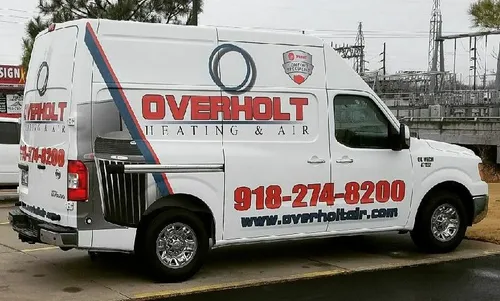
Overholt Heating & Air Inc.
602 W Broadway, Collinsville, OK 74021
Overholt Heating & Air Inc. is a heating and air conditioning company serving Tulsa, OK, and the surrounding Northeastern Oklahoma area. They provide services for both residential and commercial clients, including HVAC installation, AC repair, heat pump repair, geothermal heat pump installation, and HVAC tune-ups. The company is experienced in handling new construction projects and offers expertise with programmable thermostats to improve energy efficiency. Overholt Heating & Air Inc. has earned an A+ rating with the BBB and positive reviews across multiple platforms.

Hope Heating and Cooling, LLC
Tulsa, OK
Hope Heating and Cooling, LLC is a locally owned HVAC company serving Tulsa, OK. They provide installation, repair, and maintenance services for a wide range of HVAC systems, including traditional units, mini splits, and geothermal heat pumps. As a registered Lennox dealer, they offer sales and service of Lennox products along with indoor air quality solutions and home energy audits. The company emphasizes community involvement and supports customers with rebates and tax credit information.
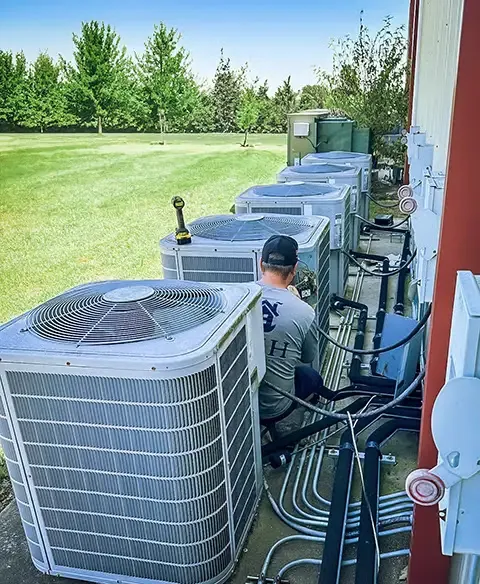
GNH Heating & Cooling, LLC
10812 N 154th E Ave, Owasso, OK 74055
GNH Heating & Cooling, LLC provides HVAC repair, installation, and maintenance services in Tulsa, OK. They specialize in air conditioning, furnace, heat pump, and geothermal heat pump systems, serving the Greater Tulsa Metro area. Their factory-trained technicians handle new installations, repairs, routine maintenance, and emergency services. The company emphasizes dependable service and long-term customer relationships.
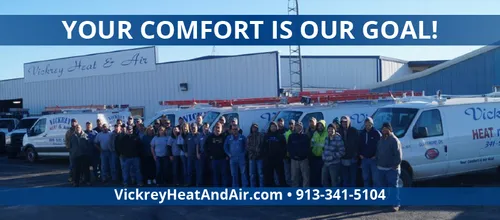
Vickrey Heat and Air Inc.
22405 S 4190 Rd, Claremore, OK 74019
Vickrey Heat and Air Inc. is a heating and air company serving Tulsa, OK. They provide repair and installation services for air conditioning, furnaces, heat pumps, and geothermal heat pumps. The company emphasizes hard work and honest values, continuing a family tradition in the heating and air business. Their team focuses on maintaining home comfort throughout the year with dependable service.
How Geothermal Heating and Cooling Works
Unlike conventional air-source heat pumps that exchange heat with the outside air, a geothermal system uses the earth as its heat source in winter and its heat sink in summer. Just a few feet below the surface, the ground maintains a nearly constant temperature of 50-60°F year-round, regardless of the weather above.
The process centers on a closed-loop system of pipes, called a ground loop, buried in your yard. A water-based solution circulates through this loop:
- In Winter: The fluid absorbs the earth's natural warmth and carries it to an indoor heat pump unit. The heat pump concentrates this thermal energy and distributes it as warm air through your home's ductwork 1 2.
- In Summer: The system reverses. The indoor heat pump extracts heat and humidity from your home's air. The warmed fluid then carries this heat back through the ground loop, where it is dissipated into the cooler earth 3 4.
This exchange with the stable ground temperature, rather than the extreme Oklahoma summer heat or winter cold, is what makes geothermal technology exceptionally efficient.
Types of Ground Loop Systems
The design of the buried ground loop is critical and depends on your property's characteristics. There are three primary configurations for residential geothermal heat pump installations.
Horizontal Ground Loops This is often the most cost-effective option if sufficient land is available. Contractors dig trenches five to eight feet deep and lay pipes in a series of coils or straight runs. A typical horizontal loop field for an average home may require between 1/4 to 3/4 of an acre of usable land 5.
Vertical Ground Loops For properties with limited space, like many residential lots in Broken Arrow, vertical loops are the standard solution. Contractors drill boreholes 150 to 450 feet deep and insert U-shaped loop pipes into each hole. The holes are then sealed with a special grout to ensure good thermal contact with the earth. This method minimizes landscape disturbance and is well-suited to Oklahoma's geology.
Pond or Lake Loops If you have a sufficiently deep and large pond or lake on your property, this can be an excellent option. Coils of pipe are submerged at the bottom of the water body. The water temperature provides an efficient medium for heat exchange, often making this the lowest-cost loop option to install if the water source is suitable 6 7.
The Installation Process for Broken Arrow Homes
Installing a ground-source heat pump is a significant project that requires specialized expertise. Understanding the steps can help you know what to expect when working with a local geothermal installer.
- Site Evaluation and Design: A qualified installer will assess your property, considering soil composition, available space, and your home's heating and cooling loads. This evaluation determines the optimal loop type and size for your system.
- Loop Field Installation: For a vertical system, a drilling rig will create the necessary boreholes. For a horizontal system, a trencher or backhoe will dig the trenches. The high-density polyethylene pipe is then placed, connected into a continuous loop, and pressure-tested for integrity.
- Indoor Unit Installation: The geothermal heat pump unit-which is typically about the size of a small furnace-is installed inside your home, usually in a basement, utility room, or garage. Your existing ductwork is connected to this new unit.
- System Startup and Commissioning: The loop is flushed and filled with the heat transfer fluid. The entire system is charged, started, and tested to ensure it operates at peak efficiency. The installer will also walk you through the system's controls 8 9.
The entire installation for a typical Broken Arrow home can often be completed in under a week.
Key Considerations for Oklahoma Properties
Several local factors make Broken Arrow and the wider Tulsa area particularly well-suited for geothermal technology.
- Favorable Geology: Oklahoma's subsurface geology is generally conducive to efficient drilling for vertical loop systems, which can help manage installation costs.
- Climate Impact: The significant temperature swings in Northeast Oklahoma-from hot, humid summers to cold winters-are where geothermal heat pumps shine. Their efficiency remains high when traditional systems struggle the most, leading to greater annual savings.
- Hybrid or Dual-Fuel Systems: In some cases, a geothermal system can be integrated with an existing high-efficiency furnace to create a dual-fuel system, providing flexibility and potentially lowering the initial investment 10.
Find the perfect geothermal heat pump contractors for your needs
Get personalized recommendations and expert advice
Benefits and Long-Term Value
The decision to install a geothermal system is an investment in long-term home comfort, efficiency, and value.
- Substantial Energy Savings: Homeowners typically see a 30% to 70% reduction in their heating, cooling, and even hot water costs compared to conventional HVAC systems 11 12 13. This is because a geothermal heat pump can deliver over 4 units of heating or cooling energy for every 1 unit of electrical energy it consumes.
- Durability and Longevity: The underground loop system is incredibly durable, with a lifespan often exceeding 50 years. The indoor heat pump unit typically lasts 20 to 24 years-significantly longer than the 15-year average lifespan of a standard air conditioner or furnace.
- Increased Home Comfort: These systems provide exceptionally even temperatures, eliminate outdoor condenser noise, and improve humidity control year-round.
- Environmental Stewardship: By using renewable thermal energy from the ground and drastically reducing fossil fuel consumption or electricity draw from the grid, a geothermal system significantly lowers your household's carbon footprint 14.
While the upfront cost is higher than a standard HVAC system, federal tax credits and potential local utility rebates can substantially offset the price. The payback period through energy savings is often estimated between 5 to 10 years, after which the ongoing savings contribute directly to your household budget for the life of the system 15.
Frequently asked questions
Sources
Footnotes
-
All You Need to Know About Home Geothermal Heating & Cooling - Dandelion Energy - https://dandelionenergy.com/all-you-need-to-know-about-home-geothermal-heating-cooling ↩
-
How a Geothermal Heat Pump Works | This Old House - https://www.youtube.com/watch?v=d5Tbsx3R2T8 ↩
-
How Does A Geothermal Heat Pump Work? Complete 2025 Guide - https://solartechonline.com/blog/how-does-geothermal-heat-pump-work/ ↩
-
How Geothermal Heat Pumps Work - https://www.youtube.com/watch?v=XxlTnBukweI&t=37 ↩
-
Geothermal Heating, Cooling, and Hot Water Systems - https://igshpa.org/wp-content/uploads/Homeowners-Guide-to-Geothermal.pdf ↩
-
Geothermal Heat Pumps, Explained - Bosch Home Comfort - https://www.bosch-homecomfort.com/us/en/residential/connect/blog/geothermal-heat-pumps-go-green-save-green/ ↩
-
How It Works: Ground Source Heat Pumps - Aztech Geothermal - https://aztechgeo.com/residential-geothermal/how-it-works/ ↩
-
Geothermal Heat Pump Installation: What To Expect For Your Property - https://jomory.com/geothermal-heat-pump-installation-what-to-expect-for-your-property/ ↩
-
Geothermal Ground Source Heat Pumps Explained - Skillings & Sons - https://www.skillingsandsons.com/blog/geothermal-ground-source-heat-pumps-explained/ ↩
-
Geothermal Heat Pump Systems: Your Guide - https://vault.nimc.gov.ng/blog/geothermal-heat-pump-systems-your-guide-1764803895 ↩
-
Oklahoma Paves the Way for Geothermal Heating and Cooling - https://www.climatemaster.com/homeowner/news/geothermal-energy/geothermal-energy/2021-03-29-oklahoma-paves-the-way-for-geothermal-heating-and-cooling ↩
-
5 Things You Should Know about Geothermal Heat Pumps - https://www.energy.gov/cmei/articles/5-things-you-should-know-about-geothermal-heat-pumps ↩
-
How Does a Geothermal System Work? - ClimateMaster - https://www.climatemaster.com/homeowner/side-links/how-it-works ↩
-
Geothermal Heat Pumps - Department of Energy - https://www.energy.gov/energysaver/geothermal-heat-pumps ↩
-
Guide to Geothermal Heat Pumps - https://www.energy.gov/sites/prod/files/guide_to_geothermal_heat_pumps.pdf ↩