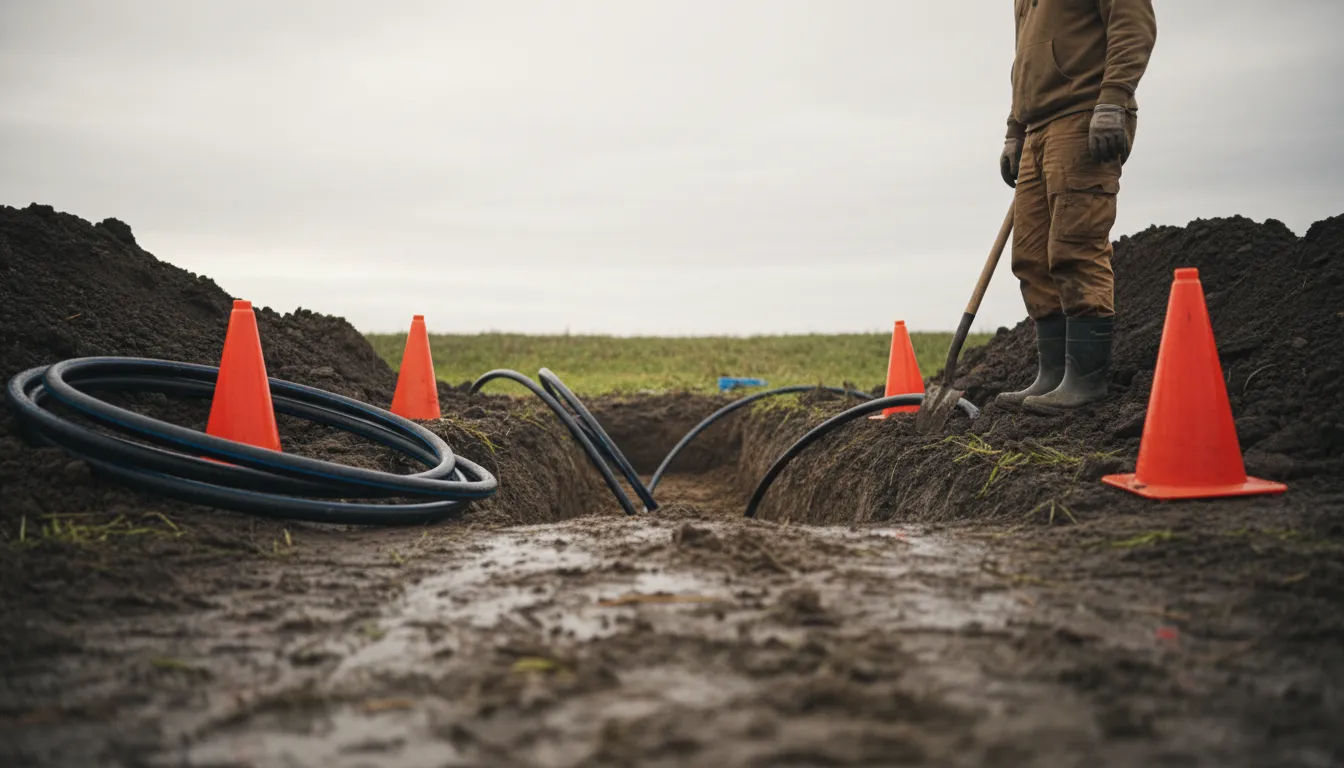
Find the Best Geothermal Heat Pump Contractors for Your Business
No obligation • Fast responses • Nationwide coverage

Why you can trust HVAC Firms
HVAC Firms is a leading United States resource for evaluating HVAC service providers. Our team researches companies, checks credentials, and reviews customer feedback to present clear, unbiased information. Listings and rankings are based on merit, and companies cannot pay to change our editorial content.
Search providers near you
Top Geothermal Heat Pump Contractors in White Plains, New York Ranked
A geothermal heat pump is a highly efficient heating and cooling system that uses the stable temperature of the earth to regulate your home's climate. Unlike conventional systems that burn fuel or use outside air, a ground-source heat pump simply transfers heat, making it a sustainable and cost-effective solution for year-round comfort. For White Plains homeowners, this guide explains how these systems work, the local installation process, and how to connect with qualified professionals who can assess your property.

MDL Electric Cooling & Heating
4 Harrison Ave, West Orange, NJ 07052
MDL Electric Cooling & Heating is a family-owned company serving Newark, NJ, and the surrounding North Jersey area. With over 30 years of experience, they provide a wide range of HVAC and electrical services including installation, repair, and maintenance of air conditioning, furnaces, heat pumps, boilers, and geothermal heat pumps. Their team is EPA certified and offers advanced solutions such as inverter-driven compressors and natural gas conversions. MDL Electric Cooling & Heating is available 24/7 to support residential and commercial customers with licensed and trained technicians.
Geothermal Works, Inc.
New York, NY
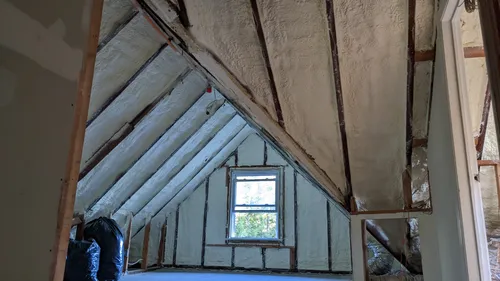
Geothermal Works, Inc. is a geothermal heat pump contractor based in New York, NY. They specialize in installing efficient geothermal heating and cooling systems that transfer heat energy between the ground and buildings. This technology helps reduce energy use and environmental impact. The company shares extensive knowledge about geothermal systems and supports clients through the installation process.
American Well & Pump
21 Prince St, Farmingdale, NY 11735
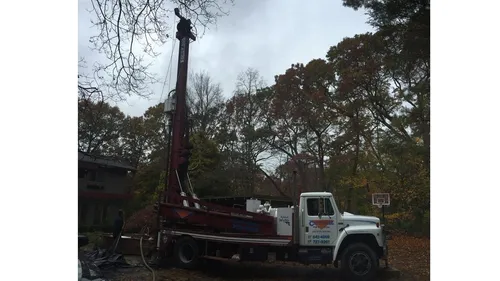
American Well & Pump is a geothermal heat pump contractor based in New York, NY, specializing in residential and commercial geothermal drilling services. They serve Nassau and Suffolk Long Island, offering a full range of geothermal drilling options including open and closed loop systems, standing column, horizontal trenching, and pump installations. The company has been operating since 1989 and uses heavy-duty equipment such as Schramm drill rigs and pump hoists to meet safety and quality standards.
How Geothermal Systems Work: Harnessing the Earth's Energy
The principle behind a geothermal system, or ground-source heat pump (GSHP), is elegant in its simplicity. Just a few feet below the surface, the earth maintains a nearly constant temperature of approximately 55°F year-round, regardless of the weather above ground 1. A geothermal unit leverages this stability.
In the winter, a fluid (typically a water-antifreeze mix) circulates through a loop of pipes buried in your yard, absorbing the earth's natural warmth. This heat energy is concentrated by the heat pump and transferred into your home's air or water distribution system. In the summer, the process reverses: the system extracts heat from your indoor air and transfers it into the cooler ground, effectively providing air conditioning 2 3. Because it moves heat rather than generating it through combustion, a geothermal system can deliver remarkable efficiency, often using 30-60% less energy than conventional systems.
Types of Ground Loop Systems for White Plains Properties
The buried pipe network, known as the ground loop, is the critical component that exchanges heat with the earth. The right type for your White Plains home depends on your lot size, soil composition, and local geology. The most common configuration is a closed-loop system, where the fluid is permanently sealed within the pipes.
- Vertical Closed-Loop: This is often the best choice for residential properties in White Plains with smaller yards. Contractors drill deep boreholes-typically 150 to 400 feet deep-and insert U-shaped loops of pipe into each hole. The holes are then filled with a special grout that enhances heat transfer. Vertical systems require less land area and are less disruptive to existing landscaping than horizontal trenches.
- Horizontal Closed-Loop: If you have ample, clear land, a horizontal loop may be installed. Contractors excavate trenches four to six feet deep and lay coils of pipe before backfilling. This method generally has a lower installation cost than vertical drilling but requires a significant amount of open space 4 5.
- Open-Loop System: This less common option requires a reliable, clean source of well water or access to a pond. It pulls water from the source, runs it through the heat pump to exchange heat, and then discharges it. While sometimes cheaper to install, open-loop systems are subject to more regulatory considerations and require a sufficient, sustainable water supply 6.
The Installation Process: From Assessment to Activation
Installing a geothermal heating and cooling system is a significant project that requires careful planning and specialized expertise. The process typically follows these key steps:
- Home Energy Assessment and Site Evaluation: A qualified installer will begin with a detailed analysis of your home's heating and cooling loads. They will also assess your property to determine the best loop type, optimal placement, and soil conditions. This stage is crucial for designing an efficient, properly sized system.
- Loop Field Installation: This is the most substantial part of the project. For a vertical system, a drilling rig will bore the necessary holes. In New York, this work must often be performed by a certified well driller. For a horizontal system, a backhoe will dig the trenches. The high-density polyethylene pipes are then placed, connected, and pressure-tested to ensure there are no leaks before the holes or trenches are backfilled.
- Indoor Unit Installation: The geothermal heat pump unit itself is installed inside your home, typically in a basement, utility room, or garage. It's connected to the ground loop and to your home's existing ductwork for forced-air systems. For homes without ducts, ductless mini-split heads can be connected to the geothermal unit 7.
- System Startup and Commissioning: Once everything is connected, the system is charged with fluid, powered up, and meticulously tested. The contractor will balance the airflow and ensure all components are operating correctly and efficiently before handing over the system to you.
Find the perfect geothermal heat pump contractors for your needs
Get personalized recommendations and expert advice
Understanding Costs, Savings, and Incentives
The upfront investment for a geothermal heat pump system is higher than for a traditional HVAC system. For a typical White Plains home, complete installation costs can range from $20,000 to over $40,000, with the ground loop accounting for a significant portion of the expense 8 9. However, this initial cost must be weighed against the substantial long-term benefits:
- Dramatic Energy Savings: Homeowners can expect a 30% to 70% reduction in their heating bills and a 20% to 50% savings on cooling costs 10 11. This efficiency translates into a compelling payback period, with many systems paying for themselves through utility savings in 5 to 10 years 12 13.
- Exceptional Longevity: The indoor heat pump components often last 20 years or more, while the underground polyethylene piping is renowned for its durability, with a lifespan that can exceed 50 years. This far outlasts conventional outdoor air-conditioning condensers and furnaces.
- Financial Incentives: To encourage this clean energy technology, significant incentives are available. The federal government offers a tax credit for geothermal heat pumps, which can cover a percentage of the installed cost. New York State also provides rebates and financing options through programs like NYSERDA (New York State Energy Research and Development Authority), which can directly reduce your initial investment.
Benefits Beyond the Bill: Comfort and Sustainability
Choosing a geothermal system offers advantages that go straight to your bottom line and overall quality of life.
- Superior Comfort: Ground-source systems provide consistent, even heating and cooling without the drafts and temperature swings associated with fossil fuel systems. They also maintain humidity levels more effectively in the summer.
- Quiet Operation: With no loud outdoor condenser unit, the system operates very quietly. The main noise comes from the indoor air handler, which is similar to the sound of a refrigerator.
- Safety and Cleanliness: There is no combustion, meaning no risk of carbon monoxide poisoning, no flammable fuel storage, and no need for a chimney or flue.
- Environmental Leadership: By drastically reducing your home's reliance on fossil fuels and using renewable thermal energy from the earth, you significantly lower your household's carbon footprint. This aligns with both New York State's and Westchester County's clean energy goals.
Finding the Right Professional in White Plains
Success with geothermal technology hinges on proper design and installation. It's essential to work with experienced, certified contractors. Look for installers who are accredited by organizations like the International Ground Source Heat Pump Association (IGSHPA) and who partner with NYSERDA-certified drillers for the loop installation. They should provide a detailed proposal including a Manual J load calculation, system design specifications, and a clear breakdown of all costs and available rebates.
Frequently asked questions
Sources
Footnotes
-
Geothermal Heat Pump Manual - NYC.gov - https://www.nyc.gov/html/ddc/downloads/pdf/geotherm.pdf ↩
-
Clean Energy 101: Geothermal Heat Pumps - RMI - https://rmi.org/clean-energy-101-geothermal-heat-pumps/ ↩
-
How does a Geothermal Heat Pump Work - https://www.youtube.com/watch?v=mWSybmZgQO4 ↩
-
Geothermal Heat Pumps - EnergySmart CNY - https://www.energysmartcny.org/heat-pumps/geothermal/ ↩
-
Geothermal Heat Pumps | WBDG - Whole Building Design Guide - https://www.wbdg.org/resources/geothermal-heat-pumps ↩
-
Geothermal Systems For Energy Efficiency, Comfort And Cost Savings - https://www.forbes.com/sites/sherikoones/2019/10/31/geothermal-systems-for-energy-efficiency-comfort-and-cost-savings/ ↩
-
Ground Source (Geothermal) Centrally Ducted System for a Two- ... - https://cleanheat.ny.gov/ground-source-heat-pump-for-a-two-story-home/ ↩
-
Geothermal or Ground Source Heat Pump Systems - nyserda - https://www.nyserda.ny.gov/-/media/Project/Nyserda/Files/Programs/ground-source-heat-pumps/Best-Practices.pdf ↩
-
Geothermal Heat Pump Guide: Installation Costs, Types And Benefits - https://modernize.com/hvac/heating-repair-installation/heat-pump/geothermal ↩
-
Geothermal Heat Pumps - Department of Energy - https://www.energy.gov/energysaver/geothermal-heat-pumps ↩
-
Ground-Source Heat Pumps | National Grid - https://www.nationalgridus.com/Upstate-NY-Home/Electric-Heating-Cooling/Ground-Source-Heat-Pumps ↩
-
Geothermal (Ground Source) Heat Pumps - https://cleanheat.ny.gov/geothermal-heat-pumps/ ↩
-
Guide to Geothermal Heat Pumps - https://www.energy.gov/sites/prod/files/guide_to_geothermal_heat_pumps.pdf ↩