Find the Best Geothermal Heat Pump Contractors for Your Business
No obligation • Fast responses • Nationwide coverage

Why you can trust HVAC Firms
HVAC Firms is a leading United States resource for evaluating HVAC service providers. Our team researches companies, checks credentials, and reviews customer feedback to present clear, unbiased information. Listings and rankings are based on merit, and companies cannot pay to change our editorial content.
Search providers near you
Top Geothermal Heat Pump Contractors in New York, New York Ranked
Geothermal heat pumps, also known as ground-source heat pumps, offer a highly efficient and sustainable method for heating and cooling homes and buildings in New York City. By leveraging the earth's stable underground temperature, these systems provide consistent comfort year-round while significantly reducing energy consumption and environmental impact. This guide will help you understand how geothermal technology works, its benefits for NYC properties, and how to connect with qualified local professionals for installation and service.
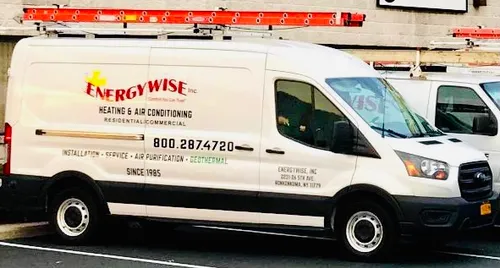
Energywise Inc
2231 5th Ave Suite 26, Ronkonkoma, NY 11779
Energywise Inc is an HVAC company based in New York, NY, specializing in heating and cooling solutions. They offer installation, repair, and maintenance services for a variety of systems including heat pumps, central air conditioning, ductless mini splits, geothermal systems, and traditional furnaces. Their factory-trained technicians provide expert guidance and personalized recommendations to optimize home comfort and energy efficiency. Energywise Inc emphasizes energy-efficient products and sustainable solutions to reduce environmental impact while maintaining reliable system performance. The company has decades of experience and provides 24/7 emergency repair services to address urgent heating or cooling issues promptly.
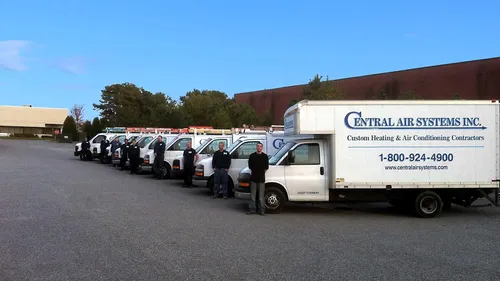
Central Air Systems, Inc
22 Scouting Blvd #2, Medford, NY 11763
Central Air Systems, Inc is an HVAC company serving New York, NY, specializing in heating and cooling services. They provide repair, installation, and maintenance for air conditioners, furnaces, boilers, and geothermal heat pumps. The company also offers indoor air quality services and HVAC tune-ups. Established in 1989, Central Air Systems has experience delivering comprehensive comfort solutions, including high-efficiency system installations and geothermal heating and cooling. Their technicians are factory trained and equipped to handle repairs for all major brands.
MDL Electric Cooling & Heating
4 Harrison Ave, West Orange, NJ 07052
MDL Electric Cooling & Heating is a family-owned company serving Newark, NJ, and the surrounding North Jersey area. With over 30 years of experience, they provide a wide range of HVAC and electrical services including installation, repair, and maintenance of air conditioning, furnaces, heat pumps, boilers, and geothermal heat pumps. Their team is EPA certified and offers advanced solutions such as inverter-driven compressors and natural gas conversions. MDL Electric Cooling & Heating is available 24/7 to support residential and commercial customers with licensed and trained technicians.
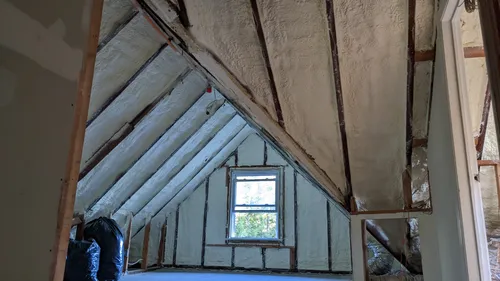
Geothermal Works, Inc.
New York, NY
Geothermal Works, Inc. is a geothermal heat pump contractor based in New York, NY. They specialize in installing efficient geothermal heating and cooling systems that transfer heat energy between the ground and buildings. This technology helps reduce energy use and environmental impact. The company shares extensive knowledge about geothermal systems and supports clients through the installation process.
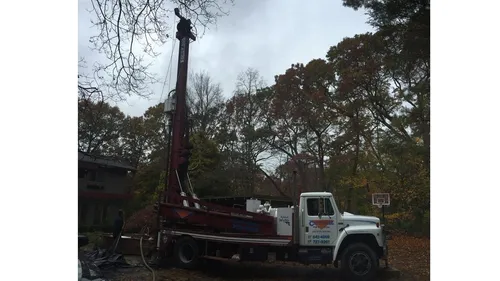
American Well & Pump
21 Prince St, Farmingdale, NY 11735
American Well & Pump is a geothermal heat pump contractor based in New York, NY, specializing in residential and commercial geothermal drilling services. They serve Nassau and Suffolk Long Island, offering a full range of geothermal drilling options including open and closed loop systems, standing column, horizontal trenching, and pump installations. The company has been operating since 1989 and uses heavy-duty equipment such as Schramm drill rigs and pump hoists to meet safety and quality standards.
How Geothermal Systems Work in NYC
The core principle behind a geothermal heat pump is remarkably simple: it uses the earth as a giant thermal battery. Unlike the fluctuating air temperatures above ground, the temperature just a few feet below the surface in New York remains a relatively constant 55°F throughout the year. This stable temperature provides an ideal source for heat exchange.
During the winter, a fluid (typically water mixed with antifreeze) circulates through a loop of pipes buried underground, called a ground loop. This fluid absorbs the earth's natural warmth. It then travels to the geothermal heat pump unit inside your home, where a compressor concentrates this low-grade heat and delivers it as warm air through your ductwork or via a hydronic system. In the summer, the process reverses: the system extracts heat and humidity from your indoor air and transfers it into the cooler ground loop, providing air conditioning. Because this is a heat transfer process, not a combustion process, geothermal systems produce no carbon monoxide and operate very quietly 1.
Types of Ground Loop Systems
The installation of the ground loop is the most distinctive aspect of a geothermal system. The right type for your NYC property depends heavily on available land, soil conditions, and geology.
Vertical Closed Loops This is the most common configuration in densely populated areas like New York City, where yard space is limited. Contractors drill deep boreholes, typically 150 to 400 feet deep, and insert U-shaped high-density polyethylene pipes. These vertical loops are then connected horizontally a few feet below the surface to form a circuit back to the heat pump. While drilling requires specialized equipment and expertise, it minimizes surface disruption and is ideal for small lots 2.
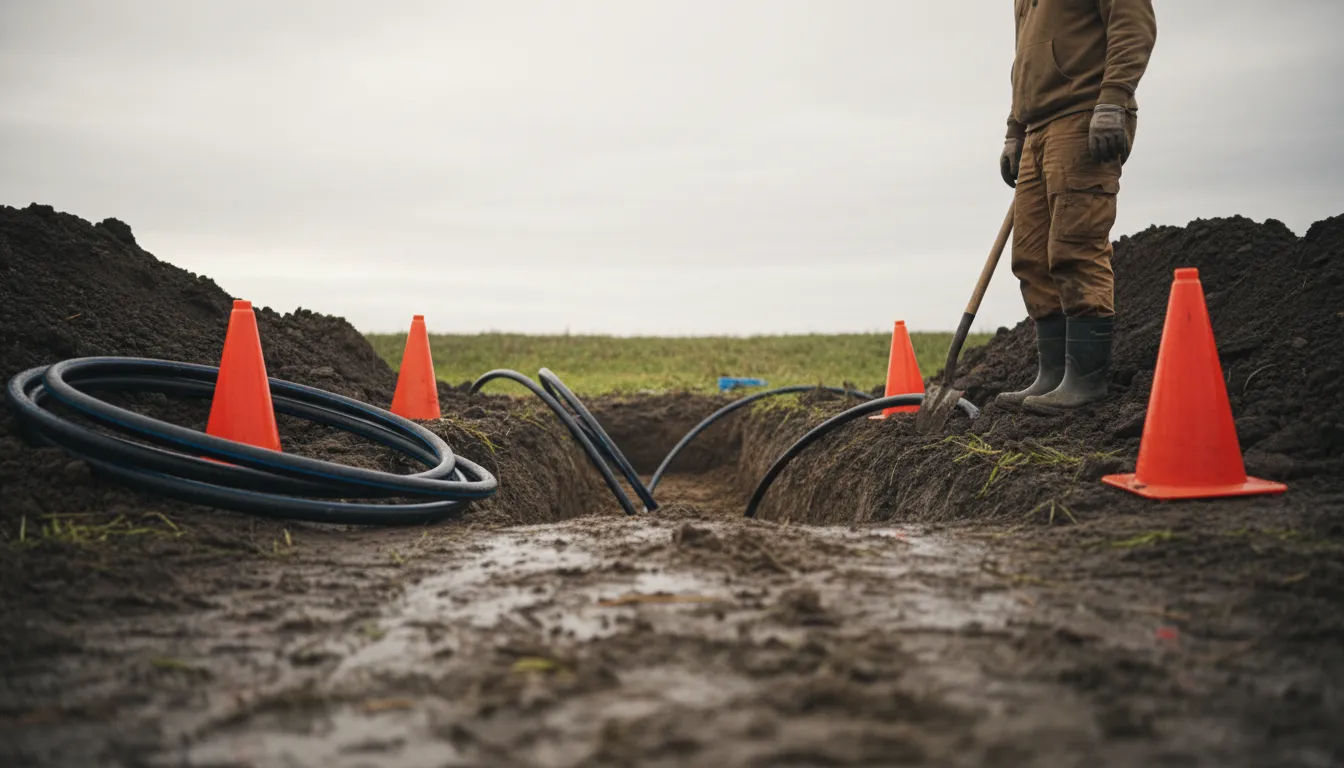
Horizontal Closed Loops For properties with more available land, such as some areas in the outer boroughs, a horizontal loop can be a cost-effective option. Trenches are dug about four to six feet deep in long, linear patterns or slinky-coil configurations. The pipes are laid in these trenches before being backfilled. This method generally has a lower installation cost than vertical drilling but requires a significant amount of open, unobstructed land 3.
Ductless and Hybrid Options Geothermal technology is versatile. For homes without existing ductwork, you can install a geothermal system that powers ductless mini-split air handlers for zoned comfort in different rooms 4. Furthermore, some systems can be configured to provide not only space heating and cooling but also a significant portion of your home's domestic hot water, increasing overall efficiency.
Benefits for New York City Homeowners
Investing in a ground-source heat pump in NYC comes with a compelling set of advantages that align with both economic and environmental goals.
- High Efficiency and Significant Savings: Geothermal heat pumps are exceptionally efficient, moving three to five units of heat for every one unit of electricity used. This can translate to a reduction in energy consumption for heating and cooling by 30% to 60% compared to conventional systems like furnaces and standard air conditioners. Over time, these savings can offset the system's higher initial cost.
- Lower Operating Costs: By leveraging free thermal energy from the ground, you are less vulnerable to the price volatility of fossil fuels like oil and natural gas. Your primary energy cost becomes electricity to run the compressor and pumps.
- Durability and Low Maintenance: The underground loop system is designed to last for decades-often 50 years or more. The indoor heat pump unit also typically has a longer lifespan than a conventional furnace or air conditioner because it is protected from outdoor weather 5.
- Quiet and Safe Operation: With no noisy outdoor condenser unit (like a traditional air conditioner) and no combustion process, geothermal systems operate very quietly. The absence of burning fuel also eliminates the risk of carbon monoxide poisoning in your home 6.
- Increased Property Value: A modern, efficient, and sustainable heating and cooling system is an attractive feature for potential buyers and can enhance your home's market value.
Key Considerations and Installation Process
While the benefits are substantial, a successful geothermal installation requires careful planning and professional execution.
Site Evaluation is Critical The first step is a thorough site assessment by a qualified installer. They will evaluate your property's soil composition, rock content, available space, and the heating/cooling load of your home 7. In New York, drilling for vertical loops is regulated under NY Environmental Conservation Law (ECL) 15-1525, which governs well construction, so working with a licensed driller is mandatory.
Understanding Costs and Incentives The upfront cost for a residential geothermal system in NYC is higher than for a conventional HVAC system, often ranging from $20,000 to $40,000 or more, depending on system size and loop type 8. However, it's crucial to view this as a long-term investment. Significant financial incentives are available to help. New York State offers rebates through NYSERDA, and federal tax credits can cover a percentage of the total installed cost 9 10. These incentives, combined with ongoing energy savings, improve the payback period.
The Importance of a Skilled Installer A geothermal system is only as good as its installation. It requires a team with specific expertise: certified drillers for the loop field and HVAC technicians trained in geothermal heat pump technology. Look for professionals certified by organizations like the International Ground Source Heat Pump Association (IGSHPA) or the National Ground Water Association (NGWA) 11. Proper design of the loop field and correct sizing of the heat pump are non-negotiable for optimal performance and efficiency.
Find the perfect geothermal heat pump contractors for your needs
Get personalized recommendations and expert advice
Navigating the NYC Landscape
Installing a ground-source heat pump in an urban environment like New York presents unique challenges and opportunities. For row houses or properties with tiny yards, vertical boreholes are often the only feasible loop option. The drilling process, while managed by professionals, does involve machinery and can cause temporary disruption. Post-installation, landscaping restoration is a standard part of a quality installer's service.
For larger commercial buildings or new construction projects, geothermal offers immense scale benefits. The City of New York itself has published guides promoting geothermal technology as a key strategy for reducing greenhouse gas emissions from buildings 12 13. Whether for a single-family home or a multi-unit residential building, the principles of efficient, renewable heating and cooling remain the same.
The long-term value proposition in a city with high energy costs is particularly strong. The stability of geothermal operating costs provides a hedge against rising utility prices. Furthermore, the system's ability to provide both heating and cooling with a single, durable unit simplifies your home's mechanical needs and can free up valuable interior or exterior space.
Frequently asked questions
Sources
Footnotes
-
Geothermal Heat Pumps | Smart Investment For New Yorkers - https://geo-us.com/blog/geothermal-heat-pumps-ny-homes/ ↩
-
Geothermal Heat Pumps | WBDG - Whole Building Design Guide - https://www.wbdg.org/resources/geothermal-heat-pumps ↩
-
Geothermal Heat Pumps - Department of Energy - https://www.energy.gov/energysaver/geothermal-heat-pumps ↩
-
How to Install a Residential Geothermal System: A Step-by-Step Guide - https://www.envirotechgeo.com/how-to-install-a-residential-geothermal-system/ ↩
-
Geothermal Heat Pump Guide: Installation Costs, Types And Benefits - https://modernize.com/hvac/heating-repair-installation/heat-pump/geothermal ↩
-
How They Work : NYS Clean Heat - NY.Gov - https://cleanheat.ny.gov/how-they-work/ ↩
-
Ground Source (Geothermal) Centrally Ducted System for a One- ... - https://cleanheat.ny.gov/ground-source-heat-pump-for-a-one-story-home/ ↩
-
Ground Source (Geothermal) Centrally Ducted System for a Two- ... - https://cleanheat.ny.gov/ground-source-heat-pump-for-a-two-story-home/ ↩
-
Geothermal (Ground Source) Heat Pumps - https://cleanheat.ny.gov/geothermal-heat-pumps/ ↩
-
Ground-Source Heat Pumps | National Grid - https://www.nationalgridus.com/Upstate-NY-Home/Electric-Heating-Cooling/Ground-Source-Heat-Pumps ↩
-
Geothermal or Ground Source Heat Pump Systems - nyserda - https://www.nyserda.ny.gov/-/media/Project/Nyserda/Files/Programs/ground-source-heat-pumps/Best-Practices.pdf ↩
-
Geothermal Systems - NYC.gov - https://www.nyc.gov/html/planyc/downloads/pdf/publications/2015_Geothermal.pdf ↩
-
Geothermal Heat Pump Manual - NYC.gov - https://www.nyc.gov/html/ddc/downloads/pdf/geotherm.pdf ↩