Find the Best Geothermal Heat Pump Contractors for Your Business
No obligation • Fast responses • Nationwide coverage

Why you can trust HVAC Firms
HVAC Firms is a leading United States resource for evaluating HVAC service providers. Our team researches companies, checks credentials, and reviews customer feedback to present clear, unbiased information. Listings and rankings are based on merit, and companies cannot pay to change our editorial content.
Search providers near you
Best Geothermal Heat Pump Contractors in New York Ranked
Geothermal heat pumps (GHPs), also known as ground-source heat pumps, are a highly efficient technology for heating and cooling your home by exchanging heat with the earth. In New York, with its supportive policies and suitable geology, these systems offer a path to significant energy savings and reduced carbon emissions. This guide provides clear, practical information to help you understand the process, benefits, and key considerations for installing a geothermal system in New York, connecting you with the knowledge needed to find qualified local professionals.
Energywise Inc
2231 5th Ave Suite 26, Ronkonkoma, NY 11779
Energywise Inc is an HVAC company based in New York, NY, specializing in heating and cooling solutions. They offer installation, repair, and maintenance services for a variety of systems including heat pumps, central air conditioning, ductless mini splits, geothermal systems, and traditional furnaces. Their factory-trained technicians provide expert guidance and personalized recommendations to optimize home comfort and energy efficiency. Energywise Inc emphasizes energy-efficient products and sustainable solutions to reduce environmental impact while maintaining reliable system performance. The company has decades of experience and provides 24/7 emergency repair services to address urgent heating or cooling issues promptly.
Central Air Systems, Inc
22 Scouting Blvd #2, Medford, NY 11763
Central Air Systems, Inc is an HVAC company serving New York, NY, specializing in heating and cooling services. They provide repair, installation, and maintenance for air conditioners, furnaces, boilers, and geothermal heat pumps. The company also offers indoor air quality services and HVAC tune-ups. Established in 1989, Central Air Systems has experience delivering comprehensive comfort solutions, including high-efficiency system installations and geothermal heating and cooling. Their technicians are factory trained and equipped to handle repairs for all major brands.

Capital Heating, Cooling, Plumbing, & Electric
2975 Walden Ave, Depew, NY 14043
Capital Heating, Cooling, Plumbing, & Electric is a family-owned business serving Buffalo, NY, and the surrounding Western New York area. Since 1957, they have provided comprehensive HVAC services including installation, repair, and maintenance of air conditioners, furnaces, heat pumps, boilers, mini splits, and geothermal systems. The company offers custom design and in-house engineering to ensure precise solutions tailored to each home. They also provide whole home generators and emergency service availability for urgent heating, cooling, plumbing, and electrical needs.
NOCO Residential: HVAC, Fuels, and Energy
2440 Sheridan Dr, Tonawanda, NY 14150
NOCO Residential: HVAC, Fuels, and Energy is a family-owned business serving Buffalo, NY, and the surrounding Western and Central New York regions. Established in 1933, NOCO offers a wide range of home energy services including heating, cooling, geothermal systems, propane, heating oil, solar energy, insulation, plumbing, and generator installation. They specialize in installing and servicing high-efficiency HVAC systems and ground-source geothermal heat pumps to help homeowners maintain comfort and energy efficiency year-round. NOCO also provides home energy assessments to identify efficiency improvements and offers flexible energy solutions tailored to local needs.
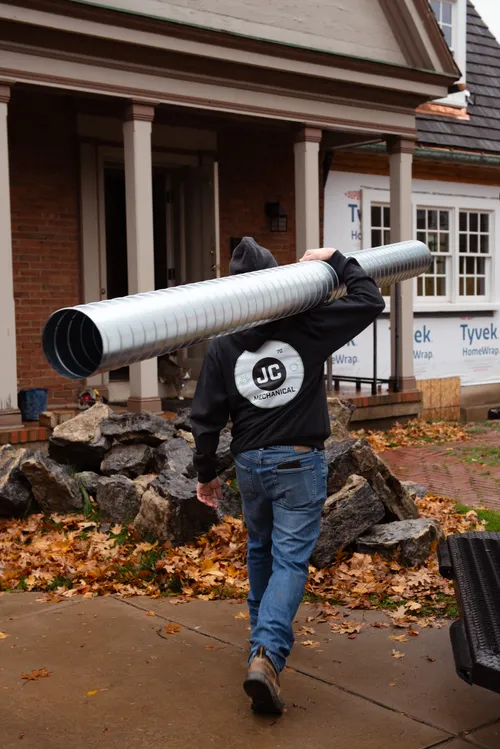
JC Mechanical
5000 Salt Rd, Clarence, NY 14031
JC Mechanical is an HVAC company based in Buffalo, NY, providing commercial and residential heating and cooling services. They offer installation, repair, and maintenance for systems including air conditioners, furnaces, boilers, mini-splits, and geothermal heat pumps. The company also fabricates custom ductwork using automated plasma cutting technology to ensure precise fittings. Since 2009, JC Mechanical has served Buffalo and Western New York with a focus on high-quality installations and honest system diagnostics.
How Geothermal Heat Pumps Work
A geothermal system uses the stable temperature of the earth just below the surface as a heat source in winter and a heat sink in summer. A loop of pipes, called a ground loop, is buried underground and circulates a fluid. In heating mode, the fluid absorbs the earth's warmth and carries it to a heat pump inside your home, which concentrates the heat and distributes it through your ductwork or radiant system. The process reverses for cooling, pulling heat from your home and depositing it into the cooler ground. This efficient exchange is why geothermal systems can deliver three to five units of heating or cooling for every one unit of electricity used to run the system.
Why New York is Ideal for Geothermal
New York's climate and geology are well-suited for geothermal heat pump technology. The state's consistent ground temperatures, which hover around 55°F in New York City and similar ranges across much of the state, provide an excellent, stable thermal resource year-round 1. This stability is key to the system's high efficiency, as the heat pump doesn't have to work as hard compared to extracting heat from freezing winter air.
Furthermore, New York has positioned itself as a national leader in clean energy adoption. The state's ambitious climate goals have led to the creation of some of the most generous financial incentives in the country for homeowners who install geothermal systems, making this advanced technology more accessible than ever 2.
Financial Incentives and Rebates in New York
The upfront cost of a geothermal system is significant, but New York offers substantial financial support to bridge the gap. These incentives can dramatically improve the long-term cost-effectiveness of your investment.
New York State Tax Credit
New York offers a direct personal income tax credit for installing an eligible geothermal energy system. The credit is worth 25% of your eligible installation costs, with a maximum credit that increases over time. For systems installed before July 1, 2025, the cap is $5,000. For systems installed on or after July 1, 2025, the cap increases to $10,000 3. This credit directly reduces the state income tax you owe, dollar for dollar.
NYSERDA and Utility Rebates
The New York State Energy Research and Development Authority (NYSERDA) administers the Clean Heat program, which provides point-of-sale rebates for geothermal installations. These rebates are substantial and are designed to work alongside the state tax credit. For example, rebates for a centrally ducted system can range from $10,000 to over $35,000 depending on the home's characteristics and the system's efficiency 4. Many local utilities, such as Con Edison, also offer their own rebate programs that can be stacked with NYSERDA incentives 5 6.
Federal Tax Credit
Homeowners can also claim the federal Residential Clean Energy Credit, which covers 30% of the total installation cost with no upper limit. This credit can be combined with New York's state-level incentives, leading to total potential incentive coverage that can exceed 50% of the project's gross cost.
Find the perfect geothermal heat pump contractors for your needs
Get personalized recommendations and expert advice
Site Assessment and System Types
Before installation, a professional site assessment is crucial. A qualified contractor will evaluate your property to determine the best type of ground loop system.
- Vertical Closed Loop: This is the most common type in New York, especially for properties with limited land. Holes are drilled 150 to 450 feet deep, and U-shaped pipe loops are inserted into each borehole. This is often the best choice for rocky soil or smaller urban and suburban lots 7.
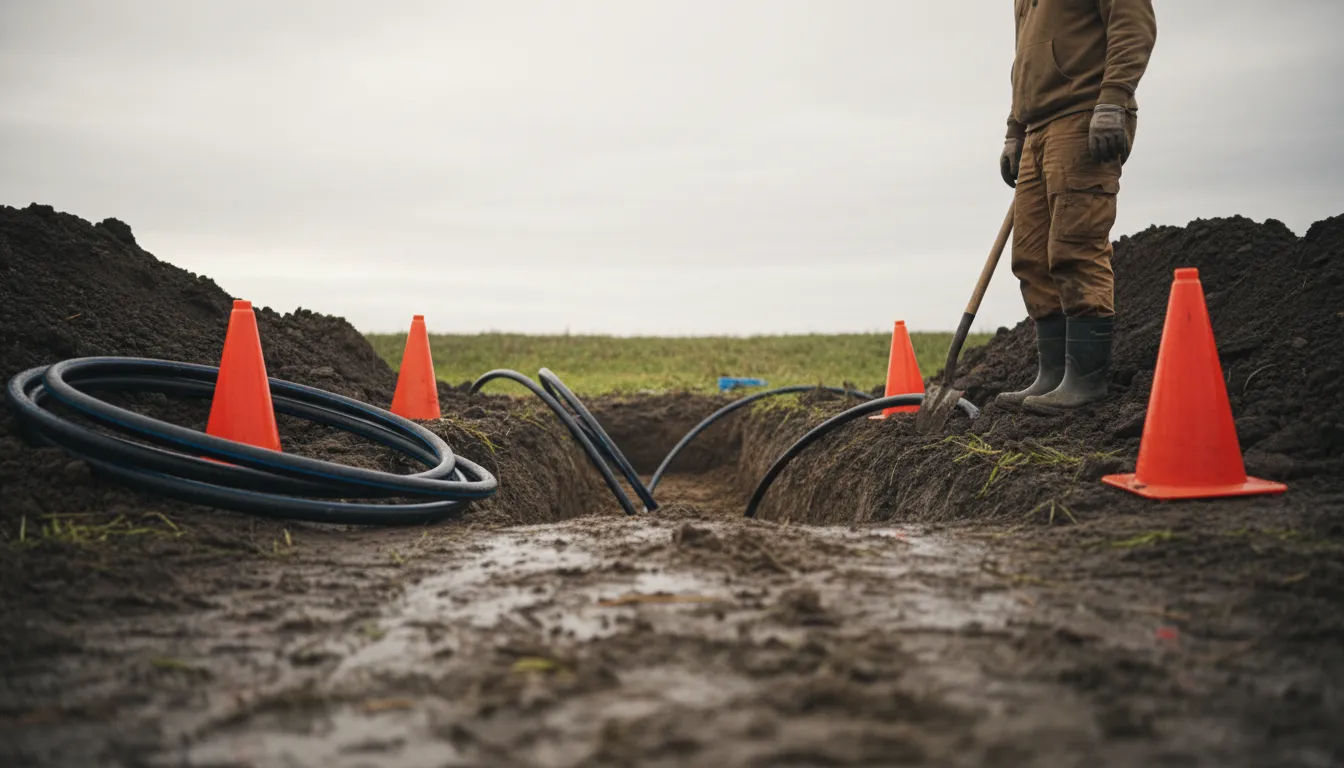
- Horizontal Closed Loop: This system requires more land area. Trenches are dug 4 to 6 feet deep, and pipes are laid in a series of loops. It is generally less expensive to install than vertical drilling if space allows 8.
- Pond/Lake Loop: If you have a suitable body of water, coils of pipe can be submerged at the bottom. This can be a very cost-effective option but is entirely dependent on your property's features.
The assessment will also evaluate your home's existing heating distribution system (ductwork, radiators, etc.) to ensure compatibility with the geothermal heat pump unit 9.
The Installation Process: What to Expect
Installing a geothermal system is a major project that involves multiple steps and skilled professionals.
- Initial Consultation and Design: A certified installer will assess your home's heating/cooling loads, evaluate your property, and design a system tailored to your needs.
- Permitting: Your contractor will secure the necessary local building permits. In New York, drilling contractors must also comply with specific environmental conservation laws (ECL 15-1525), which often requires certification from organizations like the National Ground Water Association (NGWA).
- Ground Loop Installation: Drilling rigs (for vertical systems) or excavation equipment (for horizontal systems) will create the boreholes or trenches. The high-density polyethylene pipe is then placed and the trenches/boreholes are backfilled with a special grout to ensure good thermal conductivity.
- Heat Pump and Indoor Connection: The indoor heat pump unit is installed, typically in a basement, utility room, or garage. It is connected to the ground loop and to your home's existing ductwork or hydronic system.
- System Charging and Testing: The loop is filled with an approved, environmentally safe heat transfer fluid, and the entire system is pressurized and tested for leaks. The heat pump is then started and calibrated.
- Final Inspection and Incentive Paperwork: After a final inspection, your contractor will often help you complete the paperwork to apply for the NYSERDA rebates and provide documentation for the state and federal tax credits.
Understanding Costs and Long-Term Savings
The total installed cost for a residential geothermal system in New York typically ranges from $20,000 to over $40,000 before incentives 10. The final price depends on your home's size, the chosen loop type (vertical is more expensive than horizontal), soil conditions, and the complexity of connecting to your existing HVAC distribution.
While the initial investment is high, the operating costs are low. Homeowners often see a 25-30% or greater reduction in their heating and cooling energy bills compared to fossil fuel systems 11 12. When you combine these ongoing savings with the substantial state, federal, and utility incentives available, the total lifetime savings can be profound, often making geothermal the most cost-effective heating and cooling solution over a 15-20 year period.
Frequently asked questions
Sources
Footnotes
-
Geothermal Heat Pump Manual - NYC.gov - https://www.nyc.gov/html/ddc/downloads/pdf/geotherm.pdf ↩
-
New York Geothermal Energy Organization, Inc. (NY-GEO ... - https://nyassembly.gov/write/upload/publichearing/001271/003597.pdf ↩
-
Geothermal Energy System Credit - Tax.NY.gov - https://www.tax.ny.gov/pit/credits/geothermal-energy-system-credit.htm ↩
-
Ground Source Heat Pump Rebate Program Manual - https://portal.nyserda.ny.gov/servlet/servlet.FileDownload?file=00Pt000000Eprn1EAB ↩
-
Geothermal or Ground Source Heat Pump Systems - nyserda - https://www.nyserda.ny.gov/-/media/Project/Nyserda/Files/Programs/ground-source-heat-pumps/Best-Practices.pdf ↩
-
Geothermal (Ground Source) Heat Pumps - NY.Gov - https://cleanheat.ny.gov/geothermal-heat-pumps/ ↩
-
Understanding and Evaluating Geothermal Heat Pump Systems - https://northeastgeo.com/wp-content/uploads/2017/10/NYSERDA_Evaluating_GHP_Applications.pdf ↩
-
Geothermal Heat Pumps - Department of Energy - https://www.energy.gov/energysaver/geothermal-heat-pumps ↩
-
NY State Model GSHP Building Permit Residenfial - https://www.minnesotageothermalheatpumpassociation.com/wp-content/uploads/2020/03/NY-State-Model-GSHP-Building-Permit-Residential_1.15.2020-CLean-JE.docx ↩
-
Ground Source (Geothermal) Centrally Ducted System for a One- ... - https://cleanheat.ny.gov/ground-source-heat-pump-for-a-one-story-home/ ↩
-
Geothermal Systems - NYC.gov - https://www.nyc.gov/html/planyc/downloads/pdf/publications/2015_Geothermal.pdf ↩
-
Geothermal Heat Pump Guide: Installation Costs, Types And Benefits - https://modernize.com/hvac/heating-repair-installation/heat-pump/geothermal ↩