
Find the Best Geothermal Heat Pump Contractors for Your Business
No obligation • Fast responses • Nationwide coverage

Why you can trust HVAC Firms
HVAC Firms is a leading United States resource for evaluating HVAC service providers. Our team researches companies, checks credentials, and reviews customer feedback to present clear, unbiased information. Listings and rankings are based on merit, and companies cannot pay to change our editorial content.
Search providers near you
Top Geothermal Heat Pump Contractors in New Rochelle, New York Ranked
Geothermal heat pumps, also known as ground-source heat pumps, are a highly efficient heating and cooling technology that leverages the earth's constant underground temperature. For New Rochelle homeowners, this system offers a path to dramatically lower energy bills and year-round comfort by exchanging heat with the ground rather than the outside air. This guide explains how geothermal systems work, the installation options available locally, and how you can connect with qualified specialists to explore this sustainable solution for your home.
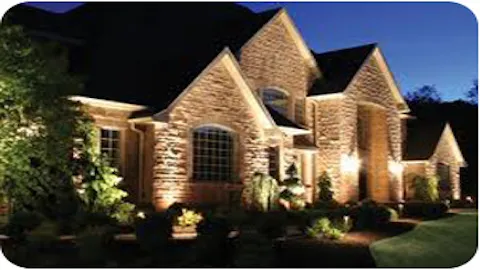
MDL Electric Cooling & Heating
4 Harrison Ave, West Orange, NJ 07052
MDL Electric Cooling & Heating is a family-owned company serving Newark, NJ, and the surrounding North Jersey area. With over 30 years of experience, they provide a wide range of HVAC and electrical services including installation, repair, and maintenance of air conditioning, furnaces, heat pumps, boilers, and geothermal heat pumps. Their team is EPA certified and offers advanced solutions such as inverter-driven compressors and natural gas conversions. MDL Electric Cooling & Heating is available 24/7 to support residential and commercial customers with licensed and trained technicians.
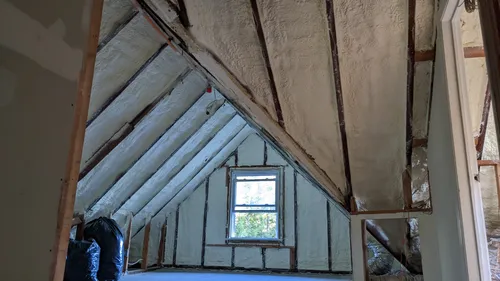
Geothermal Works, Inc.
New York, NY
Geothermal Works, Inc. is a geothermal heat pump contractor based in New York, NY. They specialize in installing efficient geothermal heating and cooling systems that transfer heat energy between the ground and buildings. This technology helps reduce energy use and environmental impact. The company shares extensive knowledge about geothermal systems and supports clients through the installation process.
American Well & Pump
21 Prince St, Farmingdale, NY 11735
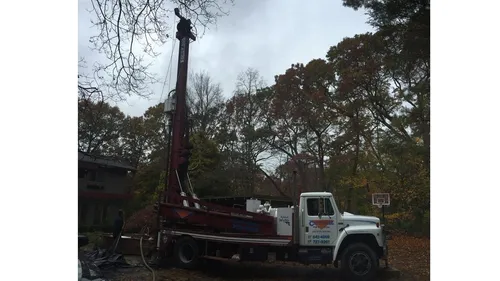
American Well & Pump is a geothermal heat pump contractor based in New York, NY, specializing in residential and commercial geothermal drilling services. They serve Nassau and Suffolk Long Island, offering a full range of geothermal drilling options including open and closed loop systems, standing column, horizontal trenching, and pump installations. The company has been operating since 1989 and uses heavy-duty equipment such as Schramm drill rigs and pump hoists to meet safety and quality standards.
Lightning Mechanical LLC
65 Newark Way, Maplewood, NJ 07040
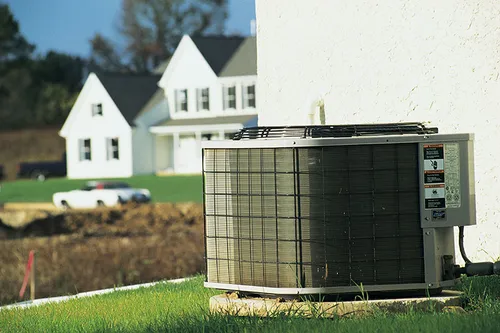
Lightning Mechanical LLC is an HVAC service provider based in Newark, NJ, offering repair, installation, and maintenance for residential and commercial heating and cooling systems. They specialize in a wide range of equipment including air conditioners, furnaces, heat pumps, boilers, and Daikin VRV systems. The company fabricates custom sheet metal in-house and serves clients throughout the New York metro area, including Newark. Since 2005, Lightning Mechanical has provided factory-trained technicians skilled in servicing multiple HVAC brands and advanced systems like Variable Refrigerant Volume (VRV). They also offer rapid response teams for mission-critical facilities and maintain an extensive inventory of Daikin VRV parts for quick repairs.
How Geothermal Systems Work: Tapping the Earth's Steady Temperature
The core principle behind a geothermal heating and cooling system is remarkably simple: a few feet below the surface, the earth maintains a nearly constant temperature of approximately 55°F year-round, regardless of New York's seasonal extremes 1. A geothermal heat pump uses this stable thermal reservoir as a source of warmth in the winter and a place to deposit excess heat in the summer.
The process involves a closed loop of pipes, called a ground loop, buried in your yard. A water-based fluid circulates through these pipes. In heating mode, the fluid absorbs the earth's natural warmth and carries it to the indoor heat pump unit. The heat pump then concentrates this low-grade heat and transfers it to your home's air or hydronic distribution system. For cooling, the cycle reverses: the system extracts heat from your indoor air and transfers it into the cooler fluid in the ground loops, which then dissipates the heat into the earth 2. This elegant exchange with the ground, which is much more efficient than battling frigid winter air or sweltering summer heat, is what leads to significant energy savings.
Types of Ground Loop Systems for New Rochelle Properties
The underground portion of a geothermal system, the ground loop, can be configured in different ways to suit the characteristics of your property. The two most common types are horizontal and vertical closed-loop systems.
Horizontal Ground Loops This configuration involves digging trenches, typically 4 to 8 feet deep, and laying a series of pipes in a horizontal plane. Horizontal loops require a larger amount of available land but generally involve lower excavation costs compared to drilling. This makes them an ideal and cost-effective choice for properties in New Rochelle with ample yard space 3 4.
Vertical Ground Loops For homes with smaller lots, which is common in many New Rochelle neighborhoods, vertical loops are the standard solution. This method involves drilling boreholes 100 to 400 feet deep and inserting U-shaped loop pipes into each hole. While the drilling equipment and process make this option more expensive upfront, it requires minimal surface area, making geothermal technology accessible for homes with limited land.
Both systems are "closed-loop," meaning the fluid is permanently sealed within the high-density polyethylene pipes and only serves your home's heat pump. These loops are designed to last for decades. The indoor heat pump unit can be connected to your existing forced-air ductwork or to a hydronic (water-based) system like radiant floor heating. For homes without ducts, geothermal systems can also be paired with ductless mini-split heads for zoned comfort 5.
The Installation Process: Excavation and Professional Expertise
Installing a geothermal system is a significant project that requires professional planning and execution. The process centers on the excavation or drilling for the ground loop, which is the most distinctive aspect of a geothermal installation compared to conventional HVAC systems.
For a horizontal loop, contractors will use trenching machines to create the necessary network of trenches in your yard. For a vertical system, a drilling rig will be brought in to create the deep boreholes. This phase of the project is intrusive and will temporarily disrupt your landscape, but professional installers will have a plan for careful restoration once the pipes are placed and pressure-tested 6 7.
Choosing an experienced installer is critical. They will conduct a detailed site evaluation to determine the best loop type and size for your home's heating and cooling loads and your property's soil conditions. They also handle the integration of the ground loop with the indoor heat pump unit and your home's distribution system, ensuring the entire system operates at peak efficiency. Proper installation is key to realizing the promised long-term energy savings and system reliability 8.
Find the perfect geothermal heat pump contractors for your needs
Get personalized recommendations and expert advice
Understanding Costs and Long-Term Energy Savings
The primary consideration for most homeowners is the financial aspect. It's important to view a geothermal heat pump as a long-term investment in your home's efficiency and comfort.
Upfront Installation Costs The initial investment for a complete geothermal system in a typical New Rochelle home is significant, often ranging from $20,000 to $40,000 or more 9 10. The largest portion of this cost is associated with the ground loop installation-the excavation, drilling, piping, and restoration. The specific price depends heavily on your chosen loop type (horizontal vs. vertical), the size of your home, soil conditions, and the complexity of integrating with your existing ductwork or radiators.
Operational Savings and Incentives Where a geothermal system shines is in its operational costs. By leveraging the earth's consistent temperature, these systems can achieve remarkable efficiency, leading to heating and cooling energy savings of 30% to 70% compared to conventional systems like oil furnaces or standard air-source heat pumps 11 12 13. For a home currently using expensive fuel oil or propane, the annual savings can be substantial, helping to offset the higher upfront cost over time.
Furthermore, homeowners should investigate available financial incentives. New York State, through programs like NYS Clean Heat, and federal tax credits can provide significant rebates and incentives that lower the net installed cost of a qualifying geothermal system 14 15. Your local installer should be well-versed in these programs and can help you identify all applicable savings.
Benefits Beyond the Bill: Comfort and Sustainability
The advantages of a ground-source heat pump extend far beyond monthly utility statements. Homeowners often report superior comfort. Because the system draws heat from a steady 55°F source rather than cold outdoor air, it provides consistent, even warmth in winter without the drafts or temperature swings associated with some fossil fuel systems. In summer, it delivers cool, dehumidified air efficiently.
From an environmental perspective, geothermal systems are a clean heating and cooling solution. They run on electricity and, by being extremely efficient, they reduce your home's overall carbon footprint, especially as New York's electric grid continues to incorporate more renewable energy. They have no on-site combustion, meaning no risk of carbon monoxide poisoning and no need for a fuel tank or chimney.
For New Rochelle residents planning to stay in their homes for the long term, a geothermal heat pump represents a forward-thinking upgrade. It increases property value, provides decades of reliable service with relatively low maintenance (primarily for the indoor unit), and locks in protection against future spikes in fossil fuel prices. It's a comprehensive solution for year-round climate control, hot water production (with a desuperheater add-on), and sustainable living.
Frequently asked questions
Sources
Footnotes
-
How They Work : NYS Clean Heat - NY.Gov - https://cleanheat.ny.gov/how-they-work/ ↩
-
Geothermal Heat Pump Manual - NYC.gov - https://www.nyc.gov/html/ddc/downloads/pdf/geotherm.pdf ↩
-
Ground Source (Geothermal) Centrally Ducted System for a One- ... - https://cleanheat.ny.gov/ground-source-heat-pump-for-a-one-story-home/ ↩
-
Ground Source (Geothermal) Centrally Ducted System for a Two- ... - https://cleanheat.ny.gov/ground-source-heat-pump-for-a-two-story-home/ ↩
-
Geothermal Heat Pumps - Department of Energy - https://www.energy.gov/energysaver/geothermal-heat-pumps ↩
-
How Do Geothermal Pumps Work? - https://newcombandcompany.com/resources/geothermal-pipes-how-geothermal-pumps-work ↩
-
Unraveling the Mystery of Geothermal HVAC Systems: A Clear Guide to Sustainable Heating and Cooling | Weather Masters Of GA - https://www.weathermastersga.com/geothermal-hvac-systems-a-clear-guide-to-sustainable-heating-and-cooling/ ↩
-
Understanding and Evaluating Geothermal Heat Pump Systems - https://northeastgeo.com/wp-content/uploads/2017/10/NYSERDA_Evaluating_GHP_Applications.pdf ↩
-
Geothermal Heat Pumps - EnergySmart CNY - https://www.energysmartcny.org/heat-pumps/geothermal/ ↩
-
Geothermal Heat Pump Guide: Installation Costs, Types And Benefits - https://modernize.com/hvac/heating-repair-installation/heat-pump/geothermal ↩
-
All You Need to Know About Home Geothermal Heating & ... - https://dandelionenergy.com/all-you-need-to-know-about-home-geothermal-heating-cooling ↩
-
5 Things You Should Know about Geothermal Heat Pumps - https://www.energy.gov/cmei/articles/5-things-you-should-know-about-geothermal-heat-pumps ↩
-
Ground-Source Heat Pumps | National Grid - https://www.nationalgridus.com/Upstate-NY-Home/Electric-Heating-Cooling/Ground-Source-Heat-Pumps ↩
-
Geothermal (Ground Source) Heat Pumps - https://cleanheat.ny.gov/geothermal-heat-pumps/ ↩
-
Geothermal Heat Pump - Sustainable Westchester - https://sustainablewestchester.org/energysmarthomes/geothermal-heat-pump/ ↩