Find the Best Geothermal Heat Pump Contractors for Your Business
No obligation • Fast responses • Nationwide coverage

Why you can trust HVAC Firms
HVAC Firms is a leading United States resource for evaluating HVAC service providers. Our team researches companies, checks credentials, and reviews customer feedback to present clear, unbiased information. Listings and rankings are based on merit, and companies cannot pay to change our editorial content.
Search providers near you
Top Geothermal Heat Pump Contractors in Freeport, New York Ranked
Geothermal heat pumps, also known as ground-source heat pumps, are a highly efficient method for heating and cooling your home by leveraging the earth's stable underground temperature. For homeowners in Freeport, this technology offers a reliable way to reduce energy bills and environmental impact while ensuring year-round comfort. This guide explains how these systems work, the installation process, and how you can connect with qualified local experts to explore this sustainable option for your property.
Energywise Inc
2231 5th Ave Suite 26, Ronkonkoma, NY 11779
Energywise Inc is an HVAC company based in New York, NY, specializing in heating and cooling solutions. They offer installation, repair, and maintenance services for a variety of systems including heat pumps, central air conditioning, ductless mini splits, geothermal systems, and traditional furnaces. Their factory-trained technicians provide expert guidance and personalized recommendations to optimize home comfort and energy efficiency. Energywise Inc emphasizes energy-efficient products and sustainable solutions to reduce environmental impact while maintaining reliable system performance. The company has decades of experience and provides 24/7 emergency repair services to address urgent heating or cooling issues promptly.
American Well & Pump
21 Prince St, Farmingdale, NY 11735
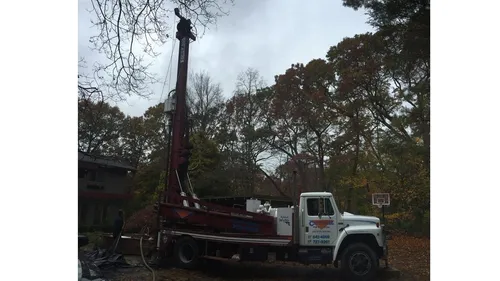
American Well & Pump is a geothermal heat pump contractor based in New York, NY, specializing in residential and commercial geothermal drilling services. They serve Nassau and Suffolk Long Island, offering a full range of geothermal drilling options including open and closed loop systems, standing column, horizontal trenching, and pump installations. The company has been operating since 1989 and uses heavy-duty equipment such as Schramm drill rigs and pump hoists to meet safety and quality standards.
How Geothermal Systems Work in Freeport
A geothermal heating and cooling system capitalizes on the fact that just a few feet below the surface, the earth in the New York area maintains a nearly constant temperature of around 55°F year-round. This stable temperature acts as a heat source in the winter and a heat sink in the summer, making the process incredibly efficient.
For Heating: During colder months, a fluid (often a water-antifreeze mixture) circulates through a loop of pipes buried in your yard, absorbing the earth's natural warmth. This warmed fluid is brought into the heat pump unit inside your home. The heat pump then concentrates this low-grade heat and transfers it to your home's air or hydronic distribution system, providing comfortable warmth.
For Cooling: The process simply reverses in the summer. The system extracts heat from your home's air and transfers it into the circulating fluid. The now-warmed fluid travels through the underground loop, where the cooler earth absorbs the excess heat. The cooled fluid then returns to help chill your home's air. This elegant exchange eliminates the need for a noisy, energy-intensive outdoor condenser unit typical of traditional air conditioners.
Types of Ground Loop Systems
The underground pipe network, or ground loop, is the heart of the system. The right type for your Freeport home depends on your property's size, soil conditions, and local geology. There are three primary configurations:
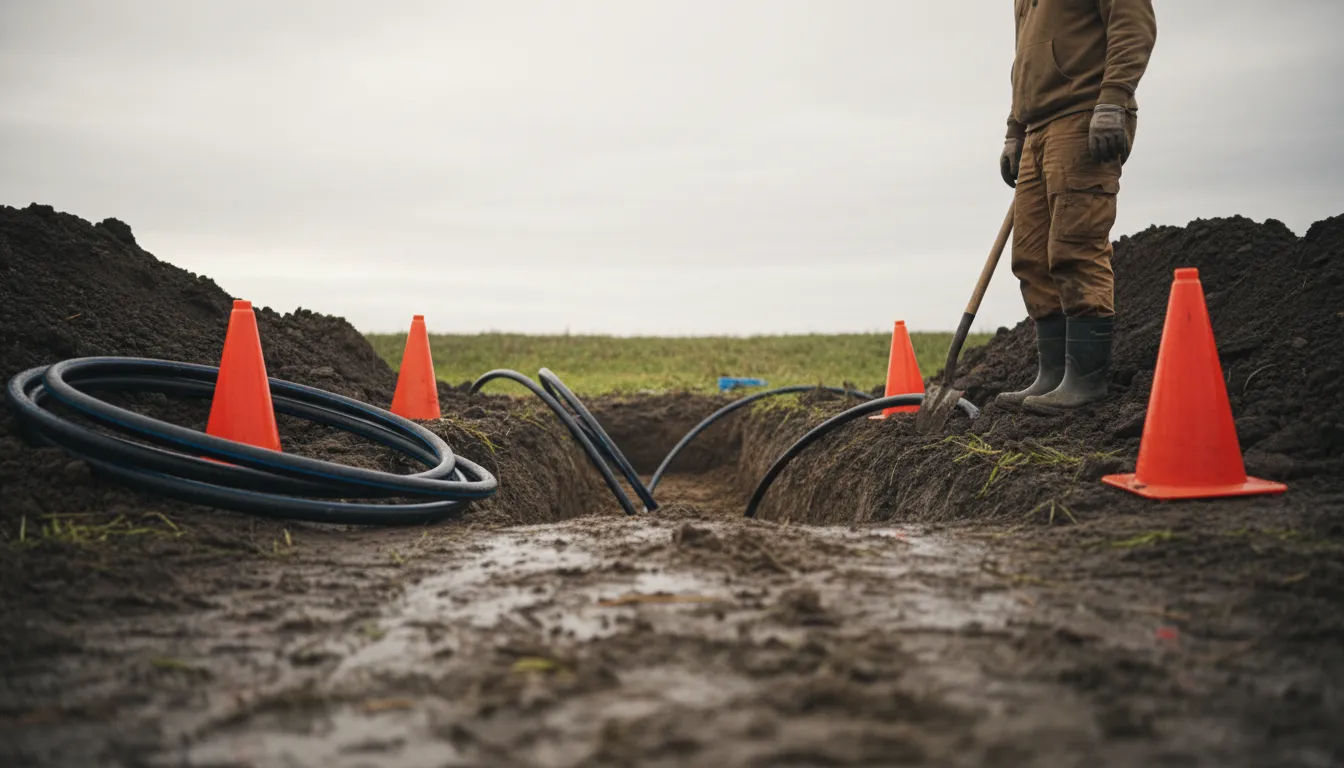
- Closed-Loop Horizontal System: This is a common choice for residential properties with sufficient land. Polyethylene pipes are laid in trenches dug 4 to 6 feet deep. While this method requires more square footage of undisturbed land, it is often less expensive than vertical drilling if the space is available.
- Closed-Loop Vertical System: Ideal for homes in Freeport with smaller lots, this system involves drilling boreholes 150 to 450 feet deep and inserting U-shaped loop pipes. Vertical systems minimize landscape disruption and are less affected by surface temperature fluctuations, but they involve higher drilling costs 1 2.
- Open-Loop System: This configuration uses groundwater from a well as the direct heat exchange fluid. After passing through the heat pump, the water is returned to the ground via a second well or a suitable discharge point. Open-loop systems can be highly efficient but require an adequate supply of clean water and compliance with local codes regarding water use and discharge 3.
The Installation Process: What to Expect
Installing a geothermal system is a significant project that requires professional expertise. Understanding the steps can help you prepare.
- Site Evaluation and Design: A certified installer will first assess your property. They will evaluate soil composition, lot size, existing ductwork or heating infrastructure, and your home's heating and cooling load to design the most effective and efficient system 4 5.
- Loop Field Installation: This is the most visible phase. For a horizontal system, excavation equipment will dig the necessary trenches. For a vertical system, a drilling rig will be brought in to create the boreholes. While this stage causes temporary disruption, professional crews work to restore your landscaping afterward 6.
- Heat Pump and Distribution Integration: The indoor heat pump unit is installed, typically in a basement, utility room, or garage. It is then connected to the buried ground loop and integrated with your home's existing ductwork or a new air handler. For homes without ducts, ductless mini-split handlers can be used with geothermal systems for zoned comfort 7.
- System Startup and Testing: Once everything is connected, the system is charged with fluid, purged of air, and thoroughly tested. The installer will calibrate the controls and ensure the entire system operates at peak efficiency before handing it over to you.
Financial Benefits and New York Incentives
The upfront cost of a geothermal system is an investment that pays dividends over time through substantial savings and available financial incentives.
- Energy Savings: Homeowners can expect to reduce their energy use for heating and cooling by 30% to 60% compared to conventional systems like furnaces and standard air conditioners 8. This translates directly into lower monthly utility bills.
- Long-Term Value: Geothermal heat pumps have a long lifespan. The underground piping is often warranted for 50+ years, and the indoor heat pump unit typically lasts 20-25 years-much longer than traditional HVAC equipment 9. This durability, combined with energy savings, leads to a compelling payback period, often estimated between 5 to 10 years 10.
- State and Federal Incentives: New York State offers strong support for clean heating technologies. A key incentive is a state tax credit worth 25% of your installed costs, up to $5,000 11. Additionally, federal tax credits may apply, and some utility companies offer rebates. A local installer can provide the most current information on all available incentives to significantly lower your net project cost.
Find the perfect geothermal heat pump contractors for your needs
Get personalized recommendations and expert advice
Environmental and Comfort Advantages
Beyond the financials, geothermal systems offer distinct quality-of-life and environmental benefits perfect for the Freeport community.
- Quiet Operation: With no loud outdoor compressor or fan unit, geothermal systems run very quietly. The main sound is the gentle hum of the indoor air handler.
- Improved Indoor Air Quality: These systems provide excellent dehumidification during the cooling season and do not involve any on-site combustion, eliminating risks from carbon monoxide or natural gas leaks.
- Reduced Carbon Footprint: By using electricity to move heat rather than create it by burning fossil fuels, a geothermal system dramatically reduces your home's greenhouse gas emissions, especially when paired with a renewable energy source.
- Domestic Hot Water: Many geothermal heat pumps can be equipped with a "desuperheater," a device that captures excess heat during the cooling cycle to help heat your household water, providing additional savings 12.
Is a Geothermal System Right for Your Home?
While highly effective, geothermal isn't a one-size-fits-all solution. It is an excellent long-term investment for homeowners who plan to stay in their homes for many years to maximize the return through energy savings. It is particularly well-suited for properties undergoing major renovation, new construction, or for those replacing an aging, inefficient HVAC system. The most important step is to consult with a qualified, experienced installer who can provide a detailed assessment of your specific property and needs.
Frequently asked questions
Sources
Footnotes
-
Geothermal Installation Steps Explained - https://ultrageothermal.com/geothermal-installation-steps-explained/ ↩
-
Geothermal heating & cooling, heat pumps, heat exchange ... - https://aztechgeo.com/residential-geothermal/how-it-works/ ↩
-
Geothermal Heat Pumps | WBDG - https://www.wbdg.org/resources/geothermal-heat-pumps ↩
-
Geothermal Systems - NYC.gov - https://www.nyc.gov/html/planyc/downloads/pdf/publications/2015_Geothermal.pdf ↩
-
Geothermal or Ground Source Heat Pump Systems - nyserda - https://www.nyserda.ny.gov/-/media/Project/Nyserda/Files/Programs/ground-source-heat-pumps/Best-Practices.pdf ↩
-
Ground Source (Geothermal) Centrally Ducted System for a Two- ... - https://cleanheat.ny.gov/ground-source-heat-pump-for-a-two-story-home/ ↩
-
Geothermal Heat Pump Manual - NYC.gov - https://www.nyc.gov/html/ddc/downloads/pdf/geotherm.pdf ↩
-
Geothermal Heat Pumps - Department of Energy - https://www.energy.gov/energysaver/geothermal-heat-pumps ↩
-
5 Things You Should Know about Geothermal Heat Pumps - https://www.energy.gov/cmei/articles/5-things-you-should-know-about-geothermal-heat-pumps ↩
-
Ground-Source Heat Pumps | National Grid - https://www.nationalgridus.com/Upstate-NY-Home/Electric-Heating-Cooling/Ground-Source-Heat-Pumps ↩
-
Geothermal (Ground Source) Heat Pumps - NY.gov - https://cleanheat.ny.gov/geothermal-heat-pumps/ ↩
-
Benefits & Types Geothermal System - NY Engineers - https://www.ny-engineers.com/blog/what-is-geothermal-system-benefits-and-types ↩