Find the Best Geothermal Heat Pump Contractors for Your Business
No obligation • Fast responses • Nationwide coverage

Why you can trust HVAC Firms
HVAC Firms is a leading United States resource for evaluating HVAC service providers. Our team researches companies, checks credentials, and reviews customer feedback to present clear, unbiased information. Listings and rankings are based on merit, and companies cannot pay to change our editorial content.
Search providers near you
Top Geothermal Heat Pump Contractors in Florissant, Missouri Ranked
A geothermal heat pump is a highly efficient system for heating and cooling your home by leveraging the stable temperatures found underground. For Florissant residents, this technology offers a reliable way to manage the region's seasonal temperature extremes while significantly reducing energy consumption and utility costs. This guide explains how these ground-source systems work, what installation involves, and how you can connect with qualified local professionals to explore your options.

Indoor Comfort Team
3640 Scarlet Oak Blvd, Kirkwood, MO 63122
Indoor Comfort Team is a family-owned HVAC company serving St Louis, MO, and nearby areas since 1979. They provide a wide range of services including air conditioning repair, furnace and heat pump installation and repair, mini split and geothermal heat pump systems, as well as indoor air quality solutions. Their NATE-certified technicians work with leading manufacturers to deliver heating and cooling services tailored to residential and commercial needs. Indoor Comfort Team offers specialized capabilities such as ground-source geothermal heat pump installations and maintains a commitment to customer satisfaction with workmanship guarantees.
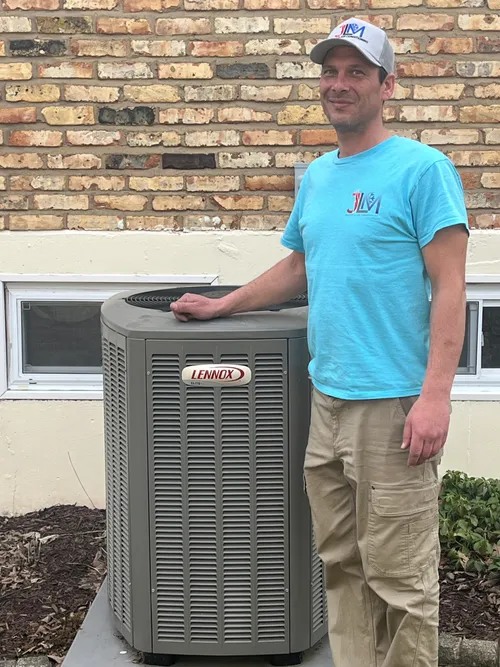
JLM Heating and Air Conditioning
3976 Royal Estates Dr, St. Louis, MO 63129
JLM Heating and Air Conditioning serves St. Louis, MO, and surrounding areas with a range of HVAC services including installation and repair of air conditioners, furnaces, heat pumps, boilers, and geothermal systems. With over 14 years of experience, their factory-trained technicians work on all makes and models and carry fully stocked service vehicles to handle most repairs efficiently. They are authorized dealers for several brands and offer flexible financing options to assist with new installations and major repairs.
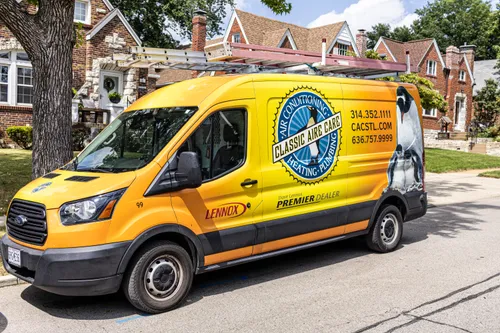
Classic Aire Care
1276 N Warson Rd, St. Louis, MO 63132
Classic Aire Care is an established HVAC and plumbing company serving St Louis, MO, and the surrounding areas. With a history dating back to 1926, they provide a wide range of services including installation, repair, and maintenance of air conditioners, furnaces, heat pumps, boilers, and geothermal systems. They also offer indoor air quality solutions such as air purifiers and humidifiers, along with expert plumbing services. Classic Aire Care is equipped to handle 24/7 emergency heating and cooling repairs, ensuring reliable service year-round.
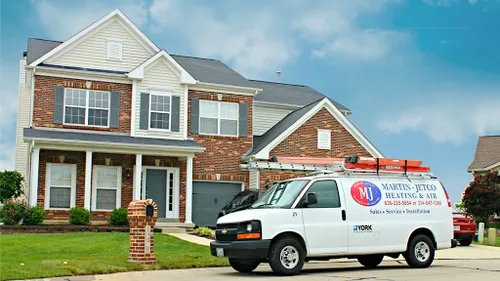
Martin Jetco Heating & Air Conditioning
1327 W Lark Industrial Dr, Fenton, MO 63026
Martin Jetco Heating & Air Conditioning is a family-owned HVAC company serving St Louis, MO, since 1964. They offer a full range of heating and cooling services, including installation, repair, and maintenance of air conditioners, furnaces, heat pumps, mini splits, and geothermal systems. Their licensed and NATE-certified technicians provide tailored solutions using leading brands like York, Goodman, and Daikin. The company emphasizes energy-efficient systems suited for the local climate and offers comprehensive maintenance plans to extend equipment lifespan and improve indoor air quality.
Viviano Heating & Air Conditioning, Inc.
201 W Main St, Collinsville, IL 62234
Viviano Heating & Air Conditioning, Inc. is an HVAC company serving St Louis, MO, and the Metro-East Illinois area. They specialize in repairing and installing air conditioners, furnaces, heat pumps, geothermal systems, and rooftop units. As Trane Comfort Specialists, their technicians are trained in the latest Trane technology to provide efficient and dependable HVAC solutions. Viviano has been serving the Metro-East region for decades, covering areas including Belleville, Collinsville, Edwardsville, and surrounding counties.
How a Geothermal System Works: The Earth as Your Energy Source
Unlike traditional furnaces and air conditioners that create heat or fight against outdoor air temperatures, a geothermal system, also known as a ground-source heat pump, moves heat. It uses the earth as a giant thermal battery. Just a few feet below the surface, the ground in Florissant maintains a relatively constant temperature of approximately 50-55°F year-round. This consistency is the key to its remarkable efficiency.
In the winter, a fluid (typically water mixed with antifreeze) circulates through a loop of pipes buried in your yard. This fluid absorbs the mild heat from the earth and carries it to a heat pump unit inside your home. The heat pump then concentrates this low-grade heat and distributes warm air through your ductwork. In the summer, the process reverses: the system extracts heat and humidity from your indoor air and transfers it into the cooler ground loop, effectively providing air conditioning 1 2. Because it's simply moving existing heat rather than generating it through combustion, a geothermal heat pump can deliver several units of heating or cooling for every unit of electricity it consumes.
Types of Ground Loops for Florissant Properties
The underground pipe system, or ground loop, is the heart of the installation. The right type for your Florissant home depends primarily on the size and characteristics of your property. There are three main configurations:
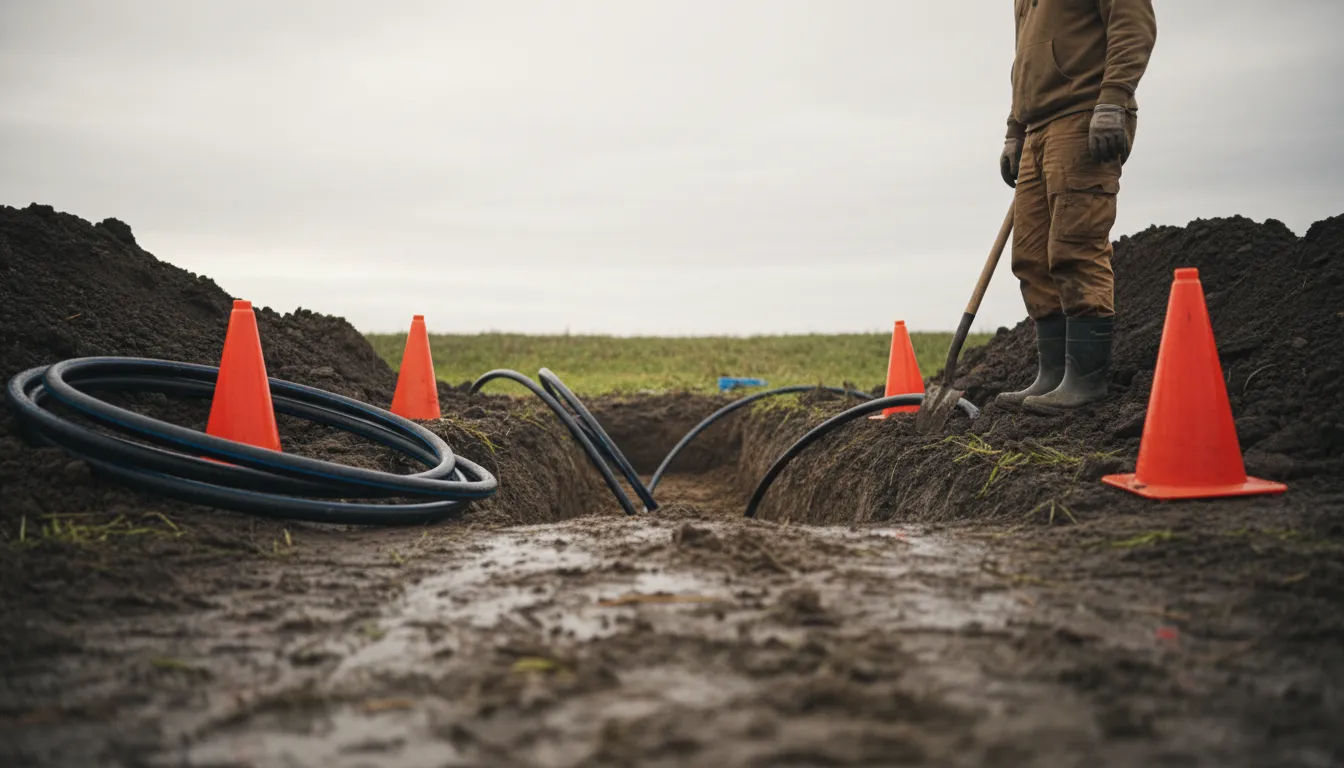
Horizontal Closed Loops This is often the most cost-effective installation method if you have sufficient land. Contractors dig trenches three to ten feet deep and lay pipes in a series of parallel rows or slinky coils 3. While this approach requires more yard space and involves significant excavation, it generally has a lower upfront cost than vertical systems.
Vertical Closed Loops For homes in Florissant with smaller lots, a vertical loop is the ideal solution. Contractors use a drilling rig to bore holes 100 to 400 feet deep. U-shaped pipes are inserted into each borehole, which are then backfilled. This method minimizes surface disruption to your landscaping and is perfect for typical suburban yards, though the drilling process can make it more expensive than a horizontal installation.
Pond/Lake Loops If you have a suitably sized and deep pond on your property, this can be an efficient option. Coils of pipe are submerged at the bottom of the water body, which also maintains stable temperatures 4. This method avoids extensive digging or drilling but is only feasible for a minority of properties.
The Geothermal Installation Process: What to Expect
Installing a geothermal heating and cooling system is a significant project that requires careful planning and expert execution. Understanding the steps can help you prepare.
-
Site Assessment and Design: A qualified installer will first evaluate your property. They will assess soil composition, available land, your home's existing ductwork or radiant system, and calculate your precise heating and cooling loads. This information is used to design the most effective and efficient loop field and select the correctly sized heat pump.
-
Loop Field Installation: This is the major outdoor work. For a horizontal system, an excavator will dig the necessary trenches. For a vertical system, a drilling rig will be brought in to create the boreholes. The high-density polyethylene pipes are then placed, connected into a continuous loop, and pressure-tested to ensure there are no leaks 5 6.
-
Heat Pump and Indoor Integration: Once the loop is buried and backfilled, the focus moves indoors. The geothermal heat pump unit is installed, typically in a basement, utility room, or garage. It is connected to the ground loop on one side and to your home's ductwork or hydronic system on the other. Electrical and control wiring are finalized.
-
System Startup and Commissioning: The installer will fill the loop with fluid, purge any air, and start the system. They will test and balance the entire system to ensure it operates at peak efficiency and provide you with instructions on its use and maintenance.
Financial and Environmental Benefits for Homeowners
The decision to install a geothermal system is an investment that pays dividends over time through lower operating costs and reduced environmental impact.
- Substantial Energy Savings: This is the most compelling benefit. By harnessing the earth's stable temperature, geothermal heat pumps operate with exceptional efficiency. Homeowners in climates like Florissant's often report savings of 50% to 70% on their heating and cooling bills compared to conventional systems 7 8 9. For example, one case study noted a home with a vertical loop system achieved 50-60% savings on its energy costs 9.
- Long-Term Reliability: The underground loop is built from durable materials with a lifespan often exceeding 50 years. The indoor heat pump unit typically lasts 20-25 years, significantly longer than the average outdoor air conditioner compressor.
- Reduced Carbon Footprint: By slashing fossil fuel consumption (like natural gas) or reducing the strain on the electrical grid, a geothermal system significantly lowers your household's greenhouse gas emissions 10.
- Consistent Comfort: These systems provide even, draft-free heating and cooling, excellent humidity control, and quiet operation since there's no noisy outdoor condenser unit.
Find the perfect geothermal heat pump contractors for your needs
Get personalized recommendations and expert advice
Trenching vs. Drilling: A Key Decision for Installation
The choice between a horizontal (trenched) or vertical (drilled) loop is a major factor in your project's scope and cost.
- Trenching for Horizontal Loops: This method is generally less expensive per foot of pipe installed. However, it requires a larger, clear area of your yard. The excavation will temporarily disrupt landscaping, lawns, or gardens, so planning for restoration is part of the process.
- Drilling for Vertical Loops: Drilling is the go-to solution for smaller lots common in Florissant neighborhoods. While the cost per foot is higher due to the specialized equipment, it causes minimal surface disruption-often just a few small boreholes. This makes it easier to preserve existing trees, gardens, and hardscapes 11 12.
Your installer will recommend the best option based on a thorough evaluation of your property's layout, soil conditions, and your budget.
Is a Geothermal System Right for Your Home?
Geothermal heat pump technology is a smart choice for many Florissant homeowners, particularly those planning to stay in their homes long enough to realize the full return on investment through energy savings. It's an excellent option for new construction, where the loop field can be integrated into the site plan from the start. It's also a viable retrofit for existing homes, especially if you are replacing an aging, inefficient HVAC system.
The upfront cost is higher than a standard furnace and air conditioner, but federal tax credits, potential local utility rebates, and the dramatic reduction in monthly energy bills improve the financial outlook. When considering this upgrade, it's crucial to work with experienced, certified installers who are familiar with the soil conditions and climate specifics of the St. Louis area.
Frequently asked questions
Sources
Footnotes
-
How Does A Geothermal Heat Pump Work? Complete 2025 Guide - https://solartechonline.com/blog/how-does-geothermal-heat-pump-work/ ↩
-
Geothermal Heat Pump Systems | Missouri Department of Natural Resources - https://dnr.mo.gov/land-geology/businesses-landowners-permittees/technical-assistance/geothermal-heat-pump-systems ↩
-
Southeast Missouri Geothermal Heating System Services - https://www.dutchenterprises.com/heating/geothermal-systems/ ↩
-
Geothermal Heat Pumps - Department of Energy - https://www.energy.gov/energysaver/geothermal-heat-pumps ↩
-
How Geothermal Heat Pumps Work - https://www.youtube.com/watch?v=XxlTnBukweI&t=37 ↩
-
How a Geothermal Heat Pump Works | This Old House - https://www.youtube.com/watch?v=d5Tbsx3R2T8 ↩
-
All You Need to Know About Home Geothermal Heating & ... - https://dandelionenergy.com/all-you-need-to-know-about-home-geothermal-heating-cooling ↩
-
Geothermal Heating, Cooling, and Hot Water Systems - https://igshpa.org/wp-content/uploads/Homeowners-Guide-to-Geothermal.pdf ↩
-
Geothermal Heating And Cooling - https://flocksheating.com/geothermal/ ↩ ↩2
-
Frequently Asked Questions - Missouri Geothermal Association - https://missourigeo.com/frequently-asked-questions/ ↩
-
Geothermal Heat Pump Installation: What To Expect For Your ... - https://jomory.com/geothermal-heat-pump-installation-what-to-expect-for-your-property/ ↩
-
Choosing Between Geothermal Systems in St. Louis | Scott-Lee - https://scottleeheating.com/which-of-the-four-geothermal-systems-is-best-for-you/ ↩