Find the Best Geothermal Heat Pump Contractors for Your Business
No obligation • Fast responses • Nationwide coverage

Why you can trust HVAC Firms
HVAC Firms is a leading United States resource for evaluating HVAC service providers. Our team researches companies, checks credentials, and reviews customer feedback to present clear, unbiased information. Listings and rankings are based on merit, and companies cannot pay to change our editorial content.
Search providers near you
Best Geothermal Heat Pump Contractors in Missouri Ranked
A geothermal heat pump is a highly efficient heating and cooling system that uses the stable temperature of the earth to regulate your home's climate. For Missouri homeowners, this technology offers a powerful way to slash energy bills and reduce environmental impact, especially given the state's varied seasonal temperatures. This guide explains how ground-source heat pumps work, their benefits for Missouri properties, and how to connect with qualified local professionals for installation and service.
Air Care
10332 W 79th St, Shawnee, KS 66214
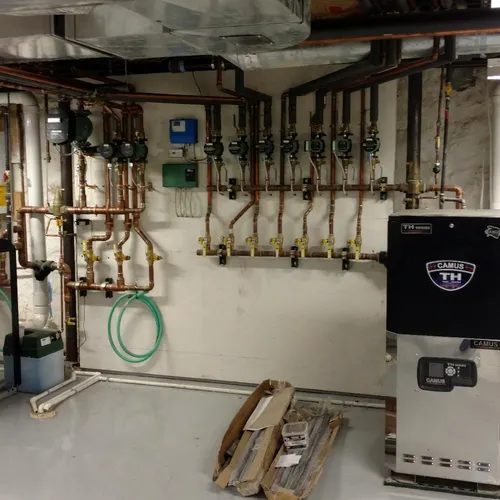
Air Care is an HVAC company serving Kansas City, MO, and the surrounding Shawnee area. Established in 1981, they provide a wide range of heating and cooling services including installation, repair, and maintenance of furnaces, air conditioners, boilers, mini-splits, and geothermal heat pumps. Their NATE-certified technicians handle both residential and light commercial work, with capabilities in duct design and indoor air quality services. Air Care offers 24/7 emergency repair service to address urgent heating or cooling issues.

Lancaster Brothers
19495 Metcalf Ave, Overland Park, KS 66085
Lancaster Brothers is an HVAC company serving Kansas City, MO, since 2000. They provide heating, air conditioning, geothermal heat pump installation and repair, indoor air quality services, and home generator installation. Their team handles residential and commercial projects, including new construction HVAC installations. Lancaster Brothers specializes in geothermal systems and offers same-day service with free estimates. Their licensed and certified technicians focus on delivering long-lasting solutions backed by warranties.

Indoor Comfort Team
3640 Scarlet Oak Blvd, Kirkwood, MO 63122
Indoor Comfort Team is a family-owned HVAC company serving St Louis, MO, and nearby areas since 1979. They provide a wide range of services including air conditioning repair, furnace and heat pump installation and repair, mini split and geothermal heat pump systems, as well as indoor air quality solutions. Their NATE-certified technicians work with leading manufacturers to deliver heating and cooling services tailored to residential and commercial needs. Indoor Comfort Team offers specialized capabilities such as ground-source geothermal heat pump installations and maintains a commitment to customer satisfaction with workmanship guarantees.
Buckner's Heating, Cooling, and Plumbing
406 W 75th St Ste F, Kansas City, MO 64114
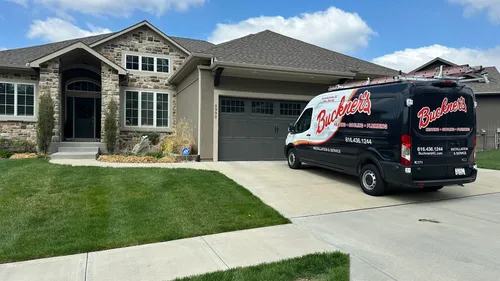
Buckner's Heating, Cooling, and Plumbing has been serving Kansas City, MO, since 1983, offering a wide range of HVAC and plumbing services. Their experienced technicians handle heating and cooling system repairs, installations, and maintenance, including furnaces, heat pumps, geothermal systems, and air conditioning units. They also provide comprehensive plumbing services such as leak repairs, water heater service, and drain cleaning. The company is equipped with well-stocked service vehicles and offers after-hours service for urgent needs.
JLM Heating and Air Conditioning
3976 Royal Estates Dr, St. Louis, MO 63129
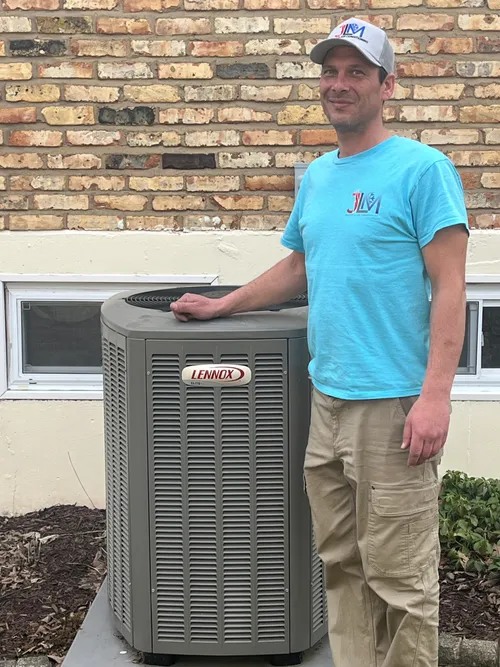
JLM Heating and Air Conditioning serves St. Louis, MO, and surrounding areas with a range of HVAC services including installation and repair of air conditioners, furnaces, heat pumps, boilers, and geothermal systems. With over 14 years of experience, their factory-trained technicians work on all makes and models and carry fully stocked service vehicles to handle most repairs efficiently. They are authorized dealers for several brands and offer flexible financing options to assist with new installations and major repairs.
Why Consider Geothermal in Missouri?
Missouri's climate, with its hot, humid summers and cold winters, creates a significant demand for year-round climate control. Traditional HVAC systems work against extreme outdoor temperatures, leading to high energy consumption. A geothermal system, in contrast, exchanges heat with the ground, which maintains a relatively constant temperature of 50-60°F just a few feet below the surface 1. This allows the system to heat your home in winter and cool it in summer with remarkable efficiency, often reducing energy use for heating and cooling by 40% to 60%.
Beyond energy savings, these systems are known for their durability and low maintenance. The underground loop field can last for more than 50 years, while the indoor heat pump unit typically lasts 20-25 years or more. This long lifespan, combined with dramatic utility savings, makes a geothermal installation a sound long-term investment for Missouri residents.
Understanding Geothermal Loop Systems
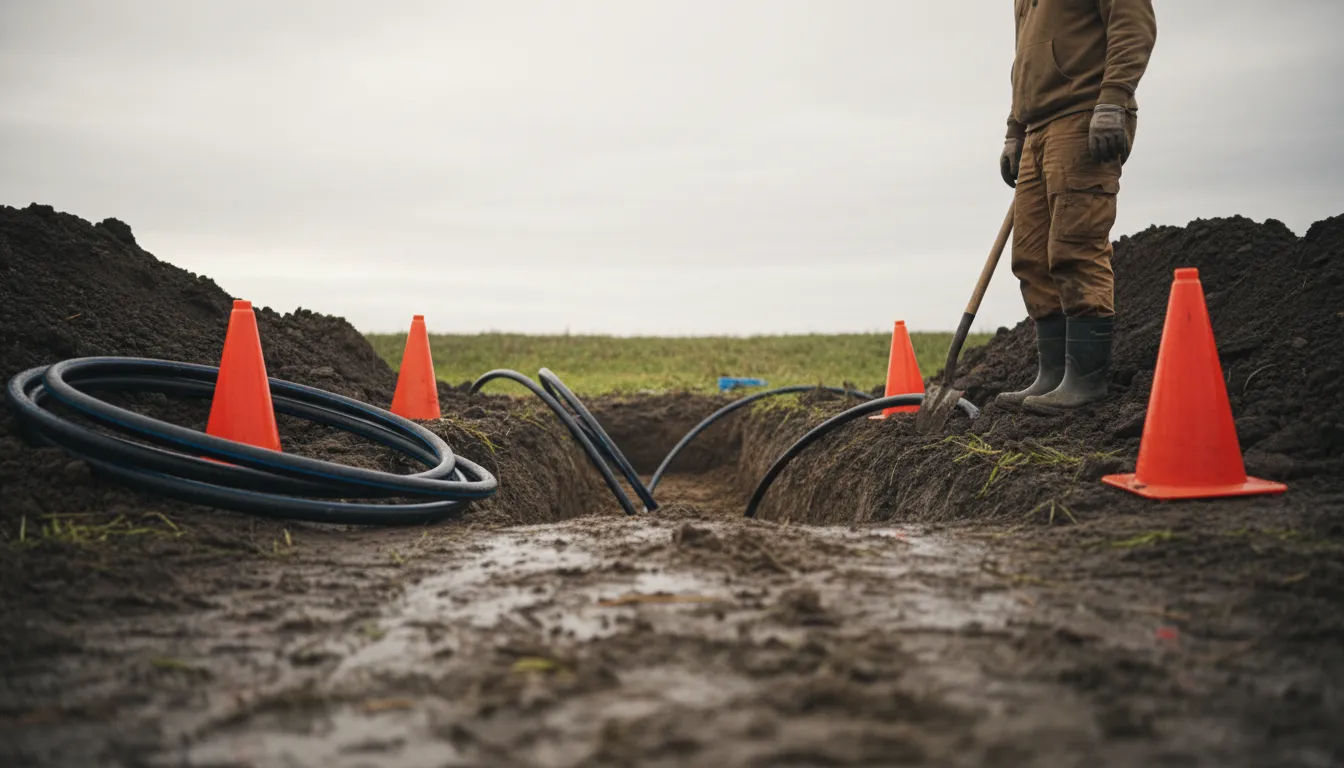
The core of a geothermal system is its ground loop-a series of pipes buried underground that circulate a water-based solution. There are three primary types of loop systems, and the right choice for your Missouri home depends on your property's characteristics.
Horizontal Closed Loop: This is often the most cost-effective option if sufficient land is available. Pipes are laid in trenches 3 to 10 feet deep, requiring a sizable plot of land 2. This method is well-suited for properties with ample, open yard space.
Vertical Closed Loop: For homes with smaller lots or rocky soil, vertical loops are ideal. Boreholes are drilled 100 to 400 feet deep, and U-shaped pipes are inserted. This is a common choice in many parts of Missouri, especially where the geology includes hard rock that favors drilling over trenching 3.
Pond/Lake (Open or Closed Loop): If your property has a suitable pond or lake, a loop can be submerged at the bottom. This can be a very efficient and lower-cost installation method, but it requires an adequate, perennial water body 4.
A professional installer will conduct a thorough site assessment to evaluate your soil composition, land availability, and geology to recommend the optimal loop configuration for your home's heating and cooling loads.
Costs, Incentives, and Payback in Missouri
The upfront investment for a residential geothermal heat pump system in Missouri is significant but is mitigated by substantial incentives and long-term savings.
Installation Costs: For a typical Missouri home, a complete geothermal system installation can range from $15,000 to over $40,000 5. The final cost depends heavily on the loop type (vertical loops are generally more expensive due to drilling), the size of your home (measured in tons), and the specific ground conditions 6.
Financial Incentives:
- Federal Tax Credit: The Inflation Reduction Act provides a tax credit worth 30% of the total installation cost, with no upper limit 7. This can translate to thousands of dollars in savings.
- Utility Rebates: Missouri utilities like Ameren offer rebates for installing high-efficiency geothermal systems. These can provide additional savings, such as rebates up to $1,800 8 9.
Payback Period: While the initial cost is higher than a conventional system, the combination of 40-60% energy savings and available incentives typically results in a payback period of 5 to 15 years 10 11. After that, the ongoing savings contribute directly to your household budget for the decades-long life of the system.
Find the perfect geothermal heat pump contractors for your needs
Get personalized recommendations and expert advice
Permits and Regulations in Missouri
Installing a geothermal system in Missouri involves specific regulatory steps to protect groundwater and ensure public safety. Working with a licensed professional is crucial, as they will handle this permitting process.
State Permits (Missouri DNR): The Missouri Department of Natural Resources (DNR) regulates geothermal heat pump wells. A permit is required for constructing or repairing a well. Furthermore, if you install an open-loop system (which draws and discharges groundwater), you must also obtain an operating permit from the DNR.
Local Permits and Codes: Cities and counties have their own requirements. For example, in St. Louis County, a permit is required for the mechanical work and the ground loop installation, and the work must be inspected to ensure compliance with all applicable codes. Your installer should be familiar with the specific requirements in your municipality.
Licensed Contractors: Always verify that your geothermal installer is properly licensed and insured. They should have specific experience with ground-source heat pumps and a thorough understanding of both state (DNR) and local permitting processes 12 13.
The Professional Installation Process
A successful geothermal installation follows a meticulous sequence carried out by experienced professionals.
- Site Evaluation & Load Calculation: A contractor assesses your property, analyzes soil and rock conditions, and performs a detailed calculation of your home's heating and cooling needs.
- System Design: Based on the evaluation, the contractor designs the system, specifying the heat pump unit size and the type, size, and layout of the ground loop.
- Permitting: The contractor submits applications and obtains all necessary permits from the state DNR and local building department.
- Loop Installation: Heavy equipment is used to excavate trenches or drill boreholes, and the high-density polyethylene pipe is installed and pressure-tested.
- Heat Pump & Ductwork Installation: The indoor heat pump unit is installed and connected to the home's ductwork or hydronic distribution system.
- System Startup & Inspection: The system is charged, started, and balanced. A final inspection by local authorities is often required to close the permit 14.
Choosing a contractor with a proven track record in geothermal installations is the single most important step to ensure your system delivers optimal efficiency, reliability, and savings for years to come.
Frequently asked questions
Sources
Footnotes
-
Geothermal Heat Pump Systems | Missouri Department of Natural Resources - https://dnr.mo.gov/land-geology/businesses-landowners-permittees/technical-assistance/geothermal-heat-pump-systems ↩
-
Geothermal Heat Pumps | Installation & Repair | Clayton, MO - https://www.missourifurnace.com/residential/geothermal-heat-pumps/ ↩
-
Frequently Asked Questions - Missouri Geothermal Association - https://missourigeo.com/frequently-asked-questions/ ↩
-
Geothermal Heat Pump Guide: Installation Costs, Types And Benefits - https://modernize.com/hvac/heating-repair-installation/heat-pump/geothermal ↩
-
Geothermal Heat Pump Wells - PUB2899 | Missouri Department of Natural Resources - https://dnr.mo.gov/document-search/geothermal-heat-pump-wells-pub2899/pub2899 ↩
-
Geothermal Heat Pump Costs: Your Complete Pricing Guide - ZNFU - https://znfu.com/geothermal-heat-pump-costs/ ↩
-
Geothermal Heat Pumps: Cost and Installation - https://www.energyhomes.org/renewable-technology/geoinstallation.html ↩
-
Federal Energy Tax Credits - Missouri Department of Natural Resources - https://dnr.mo.gov/energy/financial-assistance-opportunities/federal-tax-credits ↩
-
2025 HVAC Rebates & Incentives In St. Peters, MO - https://jerrykelly.com/blog/maximize-savings-2025-hvac-rebates-st-peters-mo/ ↩
-
Ground Source Heat Pump Cost: How Much Will You Pay in 2025? - https://www.energysage.com/heat-pumps/costs-benefits-geothermal-heat-pumps/ ↩
-
Southeast Missouri Geothermal Heating System Services - https://www.dutchenterprises.com/heating/geothermal-systems/ ↩
-
Geothermal Installation in St. Louis - Martin-Jetco - https://www.martinjetco.com/heating/geothermal/ ↩
-
10 CSR 20-6.070 - Groundwater Heat Pump Operating Permits - https://www.law.cornell.edu/regulations/missouri/10-CSR-20-6-070 ↩
-
Residential Geo-Thermal/Ground-Source Heat Pump System ... - https://stlouiscountymo.gov/st-louis-county-departments/transportation-and-public-works/publications-and-manuals/pw-residential-guides/geo-thermal-checklist/ ↩