
Find the Best Geothermal Heat Pump Contractors for Your Business
No obligation • Fast responses • Nationwide coverage

Why you can trust HVAC Firms
HVAC Firms is a leading United States resource for evaluating HVAC service providers. Our team researches companies, checks credentials, and reviews customer feedback to present clear, unbiased information. Listings and rankings are based on merit, and companies cannot pay to change our editorial content.
Search providers near you
Top Geothermal Heat Pump Contractors in Worcester, Massachusetts Ranked
Geothermal heat pumps, also known as ground-source heat pumps, are a highly efficient method for heating and cooling your Worcester home by leveraging the earth's stable underground temperature. This technology matters because it can dramatically reduce your energy bills and carbon footprint while providing consistent, quiet comfort year-round. For Worcester residents, finding a qualified local installer is the first step toward harnessing this renewable energy source, and this guide will help you understand the process, benefits, and what to look for in a provider.
Massachusetts Geothermal
8 Grove St, Medfield, MA 02052
Massachusetts Geothermal is a geothermal heat pump contractor based in Boston, MA. They specialize in installing and servicing geothermal heat pump systems, offering energy-efficient heating and cooling solutions. The company is connected with industry organizations such as the International Ground Source Heat Pump Association and the Geothermal Exchange Organization, reflecting their involvement in the geothermal community.
EnergySmart Alternatives, LLC
Boston, MA
EnergySmart Alternatives, LLC is a geothermal heat pump contractor based in Boston, MA. They manage the entire geothermal project process, including site evaluation, design, permitting, installation, and paperwork for incentives. Their services focus on geothermal heating and cooling systems that use the Earth's stable temperature to provide efficient year-round comfort and improved indoor air quality. EnergySmart handles new builds, retrofits, and replacements with certified installers to ensure proper system performance. Their approach reduces fossil fuel use and carbon footprint while offering financial and environmental benefits.
How Geothermal Systems Work in Worcester
The principle behind a geothermal heating and cooling system is elegant in its simplicity. Unlike traditional air-source heat pumps that exchange heat with the outside air, a ground-source heat pump uses the earth as a heat source in winter and a heat sink in summer. The ground temperature just a few feet below the surface in Massachusetts remains a relatively constant 50-60°F year-round. This stability is the key to the system's remarkable efficiency.
In the winter, a fluid (often a water-antifreeze mixture) circulates through a loop of pipes buried in your yard. This fluid absorbs the earth's stored thermal energy and carries it to an indoor heat pump unit. The heat pump then concentrates this low-grade heat and transfers it to your home's air or hydronic distribution system. In the summer, the process reverses: the system extracts heat from your indoor air and transfers it into the cooler ground loop, effectively providing air conditioning 1. This dual functionality from a single, durable system makes geothermal a comprehensive climate control solution.
Types of Geothermal Loop Systems
The underground portion of the system, called the ground loop, is the most significant part of the installation. The right type for your Worcester property depends on your land availability, soil composition, and budget.
Closed-Loop Systems: This is the most common residential configuration, where a sealed loop of high-density polyethylene pipe circulates a heat transfer fluid.
- Horizontal Closed-Loop: Pipes are laid in trenches typically 4 to 6 feet deep. This method requires a substantial amount of land-often between a quarter to three-quarters of an acre-but is generally less expensive to install than vertical systems where land is suitable.
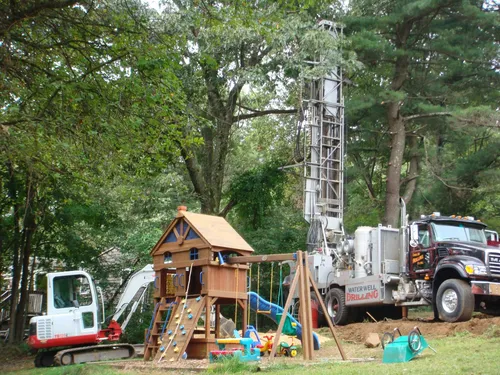
- Vertical Closed-Loop: For homes with smaller lots, which is common in more urban parts of Worcester, vertical loops are the ideal solution. Boreholes are drilled 150 to 400 feet deep, and U-shaped loops of pipe are inserted into each hole. This minimizes surface disruption but involves specialized drilling equipment.
Open-Loop Systems: This system uses groundwater from a well or a pond as the heat exchange fluid. After passing through the heat pump, the water is returned to a second well or discharged to a pond or stream, subject to local codes. It can be very efficient but requires an adequate, consistent water source and is less common due to potential regulatory and maintenance considerations.
Hybrid Systems: Also known as "combi" systems, these combine a smaller geothermal ground loop with a supplemental air-source heat pump or a cooling tower. This design can be cost-effective for homes with particularly high cooling loads 2 3.
The Geothermal Installation Process: What to Expect
Installing a residential geothermal system is a significant project that requires careful planning and expert execution. Here's a breakdown of the typical steps involved for a Worcester homeowner.
- Site Assessment and Design: A qualified installer will first conduct a thorough evaluation of your property. This includes assessing soil and rock conditions, available land, your home's heating and cooling load, and existing ductwork or radiant floor systems. This information is used to design the most effective and efficient loop field and select the properly sized heat pump unit 4 5.
- Loop Field Installation: This is the major earthwork phase. For a horizontal system, excavation equipment will dig long trenches. For a vertical system, a drilling rig will be brought in to create the deep boreholes. The piping is then laid or inserted, connected, and pressure-tested to ensure integrity before the trenches or boreholes are backfilled.
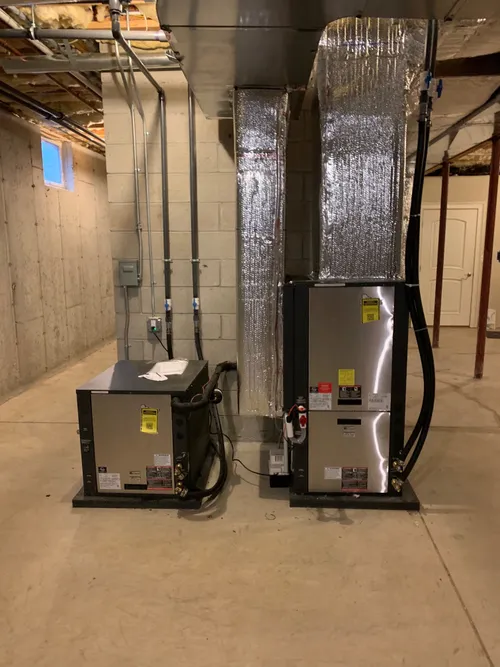
- Indoor Unit Installation: The geothermal heat pump unit itself is typically installed in a basement, utility closet, or attic. It's connected to the ground loop piping and to your home's existing ductwork or hydronic system. This unit is usually more compact and quieter than a traditional furnace and air conditioner 6.
- System Startup and Commissioning: Once everything is connected, the system is filled, purged of air, and started. The installer will calibrate the controls, check refrigerant levels, and ensure the entire system is operating at peak efficiency before handing it over to you 7.
Find the perfect geothermal heat pump contractors for your needs
Get personalized recommendations and expert advice
Benefits for Worcester Homeowners
Investing in a ground-source heat pump offers a compelling array of advantages that go beyond simple temperature control.
- Substantial Energy Savings: This is the most significant benefit. By tapping into the earth's consistent temperature, geothermal systems can reduce energy consumption for heating and cooling by up to 65% compared to conventional systems like furnaces and standard air conditioners 8 9. For a Worcester home transitioning from an oil or propane furnace, the savings on monthly utility bills can be dramatic.
- Long-Term Reliability and Low Maintenance: The underground loop system is incredibly durable, with a lifespan often exceeding 50 years. The indoor heat pump unit typically lasts 20-25 years, which is longer than most conventional HVAC equipment. With fewer mechanical parts exposed to the elements, maintenance requirements are generally lower.
- Environmental Stewardship: Geothermal systems are a clean, renewable technology. They run on electricity and, by using the earth's natural heat, drastically reduce or even eliminate your home's reliance on fossil fuels for heating. This significantly lowers your household's carbon footprint 10 11.
- Quiet Operation and Increased Comfort: With no noisy outdoor condenser unit (like an air conditioner or air-source heat pump has), operation is very quiet. The systems provide consistent, even heating and cooling without the drafts or temperature swings associated with some forced-air systems 12.
- Financial Incentives: While upfront costs are high, federal tax credits (like the Residential Clean Energy Credit) and potential state or utility rebates in Massachusetts can offset a meaningful portion of the installation cost, improving the return on investment.
Understanding Costs and Return on Investment
The primary barrier for most homeowners is the initial installation cost. For a typical Worcester home, a complete geothermal heating and cooling system can range from $20,000 to over $50,000 13 14. A vertical loop system on a smaller urban lot will often be on the higher end of this spectrum due to the drilling involved, while a horizontal system on a larger property may be less 15 16.
It's critical to view this as a long-term investment. The dramatically lower operating costs begin paying you back immediately. When you factor in the exceptional lifespan of the system and available financial incentives, the total cost of ownership over 20-30 years can be very competitive with, or even lower than, installing a high-efficiency furnace and air conditioner pair, especially when future fuel price volatility is considered. A detailed analysis from a reputable installer will provide a projected payback period and lifetime savings specific to your home.
Choosing a Provider in Worcester
Selecting the right contractor is paramount for a successful geothermal installation. Look for companies with specific, proven experience in installing ground-source heat pumps, not just general HVAC work. They should be able to provide references from local installations and have certifications from organizations like the International Ground Source Heat Pump Association (IGSHPA). A trustworthy provider will conduct a meticulous load calculation and site survey, offer a detailed written proposal explaining all costs, and clearly walk you through the available incentives and financing options.
Frequently asked questions
Sources
Footnotes
-
How Do Ground Source Heat Pumps Work? | GreenMatch - https://www.youtube.com/watch?v=4N5cLBedtiY ↩
-
Geothermal Heat Pumps - Department of Energy - https://www.energy.gov/energysaver/geothermal-heat-pumps ↩
-
Geothermal Heat Pumps | WBDG - Whole Building Design Guide - https://www.wbdg.org/resources/geothermal-heat-pumps ↩
-
How Does A Geothermal Heat Pump Work? Complete 2025 Guide - https://solartechonline.com/blog/how-does-geothermal-heat-pump-work/ ↩
-
Geothermal Heat Pump Installation: What To Expect For Your Property - https://jomory.com/geothermal-heat-pump-installation-what-to-expect-for-your-property/ ↩
-
Geothermal Heat Pumps: How They Work | AHRI - https://www.ahrinet.org/scholarships-education/education/homeowners/how-things-work/geothermal-heat-pumps-how-they-work ↩
-
Geothermal Installation Steps Explained - https://ultrageothermal.com/geothermal-installation-steps-explained/ ↩
-
Ground-Source Heat Pumps - Massachusetts Clean Energy ... - https://goclean.masscec.com/clean-energy-solutions/ground-source-heat-pumps/ ↩
-
5 Things You Should Know about Geothermal Heat Pumps - https://www.energy.gov/cmei/articles/5-things-you-should-know-about-geothermal-heat-pumps ↩
-
Clean Energy 101: Geothermal Heat Pumps - RMI - https://rmi.org/clean-energy-101-geothermal-heat-pumps/ ↩
-
Harnessing The Earth's Power: An Introduction To Geothermal Heating And Cooling In Overland Park - Climate Control Heating and Cooling,Inc. - https://www.climatecontrolkc.com/blog/heating/introduction-to-geothermal-heating-and-cooling/ ↩
-
All You Need to Know About Home Geothermal Heating & ... - https://dandelionenergy.com/all-you-need-to-know-about-home-geothermal-heating-cooling ↩
-
Understanding Geothermal System Costs in Massachusetts - https://energysmartalternatives.com/understanding-geothermal-system-costs-what-massachusetts-homeowners-should-know/ ↩
-
The Hidden Costs of HVAC Installations in Massachusetts - https://askgem.com/blog/hidden-costs-of-hvac-installations-in-massachusetts/ ↩
-
Geothermal Ground-Source Heat Pump | Mass.gov - https://www.mass.gov/doc/about-geothermal-heat-pumps-handout/download ↩
-
Geothermal Heat Pump Guide: Installation Costs, Types And Benefits - https://modernize.com/hvac/heating-repair-installation/heat-pump/geothermal ↩