
Find the Best Geothermal Heat Pump Contractors for Your Business
No obligation • Fast responses • Nationwide coverage

Why you can trust HVAC Firms
HVAC Firms is a leading United States resource for evaluating HVAC service providers. Our team researches companies, checks credentials, and reviews customer feedback to present clear, unbiased information. Listings and rankings are based on merit, and companies cannot pay to change our editorial content.
Search providers near you
Best Geothermal Heat Pump Contractors in Massachusetts Ranked
A geothermal heat pump, or ground-source heat pump, is a highly efficient system that uses the stable temperature of the earth to heat and cool your home. In Massachusetts, with its cold winters and variable climate, these systems offer a reliable, long-term solution for year-round comfort while significantly reducing energy bills. This guide explains the key considerations for Massachusetts homeowners, from financial incentives and regulations to installation and long-term benefits, helping you connect with qualified local professionals for your project.
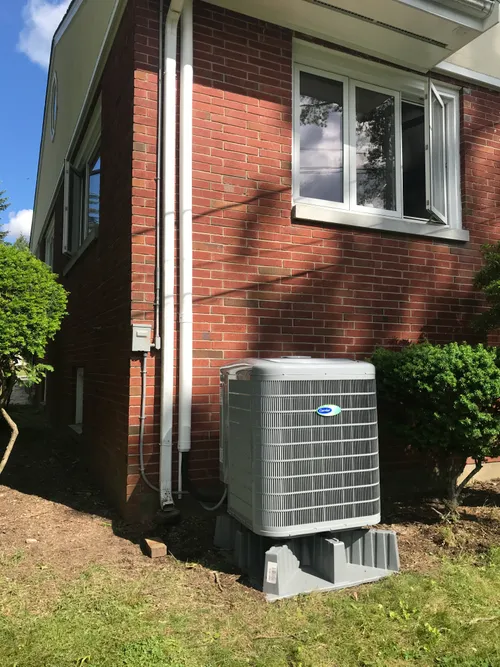
Net Zero Heating & Air Conditioning
55 Ellingwood Ave, Billerica, MA 01821
Net Zero Heating & Air Conditioning is an HVAC contractor based in Boston, MA, specializing in the design, installation, maintenance, and repair of heating and cooling systems. They offer services for air conditioners, furnaces, heat pumps, geothermal systems, and high-efficiency water heaters, helping customers improve home energy efficiency and reduce fossil fuel dependency. Their team evaluates each home's needs to recommend and install systems that meet or exceed local energy requirements. Net Zero is certified by NATE, Bryant, and Mitsubishi Diamond, and is a member of 1% for the Planet, reflecting their commitment to environmental goals.
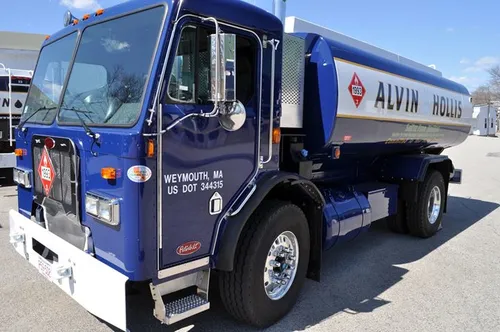
Alvin Hollis
1 Hollis St, South Weymouth, MA 02190
Alvin Hollis is a full-service energy company serving Boston, MA, and the South Shore area. They provide installation, repair, and maintenance for heating and cooling systems including air conditioners, furnaces, heat pumps, mini splits, and geothermal heat pumps. The company also offers indoor air quality services and delivers traditional and sulfur-free heating oil blended with biodegradable materials. Established in 1871, Alvin Hollis has a long history of supporting homes and businesses with energy solutions such as solar power and geothermal energy.
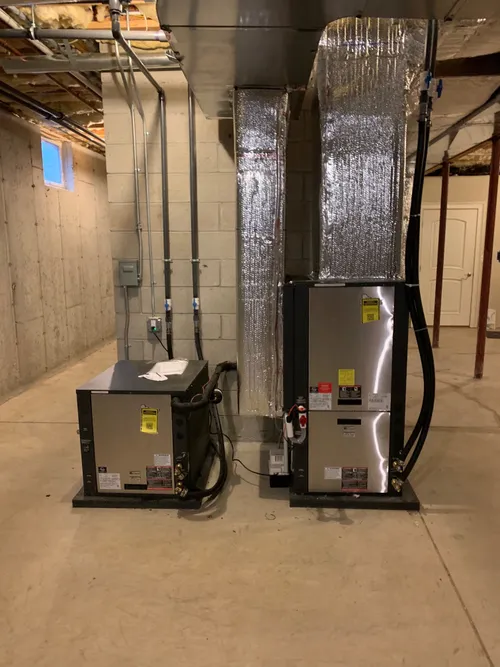
Massachusetts Geothermal
8 Grove St, Medfield, MA 02052
Massachusetts Geothermal is a geothermal heat pump contractor based in Boston, MA. They specialize in installing and servicing geothermal heat pump systems, offering energy-efficient heating and cooling solutions. The company is connected with industry organizations such as the International Ground Source Heat Pump Association and the Geothermal Exchange Organization, reflecting their involvement in the geothermal community.
ATCO HVAC
43 Lyman Rd, Milton, MA 02186
ATCO HVAC is a heating and air conditioning company serving Boston, MA, and nearby communities. They provide installation, repair, and maintenance services for a range of HVAC systems including air conditioners, furnaces, heat pumps, boilers, mini splits, and geothermal heat pumps. The company also offers indoor air quality products and HVAC tune-ups to help maintain system efficiency. As a licensed contractor and dealer for Trane® and Bryant, ATCO HVAC has the expertise and equipment to handle all brands and system types. They provide emergency service and offer service agreements to support ongoing system performance.
EnergySmart Alternatives, LLC
Boston, MA
EnergySmart Alternatives, LLC is a geothermal heat pump contractor based in Boston, MA. They manage the entire geothermal project process, including site evaluation, design, permitting, installation, and paperwork for incentives. Their services focus on geothermal heating and cooling systems that use the Earth's stable temperature to provide efficient year-round comfort and improved indoor air quality. EnergySmart handles new builds, retrofits, and replacements with certified installers to ensure proper system performance. Their approach reduces fossil fuel use and carbon footprint while offering financial and environmental benefits.
Why Consider a Geothermal System in Massachusetts?
Massachusetts presents an ideal environment for geothermal heat pump technology. While air-source heat pumps can struggle in extreme cold, ground-source systems tap into the earth's consistent temperature, typically between 45°F and 55°F in New England, providing exceptional efficiency even during the coldest winter nights. This makes them a powerful heating solution for the state's climate. Beyond performance, state and federal incentives are specifically designed to offset the higher upfront investment, making geothermal a financially viable upgrade for many homeowners seeking to lower their carbon footprint and energy costs for decades.
Financial Incentives: Making Geothermal Affordable
The initial cost of a geothermal system is its biggest hurdle, but Massachusetts offers some of the most robust incentive packages in the country to bridge the gap.
- Mass Save Rebates: The statewide energy efficiency program offers substantial rebates for installing qualifying ground-source heat pumps. Homeowners can receive rebates of $13,500 or more depending on the system's capacity and efficiency.
- Mass Save HEAT Loan: This program provides 0% interest loans of up to $25,000 for eligible energy efficiency upgrades, including geothermal installations. This can cover a significant portion of the net cost after rebates.
- Federal Tax Credit: The federal Residential Clean Energy Credit provides a 30% tax credit on the total installed cost of an ENERGY STAR® certified geothermal system, with no upper limit, through 2032 1.
- State Sales Tax Exemption: Massachusetts exempts the purchase of qualifying geothermal heat pump equipment from the state's 6.25% sales tax.
- Alternative Portfolio Standard (APS): Systems may generate Renewable Thermal Credits (also called Alternative Energy Credits or AECs), which have a market value and can provide additional annual income for the system owner 2.
Example Cost Breakdown: A typical residential geothermal installation in Massachusetts might range from $25,000 to $50,000+ before incentives 3. After applying the Mass Save rebate (~$13,500) and the 30% federal tax credit (on the remaining cost), the net investment can drop significantly, often into the $19,000 to $30,500+ range, making the long-term savings much more accessible 4 5.
Regulations and Permitting in Massachusetts
Installing a geothermal system involves specific state and local regulations, primarily concerning the ground loop portion of the system.
- Well Driller Licensing: All vertical boreholes (for closed-loop systems) and water source wells (for open-loop systems) must be drilled by a Massachusetts Registered Well Driller.
- Underground Injection Control (UIC) Permit: Open-loop systems, which extract and return groundwater, require a UIC permit from the Massachusetts Department of Environmental Protection (MassDEP). This ensures the protection of groundwater resources.
- Local Permits: Installers must typically pull building, electrical, and sometimes plumbing permits from your local city or town building department. A reputable installer will manage this entire process 6.
- System Design & Guidelines: The state provides guidelines for proper construction, grouting, and abandonment of geothermal boreholes to prevent aquifer contamination 7.
Assessing Your Property's Suitability
Not every property is identical, but most in Massachusetts can accommodate some form of geothermal system.
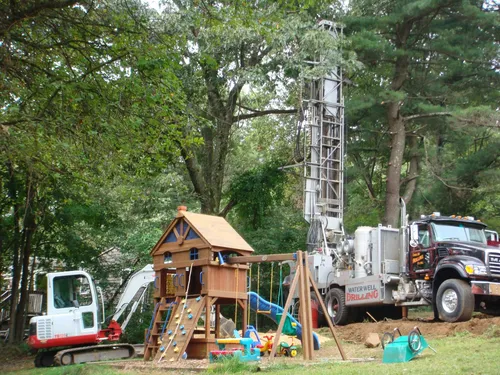
- Land Availability: The most common loop type in Massachusetts is the vertical closed-loop, which requires drilling boreholes 150 to 450 feet deep. This is ideal for homes with smaller lots. If you have ample land, a horizontal closed-loop system placed in trenches 4-6 feet deep may be more cost-effective. Properties with a suitable pond can use a pond loop.
- Soil and Rock Conditions: The geology of your site impacts drilling difficulty and cost. Areas with bedrock close to the surface may require more expensive drilling equipment, while sandy soils are easier to trench 8.
- Home Heating Load: A critical step is a professional energy assessment of your home. Proper system sizing depends on your home's square footage, insulation levels, air sealing, and existing ductwork (if any). An oversized or undersized system will not perform efficiently.
The Installation Process: What to Expect
Working with a qualified geothermal contractor ensures a smooth process from start to finish.
- Initial Consultation and Assessment: A contractor will evaluate your home's energy needs, discuss your goals, and conduct a site survey to determine the best loop type and location.
- System Design and Proposal: The installer creates a detailed design specifying the loop field, heat pump unit size, and any necessary ductwork or hydronic modifications. You'll receive a comprehensive cost estimate.
- Permitting and Financing: The contractor secures all necessary local permits and state registrations. This is also the time to finalize your Mass Save application and HEAT Loan, if applicable 9.
- Installation: The drilling or trenching crew installs the ground loop. The interior unit (heat pump) is installed and connected to your home's distribution system (ducts or radiant floors). The loops are pressure-tested and connected.
- Commissioning and Inspection: The system is charged, started, and tested for optimal performance. Local building officials will perform a final inspection. Your installer will also help you file the final paperwork for your rebates and tax credit 10.
Find the perfect geothermal heat pump contractors for your needs
Get personalized recommendations and expert advice
Long-Term Value and Maintenance
The value of a geothermal system extends far beyond the installation day.
- Operational Savings: Homeowners typically see a 40-60% reduction in heating costs and a 30-50% savings on cooling compared to conventional systems, thanks to the system's high efficiency (often 300-400% efficient) 11 12.
- System Longevity: The indoor heat pump components often last 25 years or more, while the underground polyethylene piping has a lifespan exceeding 50 years-much longer than traditional furnaces or air conditioners.
- Low Maintenance: With no outdoor condenser unit exposed to the elements and fewer mechanical parts than a furnace, geothermal systems require minimal maintenance-usually just an annual check of the pump and filters, similar to maintaining a refrigerator 13.
- Increased Home Value: The promise of low, stable energy costs for decades is a significant asset, often increasing a home's marketability and value.
Choosing a Qualified Installer in Massachusetts
Success hinges on the expertise of your installer. Look for contractors who:
- Are licensed, insured, and have specific experience with geothermal installations.
- Employ or partner with a Massachusetts Registered Well Driller for the loop installation.
- Are familiar with Mass Save processes and can provide a detailed Manual J load calculation for proper sizing.
- Offer clear warranties on both equipment and installation workmanship.
- Can provide references from past geothermal projects in the state.
Frequently asked questions
Sources
Footnotes
-
Available Tax Credits For Geothermal Heat Pumps In 2025 | MA ↩
-
Understanding Geothermal System Costs: What Massachusetts Homeowners Should Know ↩
-
permitting requirements for geothermal heating & cooling systems ↩
-
Ground Source Heat Pump Cost: How Much Will You Pay in 2025? ↩
-
Residential Geothermal Heating & Cooling Systems - Massachusetts ↩