Find the Best Geothermal Heat Pump Contractors for Your Business
No obligation • Fast responses • Nationwide coverage

Why you can trust HVAC Firms
HVAC Firms is a leading United States resource for evaluating HVAC service providers. Our team researches companies, checks credentials, and reviews customer feedback to present clear, unbiased information. Listings and rankings are based on merit, and companies cannot pay to change our editorial content.
Search providers near you
Top Geothermal Heat Pump Contractors in Boston, Massachusetts Ranked
Geothermal heat pumps, also known as ground-source heat pumps, offer a remarkably efficient way to heat and cool your Boston home. By tapping into the stable temperature of the earth, these systems move heat rather than create it, leading to significant energy savings and a reduced carbon footprint. This guide explains how geothermal technology works, the installation process specific to the Boston area, and how you can find qualified local specialists to assess your property.
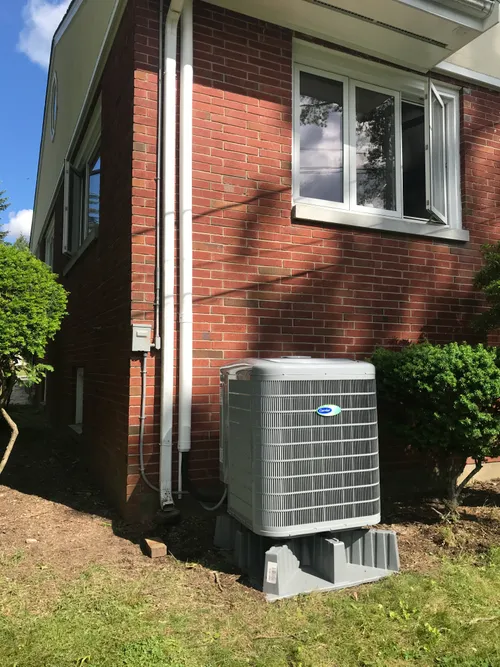
Net Zero Heating & Air Conditioning
55 Ellingwood Ave, Billerica, MA 01821
Net Zero Heating & Air Conditioning is an HVAC contractor based in Boston, MA, specializing in the design, installation, maintenance, and repair of heating and cooling systems. They offer services for air conditioners, furnaces, heat pumps, geothermal systems, and high-efficiency water heaters, helping customers improve home energy efficiency and reduce fossil fuel dependency. Their team evaluates each home's needs to recommend and install systems that meet or exceed local energy requirements. Net Zero is certified by NATE, Bryant, and Mitsubishi Diamond, and is a member of 1% for the Planet, reflecting their commitment to environmental goals.
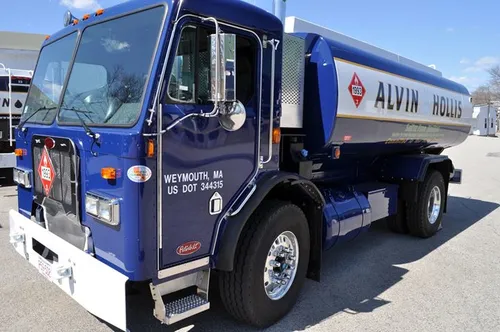
Alvin Hollis
1 Hollis St, South Weymouth, MA 02190
Alvin Hollis is a full-service energy company serving Boston, MA, and the South Shore area. They provide installation, repair, and maintenance for heating and cooling systems including air conditioners, furnaces, heat pumps, mini splits, and geothermal heat pumps. The company also offers indoor air quality services and delivers traditional and sulfur-free heating oil blended with biodegradable materials. Established in 1871, Alvin Hollis has a long history of supporting homes and businesses with energy solutions such as solar power and geothermal energy.
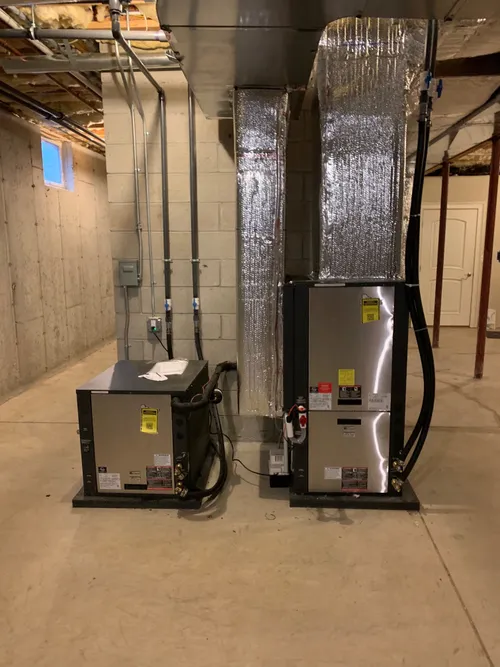
Massachusetts Geothermal
8 Grove St, Medfield, MA 02052
Massachusetts Geothermal is a geothermal heat pump contractor based in Boston, MA. They specialize in installing and servicing geothermal heat pump systems, offering energy-efficient heating and cooling solutions. The company is connected with industry organizations such as the International Ground Source Heat Pump Association and the Geothermal Exchange Organization, reflecting their involvement in the geothermal community.
ATCO HVAC
43 Lyman Rd, Milton, MA 02186
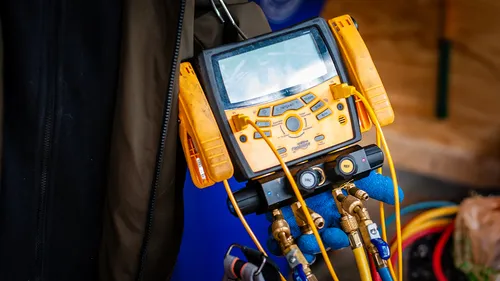
ATCO HVAC is a heating and air conditioning company serving Boston, MA, and nearby communities. They provide installation, repair, and maintenance services for a range of HVAC systems including air conditioners, furnaces, heat pumps, boilers, mini splits, and geothermal heat pumps. The company also offers indoor air quality products and HVAC tune-ups to help maintain system efficiency. As a licensed contractor and dealer for Trane® and Bryant, ATCO HVAC has the expertise and equipment to handle all brands and system types. They provide emergency service and offer service agreements to support ongoing system performance.
EnergySmart Alternatives, LLC
Boston, MA
EnergySmart Alternatives, LLC is a geothermal heat pump contractor based in Boston, MA. They manage the entire geothermal project process, including site evaluation, design, permitting, installation, and paperwork for incentives. Their services focus on geothermal heating and cooling systems that use the Earth's stable temperature to provide efficient year-round comfort and improved indoor air quality. EnergySmart handles new builds, retrofits, and replacements with certified installers to ensure proper system performance. Their approach reduces fossil fuel use and carbon footprint while offering financial and environmental benefits.
How Geothermal Heating and Cooling Works in Boston
The core principle behind a geothermal system is elegantly simple: it uses the earth as a renewable energy source. Just a few feet below the surface, the ground in Massachusetts maintains a nearly constant temperature of approximately 55°F year-round 1. This stable temperature provides a critical advantage.
In the winter, a fluid circulating through pipes buried in the ground-called a ground loop-absorbs the earth's natural warmth. The geothermal heat pump inside your home then concentrates this low-grade heat and transfers it to your home's air or hydronic heating system. The process reverses in the summer; the system extracts heat from your home and transfers it into the cooler ground, providing air conditioning. Because the system is moving existing heat rather than generating it through combustion or intense electrical resistance, it operates with exceptional efficiency, often performing three to five times more efficiently than conventional HVAC equipment.
Types of Ground-Source Heat Pump Systems
Choosing the right type of ground loop is a crucial decision that depends on your property's characteristics. The three main configurations are:
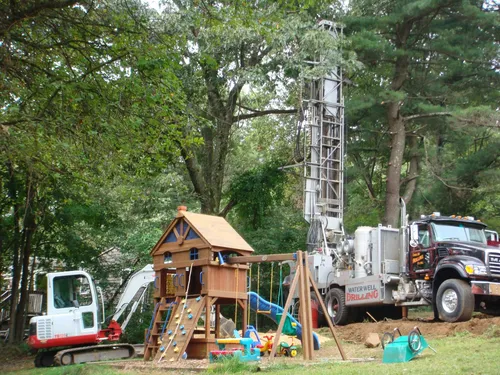
Closed-Loop Vertical Systems This is the most common installation type in Boston and surrounding suburbs, where yard space is often limited. Contractors use a drilling rig to create deep boreholes, typically 300 to 500 feet deep. U-shaped pipes are inserted into these boreholes and connected in a loop. While the drilling process represents a significant portion of the upfront cost, this system requires minimal surface land and is highly effective in most soil conditions 2.
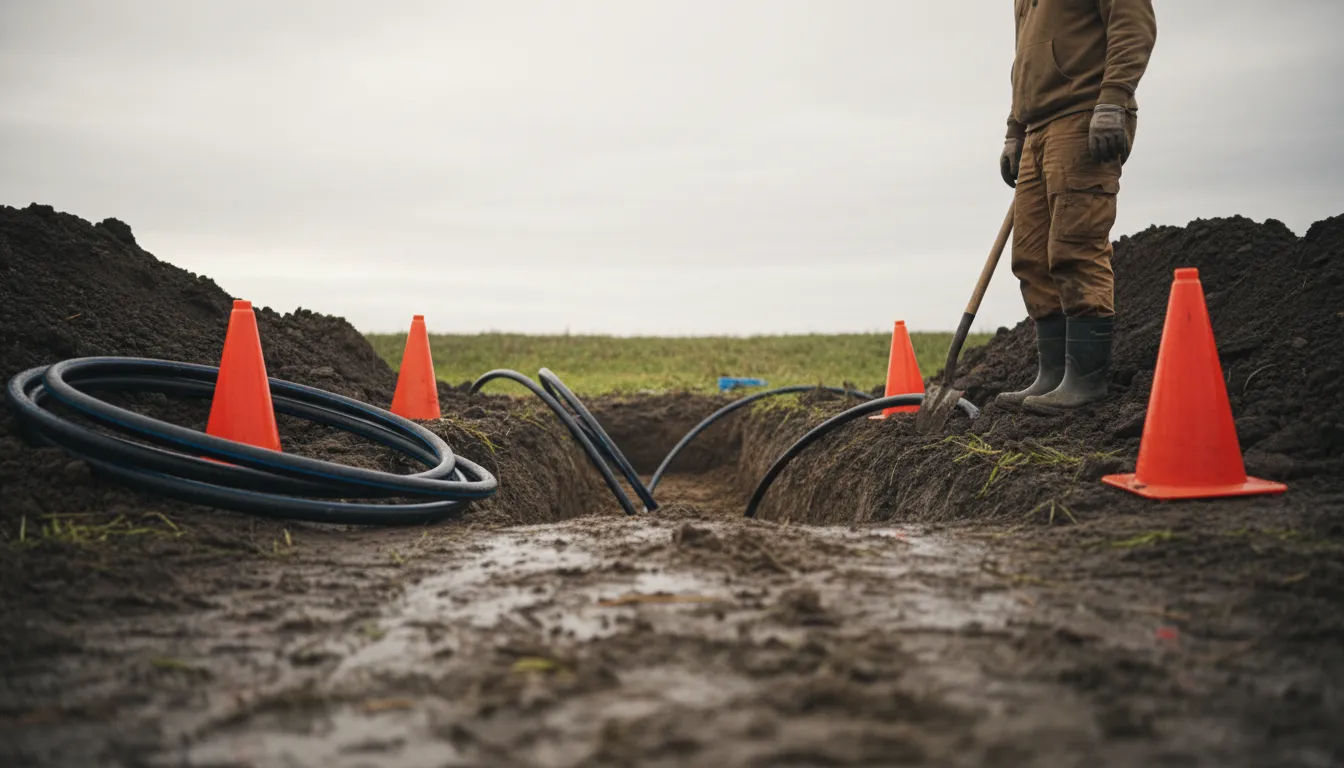
Closed-Loop Horizontal Systems If you have ample, unobstructed land, a horizontal ground loop can be a cost-effective option. Trenches are excavated four to six feet deep, and pipes are laid in a series of loops before being backfilled3 4. This method generally has lower installation costs than vertical drilling but requires a much larger plot of land, making it less common in dense urban and suburban neighborhoods.
Open-Loop Systems This less common configuration uses groundwater from a well as the direct heat exchange fluid. After passing through the heat pump, the water is returned to a second well or a suitable discharge point. An open-loop system can be highly efficient but is entirely dependent on having an adequate supply of quality groundwater and complying with local codes regarding water use and discharge.
The Geothermal Installation Process in Massachusetts
Installing a geothermal heat pump is a significant project that requires careful planning and specialized expertise. The process typically follows these key steps:
- Site Assessment and Design: A qualified installer will evaluate your property to determine the best system type and size. They assess soil composition, available space, your home's heating and cooling loads, and existing ductwork or radiant systems5.
- Ground Loop Installation: For vertical systems, a drilling rig creates the necessary boreholes. For horizontal systems, an excavator digs the trench network. This is the most distinctive phase of a geothermal installation 6.
- Loop Placement and Connection: The high-density polyethylene pipes are placed in the boreholes or trenches. The loops are pressure-tested, filled with an environmentally friendly antifreeze solution, and connected to a manifold that leads into the home.
- Indoor Unit Installation: The geothermal heat pump unit is installed inside your home, typically in a basement, utility room, or garage. It is connected to the ground loop manifold and to your home's existing ductwork for forced-air systems or to a hydronic manifold for radiant floor heating.
- System Startup and Commissioning: The installer charges the system, tests all components, and ensures it is operating at peak efficiency. Proper commissioning is essential for achieving the promised energy savings and system longevity.
Find the perfect geothermal heat pump contractors for your needs
Get personalized recommendations and expert advice
Financial Incentives and Long-Term Value
The upfront investment for a geothermal system is higher than for a conventional furnace and air conditioner. However, substantial financial incentives and long-term operational savings dramatically improve the value proposition.
Immediate Incentives and Rebates: Massachusetts offers some of the nation's most generous incentives for clean heating technology. The Mass Save® program provides significant rebates for ground-source heat pumps, which can total up to $13,500 for a qualifying system7. Additionally, Mass Save offers 0% interest HEAT Loans to help finance the remaining cost7. On the federal level, homeowners may qualify for a Residential Clean Energy Tax Credit, which can cover a percentage of the total installed cost8 9.
Ongoing Energy Savings: The primary financial benefit comes from drastically lower utility bills. By leveraging the earth's stable temperature, geothermal heat pumps can reduce energy consumption for heating and cooling by up to 65% compared to conventional systems10 11. In a city like Boston with both cold winters and warm, humid summers, these savings accumulate significantly year after year.
Durability and Lifespan: A geothermal system is a long-term investment in your home's infrastructure. The indoor heat pump unit typically lasts 25 years or more, while the buried ground loop often comes with warranties of 50 years and can potentially last for generations with minimal maintenance. This exceptional durability further enhances the system's lifetime value.
Is a Geothermal System Right for Your Boston Home?
Geothermal technology is an excellent fit for many, but not all, properties in the Greater Boston area. Ideal candidates include:
- Homes with sufficient yard space for drilling or trenching, or properties considering a new construction project.
- Homeowners planning to stay in their home long enough to realize the full payback from energy savings.
- Those seeking to eliminate their dependence on fossil fuels (oil or natural gas) for heating and hot water.
- Properties with existing ductwork (for forced-air systems) or those planning to install a hydronic radiant floor system.
The most critical step is to consult with a local, experienced geothermal installer. They can provide a detailed site evaluation, explain the options for your specific property, and give you a clear picture of costs, available incentives, and projected savings.
Frequently asked questions
Sources
Footnotes
-
All You Need to Know About Home Geothermal Heating & Cooling - https://dandelionenergy.com/all-you-need-to-know-about-home-geothermal-heating-cooling ↩
-
Geothermal/Hybrid Heating | HVAC Services Boston MA - https://bostonuniqueindoorcomfort.com/products/geothermalhybrid-heating/ ↩
-
Ground-Source Heat Pumps - Abode Energy Management - https://abodeenergy.com/wp-content/uploads/2022/07/MassCEC_GSHP_GUIDE.pdf ↩
-
How Does A Geothermal Heat Pump Work? Complete 2025 Guide - https://solartechonline.com/blog/how-does-geothermal-heat-pump-work/ ↩
-
Geothermal Heat Pumps - Department of Energy - https://www.energy.gov/energysaver/geothermal-heat-pumps ↩
-
Geothermal Pilot Reference Guide - Eversource - https://www.eversource.com/residential/save-money-energy/clean-energy-options/geothermal-energy/geothermal-pilot-reference-guide ↩
-
Ground Source Heat Pumps | Residential - Mass Save - https://www.masssave.com/residential/rebates-offers-services/heating-and-cooling/heat-pumps/ground-source-heat-pumps ↩ ↩2
-
Understanding Geothermal System Costs: What Massachusetts Homeowners Should Know - https://energysmartalternatives.com/understanding-geothermal-system-costs-what-massachusetts-homeowners-should-know/ ↩
-
5 Things You Should Know about Geothermal Heat Pumps - https://www.energy.gov/cmei/articles/5-things-you-should-know-about-geothermal-heat-pumps ↩
-
Guide to Geothermal Heat Pumps - https://www.energy.gov/sites/prod/files/guide_to_geothermal_heat_pumps.pdf ↩
-
Geothermal Ground-Source Heat Pump | Mass.gov - https://www.mass.gov/doc/about-geothermal-heat-pumps-handout/download ↩