
Find the Best Geothermal Heat Pump Contractors for Your Business
No obligation • Fast responses • Nationwide coverage

Why you can trust HVAC Firms
HVAC Firms is a leading United States resource for evaluating HVAC service providers. Our team researches companies, checks credentials, and reviews customer feedback to present clear, unbiased information. Listings and rankings are based on merit, and companies cannot pay to change our editorial content.
Search providers near you
Top Geothermal Heat Pump Contractors in Methuen, Massachusetts Ranked
A geothermal heat pump, also known as a ground-source heat pump (GSHP), is a highly efficient heating and cooling system that leverages the earth's stable underground temperature. For Methuen homeowners, this technology offers a powerful solution to combat New England's extreme seasonal temperatures while significantly reducing energy consumption. This guide explains how these systems work, what installation entails locally, and how you can find qualified specialists to assess your property for this sustainable upgrade.
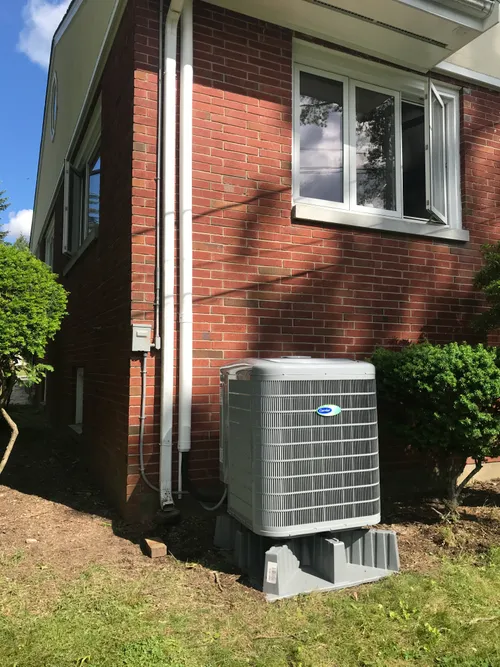
Net Zero Heating & Air Conditioning
55 Ellingwood Ave, Billerica, MA 01821
Net Zero Heating & Air Conditioning is an HVAC contractor based in Boston, MA, specializing in the design, installation, maintenance, and repair of heating and cooling systems. They offer services for air conditioners, furnaces, heat pumps, geothermal systems, and high-efficiency water heaters, helping customers improve home energy efficiency and reduce fossil fuel dependency. Their team evaluates each home's needs to recommend and install systems that meet or exceed local energy requirements. Net Zero is certified by NATE, Bryant, and Mitsubishi Diamond, and is a member of 1% for the Planet, reflecting their commitment to environmental goals.
EnergySmart Alternatives, LLC
Boston, MA
EnergySmart Alternatives, LLC is a geothermal heat pump contractor based in Boston, MA. They manage the entire geothermal project process, including site evaluation, design, permitting, installation, and paperwork for incentives. Their services focus on geothermal heating and cooling systems that use the Earth's stable temperature to provide efficient year-round comfort and improved indoor air quality. EnergySmart handles new builds, retrofits, and replacements with certified installers to ensure proper system performance. Their approach reduces fossil fuel use and carbon footprint while offering financial and environmental benefits.
How Geothermal Systems Work in Methuen
Geothermal or ground-source heat pump systems operate on a simple, elegant principle: they exchange heat with the earth, which maintains a relatively constant temperature of 50°F to 55°F just below the surface year-round. This is far more stable than Methuen's outdoor air, which can swing from below zero in winter to over 90°F in summer.
During the winter heating season, a fluid (typically a water and antifreeze mixture) circulates through a loop of pipes buried underground. This fluid absorbs the earth's latent heat and carries it to an indoor heat pump unit. The heat pump then concentrates this thermal energy and distributes it throughout your home via your existing ductwork, air handlers, or radiant floor systems.
In the summer, the process seamlessly reverses for cooling. The system extracts heat from your home's interior and transfers it into the cooler ground loop, effectively providing air conditioning 1. Many systems are also equipped with a "desuperheater" that can provide a substantial portion of your household's hot water as a byproduct of the heating and cooling cycles 2.
This constant, renewable heat source allows geothermal systems to achieve remarkable efficiency. They can reduce annual energy bills for heating and cooling by 30% to 60%, with some homeowners seeing savings of up to 65% compared to traditional oil, propane, or standard electric systems 3 4.
Types of Ground Loops Common in Methuen
The underground pipe network, or ground loop, is the heart of the system. The right type for your Methuen property depends heavily on your lot size, soil composition, and bedrock depth. Given New England's rocky terrain, certain configurations are more prevalent here.
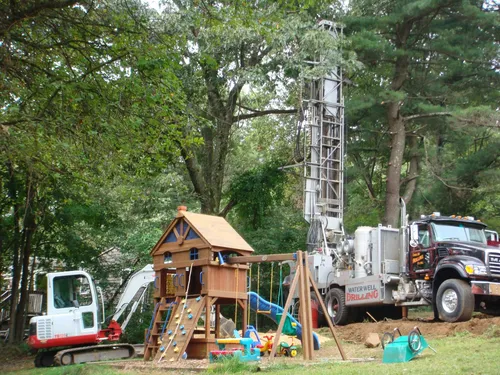
Vertical Closed-Loop Systems This is the most common and often most practical choice for existing homes in Methuen 5 6. Contractors use a drilling rig to bore one or more holes, typically 4 to 6 inches in diameter and 100 to 500 feet deep. A U-shaped pipe is inserted into each borehole, which is then backfilled with a special thermal grout to ensure good heat transfer between the earth and the pipe. The primary advantage is its small surface footprint, making it ideal for smaller residential lots.
Horizontal Closed-Loop Systems If you have ample, clear land (typically ½ acre or more), a horizontal loop may be an option. Trenches are excavated 4 to 6 feet deep, and pipes are laid in a series of parallel runs or slinky coils before being backfilled 7 8. This method generally has a lower installation cost than vertical drilling but requires significantly more land and causes more initial disruption to landscaping.
Standing Column Well Systems This method is particularly suited to the geology of the Northeast where bedrock is near the surface. A deep well is drilled into bedrock that intersects an aquifer. Water is drawn from the bottom of the well, heat is exchanged with the system, and the water is returned to the top of the same well. It acts as a hybrid open/closed-loop system and can be very efficient.
Pond/Lake Loops If you have a sufficiently large, deep body of water on your property, a closed loop of pipe can be submerged at the bottom. The water acts as an excellent heat exchange medium. This is often the most cost-effective loop option, but it is entirely dependent on having a suitable water source 9.
Find the perfect geothermal heat pump contractors for your needs
Get personalized recommendations and expert advice
The Installation Process and Timeline
Installing a residential geothermal system is a significant project that requires careful planning and specialized expertise. For a typical Methuen home retrofit, the entire process can take approximately 6 to 8 weeks from contract to completion, with the drilling phase being a major component of the timeline.
-
Site Assessment & System Design (1 day to 4+ months): A qualified installer will conduct a detailed evaluation of your property, including soil and rock analysis, lot layout, and your home's heating/cooling load. This information is used to design the most effective and efficient loop field and select the proper indoor equipment. This phase also includes securing necessary local permits, which can vary in time.
-
Drilling or Trenching (3 to 10+ days): For vertical systems, a drilling rig will be brought onsite to create the boreholes. For horizontal systems, excavators will dig the required trenches. This is the most visible and equipment-intensive phase of the project 10.
-
Loop Installation & Grouting (1-3 days): The high-density polyethylene pipes are placed into the boreholes or trenches. For vertical bores, they are pressure-tested and then the hole is filled with thermally enhanced grout to seal it and ensure optimal thermal conductivity 11.
-
Indoor Unit Installation & Connection (1-2 days): The indoor heat pump unit (which is typically compact and quiet) is installed, often in a basement, utility room, or garage. It is connected to the ground loop and to your home's existing ductwork or hydronic distribution system. Electrical and control wiring are finalized 12.
-
System Startup & Commissioning: The installer fills the loop, purges it of air, and starts the system. They will test and balance the entire system to ensure it is operating at peak efficiency and provide you with instructions on its use.
Local Considerations for Methuen Homeowners
When considering a ground-source system in Methuen, several local factors come into play:
- Geology and Rock: Methuen's subsurface often contains significant ledge and bedrock. While this makes vertical drilling predictable for experienced contractors, it can rule out horizontal trenching on many properties 13 14 15. A proper site assessment is non-negotiable.
- Space Constraints: The popularity of vertical loops is driven by the smaller lot sizes common in established neighborhoods. A vertical system requires only a small area for the drilling rig to operate, leaving most of your yard undisturbed after completion 16.
- Landscaping Impact: While the drilling or trenching process is disruptive, restoration is a standard part of a professional installation. Once the loop is buried and the soil or sod is replaced, the visual impact is minimal.
Costs, Incentives, and Long-Term Value
The upfront investment for a geothermal heat pump system is higher than for a conventional furnace and air conditioner. This cost is largely due to the ground loop excavation and installation. However, this initial cost must be weighed against exceptional long-term savings and powerful financial incentives.
Available Incentives:
- Federal Tax Credit: The federal government offers a 30% tax credit on the total cost of a qualifying geothermal heat pump system, including installation 17.
- Mass Save® Rebates: Massachusetts' premier energy efficiency program offers significant, tiered rebates for ground-source heat pumps. These rebates can cover a substantial portion of the installed cost, especially when combined with the federal credit 18.
- Potential Utility Incentives: Check with your local utility provider for any additional rebates or special financing options for geothermal installations.
Long-Term Financial Benefits: The dramatic reduction in heating and cooling costs-often cutting bills by 30% to 60%-results in a compelling payback period, especially when incentives are applied 19 20. Furthermore, these systems are renowned for their durability. The indoor heat pump components typically last about 25 years, while the underground polyethylene piping is often warranted for 50 years and can last for generations 21 22.
Increased Home Value: A geothermal system is a permanent upgrade that adds to your home's marketability and value, thanks to its low operating costs and green credentials.
Finding the Right Specialist
Given the site-specific nature of geothermal technology, choosing an installer with local experience is critical. Look for contractors who are specifically trained and certified in geothermal system design and installation. They should conduct a comprehensive Manual J load calculation for your home and a detailed site evaluation before proposing a system. Ask for references from local projects and verify they are familiar with obtaining Methuen permits and navigating the Mass Save rebate process 23 24 25.
Frequently asked questions
Sources
Footnotes
-
How Geothermal Works - https://billwenzelgeo.com/about-geothermal/how-geothermal-works ↩
-
How it Works: Ground Source (Geothermal) Heat Pumps (GSHP) - https://www.youtube.com/watch?v=uhXUV2Xm5fQ&t=21 ↩
-
A Greener Way to Heat Your Home - Mass Audubon - https://www.massaudubon.org/news/latest/a-greener-way-to-heat-your-home ↩
-
Geothermal/Hybrid Heating | HVAC Services Boston MA - https://bostonuniqueindoorcomfort.com/products/geothermalhybrid-heating/ ↩
-
The Difficulties of Residential Geo-Thermal Systems in New ... - https://wilsonbrothers.com/geo-thermal-heating-and-cooling-new-england/ ↩
-
Ground-Source Heat Pumps - Abode Energy Management - https://abodeenergy.com/wp-content/uploads/2022/07/MassCEC_GSHP_GUIDE.pdf ↩
-
Geothermal Design and Installation New England Heating ... - http://www.negeothermal.com/ ↩
-
Geothermal System Basics - Water Energy Distributers - https://northeastgeo.com/geothermal-system-basics/ ↩
-
Geothermal Heat Pumps - Department of Energy - https://www.energy.gov/energysaver/geothermal-heat-pumps ↩
-
What is Geothermal Well Drilling? | How & Why We Drill - https://www.excelgeothermal.com/what-is-geothermal-well-drilling ↩
-
Residential Geothermal Installations in Massachusetts - https://energysmartalternatives.com/residential-geothermal-installations-in-massachusetts/ ↩
-
Installation of a Ground Source Heat Pump in the UK - https://www.renewableenergyhub.co.uk/main/heat-pumps-information/how-to-install-a-ground-source-heat-pump ↩
-
Drilling geothermal wells: 2025 Ultimate Guide - https://www.eatondrillingandpumpservice.com/drilling-geothermal-wells/ ↩
-
Understanding Geothermal System Costs in Massachusetts - https://energysmartalternatives.com/understanding-geothermal-system-costs-what-massachusetts-homeowners-should-know/ ↩
-
Energy 101: Geothermal - https://extension.umd.edu/resource/energy-101-geothermal ↩
-
Geothermal Installation Process - https://ultrageothermal.com/geothermal-installation-process/ ↩
-
Geothermal Heat Pumps | National Grid - https://www.nationalgridus.com/geothermal-energy-hub/About/Geothermal-Heat-Pumps ↩
-
Ground-Source Heat Pumps - Massachusetts Clean Energy ... - https://goclean.masscec.com/clean-energy-solutions/ground-source-heat-pumps/ ↩
-
5 Things You Should Know about Geothermal Heat Pumps - https://www.energy.gov/cmei/articles/5-things-you-should-know-about-geothermal-heat-pumps ↩
-
Geothermal Ground-Source Heat Pump | Mass.gov - https://www.mass.gov/doc/about-geothermal-heat-pumps-handout/download ↩
-
5 Important Facts about Geothermal Heat Systems - https://www.skillingsandsons.com/blog/5-important-facts-about-geothermal-heat-systems/ ↩
-
Ground Source Heat Pumps | Residential - Mass Save - https://www.masssave.com/residential/rebates-offers-services/heating-and-cooling/heat-pumps/ground-source-heat-pumps ↩
-
Cheap Heat - https://www.saminfo.com/archives/2009-2000/2007/july-2007/cheap-heat ↩
-
Geothermal HVAC in Litchfield, CT: Advantages & Costs - https://www.plumbtechllc.com/geothermal-hvac-in-litchfield-ct/ ↩
-
Community Scale Geothermal and District Geothermal Energy - https://www.gov.mb.ca/sd/environment_and_biodiversity/energy/geothermal/faq.html ↩