
Find the Best Geothermal Heat Pump Contractors for Your Business
No obligation • Fast responses • Nationwide coverage

Why you can trust HVAC Firms
HVAC Firms is a leading United States resource for evaluating HVAC service providers. Our team researches companies, checks credentials, and reviews customer feedback to present clear, unbiased information. Listings and rankings are based on merit, and companies cannot pay to change our editorial content.
Search providers near you
Top Geothermal Heat Pump Contractors in Louisville, Kentucky Ranked
A geothermal heat pump is a highly efficient heating and cooling system that leverages the earth's stable underground temperature to regulate your home's climate. For Louisville homeowners, this technology offers a powerful way to cut energy bills, reduce environmental impact, and enjoy consistent comfort year-round. This guide explains how ground-source heat pumps work, their benefits for our region, and how you can find qualified local professionals to assess your property and handle the installation.
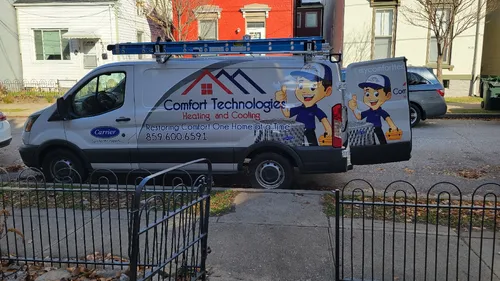
Comfort Technologies
Louisville, KY
Comfort Technologies is an HVAC company serving Louisville, KY, and the surrounding communities, including Lexington. They provide installation, repair, and maintenance services for air conditioners, furnaces, heat pumps, geothermal systems, and ductless split systems. As a licensed Carrier dealer, they offer a range of indoor comfort products such as programmable thermostats, humidifiers, and air cleaners. Comfort Technologies specializes in HVAC tune-ups and emergency repairs, with 24/7 availability to assist customers. They emphasize customizing solutions to fit unique needs and have experience installing many systems in the area.

One Choice Mechanical
8611 National Tpke, Fairdale, KY 40118
One Choice Mechanical is an HVAC company serving Louisville, KY, offering a full range of heating and cooling services for residential and commercial clients. Their expertise includes installation, repair, and tune-ups for air conditioners, furnaces, heat pumps, boilers, mini splits, and geothermal heat pumps. Established in 2007, the company provides 24/7 emergency HVAC services to ensure reliable support whenever needed.

Allgeier Air
804 N English Station Rd, Louisville, KY 40223
Allgeier Air is an HVAC company based in Louisville, KY, offering design, installation, and repair services for heating and cooling systems. Their expertise includes gas furnaces, air conditioners, heat pumps, geothermal heating systems, and indoor air quality solutions. With over 70 years of experience, they also provide duct design and new construction HVAC engineering. They offer emergency repair services and specialize in geothermal heat pump systems, which use ground-source heat exchange for efficient heating and cooling. Their technicians are available to assist with air quality testing and fireplace services as well.
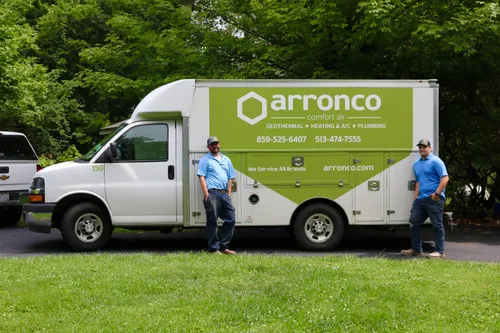
Arronco Comfort Air
272 Big Run Rd, Lexington, KY 40503
Arronco Comfort Air is a family-owned HVAC and plumbing company serving Louisville, KY, and surrounding areas. Since 1984, they have provided heating and air conditioning repair, installation, and maintenance services, including geothermal heat pump systems. Their team is certified to handle a range of HVAC solutions such as furnaces, heat pumps, mini splits, and geothermal systems, focusing on energy-efficient options for homeowners. Arronco Comfort Air also offers professional plumbing services to address various household needs.
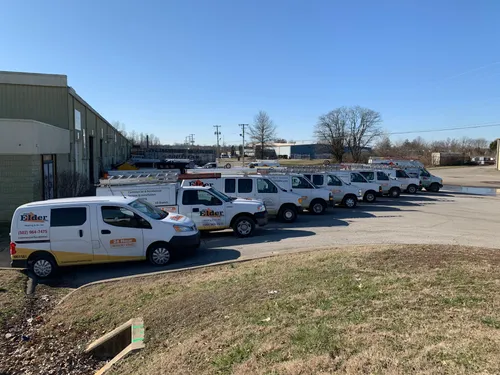
Elder Heating and Air
5800 Fern Valley Rd #100, Louisville, KY 40228
Elder Heating and Air is an HVAC company serving Louisville, KY, specializing in heating, cooling, and indoor air quality services for residential and light commercial properties. Their services include air conditioning repair and installation, furnace repair and replacement, heat pump and geothermal system installation, and ductless mini-split systems. The team has over 100 years of combined industry experience and is a Trane Comfort Specialist, capable of servicing various HVAC equipment brands. They also provide indoor air quality testing and products, home efficiency inspections, and custom sheet metal fabrication. Same day service is available with restrictions and a 3PM cutoff.
How Geothermal Systems Work in Kentucky
The core principle behind a geothermal system, often called a ground-source heat pump (GSHP), is remarkably simple. Just a few feet below the surface, the earth in Kentucky maintains a relatively constant temperature between 50-60°F year-round 1. This ground temperature is far warmer than the winter air and cooler than the peak summer heat. A geothermal system acts as a bridge, transferring thermal energy between your home and this stable underground source.
The process involves three key components:
- The Ground Loop: A network of pipes buried in your yard or drilled deep into the ground. A water-based solution circulates through this closed loop, absorbing heat from the earth in winter and depositing excess heat from your home into the earth in summer2 3.
- The Heat Pump Unit: Located inside your home (often in a garage or basement), this unit concentrates the thermal energy collected from the loop. In heating mode, it amplifies the warmth to heat your home's air. In cooling mode, it works in reverse, extracting heat from your indoor air and transferring it into the ground loop.
- The Distribution System: The conditioned air is then circulated throughout your home via your existing ductwork or a separate duct system.
This method of heat exchange is vastly more efficient than generating heat by burning fuel or fighting extreme outdoor air temperatures directly, which is why geothermal heat pumps deliver such significant energy savings.
Types of Geothermal Loop Systems for Louisville Properties
The underground loop is the heart of the system, and its configuration depends on your property's characteristics. The most common type is the closed-loop system, which continuously circulates the same fluid.
Vertical Closed Loops
This is often the ideal choice for urban and suburban lots in Louisville with limited space. Contractors drill several boreholes, typically 150 to 400 feet deep, and insert U-shaped pipe loops into each one 4. While the drilling equipment is substantial, the surface disruption is minimal once the work is complete, making it suitable for smaller yards and properties with rocky soil.
Horizontal Closed Loops
If you have more land available, a horizontal loop system can be a cost-effective option. Contractors use excavation equipment to dig trenches 5 to 8 feet deep and lay pipes in a series of parallel rows5 6. This method requires a larger area of open land but generally has a lower installation cost than vertical drilling, as trenching is less equipment-intensive.
Pond or Lake Loops
For properties with an adequate, deep body of water, this can be the most economical loop option. Coils of pipe are submerged at the bottom of the pond or lake, where the water temperature remains stable7 8. This avoids the need for drilling or extensive trenching, significantly reducing installation complexity and cost.
Open-Loop Systems
Less common due to local water use regulations, an open-loop system uses groundwater from a well as the direct heat exchange fluid. After passing through the heat pump, the water is discharged back into a second well or a suitable drainage point9. This system requires an abundant supply of clean water and compliance with all environmental codes.
Find the perfect geothermal heat pump contractors for your needs
Get personalized recommendations and expert advice
Benefits of Installing a Geothermal Heat Pump in Louisville
Switching to a geothermal heating and cooling system offers a compelling list of advantages for local homeowners, from immediate savings to long-term value.
- Substantial Energy Savings: By tapping into the earth's consistent temperature, geothermal systems operate with exceptional efficiency. Homeowners can see reductions of up to 65% on their heating and cooling bills compared to conventional systems. This is especially impactful given Louisville's seasonal temperature swings.
- Long System Lifespan and Reliability: The underground loop system is incredibly durable, often carrying warranties of 50 years or more and expected to last generations. The interior heat pump unit also boasts a long life, typically 20 to 25 years, which is longer than many standard air conditioners and furnaces.
- Quiet, Clean, and Consistent Operation: With no noisy outdoor condenser unit, a geothermal system runs very quietly. It provides steady, even heating and cooling without the drafts or hot/cold spots common with forced-air systems. Furthermore, it reduces your home's carbon footprint by using renewable thermal energy from the ground10.
- Financial Incentives and Strong Return on Investment: The higher upfront cost is mitigated by significant incentives. Historically, a 30% federal tax credit has been available for qualified geothermal installations, and other local utility rebates may apply11. With the energy savings and incentives combined, many homeowners find the system pays for itself in a matter of years, with some case studies in Kentucky communities showing a payback period of 6 to 7 years 12.
Understanding Costs and Installation
The total investment for a residential geothermal system in Louisville varies based on your home's size, the chosen loop type, soil conditions, and the complexity of integrating with your existing ductwork.
For a typical 2,000-square-foot home, total installed costs can range from $20,000 to $40,000 or more13. This includes the heat pump unit (a 3-ton unit may cost around $7,500 for the equipment itself), the labor and materials for the ground loop, and all necessary electrical and ductwork connections14 15.
The installation process is a significant undertaking that should only be performed by certified professionals. It involves several stages:
- Site Evaluation: A contractor assesses your property, soil, and land to recommend the best loop type.
- Loop Installation: Drilling rigs or excavation equipment installs the underground piping.
- System Connection: The loop is connected to the indoor heat pump unit and your home's distribution system.
- Testing & Commissioning: The entire system is charged, tested, and balanced for optimal performance.
Choosing an experienced, certified installer is the most critical step to ensuring your system delivers on its promise of efficiency and reliability for decades.
Frequently asked questions
Sources
Footnotes
-
Geothermal Heating and Cooling - https://geothermal.colorado.gov/geothermal-heating-and-cooling ↩
-
Geothermal Heat Pumps | Department of Energy - https://www.energy.gov/energysaver/geothermal-heat-pumps ↩
-
Geothermal (Ground Source) Heat Pumps - NY.gov - https://cleanheat.ny.gov/geothermal-heat-pumps/ ↩
-
Geothermal Heat Pump Installation: What To Expect For Your Property - https://jomory.com/geothermal-heat-pump-installation-what-to-expect-for-your-property/ ↩
-
All You Need to Know About Home Geothermal Heating & Cooling - Dandelion Energy - https://dandelionenergy.com/all-you-need-to-know-about-home-geothermal-heating-cooling ↩
-
Geothermal Heat Pumps, Explained - Bosch Home Comfort - https://www.bosch-homecomfort.com/us/en/residential/connect/blog/geothermal-heat-pumps-go-green-save-green/ ↩
-
The Complete Guide To Geothermal Heat Pump Installation - https://ultrageothermal.com/the-complete-guide-to-geothermal-heat-pump-installation/ ↩
-
How Do Geothermal Systems Work for Residential Homes? - https://www.davisheat.com/blog/how-do-geothermal-systems-work-for-residential-homes/ ↩
-
Geothermal Heating, Cooling, and Hot Water Systems - https://igshpa.org/wp-content/uploads/Homeowners-Guide-to-Geothermal.pdf ↩
-
Geothermal HVAC Solutions in Louisville, KY | Prudential - https://www.prudentialhvac.com/services/geothermal ↩
-
5 Things You Should Know about Geothermal Heat Pumps - https://www.energy.gov/cmei/articles/5-things-you-should-know-about-geothermal-heat-pumps ↩
-
How Does A Geothermal Heat Pump Work? Complete 2025 Guide - https://solartechonline.com/blog/how-does-geothermal-heat-pump-work/ ↩
-
Geothermal Heat Pump Guide: Installation Costs, Types And Benefits - https://modernize.com/hvac/heating-repair-installation/heat-pump/geothermal ↩
-
Geothermal Heat Pump Case Study: Norton Commons, Kentucky | Department of Energy - https://www.energy.gov/eere/geothermal/geothermal-heat-pump-case-study-norton-commons-kentucky ↩
-
Guide to Geothermal Heat Pumps - https://www.energy.gov/sites/prod/files/guide_to_geothermal_heat_pumps.pdf ↩