Find the Best Geothermal Heat Pump Contractors for Your Business
No obligation • Fast responses • Nationwide coverage

Why you can trust HVAC Firms
HVAC Firms is a leading United States resource for evaluating HVAC service providers. Our team researches companies, checks credentials, and reviews customer feedback to present clear, unbiased information. Listings and rankings are based on merit, and companies cannot pay to change our editorial content.
Search providers near you
Top Geothermal Heat Pump Contractors in Lexington, Kentucky Ranked
A geothermal heat pump, also known as a ground-source heat pump, is a highly efficient heating and cooling system that leverages the stable temperature of the earth. For Lexington homeowners, this technology offers a reliable way to manage indoor climate year-round while significantly reducing energy consumption. This guide explains how these systems work, what installation entails, and how you can find qualified local experts to assess your property for this sustainable upgrade.

Feistritzer Heating & Air Conditioning
105 Man O War Dr, Danville, KY 40422
Feistritzer Heating & Air Conditioning serves Lexington, KY, and surrounding areas including Danville, Harrodsburg, and Stanford. They provide a range of HVAC services such as air conditioning and furnace repair, heat pump and geothermal system installation, indoor air quality solutions, and thermostat and gas line installation. The company is staffed by NATE-certified technicians who handle residential and light commercial projects. They emphasize thorough assessments and offer financing options. Their capabilities include geothermal heating and cooling systems, which use underground temperatures for efficient climate control.
Comfort Technologies
Louisville, KY
Comfort Technologies is an HVAC company serving Louisville, KY, and the surrounding communities, including Lexington. They provide installation, repair, and maintenance services for air conditioners, furnaces, heat pumps, geothermal systems, and ductless split systems. As a licensed Carrier dealer, they offer a range of indoor comfort products such as programmable thermostats, humidifiers, and air cleaners. Comfort Technologies specializes in HVAC tune-ups and emergency repairs, with 24/7 availability to assist customers. They emphasize customizing solutions to fit unique needs and have experience installing many systems in the area.
Synergy Home HVAC
1064 Industry Rd Suite 130, Lexington, KY 40505
Synergy Home HVAC is an HVAC service provider based in Lexington, KY, offering a wide range of heating and cooling solutions including air conditioning, furnace, heat pump repair, and installation services. They also specialize in geothermal heat pump systems and provide HVAC tune-up services. With over two decades of experience, Synergy Home HVAC has expanded its offerings to include home energy efficiency solutions such as solar services and insulation, treating the home as an integrated system. The company provides 24/7 emergency availability to address urgent HVAC issues at any time.
Arronco Comfort Air
272 Big Run Rd, Lexington, KY 40503
Arronco Comfort Air is a family-owned HVAC and plumbing company serving Louisville, KY, and surrounding areas. Since 1984, they have provided heating and air conditioning repair, installation, and maintenance services, including geothermal heat pump systems. Their team is certified to handle a range of HVAC solutions such as furnaces, heat pumps, mini splits, and geothermal systems, focusing on energy-efficient options for homeowners. Arronco Comfort Air also offers professional plumbing services to address various household needs.
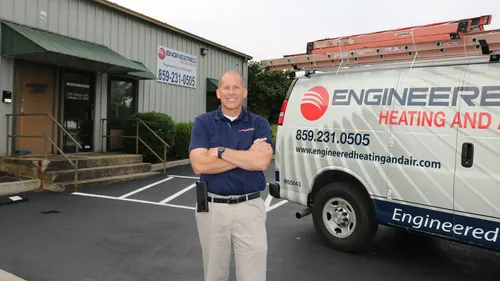
Engineered Heating and Air
1052 Whipple Ct, Lexington, KY 40511
Engineered Heating and Air provides HVAC repair, installation, and maintenance services in Louisville, KY, and the surrounding Bluegrass region. They serve both residential and commercial clients with expertise in air conditioning, furnaces, heat pumps, geothermal systems, and indoor air quality solutions. The company is known for handling a wide range of heating and cooling systems and offers HVAC financing options to support their customers. With decades of experience serving Central Kentucky, Engineered Heating and Air combines licensed engineering and technical skills to deliver practical HVAC solutions.
How Geothermal Heating and Cooling Works
Unlike conventional systems that burn fuel or use outside air, a geothermal system moves heat. It uses a network of underground pipes, called a ground loop, filled with a water-based solution. The earth beneath Lexington maintains a relatively constant temperature between 50-60°F just a few feet below the surface, providing a perfect thermal battery 1.
In the winter, the fluid circulating through the buried loop absorbs the earth's stored solar warmth. This warmed fluid is brought to an indoor heat pump unit, which extracts the heat and concentrates it for distribution throughout your home, typically via existing ductwork or radiant floor systems 2. The process reverses in the summer: the heat pump extracts heat and humidity from your indoor air and transfers it into the cooler ground loop, effectively providing air conditioning 2. Because it simply moves existing heat rather than generating it through combustion, a ground-source heat pump operates with remarkable efficiency.
Types of Ground Loop Systems
The configuration of the underground piping is a critical component of any geothermal installation. The right loop for your Lexington home depends on your land, soil composition, and budget. Local contractors will perform a detailed site assessment to determine the best option.
Horizontal Closed Loops
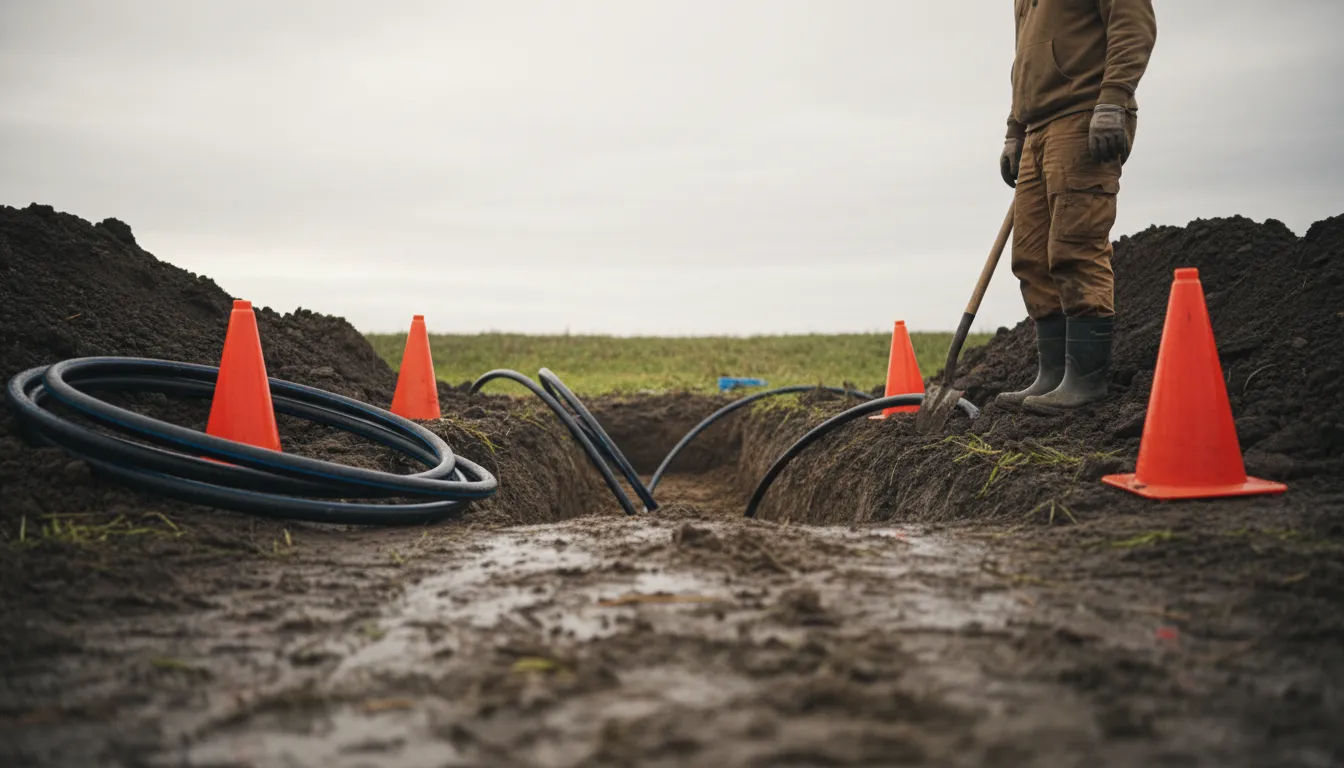
This is often the most cost-effective method if you have sufficient land. Contractors excavate trenches about five to ten feet deep and lay pipes in a series of coils or straight runs. A "slinky" coil configuration allows for more pipe-and thus more heat exchange-in a shorter trench, which is useful for properties with some space constraints 3. This method requires a larger, open yard area.
Vertical Closed Loops
For homes with smaller lots, rocky soil, or limited usable land, vertical loops are the standard solution. Contractors use drilling rigs to bore holes 150 to 400 feet deep. U-shaped pipes are inserted into each borehole, which is then filled with a special grout to ensure good thermal conductivity 4. This method is common in the Bluegrass Region, where bedrock can be close to the surface, and it minimizes disruption to your landscaping.
Pond or Lake Loops
If your property has a suitable body of water, this can be an excellent option. Coils of pipe are submerged at the bottom of the pond or lake. The water acts as an excellent heat exchanger. This method requires that the water body meet specific size, depth, and quality requirements to be effective and environmentally sound 5.
The Installation Process for Lexington Homes
Installing a geothermal heating and cooling system is a significant project that requires professional expertise. Understanding the steps can help you prepare.
- Site Evaluation and Design: A qualified installer will assess your property's soil conditions, geology, available space, and your home's heating and cooling loads. This evaluation dictates the loop type and size. They will also check your existing ductwork to see if it can be utilized, which is common in retrofits and can reduce costs 6.
- Loop Installation: For a horizontal system, excavation equipment digs the trenches. For a vertical system, a drilling rig creates the boreholes. The high-density polyethylene pipe is then placed, connected into a continuous loop, and pressure-tested. Vertical holes are grouted to seal them and enhance heat transfer 7 8.
- Indoor Unit Installation: The geothermal heat pump unit-which is about the size of a traditional furnace-is installed in your basement, utility room, or garage. It is connected to your home's electrical system and distribution system (ductwork or hydronic piping).
- Connection and Commissioning: The underground loop is connected to the heat pump. The entire system is filled with fluid, purged of air, and tested. The contractor will start up the system, calibrate it for optimal performance, and explain its operation to you.
Find the perfect geothermal heat pump contractors for your needs
Get personalized recommendations and expert advice
Key Considerations for Lexington Properties
Several local factors influence the design and success of a geothermal system in the Bluegrass region.
- Land Availability: The amount of usable, unobstructed land is the primary factor in choosing between horizontal and vertical loops. Suburban homes with acreage may opt for horizontal, while urban lots almost always require vertical drilling.
- Soil and Rock Composition: Kentucky's geology varies. The presence of limestone or shale near the surface makes vertical drilling not just a space-saving choice, but often a practical necessity. The thermal conductivity of your soil also affects loop length requirements 9.
- Existing Infrastructure: Many homes can use their existing ductwork with a geothermal retrofit, making the transition smoother. The condition and sizing of this ductwork will be evaluated during the initial assessment.
Costs, Savings, and Incentives
The upfront investment for a geothermal heat pump system is higher than for a conventional HVAC system. For a typical Lexington home, complete installation costs can range from $20,000 to $40,000 or more, with vertical loop systems generally at the higher end due to drilling costs 10.
The payoff comes from dramatically lower operating costs. Geothermal systems can reduce energy consumption for heating and cooling by 25% to 70% compared to traditional systems 11. Homeowners often report saving 40-70% on their heating and cooling bills, which can translate to over $1,000 in annual savings, depending on previous fuel costs. This means the system can pay for itself through utility savings in a number of years, offering a strong long-term return on investment.
To help with the initial cost, significant incentives are available. The federal government offers a 30% tax credit for qualified geothermal heat pump installations through 2034 12. It's crucial to check the Database of State Incentives for Renewables & Efficiency (DSIRE) for the most current federal, state, and local incentives that may apply to your Lexington installation 13 14.
Long-Term Benefits and Environmental Impact
Beyond direct savings, choosing a ground-source heat pump offers profound benefits. These systems have fewer mechanical components exposed to the weather, leading to longer lifespans-often 20-25 years for the indoor unit and 50+ years for the underground loop. They also provide exceptional dehumidification in cooling mode, improving indoor air quality and comfort.
From an environmental standpoint, geothermal systems are a clear win. By using renewable thermal energy from the ground and consuming far less electricity, they drastically reduce a home's carbon footprint. For Lexington residents looking to increase energy independence and contribute to a cleaner environment, geothermal technology represents a powerful solution.
Frequently asked questions
Sources
Footnotes
-
Geothermal (Ground Source) Heat Pumps - NY.gov - https://cleanheat.ny.gov/geothermal-heat-pumps/ ↩
-
5 Things You Should Know about Geothermal Heat Pumps - https://www.energy.gov/cmei/articles/5-things-you-should-know-about-geothermal-heat-pumps ↩ ↩2
-
Geothermal Heat Pumps - Department of Energy - https://www.energy.gov/energysaver/geothermal-heat-pumps ↩
-
Geothermal Heating, Cooling, and Hot Water Systems - https://igshpa.org/wp-content/uploads/Homeowners-Guide-to-Geothermal.pdf ↩
-
Geothermal Heat Pump Installation: What To Expect For Your Property - https://jomory.com/geothermal-heat-pump-installation-what-to-expect-for-your-property/ ↩
-
Clean Energy 101: Geothermal Heat Pumps - RMI - https://rmi.org/clean-energy-101-geothermal-heat-pumps/ ↩
-
Geothermal Lessons (Pt 1) | This Old House - https://www.youtube.com/watch?v=00wwEMbEc_M ↩
-
All You Need to Know About Home Geothermal Heating & ... - https://dandelionenergy.com/all-you-need-to-know-about-home-geothermal-heating-cooling ↩
-
Geothermal Heating and Cooling - Open Energy Information - https://openei.org/wiki/GeoBridge/Heating_and_Cooling ↩
-
Geothermal Heat Pump Guide: Installation Costs, Types And Benefits - https://modernize.com/hvac/heating-repair-installation/heat-pump/geothermal ↩
-
How Does A Geothermal Heat Pump Work? Complete 2025 Guide - https://solartechonline.com/blog/how-does-geothermal-heat-pump-work/ ↩
-
Geothermal Heat Pumps, Explained - Bosch Home Comfort - https://www.bosch-homecomfort.com/us/en/residential/connect/blog/geothermal-heat-pumps-go-green-save-green/ ↩
-
Geothermal heating & cooling, heat pumps, heat exchange loops - How it works - https://aztechgeo.com/residential-geothermal/how-it-works/ ↩
-
Guide to Geothermal Heat Pumps - https://www.energy.gov/sites/prod/files/guide_to_geothermal_heat_pumps.pdf ↩