Find the Best Geothermal Heat Pump Contractors for Your Business
No obligation • Fast responses • Nationwide coverage

Why you can trust HVAC Firms
HVAC Firms is a leading United States resource for evaluating HVAC service providers. Our team researches companies, checks credentials, and reviews customer feedback to present clear, unbiased information. Listings and rankings are based on merit, and companies cannot pay to change our editorial content.
Search providers near you
Top Geothermal Heat Pump Contractors in Wichita, Kansas Ranked
A geothermal heat pump, also known as a ground-source heat pump, is a highly efficient system that uses the Earth's stable underground temperature to heat and cool your home. For Wichita residents, this technology offers a powerful way to reduce energy bills and environmental impact by tapping into the consistent thermal energy just below the surface. This guide explains how these systems work, their benefits, and how you can connect with qualified local experts to explore options for your property.
Bryan's Heating & Air Conditioning, Inc.
700 S Ramsey Dr, Valley Center, KS 67147
Bryan's Heating & Air Conditioning, Inc. has been providing residential and commercial HVAC services in Wichita, KS since 1986. They offer a wide range of heating and cooling solutions including repair, installation, and maintenance for furnaces, heat pumps, boilers, geothermal systems, central air conditioners, and ductless mini splits. The company also specializes in indoor air quality services such as humidity control and air purification, as well as custom ductwork fabrication and repair through their in-house sheet metal shop. Bryan's serves the Greater Wichita area with a focus on energy-efficient commercial HVAC solutions and comprehensive maintenance plans.
On Time Plumbing, Heating, Cooling & Electric
4065 N Woodlawn Blvd Suite 3, Bel Aire, KS 67220
On Time Plumbing, Heating, Cooling & Electric is a full-service provider based in Wichita, KS, offering plumbing, electrical, and HVAC services. They serve residential customers with repairs, installations, and maintenance for heating systems including furnaces, heat pumps, geothermal systems, and boilers, as well as air conditioning units and mini-splits. The company has been operating since 2004 and provides 24/7 emergency service to address urgent plumbing, heating, cooling, and electrical needs.
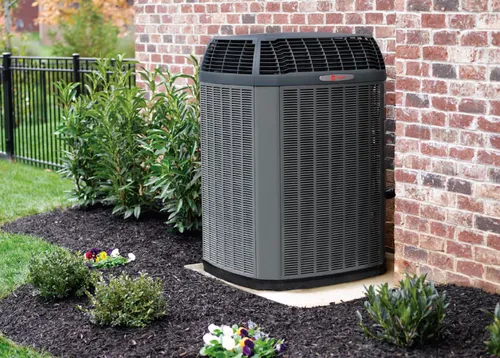
Reddi Heating and Cooling
Wichita, KS
Reddi Heating and Cooling is a locally owned HVAC company serving Wichita, KS, with over 60 years of experience. They offer a wide range of residential and commercial heating and cooling services, including AC and furnace repair, new HVAC installations, geothermal systems, ductless mini-splits, thermostats, and indoor air quality solutions. Reddi provides 24/7 service and specializes in installing and repairing systems from brands like Trane, Ruud, and Amana. Their expertise includes geothermal heat pump installation and maintenance.
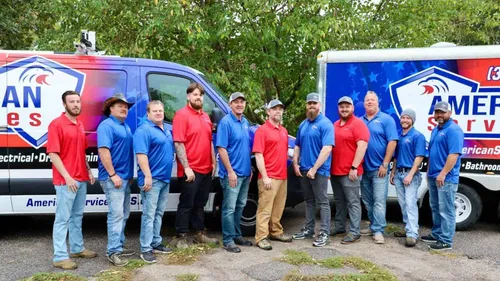
American Services
2408 S Pattie St, Wichita, KS 67216
American Services is a heating, cooling, and plumbing company serving Wichita, KS, and the surrounding Sedgwick County area. They offer a range of HVAC services including furnace repair, AC repair, heat pump repairs, HVAC installation, tune-ups, and indoor air quality solutions such as humidifiers and air purifiers. The company has been operating since 2013 and is part of a family-owned business with over 30 years of industry experience. They also provide emergency heating and cooling services, including during holidays.

Fahnestock Plumbing HVAC & Electric
3532 N Comotara St, Wichita, KS 67226
Fahnestock Plumbing HVAC & Electric is a full-service provider based in Wichita, KS, offering HVAC, plumbing, and electrical services. Their team handles repairs, installations, and maintenance for heat pumps, boilers, furnaces, air conditioning systems, and geothermal heat pumps. With over 75 years of experience since 1946, they employ NATE-certified technicians and hold certifications from the National Comfort Institute and the EPA. Fahnestock also offers emergency services to address urgent HVAC, plumbing, and electrical issues.
How Geothermal Systems Work in Wichita's Climate
The principle behind a geothermal heating and cooling system is elegant in its simplicity. Unlike traditional air-source heat pumps that exchange heat with the outside air, a ground-source heat pump (GSHP) exchanges heat with the earth. Just a few feet below the surface, the ground in Kansas maintains a nearly constant temperature between 50°F and 60°F year-round, regardless of summer heat or winter chill.
In the winter, a fluid (usually water mixed with antifreeze) circulates through a loop of pipes buried in your yard, absorbing the Earth's stored warmth. This warmed fluid is brought to the heat pump unit inside your home, where the system concentrates the thermal energy and distributes warm air through your ducts 1 2. In the summer, the process reverses: the system extracts heat and humidity from your indoor air and transfers it into the cooler ground loop, leaving your home comfortably cooled. This stable heat exchange source is what makes geothermal technology exceptionally efficient, often operating at 300-500% efficiency-meaning it moves three to five units of energy for every one unit of electricity it consumes 3 4.
Types of Ground Loop Systems
The heart of any geothermal installation is the ground loop, the network of pipes that facilitates the heat exchange with the earth. The right type for your Wichita home depends largely on your property's characteristics: available land, soil composition, and proximity to water.
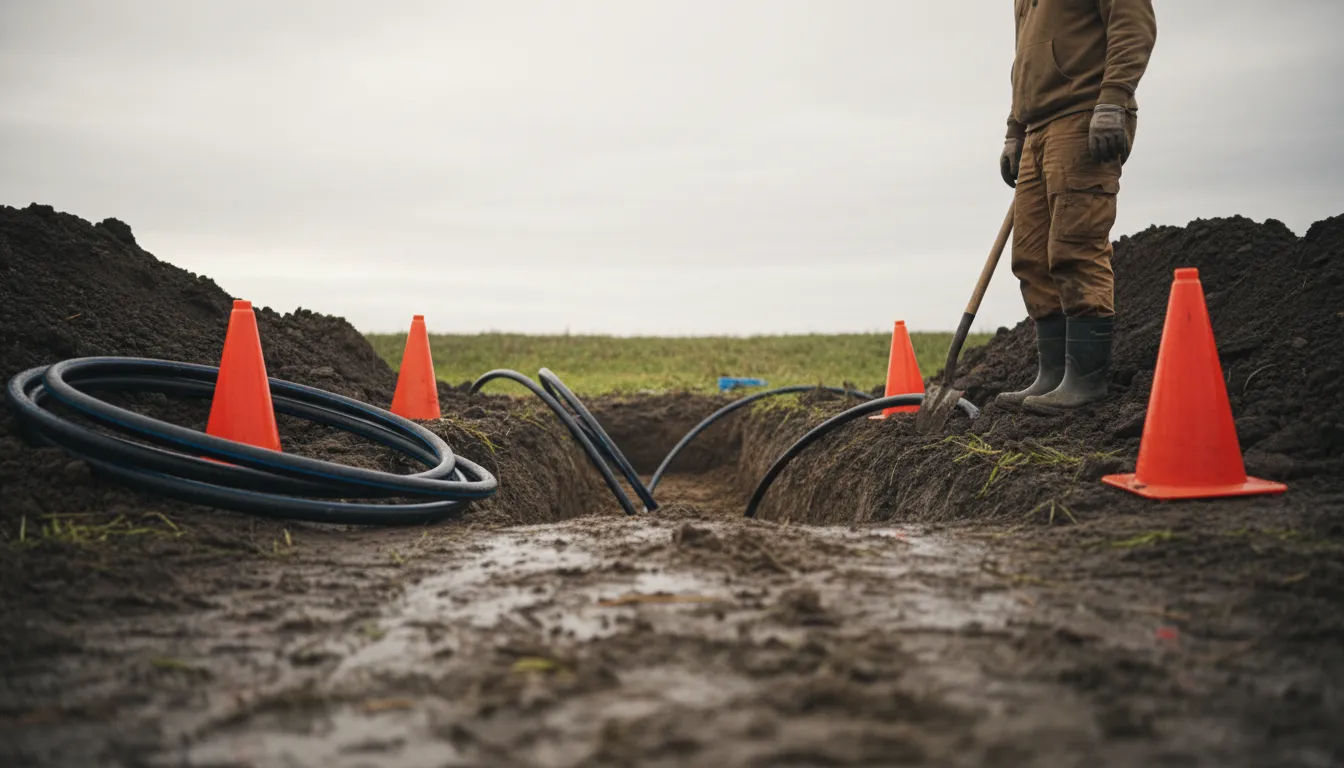
Horizontal Closed Loops This is a common choice for properties with ample yard space. Trenches are dug approximately four to six feet deep and hundreds of feet long. Pipes are laid in these trenches in a slinky-like configuration to maximize surface area within a smaller trench footprint. Horizontal loops are generally less expensive to install than vertical systems because they use standard trenching equipment, but they require a significant amount of open land.
Vertical Closed Loops For homes in Wichita with smaller lots, a vertical ground loop is often the ideal solution. Contractors drill boreholes, typically 4 to 6 inches in diameter and 150 to 500 feet deep, depending on the soil and rock conditions. U-shaped pipes are inserted into each borehole, which are then grouted to ensure good thermal contact. While vertical loops require specialized drilling rigs and can be more expensive upfront, they use minimal surface area and are less susceptible to temperature fluctuations from weather or surface conditions 5.
Pond or Lake Loops If your property has a suitable pond or lake, this can be the most cost-effective loop option. Coils of pipe are submerged at a depth where the water temperature remains stable. A pond loop requires a body of water that is deep enough, large enough, and has sufficient water flow to function effectively 6. This option is less common but can offer excellent performance where available.
The Installation Process: What to Expect
Installing a geothermal heat pump is a significant project that requires careful planning and professional expertise. Understanding the steps involved can help you prepare.
- Site Evaluation and Design: A qualified installer will first assess your property. This includes evaluating soil and rock conditions, available space, your home's heating and cooling load, and local regulations. This assessment is critical for determining the optimal type and size of the ground loop and heat pump unit.
- Loop Field Installation: This is the most substantial part of the project. For a horizontal system, excavation equipment will dig the necessary trenches. For a vertical system, a drilling rig will be brought in to create the boreholes. This phase can take several days, depending on the system's complexity 7.
- Pipe Installation and Connection: The high-density polyethylene (HDPE) piping is laid in the trenches or lowered into the boreholes. All sections are thermally fused together to create a continuous, leak-proof loop. The loop is then pressure-tested before being connected to the manifold that leads into your home.
- Heat Pump and Indoor Unit Installation: The indoor heat pump unit, which is about the size of a traditional furnace, is installed in your basement, utility room, or garage. It is connected to the ground loop manifold and to your home's existing ductwork or hydronic distribution system 8.
- System Startup and Commissioning: Once everything is connected, the system is filled with fluid, purged of air, and started. The installer will calibrate the controls, check refrigerant levels, and ensure the entire system is operating at peak efficiency before handing it over to you.
Find the perfect geothermal heat pump contractors for your needs
Get personalized recommendations and expert advice
Key Benefits for Wichita Homeowners
Investing in a geothermal system offers a compelling array of advantages that go beyond simple temperature control.
- Substantial Energy Savings: This is the most significant benefit. By leveraging the Earth's stable temperature, geothermal heat pumps use significantly less electricity than conventional systems. Homeowners can see a 25-50% reduction in overall electricity use for heating and cooling, translating to savings of 50-60% or more on their heating and cooling bills 9 10 11.
- Lower Operating Costs & Fast Payback: While the initial installation cost is higher than a standard HVAC system, the dramatically lower monthly utility bills lead to a relatively quick payback period. In many cases, the investment can be recouped in as little as 5 to 6 years through energy savings alone. Over the system's 20+ year lifespan, the total cost of ownership is often lower.
- Exceptional Comfort: Geothermal systems provide consistent, even heating and cooling without the drafts or hot/cold spots common with forced-air systems. They also excel at dehumidification in the summer, improving indoor air quality and comfort.
- Durability and Low Maintenance: The ground loop is typically warranted for 50 years and can last generations. The indoor heat pump unit also has a long lifespan, often exceeding 20 years, which is considerably longer than most conventional air conditioners and furnaces. Maintenance requirements are minimal, usually involving annual checks of the pump and components 12.
- Quiet Operation and Environmental Benefits: With no noisy outdoor condenser unit, geothermal systems operate very quietly. They also have a minimal environmental footprint, reducing your home's carbon emissions by lowering fossil fuel or high-electricity consumption for climate control.
Important Considerations Before You Install
A successful geothermal installation hinges on several key factors specific to your Wichita property.
- Property Suitability: The type of loop system you can install is dictated by your land. A horizontal loop requires a sizable, unobstructed yard. A vertical loop is the go-to for smaller urban or suburban lots but depends on the geology being suitable for drilling 13.
- Soil and Geology: The composition of your soil and bedrock-whether it's clay, sand, or limestone-affects thermal conductivity and the ease of drilling or trenching. A professional site assessment will identify any potential challenges.
- The Critical Role of Expert Installation: Geothermal technology is not a DIY project. Proper design, sizing, and installation are paramount to achieving the promised efficiency and savings. Choosing an experienced, certified installer with a proven track record in Wichita is the most important decision you will make 14 15.
Frequently asked questions
Sources
Footnotes
-
Geothermal Heat Pump - DSO Electric Cooperative - https://dsoelectric.com/geothermal-heat-pump ↩
-
Geothermal Energy and Heat Pump Potential in Kansas - https://kgs.ku.edu/geothermal-energy-and-heat-pump-potential-kansas ↩
-
Guide to Geothermal Heat Pumps - https://www.energy.gov/sites/prod/files/guide_to_geothermal_heat_pumps.pdf ↩
-
Geothermal Heat Pump Guide: Installation Costs, Types And Benefits - https://modernize.com/hvac/heating-repair-installation/heat-pump/geothermal ↩
-
Geothermal Ground Loop Design | Comfortworks, Inc. - https://comfort.works/ground-loop-design/ ↩
-
Geothermal Heat Pumps - Department of Energy - https://www.energy.gov/energysaver/geothermal-heat-pumps ↩
-
Geothermal Heat Pump Installation: What To Expect For Your Property - https://jomory.com/geothermal-heat-pump-installation-what-to-expect-for-your-property/ ↩
-
FAQs • What types of ground-source heat pumps and configurat - https://concordma.gov/FAQ.aspx?QID=484 ↩
-
Geothermal Systems in Wichita - Ground Source Heat Pumps - https://reddihvac.com/geothermal-systems ↩
-
Geothermal Heating, Cooling, and Hot Water Systems - https://igshpa.org/wp-content/uploads/Homeowners-Guide-to-Geothermal.pdf ↩
-
Geothermal Heat Pumps - EnergySmart CNY - https://www.energysmartcny.org/heat-pumps/geothermal/ ↩
-
Ground Source Heat Pump (GSHP) - Benefits and Costs - HIES - https://www.hiesscheme.org.uk/renewable-energy/ground-source-heat-pumps/ ↩
-
Geothermal Heat Pumps: How They Work and Benefits for Your ... - https://www.rbiva.com/resources/geothermal-heat-pumps-how-they-work-and-benefits/ ↩
-
Wichita Geothermal: Your 2025 Heat Pump Installation Guide - https://www.coolwichita.com/blog/geothermal-heat-pump-installation ↩
-
Installing a Geothermal Heat Pump: A Step-by-Step Guide - Oreate AI - https://www.oreateai.com/blog/installing-a-geothermal-heat-pump-a-stepbystep-guide/cc40f3e6f94e7650273ecbd9332b7668 ↩