
Find the Best Geothermal Heat Pump Contractors for Your Business
No obligation • Fast responses • Nationwide coverage

Why you can trust HVAC Firms
HVAC Firms is a leading United States resource for evaluating HVAC service providers. Our team researches companies, checks credentials, and reviews customer feedback to present clear, unbiased information. Listings and rankings are based on merit, and companies cannot pay to change our editorial content.
Search providers near you
Best Geothermal Heat Pump Contractors in Kansas Ranked
A geothermal heat pump is a highly efficient heating and cooling system that uses the stable temperature of the earth to regulate your home's climate. For Kansas homeowners, this technology offers a reliable solution to combat the state's variable weather, from humid summers to cold winters, while significantly reducing energy bills. This guide explains the key considerations for installing and maintaining a ground-source system in Kansas, helping you connect with qualified local professionals who understand state-specific regulations and soil conditions.
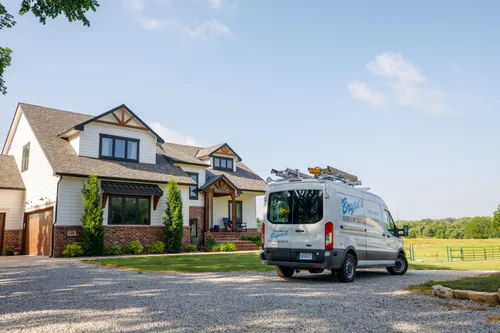
Bryan's Heating & Air Conditioning, Inc.
700 S Ramsey Dr, Valley Center, KS 67147
Bryan's Heating & Air Conditioning, Inc. has been providing residential and commercial HVAC services in Wichita, KS since 1986. They offer a wide range of heating and cooling solutions including repair, installation, and maintenance for furnaces, heat pumps, boilers, geothermal systems, central air conditioners, and ductless mini splits. The company also specializes in indoor air quality services such as humidity control and air purification, as well as custom ductwork fabrication and repair through their in-house sheet metal shop. Bryan's serves the Greater Wichita area with a focus on energy-efficient commercial HVAC solutions and comprehensive maintenance plans.
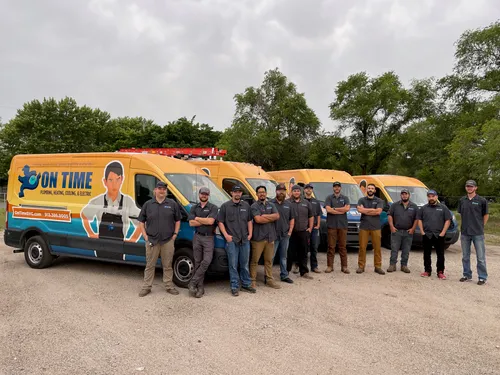
On Time Plumbing, Heating, Cooling & Electric
4065 N Woodlawn Blvd Suite 3, Bel Aire, KS 67220
On Time Plumbing, Heating, Cooling & Electric is a full-service provider based in Wichita, KS, offering plumbing, electrical, and HVAC services. They serve residential customers with repairs, installations, and maintenance for heating systems including furnaces, heat pumps, geothermal systems, and boilers, as well as air conditioning units and mini-splits. The company has been operating since 2004 and provides 24/7 emergency service to address urgent plumbing, heating, cooling, and electrical needs.
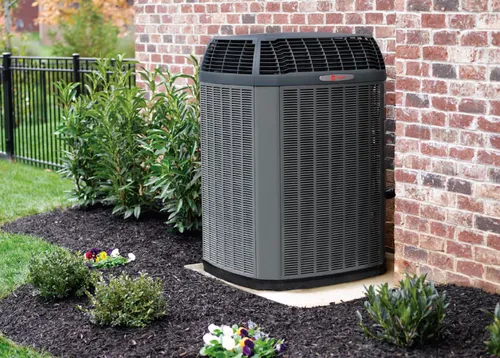
Reddi Heating and Cooling
Wichita, KS
Reddi Heating and Cooling is a locally owned HVAC company serving Wichita, KS, with over 60 years of experience. They offer a wide range of residential and commercial heating and cooling services, including AC and furnace repair, new HVAC installations, geothermal systems, ductless mini-splits, thermostats, and indoor air quality solutions. Reddi provides 24/7 service and specializes in installing and repairing systems from brands like Trane, Ruud, and Amana. Their expertise includes geothermal heat pump installation and maintenance.
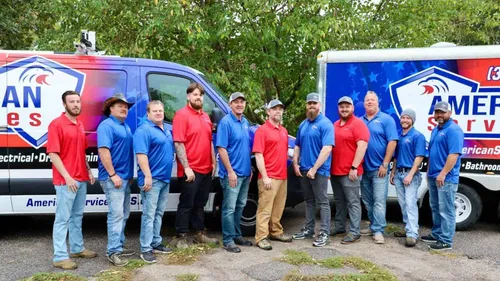
American Services
2408 S Pattie St, Wichita, KS 67216
American Services is a heating, cooling, and plumbing company serving Wichita, KS, and the surrounding Sedgwick County area. They offer a range of HVAC services including furnace repair, AC repair, heat pump repairs, HVAC installation, tune-ups, and indoor air quality solutions such as humidifiers and air purifiers. The company has been operating since 2013 and is part of a family-owned business with over 30 years of industry experience. They also provide emergency heating and cooling services, including during holidays.

Fahnestock Plumbing HVAC & Electric
3532 N Comotara St, Wichita, KS 67226
Fahnestock Plumbing HVAC & Electric is a full-service provider based in Wichita, KS, offering HVAC, plumbing, and electrical services. Their team handles repairs, installations, and maintenance for heat pumps, boilers, furnaces, air conditioning systems, and geothermal heat pumps. With over 75 years of experience since 1946, they employ NATE-certified technicians and hold certifications from the National Comfort Institute and the EPA. Fahnestock also offers emergency services to address urgent HVAC, plumbing, and electrical issues.
Why Geothermal is a Smart Choice for Kansas Homes
Kansas's climate, characterized by hot summers and cold winters, creates a substantial demand for year-round climate control. Traditional HVAC systems work hard against these extremes, leading to high energy consumption. A geothermal system, or ground-source heat pump, leverages the earth's consistent underground temperature (typically 50-55°F in Kansas) as a heat source in winter and a heat sink in summer 1. This process is far more efficient than generating heat or cool air from scratch, often resulting in 40-60% lower energy use for heating and cooling compared to conventional systems. Beyond utility savings, these systems are known for their durability, with underground loop fields lasting 50+ years and indoor units operating reliably for 20-25 years 2.
Understanding Kansas-Specific Regulations and Permitting
Installing the ground loop portion of a geothermal system in Kansas is regulated as a water well activity. This means the drilling of boreholes for vertical loops or trenches for horizontal loops must be performed by a contractor licensed by the Kansas Department of Health and Environment (KDHE).
- KDHE Licensing & WWC-5 Forms: Your installer must be a KDHE-licensed water well contractor. They are responsible for filing a WWC-5 form, the state's water well record, for each borehole. These records are maintained in a public database by the Kansas Geological Survey (KGS), which confirms the state's strong potential for geothermal technology.
- Local Permits: In addition to state oversight, you will likely need local building or excavation permits from your city or county. Requirements vary, so your installer should handle this or guide you through the process.
Working with a provider familiar with these regulations is crucial for a compliant and successful installation.
Financial Incentives: Offsetting the Upfront Cost
The initial investment for a geothermal heat pump system is higher than for a traditional HVAC system, with average costs for a typical Kansas home ranging from $20,000 to $40,000 or more 3. However, significant financial incentives can reduce the net cost and accelerate payback, which is typically estimated between 5 to 15 years 4.
- Federal Tax Credit: The most substantial incentive is the federal Residential Clean Energy Credit. It offers a 30% tax credit on the total cost of installing an ENERGY STAR® certified geothermal heat pump system. This credit applies to systems installed through 2032, after which it will phase down 5 6.
- State & Utility Rebates: Kansas-specific incentives can provide additional savings. It's essential to check the Database of State Incentives for Renewables & Efficiency (DSIRE) for current rebates or special loan programs offered by local utilities or the state.
Find the perfect geothermal heat pump contractors for your needs
Get personalized recommendations and expert advice
The Installation Process: From Assessment to Commissioning
A proper geothermal installation is a multi-stage project that ensures long-term efficiency and reliability.
- Site Assessment & Design: A qualified professional will evaluate your property's soil composition, geology, available land, and your home's heating and cooling loads. This assessment determines the optimal loop type: vertical boreholes (ideal for smaller lots), horizontal trenches (requiring more land), or a pond loop if a suitable water body is available.
- Loop Field Installation: Using heavy equipment, the licensed contractor will drill boreholes or excavate trenches to install the high-density polyethylene (HDPE) pipe loops. These are filled with a water-antifreeze solution and sealed in a closed loop.
- Indoor Unit & Connection: The geothermal heat pump unit is installed inside your home, typically in place of a traditional furnace. New or existing ductwork is connected to it. The system is then linked to the ground loop via piping that enters the home 7 8.
- System Commissioning: Finally, the installer will charge the system, test all components, and optimize its performance for maximum efficiency. Proper commissioning is key to achieving the promised energy savings 9.
Soil, Geology, and System Performance in Kansas
Kansas geology is generally well-suited for geothermal systems. The state's varied soils and rock layers can effectively transfer heat, but a site-specific evaluation is non-negotiable. The Kansas Geological Survey notes that the thermal properties of local materials influence the required length of the ground loop 10 11. A professional assessment will account for these factors to design a loop field that performs efficiently for decades, regardless of whether your property has clay, silt, sandstone, or limestone beneath the surface.
Maintenance and Repair Considerations
Geothermal systems require minimal maintenance, but like any mechanical system, they may need occasional service. The indoor heat pump components may require standard HVAC maintenance, such as checking filters, coils, and blowers.
Repairs are specialized. If system performance declines, a trained technician will use diagnostic tools like pressure gauges and thermal imaging to pinpoint issues, which could be related to the indoor unit, the circulating pump, or the ground loop itself. Leaks in the ground loop are rare but serious, requiring specialized detection and repair by an experienced professional. Choosing an installer who also offers repair services ensures you have expert support for the life of the system.
Frequently asked questions
Sources
Footnotes
-
Wichita Geothermal: Your 2025 Heat Pump Installation Guide - https://www.coolwichita.com/blog/geothermal-heat-pump-installation ↩
-
Overland Park Ground Source Heat Pump Installation & Repair - https://www.lancasterbrothers.com/geothermal/geothermal-install-and-repair-ground-source-heat/ ↩
-
Ground Source Heat Pump Cost: How Much Will You Pay in 2025? - https://www.energysage.com/heat-pumps/costs-benefits-geothermal-heat-pumps/ ↩
-
Geothermal Heat Pump Guide: Installation Costs, Types And Benefits - https://modernize.com/hvac/heating-repair-installation/heat-pump/geothermal ↩
-
Geothermal Heat Pumps: Cost and Installation - https://www.energyhomes.org/renewable-technology/geoinstallation.html ↩
-
Available Tax Credits For Geothermal Heat Pumps In 2025 | KS - https://smithsci.com/available-tax-credits-for-geothermal-heat-pumps-in-2025/ ↩
-
Exploring Geothermal Systems In Kansas City - https://www.climatecontrolkc.com/blog/geothermal-heating-and-cooling/explore-geothermal-systems-in-kansas-city/ ↩
-
Exploring The Efficiency And Benefits Of Geothermal Heating ... - https://www.climatecontrolkc.com/blog/geothermal-heating-and-cooling/geothermal-heating-cooling-benefits/ ↩
-
The Complete Guide To Geothermal Heat Pump Installation - https://ultrageothermal.com/the-complete-guide-to-geothermal-heat-pump-installation/ ↩
-
Geothermal Energy and Heat Pump Potential in Kansas - https://www.kgs.ku.edu/Publications/PIC/pic31.html ↩
-
Geothermal Energy and Heat Pump Potential in Kansas - https://www.kgs.ku.edu/Publications/PIC/PIC31-2011.pdf ↩