
Find the Best Geothermal Heat Pump Contractors for Your Business
No obligation • Fast responses • Nationwide coverage

Why you can trust HVAC Firms
HVAC Firms is a leading United States resource for evaluating HVAC service providers. Our team researches companies, checks credentials, and reviews customer feedback to present clear, unbiased information. Listings and rankings are based on merit, and companies cannot pay to change our editorial content.
Search providers near you
Top Geothermal Heat Pump Contractors in Lawrence, Kansas Ranked
A geothermal heat pump, also known as a ground-source heat pump, is one of the most energy-efficient heating and cooling systems available for your home. By leveraging the stable temperatures found underground, these systems provide consistent comfort year-round while significantly reducing your utility bills. For homeowners in Lawrence, navigating the options for geothermal installation and finding qualified local experts is the first step toward harnessing this sustainable technology. This guide will help you understand how these systems work, what to expect during installation, and how to connect with professionals in your area.
Air Care
10332 W 79th St, Shawnee, KS 66214
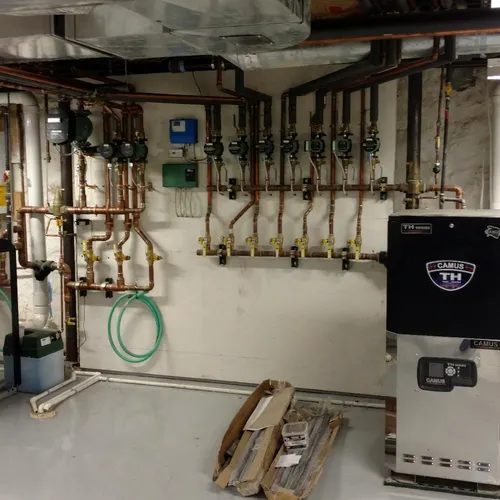
Air Care is an HVAC company serving Kansas City, MO, and the surrounding Shawnee area. Established in 1981, they provide a wide range of heating and cooling services including installation, repair, and maintenance of furnaces, air conditioners, boilers, mini-splits, and geothermal heat pumps. Their NATE-certified technicians handle both residential and light commercial work, with capabilities in duct design and indoor air quality services. Air Care offers 24/7 emergency repair service to address urgent heating or cooling issues.
Anthony Plumbing, Heating, Cooling & Electric
15203 W 99th St, Lenexa, KS 66219
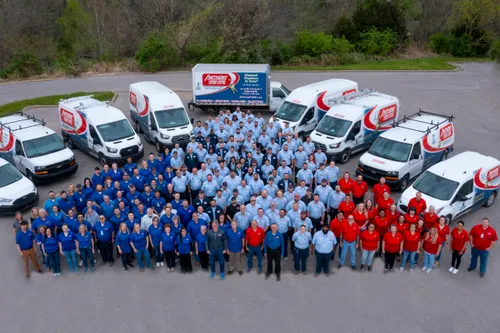
Anthony Plumbing, Heating, Cooling & Electric provides comprehensive HVAC, plumbing, and electrical services in Kansas City, MO. With over 70 years of experience, they offer repair and installation for air conditioners, furnaces, heat pumps, boilers, and geothermal systems. Their technicians are trained annually and vetted for trustworthiness, allowing them to work in homes even without the owner present. The company supports the Greater Kansas City Metro and surrounding areas, offering 24/7 emergency support and specialized capabilities such as Maestro zoning systems and whole-home generator installations.

Santa Fe Heating & Air
1100 E Santa Fe St, Gardner, KS 66030
Santa Fe Heating & Air is an HVAC contractor serving Kansas City, MO, and the surrounding Johnson County area. They provide heating, cooling, and indoor air quality services, including furnace and heat pump repair, air conditioning installation, and whole-home air purifier and humidifier solutions. Their technicians are NATE-certified and experienced with various systems, including geothermal heat pumps and ductless mini-splits. Established in 1985, Santa Fe Heating & Air has been serving local homeowners and businesses for nearly 40 years. They also offer same-day emergency heating repairs during cold weather.

Westside Heat & Aire Inc
6124 Mullen Rd, Shawnee, KS 66216
Westside Heat & Aire Inc is a full-service HVAC contractor based in Kansas City, MO, offering residential and commercial heating and cooling solutions. They provide repair, installation, and tune-up services for air conditioners, furnaces, heat pumps, and geothermal heat pump systems. The company specializes in Rheem home comfort systems and Climate Master geothermal heat pumps, which use the earth's constant temperature for efficient heating and cooling. With over twenty years of combined experience, Westside Heat & Aire Inc also offers 24-hour emergency service for unexpected HVAC issues.
How Geothermal Systems Work in the Lawrence Climate
The principle behind a ground-source heat pump is elegantly simple: it uses the earth as a giant thermal battery. Below the frost line, the soil in Kansas maintains a remarkably consistent temperature, typically between 50 and 60 degrees Fahrenheit, regardless of the season above ground. This stable temperature is the key to the system's efficiency.
Here's the basic process:
- Heat Exchange: A mixture of water and antifreeze circulates through a network of pipes buried in your yard, known as the ground loop. In the winter, this fluid absorbs the earth's natural heat.
- Heat Concentration: The warm fluid is pumped to an indoor heat pump unit. The unit uses a refrigeration cycle to concentrate this low-grade heat into a higher temperature suitable for warming your home.
- Heat Distribution: The concentrated heat is then distributed through your home's existing ductwork or a hydronic (water-based) system.
- Summer Reversal: In the cooling mode, the process reverses. The system extracts heat from your indoor air and transfers it into the cooler ground loop fluid, which then rejects the heat into the earth.
This method of exchanging heat with the ground is far more efficient than traditional air-source heat pumps, which must work harder as outside air temperatures become extreme.
Types of Ground Loop Systems for Your Property
The underground piping, or loop field, is the heart of the system. The right type for your Lawrence home depends on your lot size, soil composition, and access to water. Local installers will conduct a detailed site assessment to determine the best option.
Closed-Loop Systems
These are the most common installations, where the fluid continuously circulates through sealed, high-density polyethylene pipes.
- Horizontal Closed-Loop: Pipes are laid in trenches dug 5 to 8 feet deep. This is often the most cost-effective method but requires a significant amount of available land 1.
- Vertical Closed-Loop: Pipes are installed in deep boreholes, typically 100 to 400 feet deep. This is ideal for homes with smaller yards, as it requires less horizontal space, but involves specialized drilling equipment.
- Pond/Lake Loop: If you have a sufficient body of water on your property, coils of pipe can be submerged at the bottom. This can be the lowest-cost loop option, as it avoids extensive digging or drilling 2 3.
Open-Loop Systems
This system uses groundwater directly from a well as the heat exchange fluid. After passing through the heat pump, the water is discharged back into a second well, a pond, or a stream. This option can be highly efficient but requires an adequate, consistent supply of clean water and compliance with local codes regarding water discharge 4 5.
The Installation Process: What to Expect
Installing a geothermal heating and cooling system is a significant project that involves both indoor and outdoor work. Understanding the steps can help you prepare.
- Comprehensive Site Evaluation: A qualified installer will assess your property's soil conditions, available space, and your home's heating and cooling loads. They will also check for any underground utilities.
- Loop Field Installation: This is the major outdoor phase.
- For horizontal loops, excavators will dig long trenches in your yard.
- For vertical loops, a well-drilling rig will be brought in to create the boreholes. While drilling is less disruptive to the surface landscape, it is a more technically complex process.
- Indoor Unit Installation: The geothermal heat pump unit, which is similar in size to a traditional furnace, is installed in your basement, utility room, or garage. It will be connected to your home's existing ductwork or piping system 6.
- Connection and Commissioning: A trench is dug to bring the loop field pipes to the house foundation. All components are connected, the system is filled and pressurized, and the installer will test and calibrate the entire system for optimal performance 7 8.
Find the perfect geothermal heat pump contractors for your needs
Get personalized recommendations and expert advice
Financial Considerations: Costs, Savings, and Incentives
The decision to invest in a geothermal system involves weighing higher upfront costs against substantial long-term savings.
- Upfront Investment: The total installed cost for a residential geothermal heat pump system in Lawrence typically ranges from $20,000 to over $40,000. The final price is highly dependent on the loop type, your home's size, and the existing infrastructure.
- Operational Savings: The dramatic reduction in energy use is the primary payoff. Homeowners can expect to save between 30% and 70% on their heating and cooling bills compared to conventional systems like furnaces and standard air conditioners 9 10 11.
- Durability and Lifespan: The indoor heat pump unit often lasts 20 years or more, while the underground polyethylene piping can have a lifespan exceeding 50 years with minimal maintenance.
- Financial Incentives: The federal government offers a tax credit for the installation of qualified geothermal heat pump systems. It's crucial to check for any additional state or local utility rebates that may be available to Kansas residents, as these can significantly reduce the net cost.
Why Geothermal is a Smart Choice for Kansas Homes
Kansas's climate, with its hot summers and cold winters, is well-suited for geothermal technology. While air-source heat pumps can struggle to extract heat from frigid winter air, a ground-source system consistently accesses the earth's stable 50-60°F temperature, making it exceptionally efficient year-round 12. This reliability translates to unmatched comfort and energy independence.
Finding the Right Local Professional
Selecting an experienced installer is critical. Look for contractors who are certified by organizations like the International Ground Source Heat Pump Association (IGSHPA). They should provide detailed proposals, explain the site-specific rationale for their loop recommendation, and offer clear references from past projects in the Lawrence area. A reputable professional will handle everything from permits and drilling to system startup and homeowner education.
Frequently asked questions
Sources
Footnotes
-
Geothermal Energy and Heat Pump Potential in Kansas - https://kgs.ku.edu/geothermal-energy-and-heat-pump-potential-kansas ↩
-
Geothermal Heat Pumps - Department of Energy - https://www.energy.gov/energysaver/geothermal-heat-pumps ↩
-
Breakdown of 'open loop', 'closed vertical loop', and 'closed horizontal loop' systems. - https://www.greenmatch.co.uk/ground-source-heat-pump/replacement-installation ↩
-
Geothermal Heating and Cooling Systems - MN Dept. of Health - https://www.health.state.mn.us/communities/environment/water/wells/geothermal.html ↩
-
How Do Geothermal Pumps Work? - https://newcombandcompany.com/resources/geothermal-pipes-how-geothermal-pumps-work ↩
-
How Does a Geothermal System Work? - ClimateMaster - https://www.climatemaster.com/homeowner/side-links/how-it-works ↩
-
Geothermal & Construction | Kansas & Missouri - https://www.geothermalkc.com/ ↩
-
Geothermal Heat Pump Installation: What To Expect For Your ... - https://jomory.com/geothermal-heat-pump-installation-what-to-expect-for-your-property/ ↩
-
Geothermal Heating, Cooling, and Hot Water Systems - https://igshpa.org/wp-content/uploads/Homeowners-Guide-to-Geothermal.pdf ↩
-
Guide to Geothermal Heat Pumps - https://www.energy.gov/sites/prod/files/guide_to_geothermal_heat_pumps.pdf ↩
-
Geothermal Heat Pump Guide: Installation Costs, Types And Benefits - https://modernize.com/hvac/heating-repair-installation/heat-pump/geothermal ↩
-
Air-Source vs. Geothermal Heat Pumps - https://bucknershc.com/blog/air-source-vs-geothermal-heat-pump ↩