
Find the Best Geothermal Heat Pump Contractors for Your Business
No obligation • Fast responses • Nationwide coverage

Why you can trust HVAC Firms
HVAC Firms is a leading United States resource for evaluating HVAC service providers. Our team researches companies, checks credentials, and reviews customer feedback to present clear, unbiased information. Listings and rankings are based on merit, and companies cannot pay to change our editorial content.
Search providers near you
Top Geothermal Heat Pump Contractors in Waukegan, Illinois Ranked
Geothermal heat pumps, also known as ground-source heat pumps, are a highly efficient technology for heating and cooling your home by leveraging the earth's stable underground temperature. For Waukegan residents, this system offers a path to significant energy savings and reduced environmental impact, especially when paired with available financial incentives. This guide explains how these systems work, the installation process, and how you can find qualified local experts to evaluate your property for a geothermal solution.
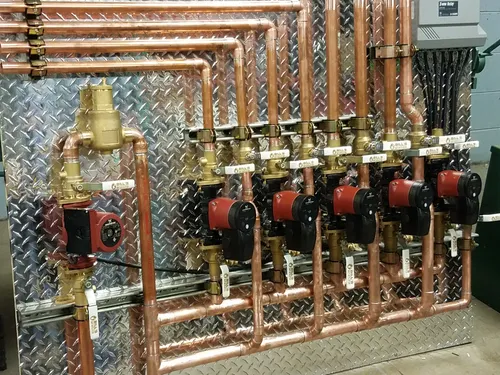
Bill's Heating And Air Conditioning Inc.
1855 Holste Rd, Northbrook, IL 60062
Bill's Heating And Air Conditioning Inc. provides HVAC repair, maintenance, and installation services for residential and commercial clients in Chicago, IL. Their offerings include air conditioning, furnace, and boiler services, as well as geothermal heat pump installation and indoor air quality improvements. The company is equipped to handle zoning and control systems and offers 24/7 emergency service throughout the Chicago area. They focus on accurate diagnosis and timely repairs, often fixing broken parts rather than replacing entire systems. Bill's Heating And Air Conditioning Inc. serves multiple nearby communities including Skokie, Glenview, and Evanston.
Western Heating And Air Conditioning
6925 N Greenview Ave, Chicago, IL 60626
Western Heating And Air Conditioning is an HVAC contractor based in Chicago, IL, providing a wide range of heating, cooling, and indoor air quality services. They handle installation, repair, and maintenance for air conditioners, furnaces, heat pumps, mini splits, and geothermal systems. The company also offers duct cleaning, thermostat installation, and HVAC tune-ups. Known for capabilities such as smart thermostat integration and energy-efficient HVAC solutions, Western Heating And Air Conditioning supports both residential and commercial clients in the Chicago area.
Next Step Heating & Cooling
8206 N McCormick Blvd, Skokie, IL 60076
Next Step Heating & Cooling is an HVAC contractor serving Chicago, IL, and the North Shore area. They provide installation, repair, and maintenance services for heating and cooling systems including furnaces, boilers, air conditioners, geothermal heat pumps, ductless mini splits, and thermostats. The company specializes in geothermal system installations, offering efficient heating and cooling solutions for both residential and commercial properties. Next Step Heating & Cooling is a member of the Geothermal Alliance of Illinois and Comed Energy Efficiency Service providers, emphasizing environmentally friendly and cost-effective HVAC options.
Y-Tech Heating & Air Conditioning
701 Devon Ave, Park Ridge, IL 60068
Y-Tech Heating & Air Conditioning is a licensed HVAC contractor serving Chicago, IL, and the surrounding communities. They provide a range of services including installation, repair, and maintenance of air conditioners, furnaces, heat pumps, boilers, mini split systems, geothermal heat pumps, and indoor air quality products. With over 50 years of experience, Y-Tech offers professional HVAC tune-ups and maintenance agreements to help keep systems running efficiently. They also provide 24/7 emergency service to address urgent heating and cooling needs.
How Geothermal Systems Work: Tapping into the Earth's Energy
Unlike traditional furnaces and air conditioners that generate heat or fight against outdoor air temperatures, a geothermal heat pump simply moves heat. It uses the earth as a massive, free battery for thermal energy. Just a few feet below the surface, the ground in Waukegan maintains a relatively constant temperature between 40°F and 70°F year-round, regardless of the summer heat or winter chill above ground.
The core of the system is a sealed loop of high-density polyethylene pipe, called the ground loop, buried in your yard. A water-based fluid circulates through this loop, absorbing heat from the earth in the winter and depositing heat back into the earth in the summer. This fluid carries the thermal energy to a heat pump unit inside your home. The heat pump then concentrates this energy-using a refrigeration cycle similar to your refrigerator-to provide warm or cool air that is distributed through your existing ductwork or a ductless system. This process of moving heat, rather than creating it through combustion, is what delivers exceptional efficiency, often moving 3 to 5 times more energy than the electricity it consumes to operate 1.
Types of Ground Loop Systems
The design of the underground loop is critical and depends on your property's characteristics. The most common type is the closed-loop system, where the fluid continuously circulates through sealed pipes. There are two primary configurations:
- Horizontal Closed-Loop: This layout involves digging trenches 4 to 6 feet deep across a large area of your yard. Pipes are laid in these trenches in a series of parallel runs or slinky coils. This option is typically more cost-effective but requires a significant amount of available land 2 3.
- Vertical Closed-Loop: For properties with limited space, like many residential lots in Waukegan, vertical loops are the ideal solution. Contractors drill boreholes 60 to 140 meters deep and insert U-shaped pipe loops into each hole. While drilling can be more expensive upfront, it minimizes landscape disruption and is effective for most urban and suburban homes.
A less common alternative is an open-loop system, which uses groundwater from a well or a pond as the direct heat exchange fluid. After passing through the heat pump, the water is returned to a discharge well or the pond. This system can be highly efficient but requires an adequate supply of clean water and may be subject to local regulations 4.
The Installation Process for Waukegan Homes
Installing a geothermal heating and cooling system is a significant project that requires professional expertise. The process generally follows these key steps:
- Site Assessment and Design: A qualified installer will evaluate your property, considering soil composition, lot size, and your home's heating and cooling loads. This assessment determines the optimal loop type and size to ensure peak system performance.
- Loop Installation: For a vertical system, a drilling rig will create the necessary boreholes. For a horizontal system, a backhoe will dig the trenches. The HDPE pipe is then placed and the trenches or boreholes are backfilled with a special grout to ensure good thermal conductivity 5.
- Heat Pump and Connection: The indoor heat pump unit is installed, typically in a basement, utility room, or garage. It is connected to the ground loop and to your home's existing ductwork or to new air handlers for a ductless setup. The system is pressurized, tested for leaks, and the circulating fluid is added 6.
- System Activation and Commissioning: Finally, the system is started up, balanced, and tested to ensure it is operating correctly and efficiently. A good installer will walk you through the system's controls and basic maintenance.
Find the perfect geothermal heat pump contractors for your needs
Get personalized recommendations and expert advice
Understanding Costs, Savings, and Incentives
The decision to install a geothermal system is a long-term investment in your home's comfort and efficiency. While the upfront cost is higher than a conventional HVAC system, the operational savings and available incentives make it a compelling financial choice.
Upfront Installation Costs: For a typical single-family home in Waukegan, a complete geothermal heat pump system, including the ground loop and indoor unit, can range from $20,000 to over $40,000. The final cost depends heavily on your home's size, the chosen loop type (vertical drilling is often more expensive than horizontal trenching), and the soil conditions.
Long-Term Energy Savings: This is where geothermal systems shine. By leveraging the earth's stable temperature, they can reduce your heating costs by up to 70% and cooling costs by about 50% compared to conventional systems. For many homeowners, this translates to annual savings of $1,000 or more on their energy bills. Over the 20+ year lifespan of the heat pump unit (the underground loop can last 50+ years), these savings add up dramatically 7 8.
Financial Incentives to Reduce Cost: The financial landscape for geothermal in Waukegan is very favorable thanks to federal and local programs:
- Federal Tax Credit: The Inflation Reduction Act (IRA) provides a tax credit worth 30% of the total system cost, with no upper limit. For a $30,000 system, this is a direct $9,000 reduction in your federal tax liability 9.
- ComEd Rebates: As a Waukegan resident served by ComEd, you may be eligible for significant rebates for installing a qualifying geothermal heat pump. These rebates are often structured per ton of capacity (e.g., $1,500 per ton), which can amount to several thousand dollars in additional savings 10.
Calculating Your Return on Investment (ROI): With these incentives, the effective net cost of a system can be cut nearly in half. For example, a $30,000 system might see a $9,000 federal tax credit and a $4,500 ComEd rebate, bringing your out-of-pocket cost down to around $16,500. If the system saves you $1,750 annually on energy, your simple payback period could be under 10 years. After that, you enjoy drastically lower energy bills for decades, all while increasing your home's value and comfort 11.
Benefits Beyond Savings
The advantages of a ground-source heat pump extend well beyond your utility bill:
- Superior Comfort: These systems provide consistent, even heating and cooling without the drafts or hot/cold spots common with forced-air systems. They also excel at dehumidifying in the summer.
- Quiet Operation: With no noisy outdoor condenser unit (like a traditional air conditioner), the system operates very quietly. The main components are indoors or underground.
- Durability and Longevity: The indoor heat pump components often last 20-25 years, while the underground piping loop frequently carries a warranty of 50 years or more, as it is protected from the weather 12.
- Environmental Impact: By using renewable thermal energy from the ground and electricity, geothermal systems drastically reduce your home's carbon footprint. They use no fossil fuels on-site and have no combustion emissions.
Finding the Right Professional in Waukegan
Choosing an experienced, certified installer is the most critical step. Look for contractors who are accredited by organizations like the International Ground Source Heat Pump Association (IGSHPA). They should conduct a detailed Manual J load calculation for your home and provide a comprehensive proposal that includes system design, loop specifications, and a clear breakdown of all costs and projected savings. Be sure to ask for references from local installations and verify they are familiar with the process for securing ComEd rebates and federal tax credits.
Frequently asked questions
Sources
Footnotes
-
5 Things You Should Know about Geothermal Heat Pumps - https://www.energy.gov/cmei/articles/5-things-you-should-know-about-geothermal-heat-pumps ↩
-
Geothermal Heat Pumps | WBDG - https://www.wbdg.org/resources/geothermal-heat-pumps ↩
-
Geothermal Heat Pumps - Department of Energy - https://www.energy.gov/energysaver/geothermal-heat-pumps ↩
-
Geothermal 101: Frequently Asked Questions Regarding Geothermal Energy - https://energyalabama.org/geothermal-101-frequently-asked-questions-regarding-geothermal-energy/ ↩
-
Geothermal heat pumps: The ultimate guide to ground-source ... - https://termo-plus.com/blog/geothermal-ultimate-guide-to-ground-source-heat-pumps/ ↩
-
How a Geothermal Heat Pump Works | This Old House - https://www.youtube.com/watch?v=d5Tbsx3R2T8 ↩
-
Clean Energy 101: Geothermal Heat Pumps - RMI - https://rmi.org/clean-energy-101-geothermal-heat-pumps/ ↩
-
Geothermal Heating & Cooling - Department of Energy - https://www.energy.gov/eere/geothermal/geothermal-heating-cooling ↩
-
Guide to Geothermal Heat Pumps - https://www.energy.gov/sites/prod/files/guide_to_geothermal_heat_pumps.pdf ↩
-
Geothermal Heating and Cooling - Open Energy Information - https://openei.org/wiki/GeoBridge/Heating_and_Cooling ↩
-
Geothermal Heat Pump Guide: Installation Costs, Types And Benefits - https://modernize.com/hvac/heating-repair-installation/heat-pump/geothermal ↩
-
Geothermal Heating And Cooling - https://flocksheating.com/geothermal/ ↩