
Find the Best Geothermal Heat Pump Contractors for Your Business
No obligation • Fast responses • Nationwide coverage

Why you can trust HVAC Firms
HVAC Firms is a leading United States resource for evaluating HVAC service providers. Our team researches companies, checks credentials, and reviews customer feedback to present clear, unbiased information. Listings and rankings are based on merit, and companies cannot pay to change our editorial content.
Search providers near you
Top Geothermal Heat Pump Contractors in Chicago, Illinois Ranked
Geothermal heat pumps, also known as ground-source heat pumps, are a highly efficient method for heating and cooling your Chicago home by leveraging the Earth's stable underground temperature. This technology matters because it can dramatically reduce your energy bills and environmental footprint while providing reliable comfort year-round, regardless of Chicago's extreme summer heat or winter cold. You can use this guide to understand how these systems work, the types available, and what to consider when looking for a qualified local installer to assess your property.
Bill's Heating And Air Conditioning Inc.
1855 Holste Rd, Northbrook, IL 60062
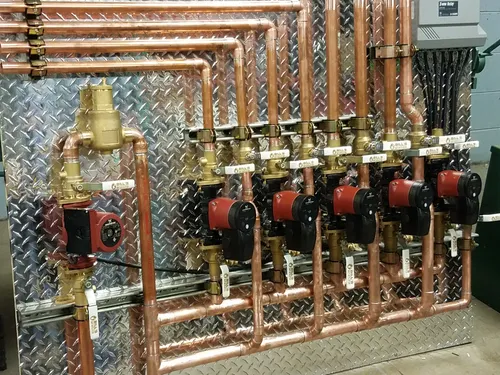
Bill's Heating And Air Conditioning Inc. provides HVAC repair, maintenance, and installation services for residential and commercial clients in Chicago, IL. Their offerings include air conditioning, furnace, and boiler services, as well as geothermal heat pump installation and indoor air quality improvements. The company is equipped to handle zoning and control systems and offers 24/7 emergency service throughout the Chicago area. They focus on accurate diagnosis and timely repairs, often fixing broken parts rather than replacing entire systems. Bill's Heating And Air Conditioning Inc. serves multiple nearby communities including Skokie, Glenview, and Evanston.
Western Heating And Air Conditioning
6925 N Greenview Ave, Chicago, IL 60626
Western Heating And Air Conditioning is an HVAC contractor based in Chicago, IL, providing a wide range of heating, cooling, and indoor air quality services. They handle installation, repair, and maintenance for air conditioners, furnaces, heat pumps, mini splits, and geothermal systems. The company also offers duct cleaning, thermostat installation, and HVAC tune-ups. Known for capabilities such as smart thermostat integration and energy-efficient HVAC solutions, Western Heating And Air Conditioning supports both residential and commercial clients in the Chicago area.
Next Step Heating & Cooling
8206 N McCormick Blvd, Skokie, IL 60076
Next Step Heating & Cooling is an HVAC contractor serving Chicago, IL, and the North Shore area. They provide installation, repair, and maintenance services for heating and cooling systems including furnaces, boilers, air conditioners, geothermal heat pumps, ductless mini splits, and thermostats. The company specializes in geothermal system installations, offering efficient heating and cooling solutions for both residential and commercial properties. Next Step Heating & Cooling is a member of the Geothermal Alliance of Illinois and Comed Energy Efficiency Service providers, emphasizing environmentally friendly and cost-effective HVAC options.
Geothermal Specialist, Inc.
5427 County Rd 300 E suite a, La Porte, IN 46350
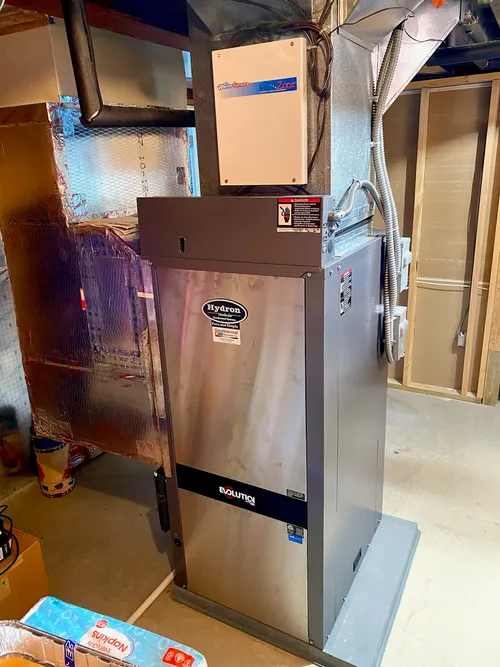
Geothermal Specialist, Inc. is a geothermal heat pump contractor based in Chicago, IL. The company offers clean and efficient geothermal heating and cooling solutions for both residential and commercial clients. With over 30 years of experience, they provide installation and repair services as a comprehensive geothermal provider.
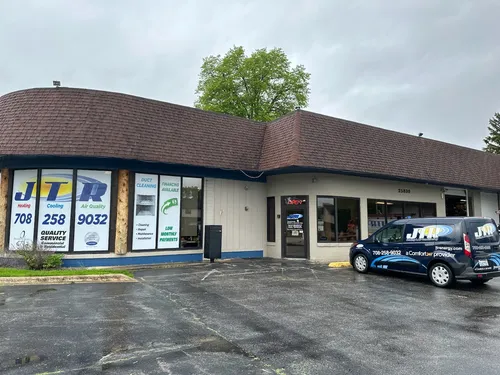
JTR Heating & Air Conditioning
25830 S Governors Hwy, Monee, IL 60449
JTR Heating & Air Conditioning is an HVAC company serving Chicago, IL, and nearby communities including Bourbonnais, Monee, and Peotone. They provide a range of heating and cooling services such as air conditioning and furnace repair, installation, geothermal heat pump systems, duct cleaning, and HVAC tune-ups. With over 30 years of experience, the company supports both residential and commercial customers. They have been recognized with the Carrier President's Award for their service in consecutive years.
How a Geothermal System Works in Chicago
A geothermal heating and cooling system capitalizes on a simple fact: just a few feet below the surface, the Earth in Illinois maintains a relatively constant temperature between 40°F and 70°F year-round. A geothermal heat pump uses this stable resource as an exchange medium instead of the outside air.
During the winter, the system circulates a water-based solution through a loop of pipes buried underground (called the ground loop). This fluid absorbs the Earth's natural heat and carries it to the heat pump unit inside your home. The heat pump concentrates this low-grade thermal energy and distributes warm air through your ductwork. In the summer, the process reverses: the system extracts heat and humidity from your indoor air and transfers it into the cooler ground loop, leaving your home comfortably cooled 1. This constant, reliable exchange source makes ground-source systems far more efficient than conventional air-source heat pumps, which must work harder as outdoor temperatures become extreme 2.
Key Benefits for Chicago Homeowners
Installing a geothermal system in the Chicagoland area offers several compelling advantages:
- Substantial Energy Savings: Homeowners can typically expect a 30% to 70% reduction in their heating and cooling bills compared to conventional systems. This is due to the exceptional efficiency of moving heat rather than generating it through combustion.
- Year-Round Comfort: These systems provide consistent, even heating and cooling without the drafts or hot/cold spots common with forced-air systems. They also excel at dehumidifying in the summer.
- Durability and Low Maintenance: The underground piping, or loop field, is designed to last for more than 50 years 3. The indoor heat pump unit also has a long lifespan, typically 20 to 25 years, which is often longer than traditional HVAC equipment 4 3. With few moving parts exposed to the elements, maintenance requirements are generally low.
- Environmental Impact: By using renewable thermal energy from the ground and electricity, geothermal systems significantly reduce your home's carbon footprint. They produce no on-site emissions and have a very low environmental impact over their long life.
- Quiet Operation: The majority of the system is underground or indoors, and there is no loud outdoor condenser unit, resulting in very quiet operation.
Types of Geothermal Loop Systems
The heart of a geothermal system is its ground loop. The right type for your Chicago property depends on your lot size, soil conditions, and local geology. The main categories are closed-loop and open-loop systems.
Closed-Loop Systems
This is the most common residential configuration, using a continuous, sealed loop of high-density polyethylene pipe buried in the ground. A mixture of water and environmentally safe antifreeze circulates through this loop. There are two primary arrangements:
- Vertical Closed-Loop: This is the ideal and most common choice for urban and suburban lots in Chicago, where yard space is limited. Contractors drill boreholes typically 150 to 500 feet deep and insert U-shaped loops of pipe into each hole 5. The holes are then backfilled with a special grout. While the drilling process has a higher upfront cost, it requires the least amount of land area.
- Horizontal Closed-Loop: This method is suitable for properties with ample open land. Contractors excavate long, shallow trenches (usually 4 to 6 feet deep) and lay loops of pipe horizontally 6. This approach generally has lower excavation costs than vertical drilling but requires a significant amount of usable land, which can be a constraint in many neighborhoods.
Open-Loop Systems
This configuration uses groundwater from a well or a nearby pond as the direct heat exchange fluid. It pulls water from the source, runs it through the heat pump, and then discharges it 7. While potentially very efficient, open-loop systems are less common due to their dependence on a sufficient supply of clean water and compliance with local codes regarding water discharge. They are not feasible for most standard residential properties in Chicago.
Hybrid Systems
In some cases, a hybrid or "dual-source" system that combines a smaller geothermal ground loop with a supplemental air-source heat pump can be designed. This can be a cost-optimizing solution for certain properties where a full-sized ground loop is prohibitively expensive.
Find the perfect geothermal heat pump contractors for your needs
Get personalized recommendations and expert advice
The Installation Process: What to Expect
Installing a geothermal system is a significant project that requires expert planning and execution. The process generally follows these key steps:
- Site Evaluation and Design: A qualified installer will assess your property, including soil composition, lot layout, and existing ductwork. They will perform a Manual J load calculation to determine your home's exact heating and cooling needs and design a system with the correct capacity (measured in tons).
- Loop Field Installation: This is the major excavation or drilling phase. For a vertical system, a drilling rig will create the necessary boreholes. For a horizontal system, a backhoe will dig the trenches. The piping is then placed, connected, and pressure-tested to ensure there are no leaks before being backfilled.
- Indoor Unit and Ductwork Connection: The geothermal heat pump unit (which contains the compressor, heat exchanger, and fan) is installed indoors, typically in a basement, utility room, or garage. It is connected to the ground loop piping and to your home's existing or new air duct distribution system 8.
- System Startup and Commissioning: The installer fills the loop with fluid, purges air from the lines, and starts the system. They will test and calibrate all components to ensure everything is operating at peak efficiency and explain the system's controls to you.
Understanding Costs and Incentives
The initial investment for a geothermal heat pump system is higher than for a conventional HVAC system. Costs are influenced by the system size (tonnage), the type of loop field (vertical drilling is more expensive than horizontal trenching), your home's characteristics, and the chosen installer 9 10 11.
A rough cost range for the geothermal system itself is often cited at $4,000 to $8,000 per ton of capacity, with the complete installed cost including the ground loop being significantly higher 12 13. It's crucial to view this as a long-term investment. The dramatic reduction in monthly energy bills means the system can pay for itself over time, a period known as the payback period. Furthermore, the exceptional durability of the components adds to the long-term value.
Financial incentives can substantially reduce the net cost. The federal government offers a tax credit for qualified geothermal heat pump installations. It's also worth investigating if the State of Illinois, Cook County, or local utilities like ComEd offer rebates, special financing, or group purchase programs. Organizations like the Citizens Utility Board have promoted group buys for Chicagoland homeowners to reduce costs through collective purchasing power 14.
Finding a Qualified Installer in Chicagoland
Selecting the right contractor is the most critical step for a successful geothermal installation. Look for a company with specific, proven experience in designing and installing ground-source heat pump systems, not just general HVAC work. They should be able to explain the different loop options, provide a detailed site assessment, and offer clear references from past geothermal projects. Resources like the Illinois Geothermal Coalition can be a starting point for finding knowledgeable professionals in the region 15. Always get multiple detailed quotes that break down equipment, loop installation, and labor costs.
Frequently asked questions
Sources
Footnotes
-
Geothermal Heating & Cooling - Department of Energy - https://www.energy.gov/eere/geothermal/geothermal-heating-cooling ↩
-
Air-Source Heat Pumps: Efficient Choice for Year-Round Comfort - https://cielowigle.com/blog/air-source-heat-pump/ ↩
-
Geothermal Heating and Cooling - Ecology Action Center - https://ecologyactioncenter.org/energy-home/geothermal-heating-and-cooling/ ↩ ↩2
-
Guide to Geothermal Heat Pumps - https://www.energy.gov/sites/prod/files/guide_to_geothermal_heat_pumps.pdf ↩
-
Geothermal Installation Steps Explained - https://ultrageothermal.com/geothermal-installation-steps-explained/ ↩
-
Closed Loop System Guide (2025) - https://www.greenmatch.co.uk/ground-source-heat-pump/close-loop ↩
-
Benefits & Types Geothermal System - NY Engineers - https://www.ny-engineers.com/blog/what-is-geothermal-system-benefits-and-types ↩
-
Geothermal Heat Pumps - Department of Energy - https://www.energy.gov/energysaver/geothermal-heat-pumps ↩
-
Geothermal Heating and Cooling - Open Energy Information - https://openei.org/wiki/GeoBridge/Heating_and_Cooling ↩
-
All You Need to Know About Home Geothermal Heating & ... - https://dandelionenergy.com/all-you-need-to-know-about-home-geothermal-heating-cooling ↩
-
Ground source heat pumps: costs, savings and benefits - https://energysavingtrust.org.uk/advice/ground-source-heat-pumps/ ↩
-
Geothermal | Northbrook, IL - https://www.northbrook.il.us/1233/Geothermal ↩
-
5 Things You Should Know about Geothermal Heat Pumps - https://www.energy.gov/cmei/articles/5-things-you-should-know-about-geothermal-heat-pumps ↩
-
Get the details on geothermal heat pumps - Citizens Utility Board - https://www.citizensutilityboard.org/blog/2023/04/03/announcing-grow-geo-chicagoland-get-the-details-on-cubs-new-geothermal-heat-pump-group-buy/ ↩
-
Geothermal in the Midwest - Illinois Geothermal Coalition - https://geothermal.illinois.edu/wiki/ ↩