Find the Best Geothermal Heat Pump Contractors for Your Business
No obligation • Fast responses • Nationwide coverage

Why you can trust HVAC Firms
HVAC Firms is a leading United States resource for evaluating HVAC service providers. Our team researches companies, checks credentials, and reviews customer feedback to present clear, unbiased information. Listings and rankings are based on merit, and companies cannot pay to change our editorial content.
Search providers near you
Top Geothermal Heat Pump Contractors in Joliet, Illinois Ranked
Geothermal heat pumps, also known as ground-source heat pumps, are a highly efficient method for heating and cooling your home by leveraging the earth's stable underground temperature. For Joliet residents, this technology offers a reliable way to achieve significant energy savings and enhanced comfort year-round, regardless of the extremes in Illinois weather. This guide explains how geothermal systems work locally, the installation options available, and how you can connect with qualified specialists to explore this sustainable solution for your property.
How Geothermal Heating and Cooling Works in Joliet
The principle behind a geothermal system is elegant in its simplicity. Just a few feet below the surface, the earth in the Joliet area maintains a remarkably consistent temperature, typically between 50°F and 60°F year-round. A geothermal heat pump system uses this stable thermal resource as a heat source in winter and a heat sink in summer.
The process centers on a ground loop: a network of durable pipes buried in your yard. A water-based fluid circulates through this closed loop, absorbing the earth's gentle warmth in the winter. This warmed fluid is brought to a heat pump unit inside your home, where the heat is concentrated and distributed through your existing ductwork or radiant floor system. In the summer, the system reverses, pulling excess heat from your home and transferring it into the cooler ground 1 2. Because the system is moving heat rather than generating it by burning fuel, it operates with exceptional efficiency, using up to 80% less energy than traditional furnaces in our Midwest climate.
Common Types of Geothermal Systems
Not all geothermal installations are the same. The right configuration for your Joliet home depends on your property's characteristics, soil conditions, and budget. The most common setup is a closed-loop system, which comes in two primary designs.
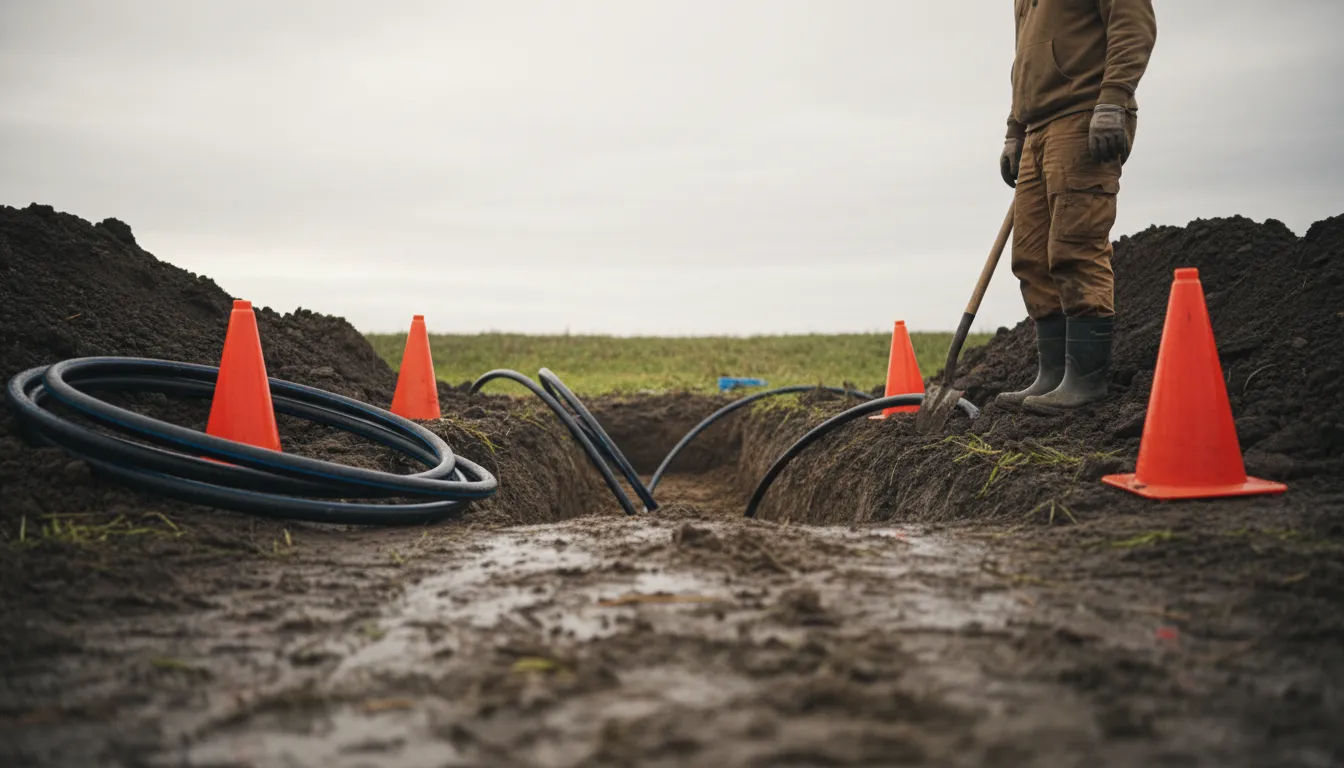
- Horizontal Closed-Loop: This is often the most cost-effective option if you have sufficient land. Contractors dig trenches several feet deep in your yard and lay loops of pipe. This method requires a larger, unobstructed plot of land but generally involves lower excavation costs 3 4.
- Vertical Closed-Loop: For homes with smaller lots, which is common in many Joliet neighborhoods, a vertical system is the ideal solution. Using a drilling rig, contractors bore holes 150 to 400 feet deep and insert U-shaped loops of pipe. While the drilling process is more expensive than trenching, it minimizes landscape disruption and is highly effective.
- Direct Exchange (DX) Systems: A less common variant, DX systems circulate refrigerant directly through copper ground loops. They can be very efficient but are not suitable for all soil types and require specific expertise to install 5.
- Hybrid Systems: Some properties may benefit from a hybrid approach that combines a geothermal ground loop with a supplemental air-source heat pump. This can optimize performance and cost for homes with particularly high cooling loads 6.
The Installation Process: Trenching vs. Drilling
The most significant part of installing a geothermal system is placing the ground loop. In Joliet, the choice between trenching and drilling is a key decision point.
Trenching for Horizontal Loops This method involves using excavating equipment to dig long trenches, typically 4 to 6 feet deep. It's a faster process for suitable properties and is generally less expensive per foot of loop installed. The primary requirement is ample yard space-often several thousand square feet of clear area is needed 7.
Drilling for Vertical Loops When space is limited, vertical drilling is the go-to method. A drilling rig will create a series of boreholes across your property. This technique is perfect for smaller lots, wooded properties, or existing landscaped yards where you want to preserve the surface. The depth and number of holes are calculated based on your home's heating and cooling needs.
A typical installation follows a clear process:
- Site Assessment & Load Calculation: A specialist will evaluate your property and perform a detailed calculation to correctly size the system for your home's specific requirements.
- Loop Installation: The chosen method (trenching or drilling) is used to install the polyethylene ground loop pipes, which are then connected to a manifold.
- Heat Pump Installation: The indoor heat pump unit is installed, typically in a basement, utility room, or garage, and connected to your home's electrical system and ductwork.
- System Connection & Testing: The ground loop is connected to the heat pump, the system is filled and pressurized, and a comprehensive startup test ensures everything operates flawlessly.
Find the perfect geothermal heat pump contractors for your needs
Get personalized recommendations and expert advice
Understanding Costs, Savings, and Incentives in Joliet
The upfront investment for a complete geothermal heating and cooling system in the Joliet area typically ranges from $20,000 to $40,000 or more, depending on your home's size, the loop type, and the soil conditions 8. It's important to view this cost in the context of long-term operation and the powerful financial incentives now available.
Substantial Energy Savings The operational savings are where a geothermal system truly shines. Homeowners can see reductions of up to 65% on their heating and cooling energy bills 9. By using the earth's consistent temperature, these systems avoid the drastic efficiency drops that air-source heat pumps experience during Joliet's cold winters, providing stable and affordable comfort.
Powerful Financial Incentives Current incentives dramatically improve affordability and return on investment:
- Federal Tax Credit: The Inflation Reduction Act provides a 30% federal tax credit for the total installed cost of a qualifying geothermal heat pump system, with no upper limit.
- Local Utility Rebates: ComEd, Joliet's electric utility, offers rebates for geothermal installations. These can amount to significant savings, such as $1,500 per ton of system capacity.
When combined, these incentives can reduce the net installed cost by tens of thousands of dollars. For example, on a $30,000 system, you could receive a $9,000 federal tax credit and a substantial ComEd rebate, cutting your initial outlay nearly in half. Experts like the Citizens Utility Board note that with these savings and incentives, the payback period for many homeowners can be as short as 5 to 10 years 10 11.
Long-Term Benefits and Considerations
Beyond monthly savings, a geothermal system offers durability and low maintenance. The ground loops are warrantied for 50+ years and the indoor heat pump unit often lasts 20 years or more. With fewer mechanical parts exposed to the elements compared to an outdoor AC unit, maintenance is straightforward-primarily involving routine checks of the pump and filters.
For Joliet homeowners, embracing geothermal technology means locking in stable, predictable heating and cooling costs, increasing property value, and making a long-term investment in home comfort and sustainability. The combination of proven technology, modern installation methods, and strong financial support makes it a compelling option to consider.
Frequently asked questions
Sources
Footnotes
-
Geothermal Heat Pumps | WBDG - https://www.wbdg.org/resources/geothermal-heat-pumps ↩
-
How a Geothermal Heat Pump Works | This Old House - https://www.youtube.com/watch?v=d5Tbsx3R2T8 ↩
-
Geothermal Heating and Cooling - Open Energy Information - https://openei.org/wiki/GeoBridge/Heating_and_Cooling ↩
-
Geothermal heating & cooling, heat pumps, heat exchange ... - https://aztechgeo.com/residential-geothermal/how-it-works/ ↩
-
Geothermal Heat Pumps - Department of Energy - https://www.energy.gov/energysaver/geothermal-heat-pumps ↩
-
Geothermal in the Midwest - Illinois Geothermal Coalition - https://geothermal.illinois.edu/wiki/ ↩
-
All You Need to Know About Home Geothermal Heating & ... - https://dandelionenergy.com/all-you-need-to-know-about-home-geothermal-heating-cooling ↩
-
Guide to Geothermal Heat Pumps - https://www.energy.gov/sites/prod/files/guide_to_geothermal_heat_pumps.pdf ↩
-
5 Things You Should Know about Geothermal Heat Pumps - https://www.energy.gov/cmei/articles/5-things-you-should-know-about-geothermal-heat-pumps ↩
-
Clean Energy 101: Geothermal Heat Pumps - RMI - https://rmi.org/clean-energy-101-geothermal-heat-pumps/ ↩
-
Is geothermal energy right for your commercial property? - https://proptechos.com/energy-efficiency/geothermal-energy/ ↩